
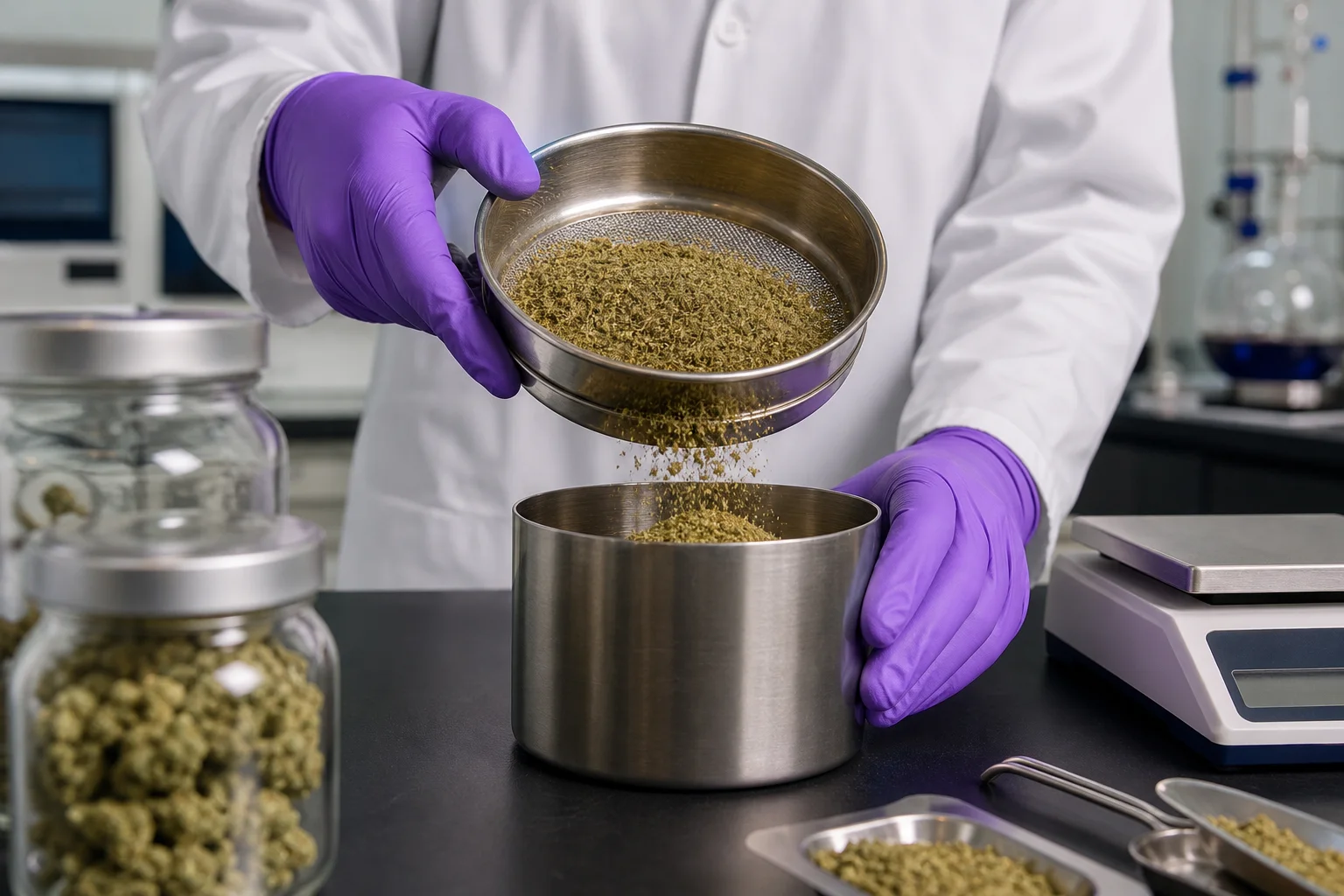
NIST’s hemp reference material work demonstrates why standardized reference materials matter: they reduce inter‑lab variation and make cannabinoid measurements comparable. This image illustrates the laboratory side of evidence quality but does not show clinical outcomes or patient data. Source: NIST. Limit: it represents methods development, not clinical evidence. ([nist.gov](https://www.nist.gov/news-events/news/2024/07/nists-new-hemp-reference-material-will-help-ensure-accurate-cannabis))
Why this matters to Maine adults
If you grow, buy, or learn about cannabis in Maine, you live at the meeting point of two cultures: hands‑on experience and messy, evolving science. That’s a good place to be — but it’s also a place where people either over‑trust a single study or dismiss decades of patient experience. This guide gives a practical hierarchy for different kinds of evidence and shows how to fold lived experience into that hierarchy without letting anecdotes eclipse population research.
Maine’s regulatory framework makes the distinction relevant. The Maine Medical Use of Cannabis Program remains an established program with registrations, rules, and a statutory structure that supports research and patient access; meanwhile state regulation of adult‑use and public health guidance sit elsewhere in OCP and state statutes. Knowing which system applies to the person you’re helping matters for access, recordkeeping, and what kinds of data are collected and published publicly. (maine.gov)
Finally: risk awareness means using trustworthy sources. Federal agencies like the CDC and FDA highlight areas where evidence is incomplete and single studies can be misleading — we’ll use those cautions as guardrails in this piece. (cdc.gov)
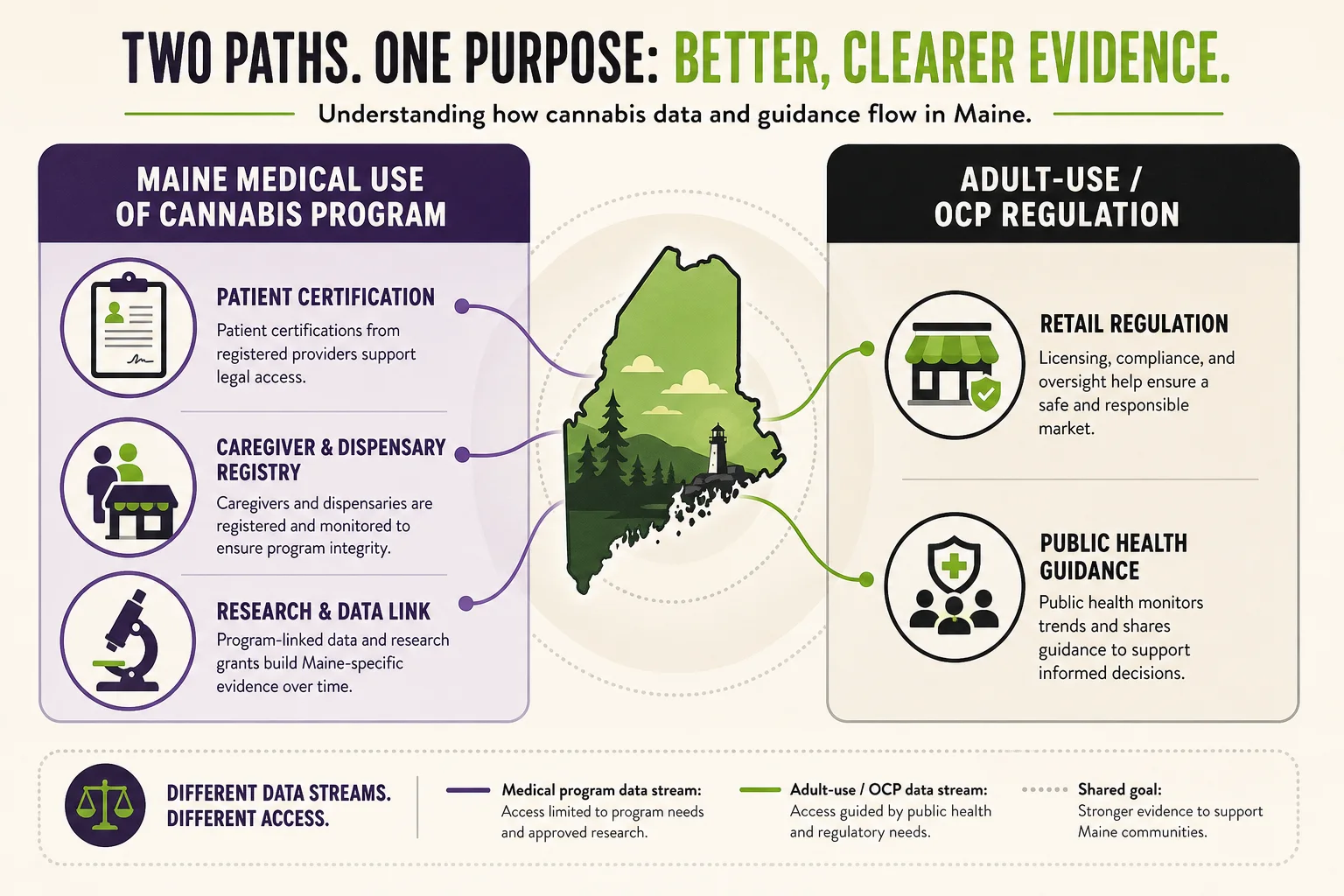
An explanatory illustration that contrasts Maine’s Medical Use of Cannabis Program (registration, certification, caregivers) with the state’s adult‑use regulation environment. Useful for understanding how data sources differ by program. Limit: schematic only; does not substitute for legal text or program forms. Source: Maine OCP. ([maine.gov](https://www.maine.gov/dafs/ocp/medical-use/))
Research context: Maine Medical Use of Cannabis ProgramA simple map of evidence types (and what they can tell you)
When people say “evidence,” they often mean different things. Here’s a quick, useful map you can carry in your head as you read: mechanism studies and lab (in vitro) work; animal studies; surveys and cross‑sectional observational studies; cohort and case‑control observational studies; randomized controlled trials (RCTs); systematic reviews and meta‑analyses; and individual lived‑experience notes (patient logs, grower journals, clinic case notes).
Each type answers a different kind of question. Mechanism and animal work explain how cannabinoids interact with cells and organ systems; surveys tell you what people notice and how they behave; observational cohorts show associations in real populations; RCTs test causality in controlled settings; reviews summarize and weigh multiple studies. None stands alone — a claim that survives this ladder, from mechanism to RCTs to independent reviews, is stronger than one built on a single method. (pubmed.ncbi.nlm.nih.gov)
Keep an eye on three recurring limits while you read: sample size (small studies are fragile), population (young, old, pregnant, or medically complex people aren’t interchangeable), and method gaps (self‑report versus biological measures). When a claim depends on only one or two small studies, regard it as provisional.
Mechanism papers and animal research: why useful, why early
Mechanism papers — cell cultures, receptor binding, enzymatic pathways — are the plumbing diagrams of cannabis science. They tell you whether a molecule (like THC or CBD) can affect a receptor or pathway under laboratory conditions. Animal studies can extend that picture with whole‑organism outcomes, including toxicity signals and dose ranges that would be impossible to test initially in people.
But those strengths are also limits: lab conditions are simplified and animal metabolism differs from human metabolism in important ways. Results that look robust in mice or in a petri dish don’t always translate into meaningful human outcomes. That doesn’t make these studies worthless — it makes them early. They are hypothesis generators, not definitive proof. Regard them as a way to ask better questions and to flag safety concerns for human studies. (pubmed.ncbi.nlm.nih.gov)
A practical habit: when you read a mechanism or animal paper, ask whether downstream human data exist. If an animal study finds a potential harm or side effect, it’s legitimate to pay attention — and also to seek corroboration in observational data, clinical trials, or public‑health reports before concluding how it affects people.
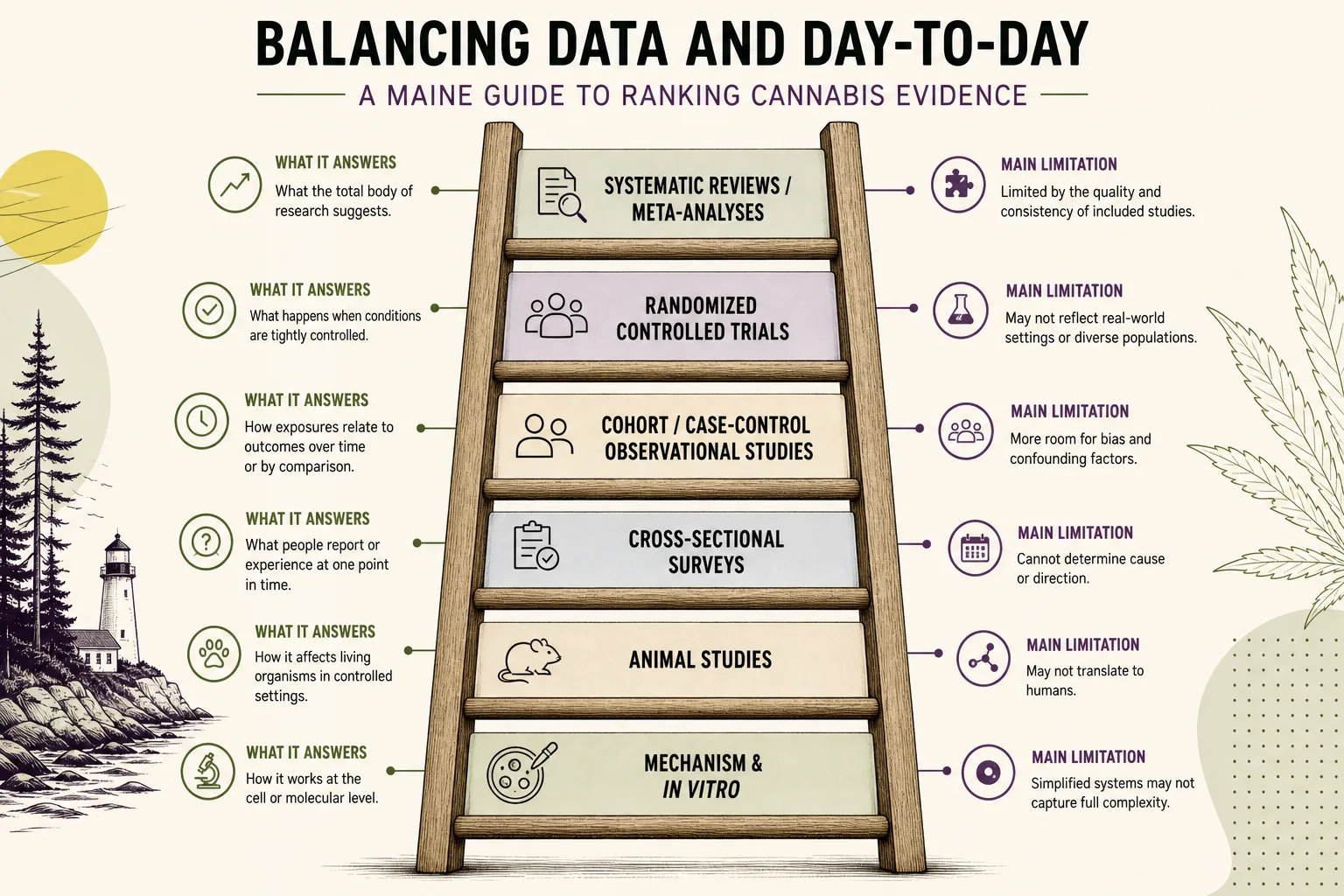
An evidence‑hierarchy diagram showing where mechanism studies, animal work, surveys, observational cohorts, RCTs, and systematic reviews sit relative to questions of causality and generalizability. This visual teaches method differences but contains no study statistics or clinical claims. Source: JAMA review (PubMed). ([pubmed.ncbi.nlm.nih.gov](https://pubmed.ncbi.nlm.nih.gov/41296368/))
Research context: Therapeutic Use of Cannabis and Cannabinoids: A Review (PubMed)Surveys and observational studies: the lived patterns and their traps
Surveys and observational research — cross‑sectional polls, patient registries, and cohort studies — are where lived experience and population data meet. They capture what people report (symptoms, side effects, frequency of use) and how cannabis use clusters with other behaviors (alcohol use, medications, comorbid conditions).
Observational work is essential because it reports real human behavior at scale. But correlation is not causation: people who choose cannabis may differ from those who do not in many ways that affect outcomes. Observational studies can adjust for confounders, but residual confounding often remains. That’s why observational findings should be viewed as suggestive rather than conclusive, unless they’re very large, well‑designed, and consistently replicated. (pubmed.ncbi.nlm.nih.gov)
Maine’s public program collects administrative data and supports research grants that may fund observational and clinical work; knowing whether a dataset comes from the medical program or from broader public health surveys affects how you interpret it. For example, registrants in the medical program have formal certifications and care access that aren’t present in general population surveys. (maine.gov)
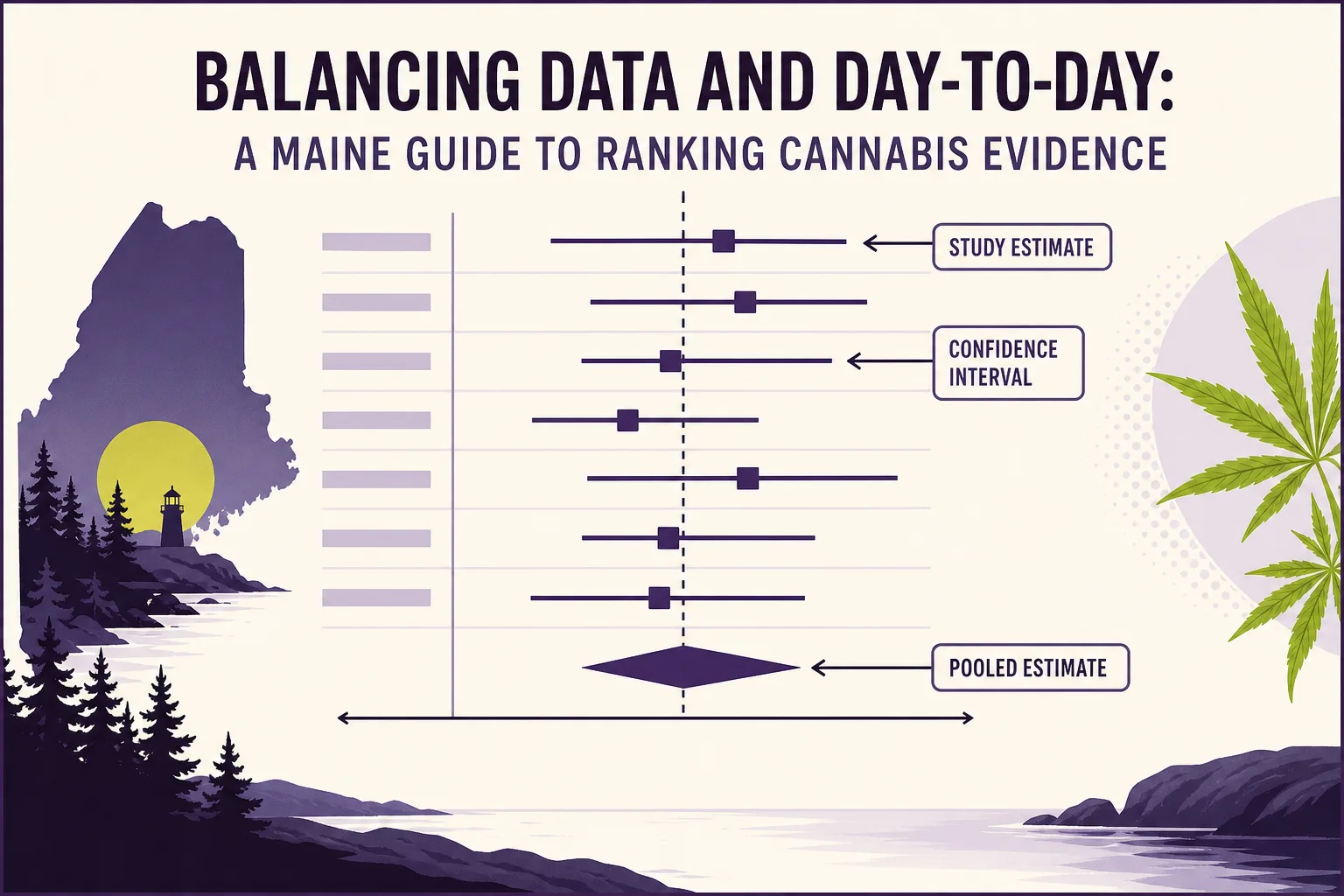
A generic forest‑plot illustration showing how randomized trials are pooled in a meta‑analysis: visualizes study weights and consistency across trials without showing actual effect sizes or numbers. Teaches interpretation rather than reporting outcomes. Source: JAMA review (PubMed). Limit: no quantitative claims are displayed. ([pubmed.ncbi.nlm.nih.gov](https://pubmed.ncbi.nlm.nih.gov/41296368/))
Research context: Therapeutic Use of Cannabis and Cannabinoids: A Review (PubMed)Randomized trials and systematic reviews: strengths and real limits
Randomized controlled trials (RCTs) are the closest we get to causal evidence in people because random assignment balances known and unknown confounders. Systematic reviews and meta‑analyses sit above RCTs by pooling evidence and testing consistency across studies. When an effect is present in multiple high‑quality RCTs and appears in systematic reviews, confidence rises.
But RCTs are not perfect for every cannabis question. Trials can be short, include narrowly defined participants, use single formulations that don’t match consumer products, or struggle with blinding when psychoactive effects give away allocation. Systematic reviews can only be as strong as the trials they include, and heterogeneity in product, dosing, and outcomes is common in cannabis research. The recent comprehensive review of cannabinoids underscores that evidence remains incomplete for many claimed uses and that inhaled, high‑potency products carry specific concerns. (pubmed.ncbi.nlm.nih.gov)
The practical rule: give RCTs and reviews more weight, but read their methods. If a review pools very different products or short trials, its headline conclusion may still leave important uncertainties.
Lab testing, measurement variability, and why standardization matters
If you’re a grower or buyer, lab numbers matter — but they’re not gospel. Measurement of cannabinoids, moisture, and contaminants varies among labs, methods, and sample preparation techniques. Organizations like NIST are working to improve measurement comparability through reference materials and quality assurance programs so lab results become more reliable across time and places. Those efforts reduce uncertainty and make comparisons between studies or batches more meaningful. (nist.gov)
That said, a single lab result from one test should be interpreted cautiously. Sampling error (which bud was tested), lab method, and reporting conventions (THCA vs total THC, moisture basis) all affect the number you see. Use lab data as one piece of evidence: consistent results across batches and accredited labs are more informative than a single reading.
When evaluating research that uses lab‑measured products, check whether the study documented testing methods, used reference materials, or participated in inter‑lab comparisons. Those details are the difference between a controlled lab product and a loosely described “high‑THC” consumer item.

A laboratory context image showing the type of instrumentation used to measure cannabinoids and contaminants — useful to explain why method, sample prep, and QA matter for study comparability. Limit: illustrative of measurement context, not evidence of product safety or efficacy. Source: NIST CannaQAP materials. ([nist.gov](https://www.nist.gov/programs-projects/nist-tools-cannabis-laboratory-quality-assurance))
Research context: NIST Tools for Cannabis Laboratory Quality AssuranceWeighing lived experience without elevating anecdotes into evidence
People’s lived notes — patient logs, caregiver reports, grower journals — are valuable. They record variability that formal trials often miss: differences in cultivar, harvest timing, tolerance, and interactions with daily life. Lived experience excels at hypothesis generation and at flagging rare safety signals or real‑world practicalities (storage, dosing patterns, product formats).
But lived experience is subject to memory bias, placebo effects, selection bias, and confounding. A dozen patient journals that report benefit do not equal a randomized trial. The right approach is to regard lived experience as both data and context: document it, compare it to population research, and use it to ask focused research questions. When many independent lived reports align with observational or clinical data, the combined signal gets stronger.
For Maine adults, that means keeping patient notes, recording product details and context (other drugs, sleep, food), and sharing de‑identified patterns with researchers or OCP initiatives that can test hypotheses at scale. The state’s research funds and program records exist to turn those observations into replicable knowledge. (web.legislature.maine.gov)
Safety signals and urgent cautions to carry with you
Public health agencies flag consistent safety issues you should respect: cannabis use disorder risk, impaired driving, possible cardiovascular and mental‑health signals for susceptible people, and unintentional pediatric exposures from edibles. CDC and poison control resources emphasize risk‑reduction, safe storage, and caution around combining cannabis with other depressant drugs. These are evidence‑informed cautions, often arising from multiple observational reports and surveillance systems. (cdc.gov)
Practical implication: when you read a claim about benefit, check whether research also explored harms and whether public health agencies have issued advisories. A balanced view is the most cautious approach.
How to read a single claim (a quick checklist)
- What type of evidence is it? Mechanism, animal, observational, RCT, review, or an individual note? Give each type its proper weight.
- How big and recent is the study? Small, single‑site studies are fragile; larger, multicenter trials and systematic reviews carry more weight. (pubmed.ncbi.nlm.nih.gov)
- Were products and measures standardized and tested in accredited labs? If not, be cautious. (nist.gov)
- Are harms and interactions discussed? If a study only reports positive outcomes without safety data, view the findings as incomplete. (fda.gov)
- Does lived experience align with population data? Convergence across different evidence types strengthens confidence.
Use this checklist when you read a news item, a label claim, or a forum post. It helps you rank the claim without throwing out the person who lived it.
Conclusion: respectful skepticism, practical curiosity
Ranking cannabis evidence is an act of balance: honor lived experience and the insights of growers while asking whether that experience fits the broader pattern visible in observational data, trials, and systematic reviews. Use lab data carefully, prefer standardized methods, and consider single small studies as starting points, not final answers.
For Maine adults and caregivers, the state’s programs and research funding mean your observations can feed formal study. Save your notes, push for transparent lab methods, and lean on public agencies for safety guidance. That combination — practical, curious, and evidence‑aware — is how communities turn experience into knowledge.
Sources cited in the article
- CDC — Cannabis and Cannabinoids Health Effects. (cdc.gov)
- FDA — What You Need to Know About Products Containing Cannabis or Cannabis-derived Compounds. (fda.gov)
- Maine Office of Cannabis Policy — Maine Medical Use of Cannabis Program. (maine.gov)
- JAMA review — "Use of Cannabis and Cannabinoids: A Review" (PubMed). (pubmed.ncbi.nlm.nih.gov)
- NIST — Tools and reports on cannabis measurement and CannaQAP. (nist.gov)
- Poison Control (poison.org) — Medical marijuana poisoning in kids and reducing risk. (poison.org)
Questions this guide answers
How should I weigh a single patient’s positive report?
A single positive report is useful as a hypothesis and practical insight, but it’s not conclusive. Look for supporting observational studies, quality lab data, or randomized trials before assuming the effect generalizes.
Are RCTs always best for cannabis claims?
RCTs are the strongest tool for causal inference, but they can be short, narrow, or use products that don’t match the market. Interpret trials alongside observational data and real‑world notes.
Can I trust cannabinoid percentages on a label?
Label numbers are informative but can vary by lab, sample, and reporting method. Prefer products tested by labs that follow standardized approaches and use reference materials; NIST is working to improve that comparability. ([nist.gov](https://www.nist.gov/news-events/news/2024/07/nists-new-hemp-reference-material-will-help-ensure-accurate-cannabis))
How does Maine’s medical program differ for evidence gathering?
Maine’s Medical Use of Cannabis Program includes registries, program rules, and statutory support for research grants. That infrastructure can enable more specific, patient‑certified data than general population surveys. ([maine.gov](https://www.maine.gov/dafs/ocp/medical-use/))
Where should I look for safety guidance?
Start with public health agencies like CDC and trusted clinical reviews. Poison Control is the go‑to for acute exposures and pediatric concerns; call 1‑800‑222‑1222 or use webPOISONCONTROL if an ingestion happens. ([cdc.gov](https://www.cdc.gov/cannabis/health-effects/index.html))
Educational information only. Cannabis affects people differently and this is not medical advice.