Research-grade guides built to answer one real question at a time—without miracle claims, recycled mythology, or pretending uncertainty does not exist.
The Maine Cannabis Encyclopedia is one expanding, source-backed record of the state’s cannabis history, laws, programs, cultivation, science, people, places, and culture. We begin with A and keep going for years.
AToday’s letterThree permanent entries · three reviewed social stories · one public source trail
Daily research desk
New questions. Fresh evidence.
Each edition must pass source, structure, safety, and compliance gates before publication.
strain-literacy
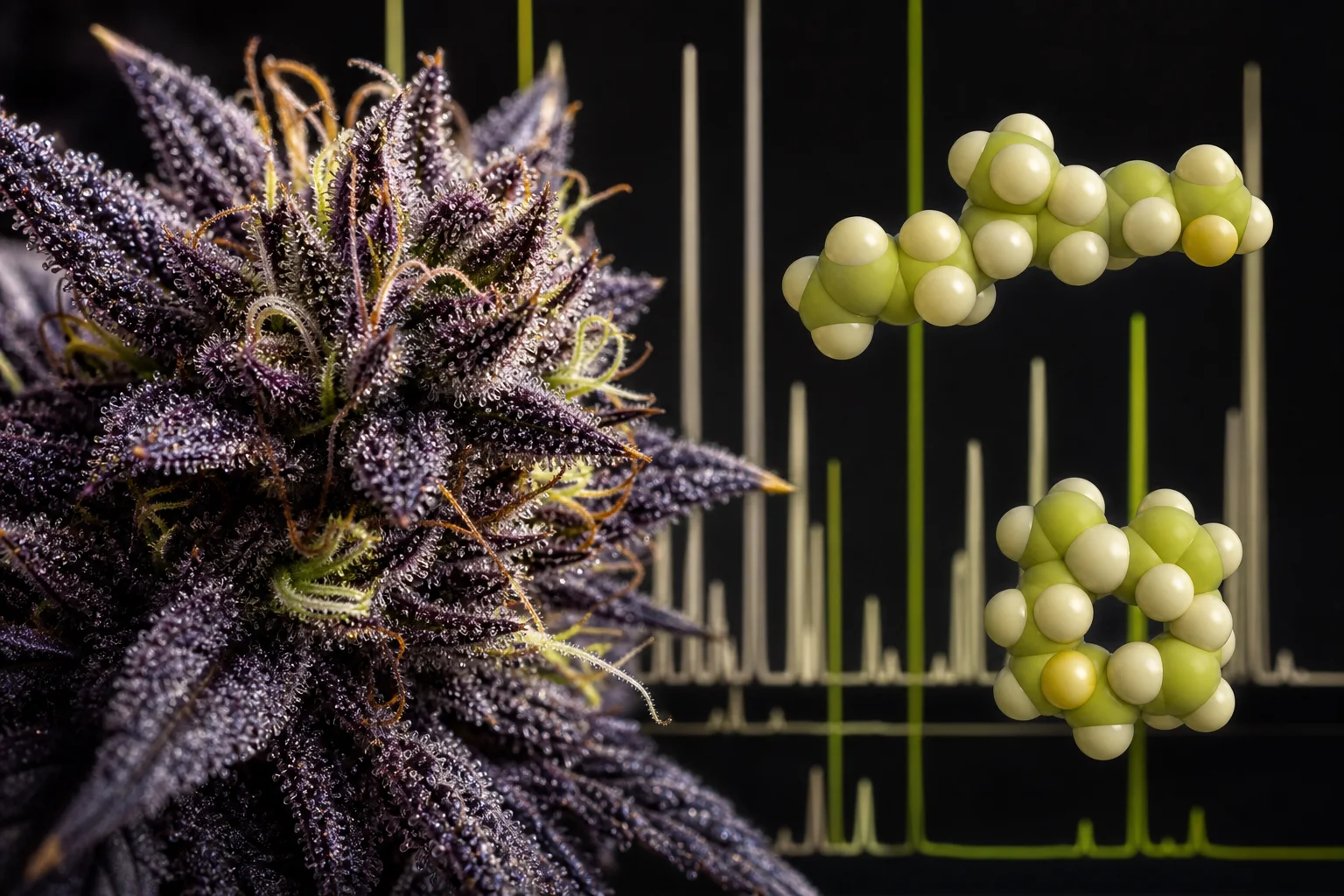
How to Read a Cannabis Terpene Panel — Separate Chemistry from Promises
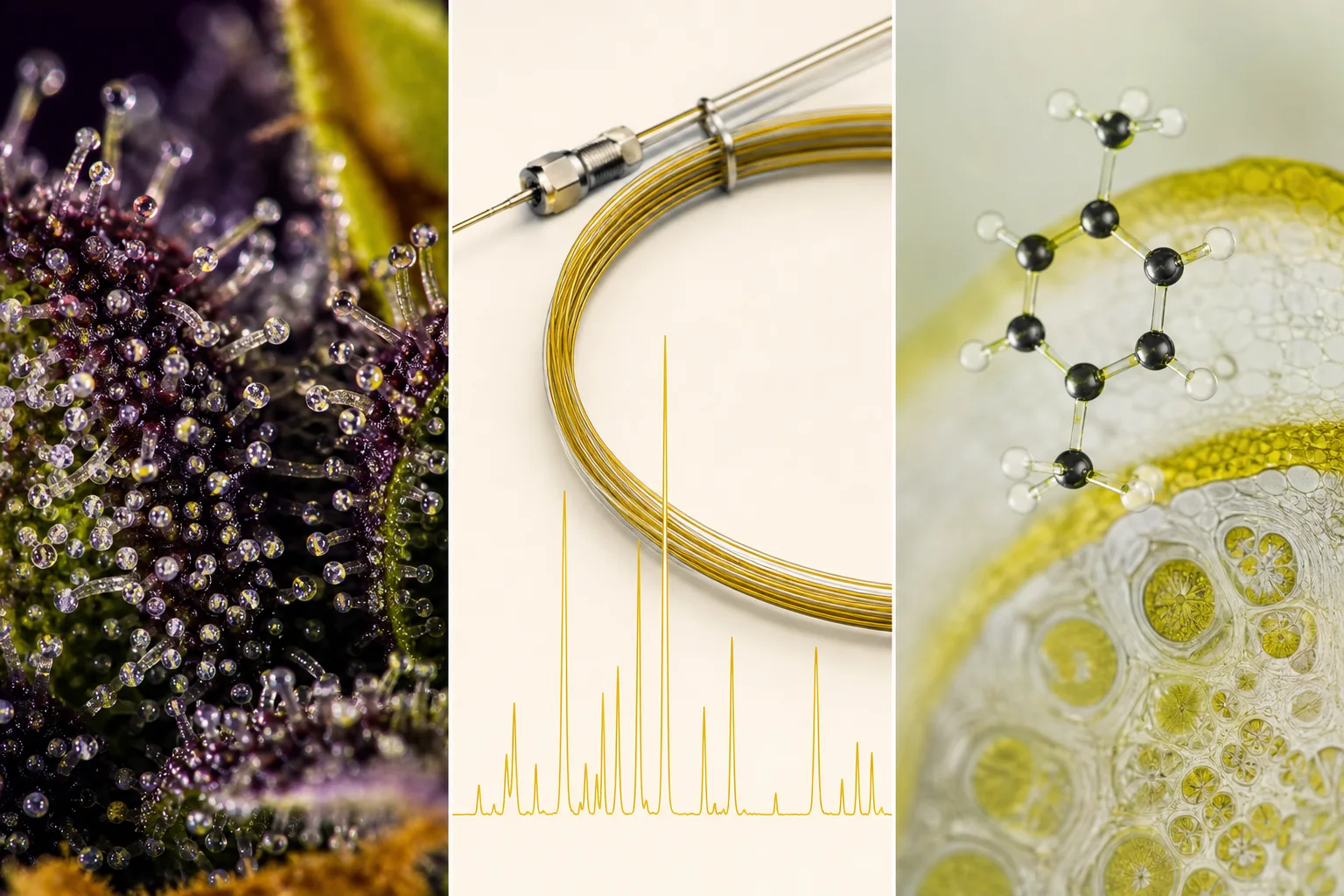
Terpene numbers are useful lab data, not fortune-telling. Learn what terpene panels actually measure, how labs measure them, what aroma descriptors mean, how batch context changes profiles, and why effect promises outrun the evidence.
Why THC Percentage Is One Measurement — Not a Complete Cannabis Quality Score
THC percentage tells you about potency in a narrow, laboratory sense. It doesn’t describe how a product was grown, sampled, stored, or how it will behave in a body—or whether it’s safe, homogeneous, or fresh.
When One Number Isn’t Enough: Why THC Percentage Isn’t a Complete Cannabis Quality Score
THC percentage is a useful, concrete lab measurement — but it’s only one part of a longer story. This article explains what potency numbers mean, how labs get them, what they can’t tell you, and what to ask when reading a COA in Maine.
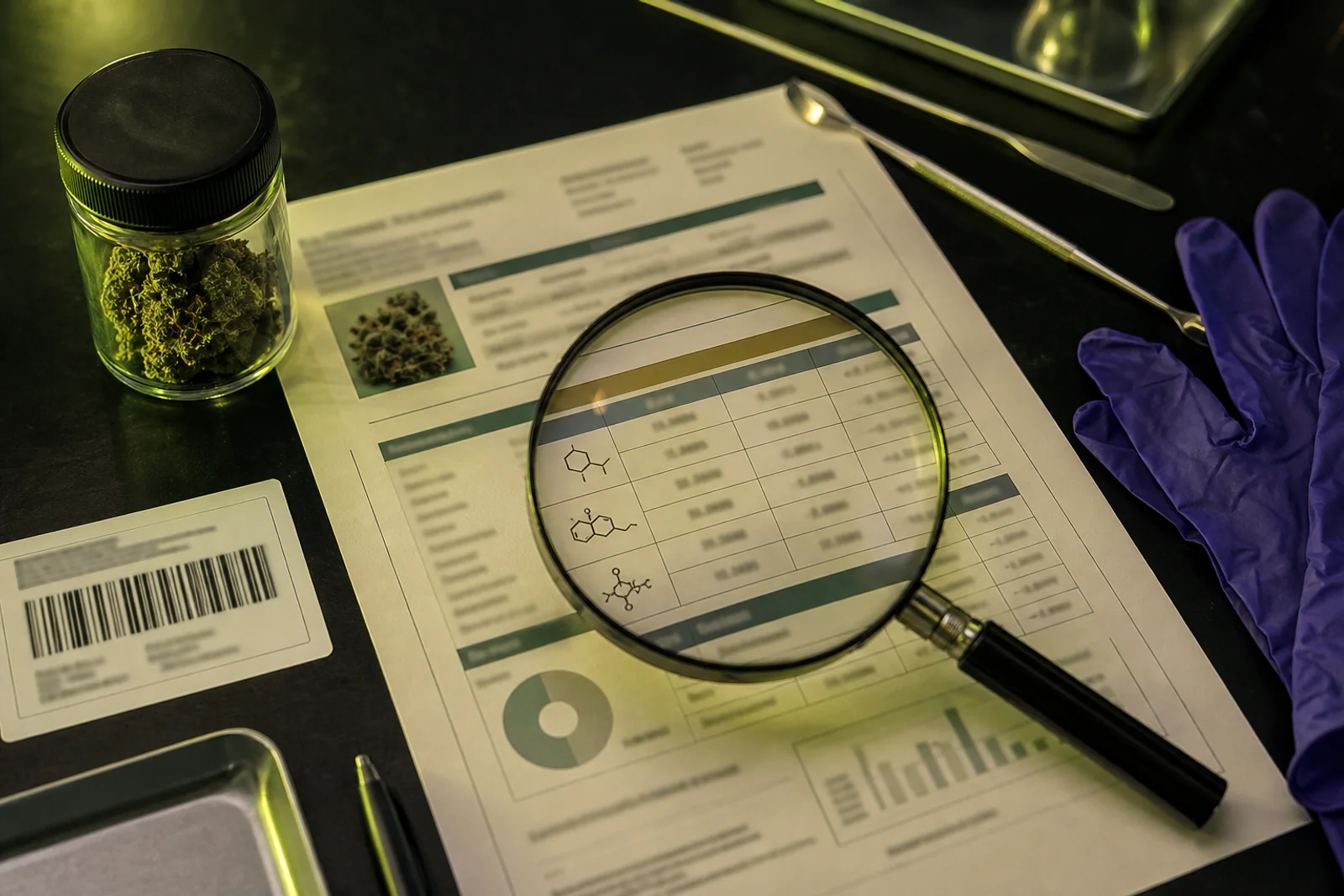
What a Cannabis Test Result Can — and Can’t — Tell an Adult Consumer
A practical, evidence-grounded guide for Maine adults explaining what appears on a Certificate of Analysis (COA), the scientific limits of a single batch result, and how state rules shape what you can reliably learn.
How responsible cannabis education differs from advertising claims
Source labels, transparent uncertainty, and honest limits on outcomes make cannabis information more useful and safer than one‑sided marketing. Here’s how to read that difference — and why it matters for Maine growers and adult users.
What Changes After the Cut: Drying, Conditioning, Packaging & Storage
After harvest the plant keeps changing. Learn how moisture moves, how terpenes and cannabinoids shift, why records and testing matter, and why 'looking good' is not the same as being safe.
After the Cut: How Drying, Conditioning, Packaging, and Storage Change Cannabis
A practical, evidence-based guide for Maine growers and caregivers explaining water movement, volatile chemistry, recordkeeping, and why a pretty bud isn't a safety certificate.
Edibles act differently than smoked or vaped cannabis: onset is slower, effects are more variable, labeling can be imperfect, and accidental ingestion (especially in children) is an underappreciated risk.
How Adults Can Rank Cannabis Evidence — Without Dismissing Lived Experience
A practical, evidence-literate way for adults—patients, caregivers, growers, and curious Mainers—to read studies, honor personal reports, and make safer decisions in a changing policy landscape.
How to Read a Cannabis Terpenes Panel — Separate Chemistry from Promises
Terpene panels report measured volatile compounds — not guaranteed aromas or effects. Learn what labs measure, what sensory words mean, and how Maine rules and lab quality affect interpretation.
Why THC percentage is one useful measurement — not a complete cannabis quality score
THC percentage is a lab-measured ingredient quantity on a Certificate of Analysis. It says something important about potency, but it doesn’t — and can’t — answer questions about sampling, lab uncertainty, route of use, contaminants, or consumer experience.
Reading One Lab Result: What a Cannabis Test Reveals — and What It Doesn’t
A single lab Certificate of Analysis (COA) is useful — but limited. This article explains what numbers and pass/fail marks mean, how sampling and lab methods drive uncertainty, and what consumers in Maine can check before relying on one batch result.
From Name to Note: Why a Cannabis Strain Label Is a Starting Point
Strain names carry history and marketing, but they don’t replace genetics, batch records, lab data, garden observation, or how a person uses a product. Learn how to read the full story behind a label.
Why a Strain Name Is a Starting Point — Not a Prediction
A strain name is a label attached to a lineage, not a promise about chemistry or experience. Learn how breeder lineage, batch testing, garden notes and personal factors combine to shape what a person actually experiences.
Plan the Ride Before You Light Up: Why a No‑Drive Decision Beats Measuring Impairment Later
Deciding not to drive before you use cannabis removes guesswork, protects others, and respects how variable impairment really is—especially when other substances, tolerance, and testing limits are in play.
Cannabis storage: product care, household safety, and batch records
Practical, evidence‑based guidance for home and small‑batch growers on protecting potency and scent, reducing the risk of accidental exposures to children and pets, and keeping clear batch records that make good products repeatable.
How to Read a Cannabis Terpene Panel — Without Turning Aroma into a Promise
Terpene numbers describe measured volatile compounds, not claims about user effects. Learn what a lab report tells you, what it doesn’t, and how to combine chemistry, sensory description, and batch context for clearer decisions.
Mapping the Difference: Maine Medical vs. Adult‑Use Cannabis — Participants, Testing, Labels, and Why Program.
A plain‑language, evidence‑based map of who takes part in each Maine cannabis program, how testing and labels work, and why the state’s separate medical and adult‑use identities matter for patients, growers, and curious adults.
How Adults Can Rank Cannabis Evidence Without Dismissing Lived Experience
A practical, research-grounded guide that compares mechanism work, animal studies, surveys, observational research, clinical trials, reviews, and individual notes — with Maine context and laboratory measurement realities.
Why edible cannabis timing deserves patience and careful label reading
Edible cannabis is not instant coffee. Delayed onset, variable absorption, serving vs package labeling, and accidental exposure risks mean reading labels slowly and waiting patiently—especially in Maine’s regulated markets.
Why THC Percentage Is One Number — Not a Complete Quality Score
Potency is useful, but percent-THC on a label answers a narrow laboratory question. This article explains what that number measures, how labs produce it, what it can’t tell you, and which questions to ask when you want meaningful information about a batch.
What a Single Cannabis Test Result Can — and Can’t — Tell an Adult Consumer
A close, practical look at the Certificate of Analysis (COA): what’s reliable, where uncertainty lives, and how Maine rules shape what you can (and can’t) learn from one batch test.
Why a Strain Name Is a Starting Point, Not a Prediction
Learn to read a strain name as a clue — not a promise. Distinguish breeder lineage, batch data, garden observation, and your own experience so you can make clearer, safer choices in Maine’s cannabis systems.
Questions to Ask About Cannabis Source and Freshness: A Practical Checklist
A hands-on checklist for adult consumers and medical program patients who want clear, evidence-based questions about where a cannabis product came from, how it was harvested and stored, and what testing and uncertainty mean for freshness and quality.
Why Responsible Cannabis Education Isn’t the Same as Advertising
Source labels, transparent uncertainty, and clear limits on health claims make cannabis education more useful than advertising. A Maine-focused primer for growers, patients, and curious adults.
Primary research, plant context, analytical limits, and the questions human evidence can actually answer.
Plant science · 11 min
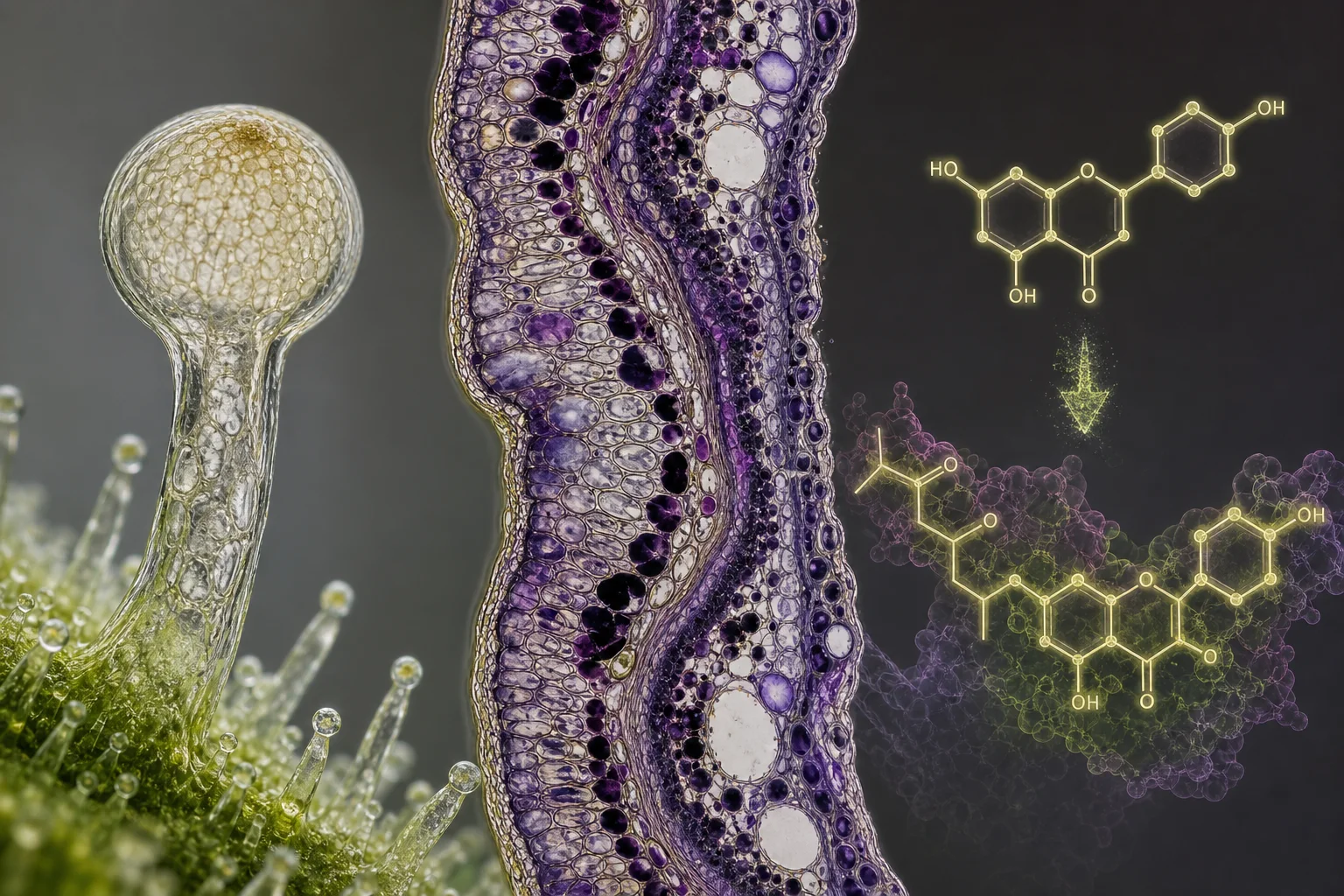
Cannflavin A: What the Evidence Actually Shows
Cannflavin A is a prenylated/geranylated flavone unique to Cannabis sativa that attracts attention for reported anti‑inflammatory activity. This review separates chemistry and measurement from mechanism work and the much thinner human evidence.
Cannflavins B, C, and isocannflavin B are prenylflavones present at low levels in Cannabis sativa. This article explains how they differ chemically, how researchers isolate or synthesize them, what preclinical studies show, and why the scarcity of controlled human data—plus analytical and biosynthetic challenges—matters for interpreting claims.
Anthocyanins and Purple Cannabis: Reading Color Carefully
Purple buds catch the eye, but color is a complex signal. This evidence-forward piece explains the chemistry, genetics, environmental drivers, lab measurement limits, and why purple cannot certify potency, quality, identity, or effects.
Primary research, plant context, analytical limits, and the questions human evidence can actually answer.
Cannabis science · 12–14 min
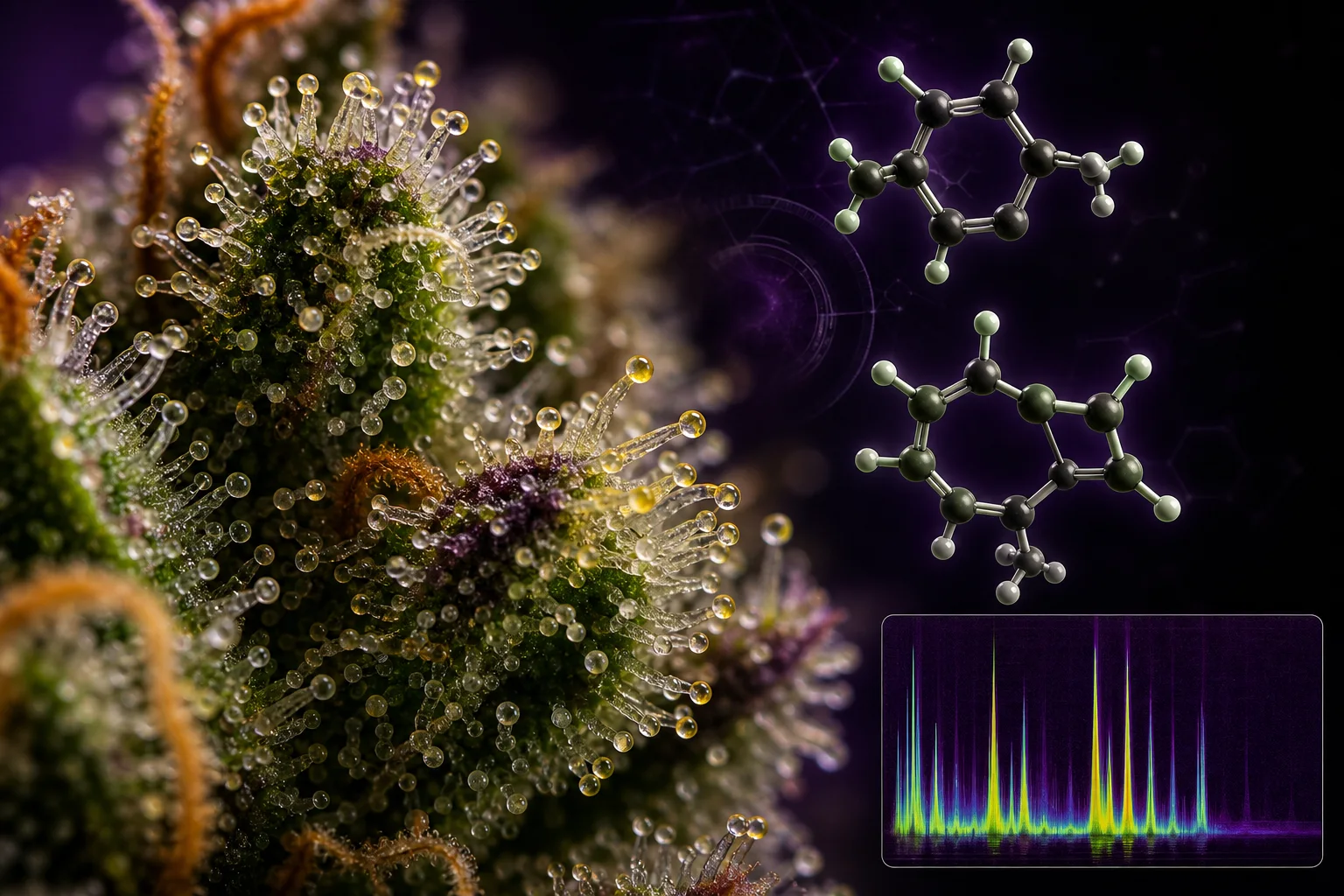
Cannabis Terpenes: Pathways, Families, and Aroma
An evidence-forward exploration of the chemistry behind cannabis aromas: how terpenes are built, which enzyme families shape their diversity, where they are produced and stored, and why batch labels can differ.
A careful, evidence-forward look at β-myrcene in cannabis — what the molecule is, how labs measure it, how and why it varies across plants, what animal studies show (and do not), and where human evidence and regulation stand.
Limonene in Cannabis: Citrus Aroma, Measured Carefully
An evidence-first review that separates limonene’s chemical identity and citrus scent from claims about effects — focusing on measurement, biology, controlled human data, and what remains uncertain.
Primary research, plant context, analytical limits, and the questions human evidence can actually answer.
Cannabis science · 12 min
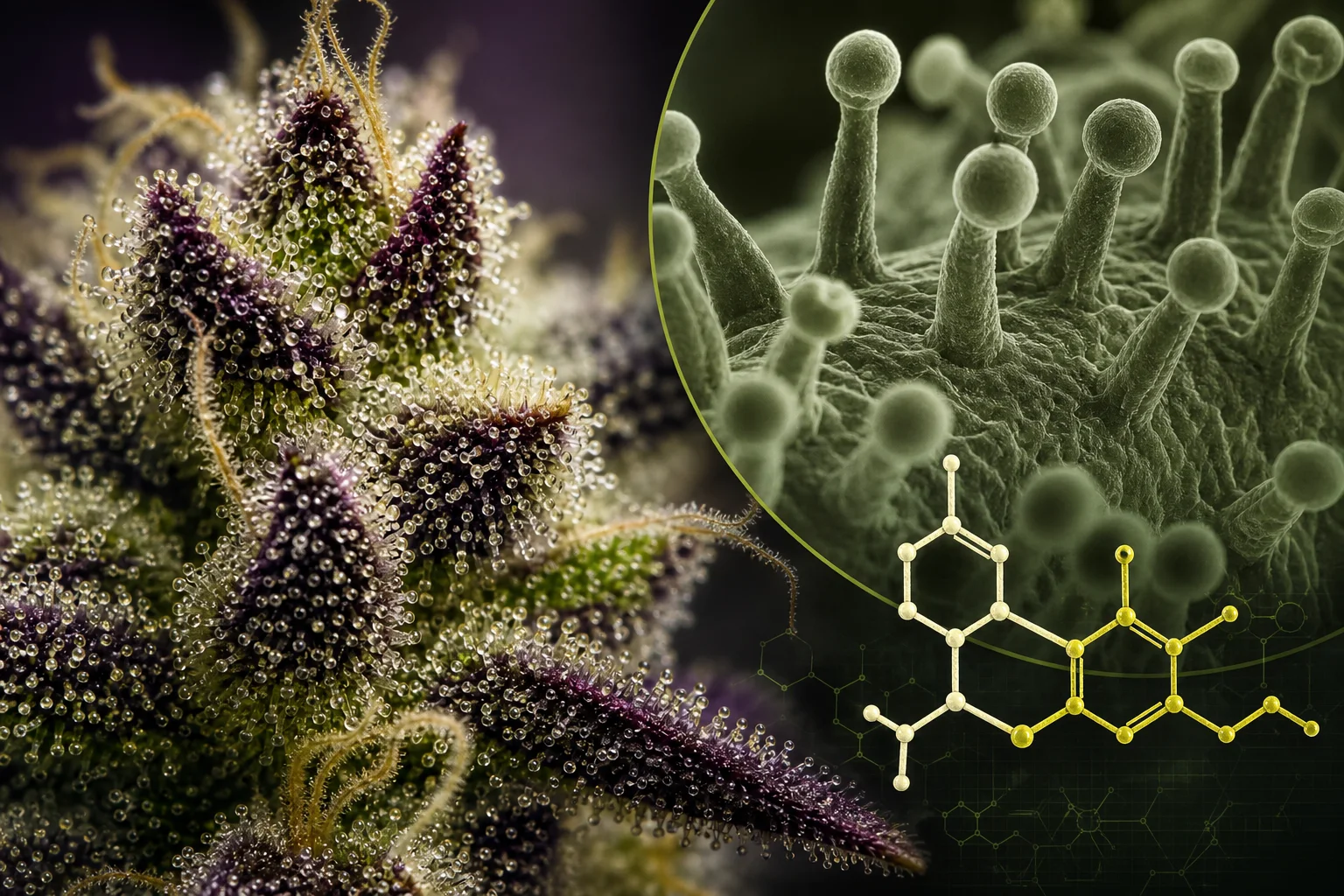
Cannabis Trichome Anatomy: Bulbous, Sessile, and Stalked
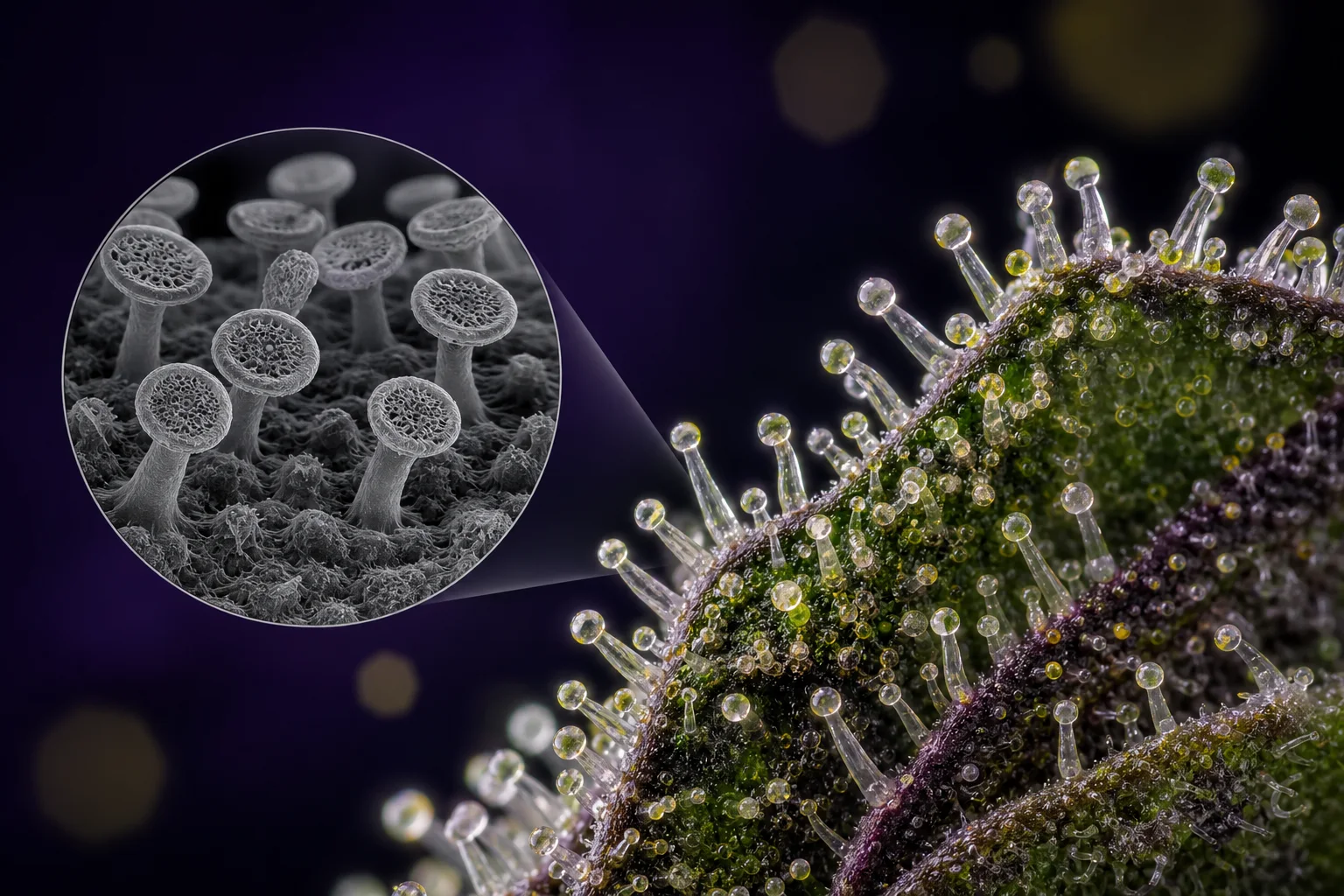
An evidence‑based primer on the cellular architecture of Cannabis trichomes, where cannabinoids and terpenes are synthesized and stored, and why the classic three‑type diagram is a useful but incomplete shorthand.
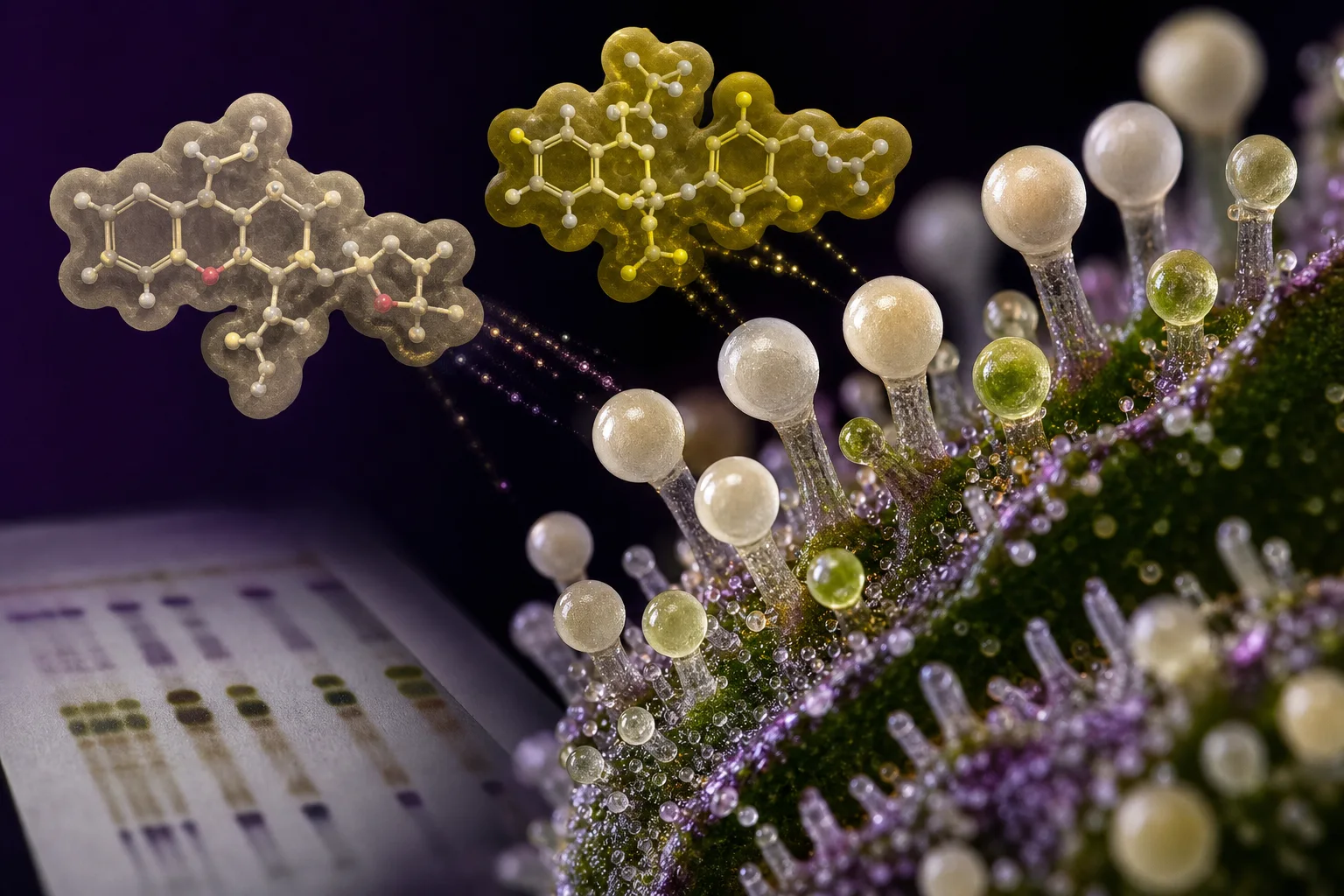
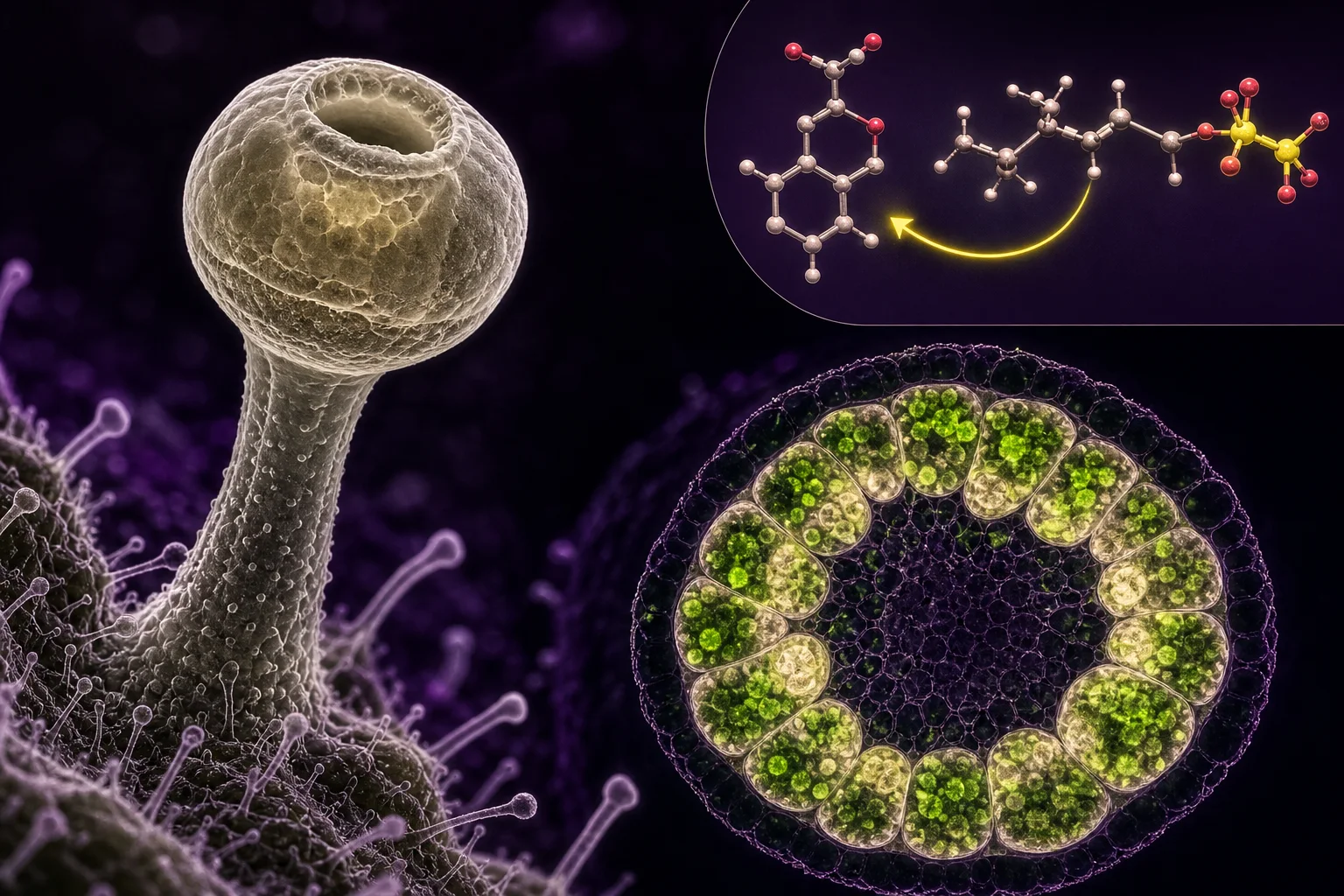
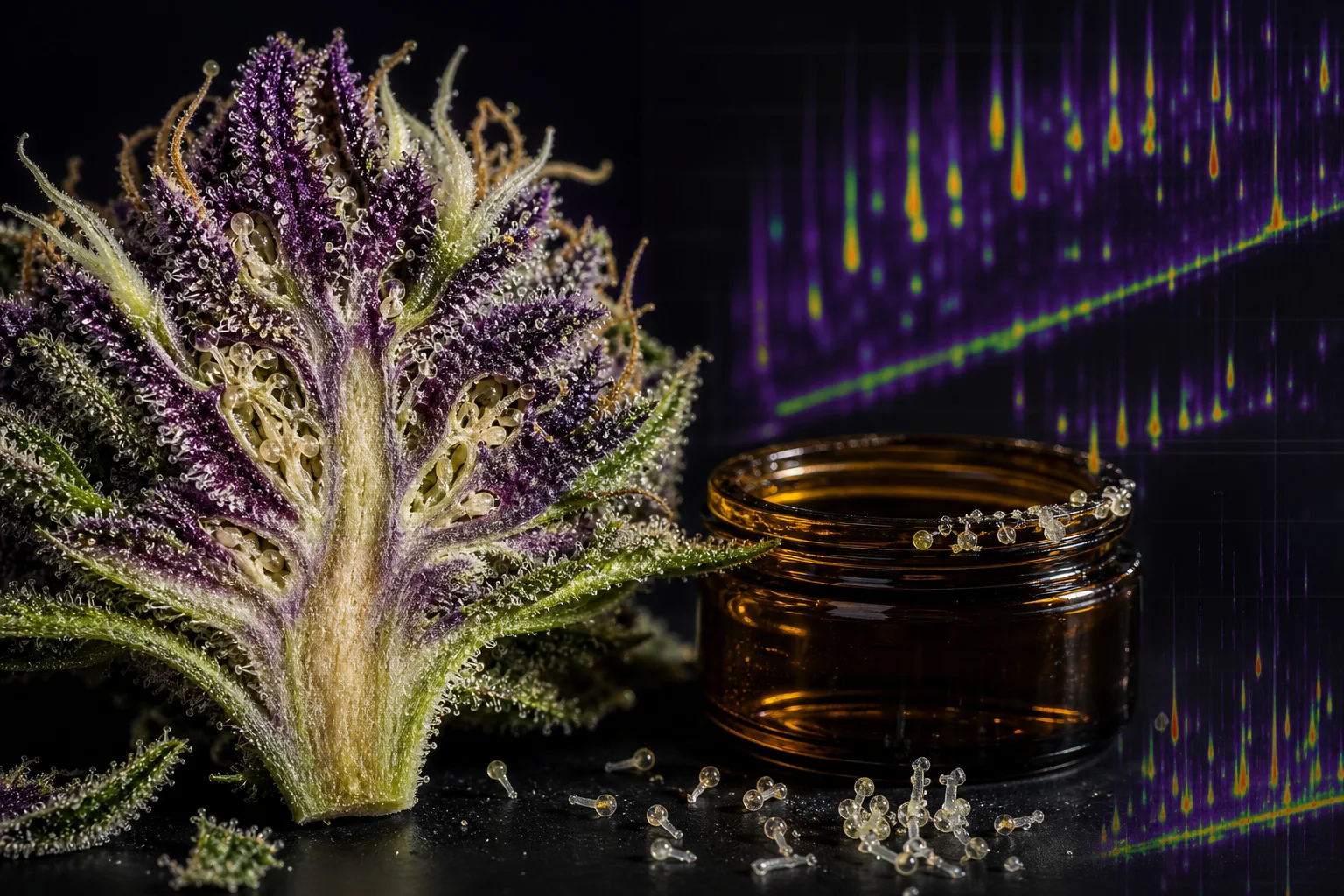
A step-by-step cellular tour of the Cannabis glandular trichome: how disc cells and their plastids make and move precursor molecules, how biosynthetic enzymes act at membranes or are secreted, and how cannabinoids and terpenes collect in the subcuticular storage cavity.
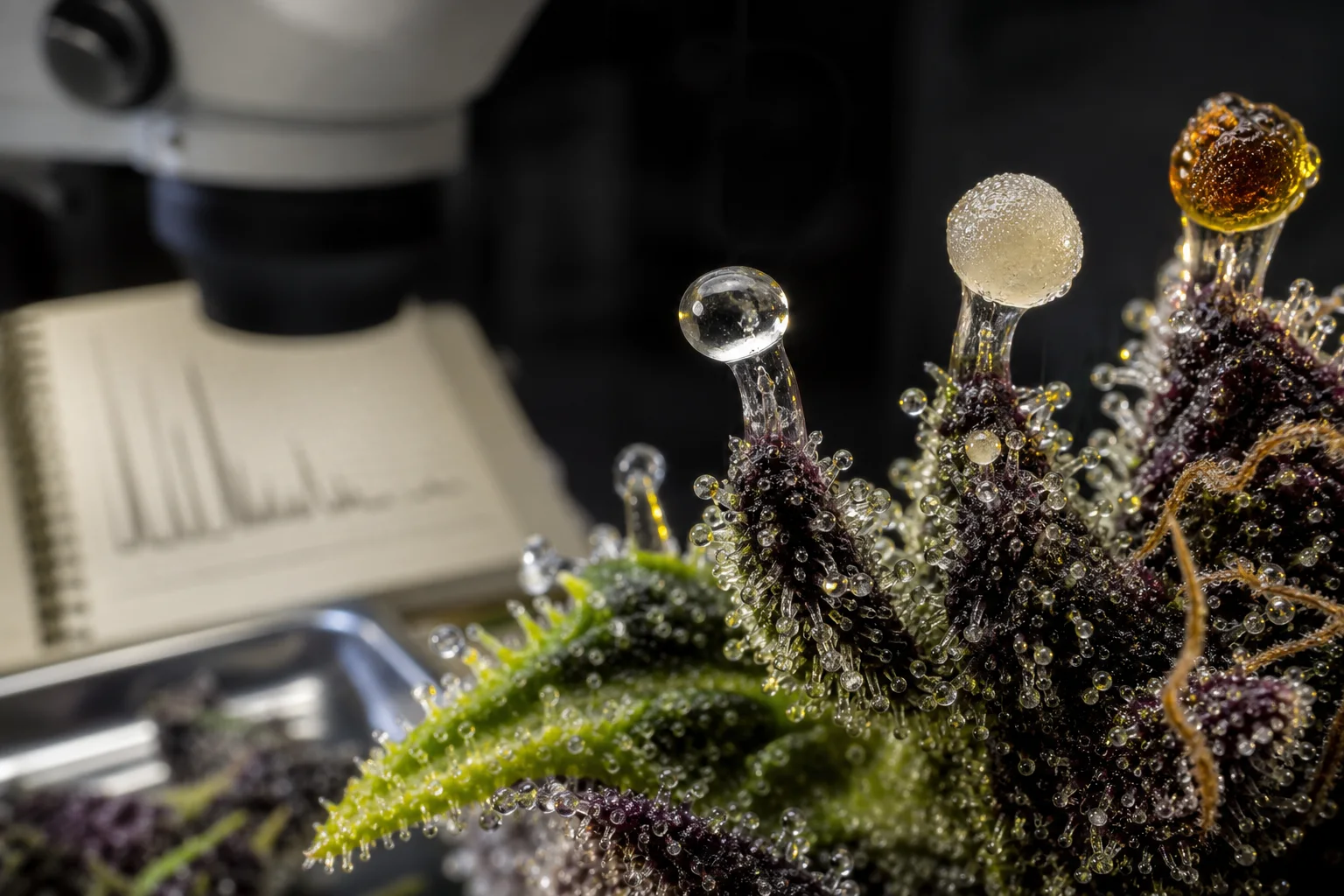
A scientific primer for growers and lab-readers on how glandular trichomes develop, why they shift from clear to milky to amber, and why color alone is not a universal harvest clock.
Every guide shows its review date and primary or official sources.
Testing & labels
How to Read a Cannabis Certificate of Analysis
A field guide to matching the batch, checking the laboratory, reading THC and contaminant results, understanding Maine’s two testing systems, and spotting what a COA cannot prove.
One name can travel through breeders, growers, selections, renames, and decades of retelling. Here is how to preserve the useful history without inventing certainty.
Cultivar, Strain, Chemovar: What the Words Can—and Cannot—Tell You
A plain-language field guide to three labels people use for cannabis identity, with room for culture, botany, and chemistry to coexist—plus a practical checklist for growers and buyers.
Cannabis Flavonoids: The Plant Chemistry Beyond Cannabinoids
Flavonoids are a diverse group of plant polyphenols present in Cannabis sativa. This article catalogs the families identified in cannabis, describes their tissue distribution and likely plant functions, summarizes the types of preclinical evidence on biological activity, and explains why chemical presence alone does not establish a human outcome.
Follow the amino acid phenylalanine step by step through the phenylpropanoid and flavonoid pathways in Cannabis sativa—what enzymes build the core flavonoid skeleton, where specialized cannflavins branch off, how tissue expression shapes the chemistry, and which parts of the story researchers still don’t agree on.
An evidence-focused guide to where cannabis flavonoids are produced and detected across plant parts and growth stages, and how to read the data without overgeneralizing across cultivars.
A technical yet practical primer for scientists, lab managers, regulators and curious cultivators that explains extraction choices, chromatographic separation, mass-spectrometric detection, calibration, limits of detection, matrix effects, and the regulatory and practical reasons flavonoids rarely appear on retail panels.
Drying, Storage, and the Cannabis Flavonoid Record
A pragmatic review of evidence on how post-harvest processes — drying, curing, storage, light, heat, and extraction — alter cannabis flavonoid chemistry, plus guidance for reading laboratory records and product claims.
A practical, research‑grade guide that teaches how to read reports about cannflavins and other cannabis flavonoids — which lab evidence translates to humans, and which does not.
A practical, research‑grade checklist that helps adult consumers and editors evaluate flavonoid claims on cannabis product copy and lab records — focusing on source provenance, batch evidence, analytical measurement, clinical language, and Maine program boundaries.
Alpha‑ and beta‑pinene are common monoterpenes that give many cannabis samples a piney top note. This article compares their chemistry and biosynthesis in Cannabis sativa, explains analytical pitfalls, surveys the experimental evidence behind memory and breathing claims, and gives practical advice for reading terpene reports and product claims.
Beta-Caryophyllene in Cannabis: Receptor Facts, Human Limits
β‑Caryophyllene (BCP) is a common sesquiterpene in cannabis and many foods. It binds the cannabinoid receptor type 2 (CB2) in preclinical models, but human evidence is limited. This article separates chemical identity, analytical measurement, preclinical biology, and the controlled-human evidence (or lack thereof), and offers practical guidance for reading terpene reports and product claims.
Linalool in Cannabis: Floral Aroma Without the Horoscope
Linalool is a common floral monoterpene found across many plants, including cannabis. This article separates plant chemistry and analytical practice from hype: where linalool comes from in the plant, how labs measure it, what preclinical studies show about its nervous‑system actions, how route alters effects, and why a lavender aroma alone cannot predict a cannabis experience.
Terpinolene is a frequently reported cannabis monoterpene with a multi-note aroma and an uncertain biosynthetic and pharmacological footprint. This review separates chemistry and measurement from interpretation and shows how to read claims with the evidence in hand.
Analytical choices — from which standards a lab buys to how a GC column resolves isomers — shape what a consumer or regulator sees. This article explains why ocimene and α‑humulene sometimes vanish from testing panels, why that’s a measurement problem more than a botanical one, and how to read lab reports with curiosity and caution.
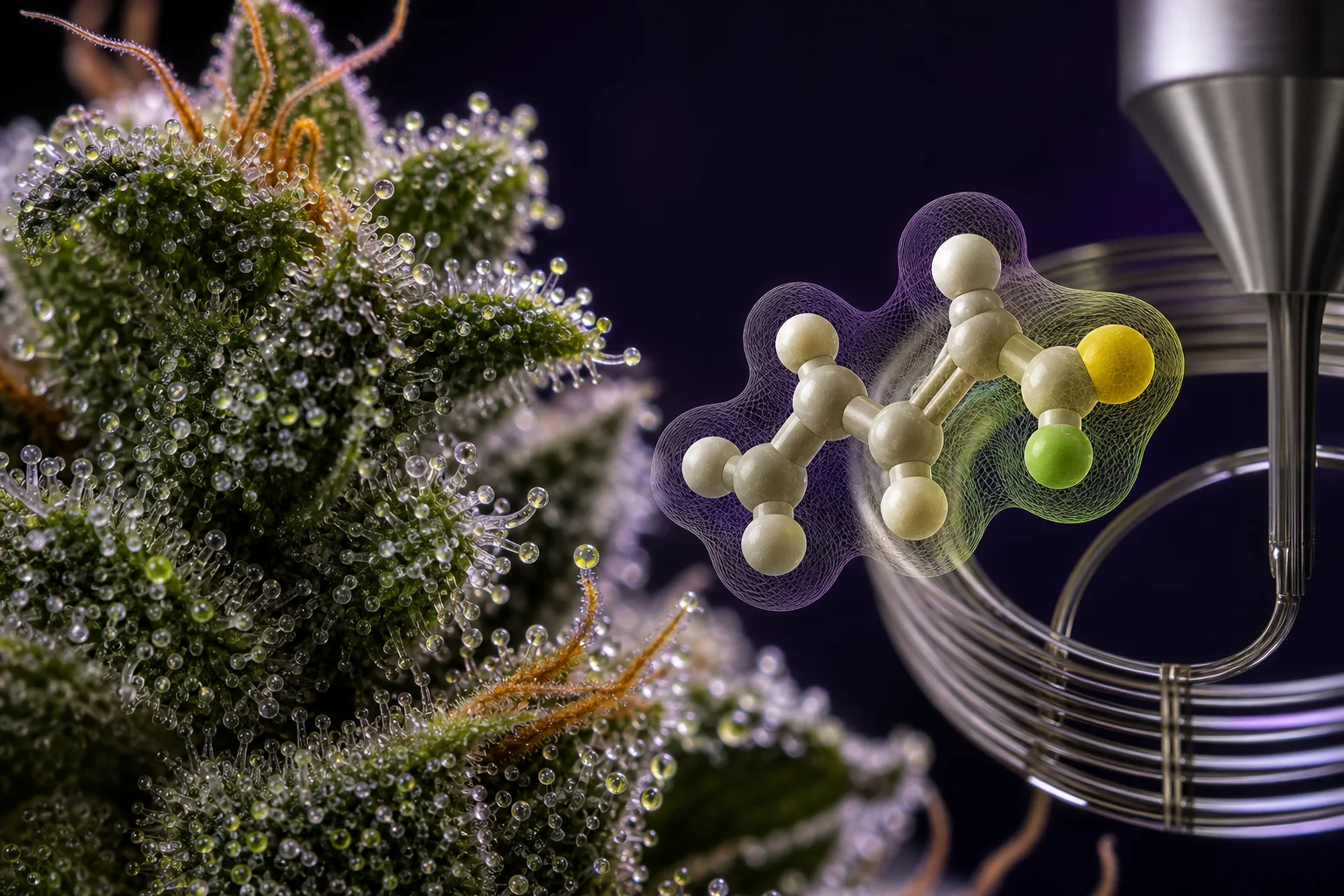
Terpenes are important to cannabis scent, but recent chemical and analytical work shows a separate family of sulfur-containing volatiles — thiols and sulfides — that can dominate skunky, garlic-like, and tropical notes even at vanishingly low concentrations.
How Drying, Curing, and Storage Change Cannabis Aroma
The bouquet you smell in a jar is largely a post‑harvest story. This review synthesizes primary studies and authoritative measurement guidance to explain how drying, curing, and storage alter the cannabis volatilome and why a strain name is not a substitute for a batch record.
A research-grade, practical guide to how cannabis glandular trichomes respond to physical and environmental stress after harvest, what the science does—and doesn’t—prove about handling and measurement, and how to read lab records with healthy skepticism.
Edible cannabis can take longer to be felt and last longer than inhaled products. Understanding digestion, product form, labels, and storage reduces accidental overconsumption and unintended exposures.
No inhaled cannabis format deserves a risk-free label. Here’s a clear, evidence-first field guide for growers, patients, and clinicians about combustion, aerosols, device integrity, and the lines of uncertainty.