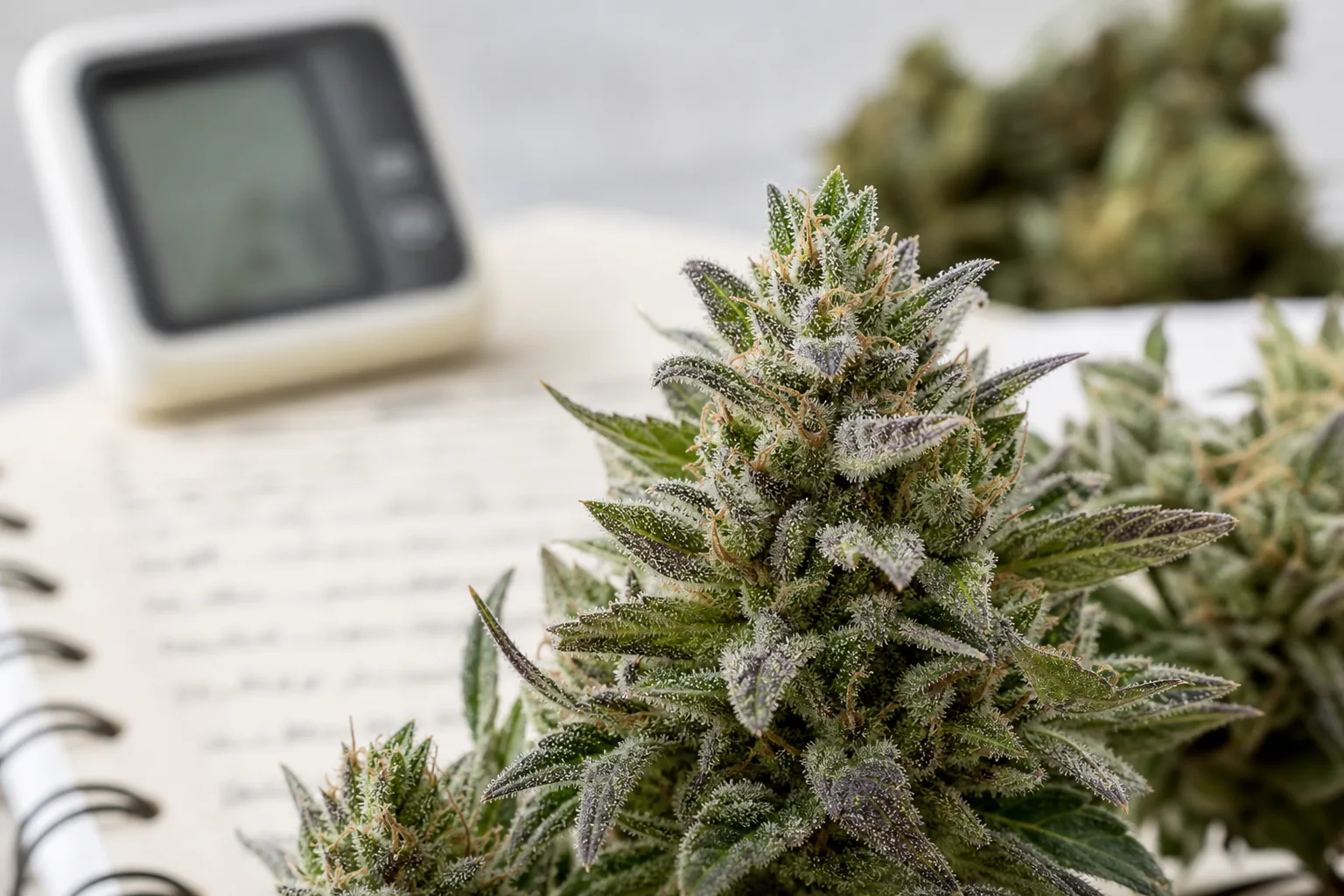
Macro botanical image linking visible trichome condition and a nearby hygrometer/harvest log: illustrates how harvest timing and immediate moisture control relate to chemistry and microbial outcomes. This image is documentary in style and does not present readable lab values; it connects the article's discussion of drying and moisture to physical evidence reported in postharvest studies. Source: peer‑reviewed postharvest drying research.
Why ask about source and freshness?
Cannabis is an agricultural product that keeps changing after it’s cut. Knowing where a sample came from, how it was handled at harvest, and how it was stored afterward helps you judge whether a label or lab report applies to the batch you hold in your hand. These are practical, evidence-focused questions—not claims about effects—but they change how much confidence you can place in a package or a Certificate of Analysis (COA). (pubmed.ncbi.nlm.nih.gov)
For adults buying in Maine it matters in two additional ways. First, Maine’s Office of Cannabis Policy (OCP) publishes consumer resources and rules that set baseline labelling and safety expectations for licensed adult-use and medical markets. Second, Title 28‑B includes specific limits on misleading labels and packaging for adult‑use sale—labels that are false, deceptive, or that target minors are prohibited. When you ask where a product came from, you’re also engaging with these rules and the licensing system. (maine.gov)
The scientific literature shows post‑harvest steps—drying, curing, storage—change cannabinoids, volatile aroma compounds, and microbial levels. That means a percentage or terpene profile printed for a batch can drift over weeks or months depending on humidity, temperature, and packaging. Asking concrete questions about those steps is the most useful way to move from marketing language to verifiable evidence. (pubmed.ncbi.nlm.nih.gov)
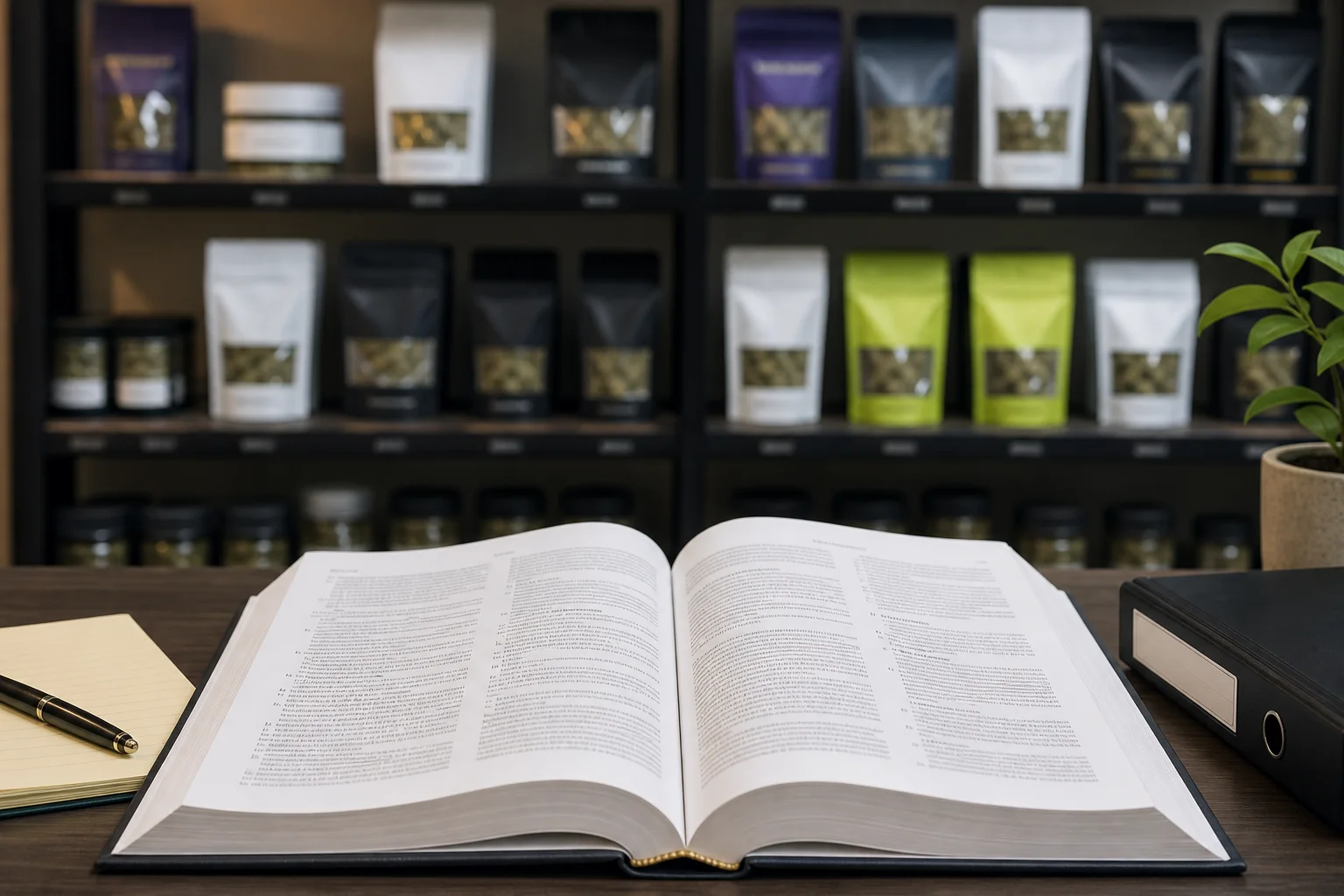
A visual tying Maine's labeling statute to the retail environment: shows legal text in the foreground and sealed, child‑resistant packages blurred behind. This links the article’s discussion of statutory labeling limits to the consumer point of sale. Limit: it illustrates context but cannot substitute for reading the law or a specific label. Source: Maine statute on labeling and OCP resources. ([legislature.maine.gov](https://www.legislature.maine.gov/legis/statutes/28-B/title28-Bsec701.html))
Research context: Maine Title 28-B §701: Labeling and packagingChecklist: Source and provenance — who, where, batch ID
Ask: Who grew this, and is there a batch or lot number? A licensed grower or processor can typically point to a harvest or batch ID that ties the packaged product to cultivation records. Batch IDs are the backbone of traceability—without them a COA or label can’t be reliably matched to the container you hold.
When a licensee can produce harvest records or a production log, verify the presence of simple, verifiable entries: harvest date, cultivar name used (not just the marketing name), and a lot or batch identifier. In Maine, licensed producers and retailers are expected to follow OCP rules and guidance around labeling and recordkeeping; consumers can ask to see or reference the batch identifier on the package and COA. (maine.gov)
If the seller cannot produce a batch ID or the ID on the package doesn’t match the COA, consider that a sign of meaningful uncertainty. A missing or mismatched batch number means you don’t have a reliable chain of custody for the sample—labels and test results become much harder to trust in that case. (Later sections explain how to check COAs without getting lost in lab jargon.)
Checklist: Harvest context — timing, drying, and curing
Ask: When was this harvested? Freshness is anchored to the harvest date. Cannabinoids and volatile compounds (the compounds that make flowers smell) shift after harvest; some studies document measurable declines over weeks to months depending on drying and storage conditions. If a grower can give you a harvest date, you can set realistic expectations for how close the sample is to the reported COA. (pubmed.ncbi.nlm.nih.gov)
Ask how the product was dried and cured. Was it hang‑dried whole, hot‑air dried, freeze‑dried, or subject to another process? Different methods change moisture quickly or slowly and can reduce microbial load to differing degrees; hot air drying, for example, can reduce moisture fast and lower yeast and mold counts in some experimental settings. Those post‑harvest choices change both safety indicators and sensory chemistry. (pubmed.ncbi.nlm.nih.gov)
Ask whether curing occurred and how (sealed glass, Mylar, vacuum). Curing is not just a marketing word—how long and in what environment flowers are cured affects final moisture equilibrium and the volatility of terpenes. If the grower or retailer cannot describe a basic post‑harvest workflow, you’ve identified a useful gap to factor into your decision-making.
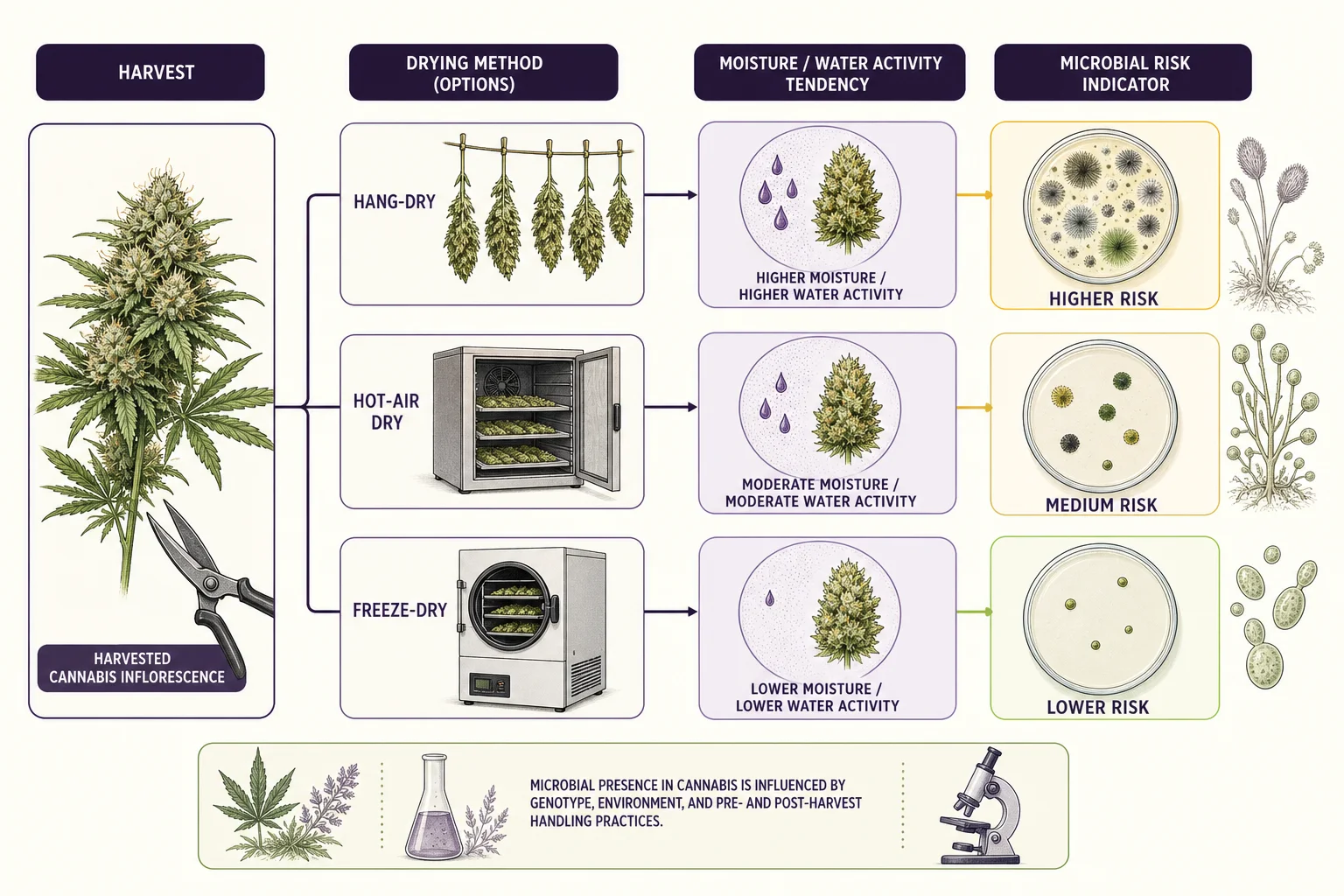
An evidence diagram connecting drying method, moisture/water activity, and yeast & mold risk—based on postharvest and microbial studies. The diagram is explanatory only and intentionally omits numeric values to avoid misrepresenting specific limits across jurisdictions. Limit: simplifies complex lab findings; consult original studies for full data. Source: peer‑reviewed research on drying and microbial levels. ([pubmed.ncbi.nlm.nih.gov](https://pubmed.ncbi.nlm.nih.gov/37383630/))
Research context: Total yeast and mold levels in high THC‑containing cannabis inflorescences are influenced by genotype, environment, and pre‑and post‑harvest handling practicesChecklist: Storage and packaging — what keeps a batch stable
Ask: How was this packaged and when? Packaging choices (child‑resistant, opaque, barrier‑film vs. glass) and the time between packaging and now are practical determinants of freshness. Glass is generally more inert for preserving volatile profiles; certain plastics may allow slow losses. Lab studies indicate storage in glass preserves volatile profiles better than some plastics under the same conditions. (pubmed.ncbi.nlm.nih.gov)
Ask: What were the storage conditions before sale—temperature, humidity, light exposure? Warmth and light speed chemical changes in botanicals. If product sat on a sunny shelf for months or went through repeated temperature swings during transport, expect more chemical drift than for product kept cool, dark, and in sealed containers.
Ask about reseal evidence and tamper controls. Child‑resistant and tamper‑evident packaging is required for adult‑use sales in Maine and is intended to both protect consumers and to indicate whether a package has been opened since packaging. If a package’s tamper evidence is broken, consider label claims uncertain and factor that into your choice, such as selecting an intact package. (legislature.maine.gov)
Checklist: Lab testing, COAs, and what tests really tell you
Ask for a Certificate of Analysis (COA) that matches the batch ID on the package. A COA should state the sample ID, the lab that tested it, the date sampled, and the date tested. Without a sample or batch ID match, the COA is not reliably connected to the product on the shelf. Start here before you try to interpret cannabinoid or contaminant numbers.
Ask which tests were run and which lab did them. Labs vary in methods, limits of detection, and reporting format. The FDA and other reviewers have documented variability and labeling inaccuracy for some unregulated cannabinoid products; even in regulated markets, inter‑lab variability and methodological differences mean COAs are helpful but rarely perfect proof of a single packet’s exact content. Use COAs as evidence that specific hazards (pesticides, microbial impurities, heavy metals, solvents) were at least measured in that batch—not as proof of absolute purity. (fda.gov)
Ask the seller whether the sample on the shelf was taken for the COA or whether COA sampling occurred earlier in the cleaning/processing chain. Sampling point matters: a COA from a bulk processing tank or an earlier interim sample may not represent the final packaged unit. When in doubt, prefer COAs that explicitly tie a tested sample ID to the final package’s batch or lot ID.
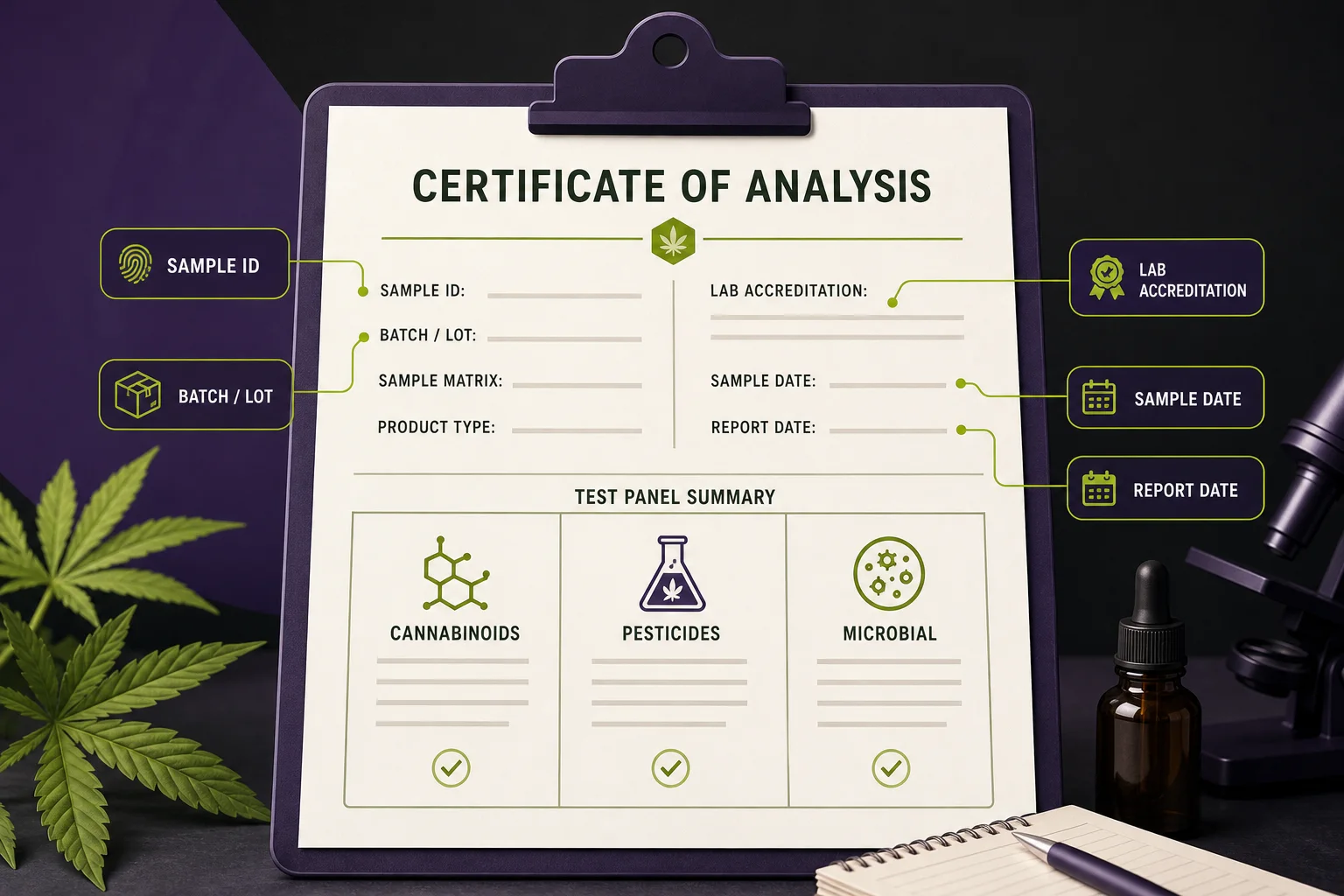
A neutral schematic of a COA that shows where sample ID, lab name, sample date, and test categories (cannabinoids, pesticides, microbes) appear—intended to teach readers how to check that a COA matches a package without showing or implying specific values. Limit: an illustrative COA does not replace reviewing the actual lab report. Source: FDA documentation on testing and label variability.
Research context: What You Need to Know (And What We’re Working to Find Out) About Products Containing Cannabis or Cannabis‑derived Compounds, Including CBDDealing with uncertainty: How to ask, what to accept, and next steps
Be explicit: ask the retailer or grower to show you the batch number and the COA (or the COA reference if it’s posted online). If they can’t, choosing not to purchase that package is a reasonable response—uncertainty about provenance is real and solvable by traceability. Maine’s OCP materials encourage consumers to use available resources and ask questions about labeling and testing; licensed sellers are part of that system. (maine.gov)
When evidence is partial, rank risks practically. If the main concern is microbial contamination (for example, for people who store product long-term or who are around immunocompromised household members), ask whether yeast & mold testing was performed and what the acceptance limit was. Different jurisdictions set different microbial limits; scientific reviews show that moisture and drying practices are strong drivers of yeast & mold counts. If a seller can’t answer, consider microbial risk uncertain. (pubmed.ncbi.nlm.nih.gov)
For home storage: reseal the package, keep product cool, dark, and dry, and keep packages out of reach of children and pets. Poison Control and public health guidance emphasize that edibles and improperly stored products pose an accidental‑ingestion hazard, especially to children; secure, child‑resistant storage is both a law and a commonly recommended safety practice. (poison.org)
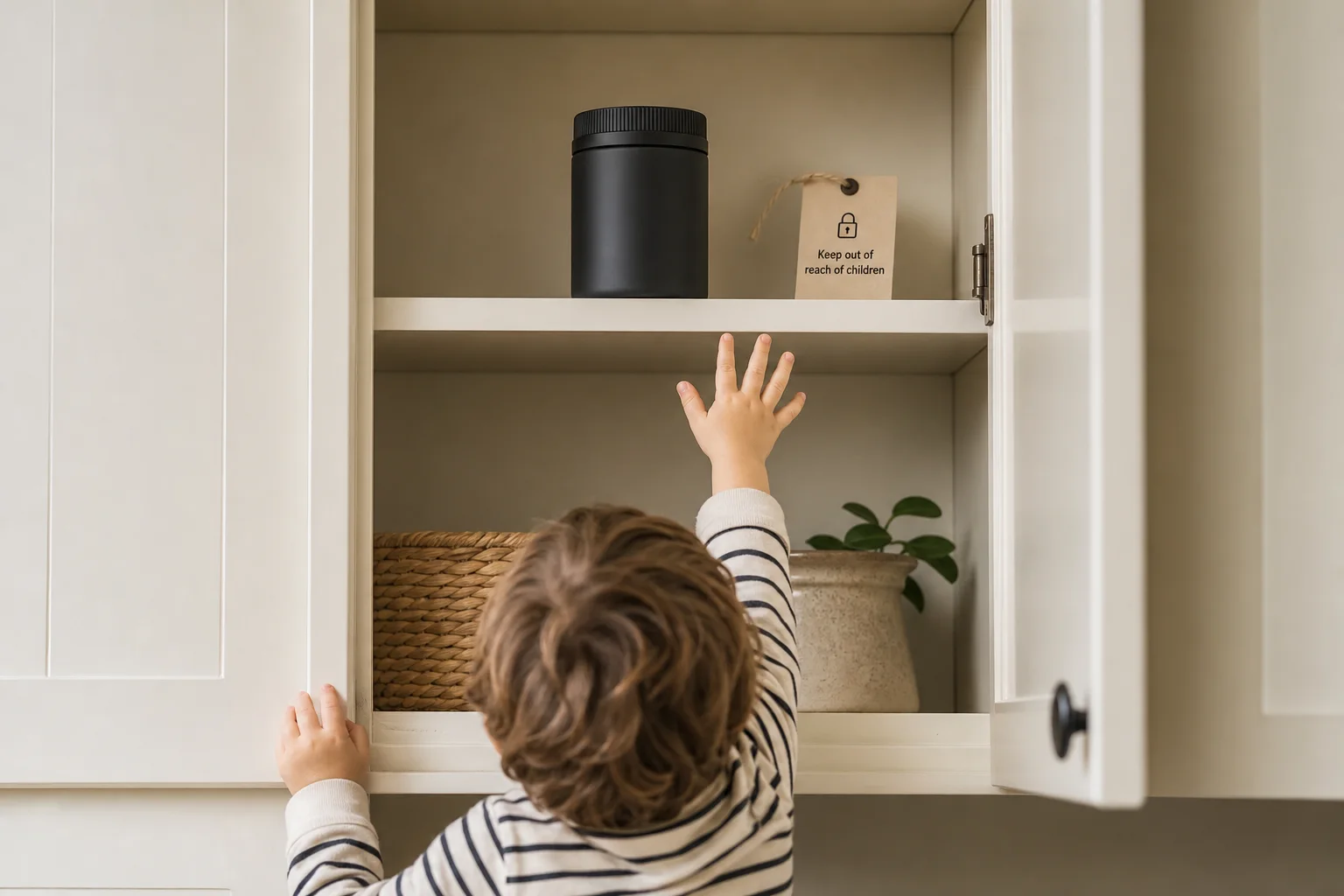
A practical storage illustration tied to Poison Control guidance: shows safe placement and opaque, child‑resistant containers. It teaches storage habits discussed in the article without showing product branding or edible packaging that could be attractive to children. Limit: a storage illustration cannot prevent all accidental ingestions; follow local guidance and poison center recommendations. Source: Poison Control education on pediatric edible exposure risks.
Research context: My child ate a cannabis edibleEvidence limits and how to read them honestly
What we can say with confidence: harvest timing, drying, curing, storage, and packaging materially influence measurable chemistry and microbial counts, and good recordkeeping (batch IDs, COAs) is the main tool for moving from advertising to evidence. Peer‑reviewed studies show measurable shifts in cannabinoids and the volatilome after different drying and storage methods. (pubmed.ncbi.nlm.nih.gov)
What we can’t say for an individual package without traceability: that a printed percentage or terpene list exactly matches the handful of flowers you’re holding today. Inter‑lab variation, sampling differences, and post‑sampling storage all introduce uncertainty. Regulatory labeling and COAs reduce—but do not eliminate—those uncertainties. The FDA has repeatedly noted variability in testing and label claims for non‑regulated products; even in regulated markets, vigilance and record linkage matter. (fda.gov)
Maine medical vs. adult‑use note: Maine operates both a medical program and an adult‑use program; they are not identical. Medical patients often rely on different distribution channels and may have different expectations about product continuity; adult‑use labeling and packaging rules include explicit restrictions to avoid targeting minors. Ask sellers which program the product was produced under and whether records separate medical and adult‑use batches. OCP materials explain these program distinctions and what consumers can expect. (maine.gov)
Practical conversation scripts you can use
"Can you show me the batch/lot number and the matching COA for this package?"
"When was this harvested and packaged, and what drying/curing method did you use?"
"Which lab tested this sample, what tests were run, and where was the sample taken from (final packaged unit or bulk)?"
These short questions focus on verifiable facts and reduce the need to interpret percentages or aroma claims on the spot. If a seller or grower can answer them, you’ll leave with usable evidence; if they can’t, you’ve identified meaningful uncertainty.
Key takeaways
- Ask for a batch/lot ID and a matching COA before trusting label claims. (pubmed.ncbi.nlm.nih.gov)
- Harvest date and drying/curing method strongly influence freshness and microbial risk. (pubmed.ncbi.nlm.nih.gov)
- Packaging and storage (temperature, light, humidity) drive chemical drift; glass preserves volatiles better than some plastics. (pubmed.ncbi.nlm.nih.gov)
- Labs differ; a COA is evidence but not absolute proof of a single package’s content. (fda.gov)
- Keep products child‑resistant and out of reach; Poison Control resources show accidental edible exposures are a real hazard. (poison.org)
FAQs
Q: If a package lists a THC percent, how much should I trust that number?
A: Trust it as a useful measurement tied to a tested sample—but only as far as the sample ID and test date match your package. Chemical percentages can drift with time and storage; a COA linked to the package reduces but does not erase uncertainty. (pubmed.ncbi.nlm.nih.gov)
Q: What if the seller says the COA is "for reference" but won’t show a batch number?
A: "For reference" without a batch ID means the COA cannot be confidently matched to your package. That’s a reasonable reason to pause; the COA may reflect a different lot or an earlier production stage. Ask for the lot ID again or choose a package with verifiable traceability. (maine.gov)
Q: Does glass packaging make cannabis "safer"?
A: Glass is a more inert barrier for preserving volatile compounds and reducing aroma loss; it can help preserve freshness. Safety (microbial, pesticides) depends more on drying, storage conditions, and original cultivation practices than on the container alone. (pubmed.ncbi.nlm.nih.gov)
Q: Are COAs standardized across labs?
A: Not fully. Labs use different methods and report formats, and inter‑lab variability exists. A reputable lab, clear sampling notes, and a matching sample ID increase the utility of a COA, but they do not guarantee identical numbers across every lab. (fda.gov)
Q: How long after harvest is cannabis "fresh"?
A: There is no single cutoff. Volatile compounds and some cannabinoids change measurably within weeks to months depending on drying and storage. A harvest date and clear storage history help you judge how much drift likely occurred. (pubmed.ncbi.nlm.nih.gov)
Q: Who do I contact if I suspect a labeling or safety problem?
A: For licensed products in Maine, contact the Office of Cannabis Policy consumer resources or use the reporting channels they provide. If there’s an immediate poisoning concern, contact Poison Control at 1‑800‑222‑1222. (maine.gov)
Questions this guide answers
If a package lists a THC percent, how much should I trust that number?
Trust it as a useful measurement tied to a tested sample—but only when the COA and package share a matching batch ID and recent test date. Percentages can change with storage and handling; a COA reduces but does not eliminate uncertainty. ([pubmed.ncbi.nlm.nih.gov](https://pubmed.ncbi.nlm.nih.gov/36004888/))
What if the seller won’t show a batch number?
A missing or mismatched batch number breaks the chain of custody. Without it, the COA can’t be reliably linked to your package—ask again or choose a product with verifiable traceability. ([maine.gov](https://www.maine.gov/dafs/ocp/resources/faq))
Does glass packaging make cannabis safer?
Glass better preserves volatile profiles but does not by itself guarantee safety. Microbial and pesticide safety depend more on cultivation, drying, and testing practices than on container choice. ([pubmed.ncbi.nlm.nih.gov](https://pubmed.ncbi.nlm.nih.gov/38702447/))
How can I reduce accidental ingestion risks at home?
Store all cannabis in child‑resistant, clearly labelled containers out of reach of children and pets. Poison Control emphasizes that edibles can look like snacks and are common sources of accidental exposure. ([poison.org](https://www.poison.org/articles/my-child-ate-a-cannabis-edible))
Where do I report a labeling or safety problem in Maine?
Start with Maine's Office of Cannabis Policy consumer resources for guidance and reporting; for urgent poisoning concerns contact Poison Control at 1‑800‑222‑1222. ([maine.gov](https://www.maine.gov/dafs/ocp/resources/faq))
Educational information only. Cannabis affects people differently and this is not medical advice.