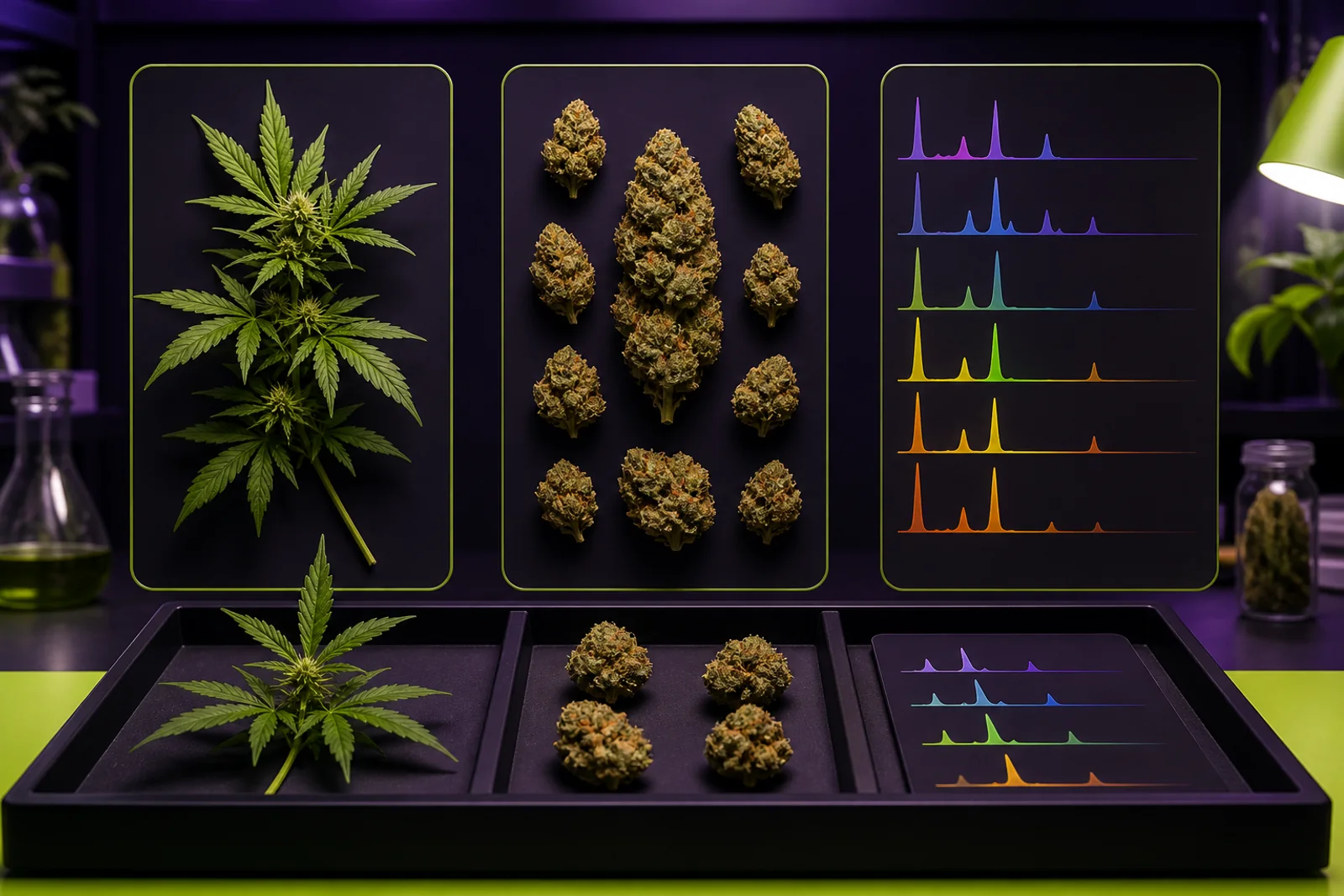
Three different classification lenses make the distinctions among cultivar, strain, and chemovar visible without reducing them to interchangeable labels.
Mainezilla original editorial visual · AI-assisted art directionWhy these three words exist (and why they bicker)
People who work with cannabis—breeders, growers, dispensary staff, and consumers—use a handful of different words to name the plant material they sell, grow, or learn from. “Strain” is the word most folks recognize; it’s the public, social label that moves through a marketplace and culture. Plant scientists and formal plant-breeders more often use “cultivar” to mean a cultivated variety or an intentionally selected genetic line. “Chemovar” is a newer term that groups plants by their chemical fingerprint rather than by pedigree or a trade name.
Each word answers a different question. Cultivar answers “what bred line or selection was chosen?” Strain answers “what name did people give this thing?” Chemovar answers “what did testing find that’s actually in this batch?” The confusion starts when these answers are treated like synonyms—when a name is read as an immutable genetic fact or a single lab result is read as a permanent identity.
Science supports that confusion: genetics control which biosynthetic enzymes a plant can express, and those enzymes strongly influence terpene and cannabinoid output, but genes are just part of the story. Environment, cultivation practices, and developmental timing change how those genes are expressed, so the chemistry that matters to consumers can shift even within the same cultivar or strain name. In short: names travel; genes and chemistry interact; testing captures only a slice in time. (Evidence: genetic and biochemistry studies on terpene synthase and cannabinoid/terpenoid networks.)
Plain-language definitions that actually help
Cultivar: a cultivated variety or selection. If you hear the word in a grow room, it usually means someone selected a mother or line for consistent traits—flower form, flavor, growth habit—and then propagated that line. Think of it as the breeder’s or grower’s claim: “this genetic line behaves like this under our conditions.” The botanical expectation is repeatability in genetics, not guaranteed chemistry across every environment.
Strain: the colloquial, marketplace name. “Strain” is sticky cultural language—it carries history, anecdotes, and a reputation that can be useful for shoppers and growers. But it is heavily influenced by marketing, informal naming, and the messy reality of shared cuttings and renaming. Strain names can drift, be reused, or be applied unevenly across genetic material, so they are less reliable as strict scientific identifiers.
Chemovar: a chemical variety based on measured phytochemistry—typically levels of cannabinoids and terpenes. A chemovar groups samples that share a similar chemical fingerprint. This term is useful when you want to talk about what’s in the jar or batch right now, because it centers actual measurements. But chemovars require transparent, recent testing and careful sampling to be meaningful.
Why genes aren’t the whole story: environment and expression matter
Genetics set the blueprint—the plant’s ability to make particular terpenes and cannabinoids depends on the presence, number, and variants of specific synthase genes. Studies that compare genetic markers to terpene profiles find associations between labeling and variation in terpene synthase arrays, which helps explain why some named lines tend to smell or taste similar. But genetic differences do not always translate into fixed chemistry in every growing situation.
Environment and management—light, nutrients, root health, temperature, drying and curing—alter gene expression and secondary metabolite accumulation. An identical clone grown under two different light schedules or nutrient regimens can produce measurably different terpene ratios and potency. That interaction (the classic G×E problem: genotype by environment) is why a cultivar can look, smell, or test differently depending on where and how it was grown.
For growers and lab partners this means two practical truths: (1) genetics predict potential and limits, not exact current chemistry; (2) a reliable chemical profile needs consistent cultivation practices plus representative sampling and testing. Use genetics to choose what to try; use chemistry to certify what you sold. (Evidence: gene network and terpene synthase studies.)
What a label can—and cannot—promise in Maine’s regulatory context
Maine’s Adult Use Cannabis law and the Office of Cannabis Policy (OCP) require testing and set labeling and packaging rules that affect what a consumer can reasonably expect from a retail packet. The law requires a label identity statement, universal symbol, license numbers, and safety warnings; mandatory testing covers contaminants and potency/cannabinoid profiles. That legal architecture makes Certificates of Analysis (COAs) and batch records central to any trustworthy claim about chemistry or safety.
A label can honestly say who produced the flower, what the batch is, and present the COA results tied to that batch. What it cannot promise is that the same name sold next month or from a different producer will deliver the identical chemistry or experience—because testing is batch-specific and cultivars express based on environment. Maine’s system requires mandatory testing for analytes including THC potency and cannabinoid profiles, but that testing only reflects the specific sample(s) pulled for that batch and moment in time.
Because testing is mandatory before sale, a COA is the best available chemical snapshot for a retail item in Maine. Still, COA practices (sample size, where the sample came from in the lot, and lab methodology) drive how representative that snapshot is. Careful sampling, transparent chain-of-custody, and clear label-to-COA linkage are the real consumer protections—more so than the label name alone. (Evidence: Maine OCP testing data, labeling statute, and best-practice guidance.)
A grower’s field record: what to save so your work survives naming debates
Names change, but records don’t need to. Build a stack of information that ties identity, genetics, and chemistry together. At minimum keep: the familiar name and any known aliases; the breeder/credit; the selection or phenotype code (e.g., “pheno A”); mother and father IDs if available; propagation method (clone, seed, feminized seed); lot or batch numbers; harvest date; drying and curing notes; and the COA number(s) with sampling metadata.
Also save environmental metadata that matters to chemistry: light schedule/intensity, nutrient program, growth medium, and any abiotic stresses or pest treatments. Those cultivation notes are the difference between “this plant was called X” and “this plant produced Y terpene ratio under these conditions,” which is what you actually want when you compare years or sites.
Make COAs part of the record, and store them with the batch ID and chain-of-custody notes. Maine’s testing rules and OCP guidance emphasize reporting mandatory test results and linking them to product records; adopting those practices voluntarily, even for non-regulated batches, makes your catalog useful for future comparison and for answering consumer questions without having to guess. (Evidence: OCP best practice guide and testing data guidance.)
Using the words in practice: honest naming that respects culture and science
If you’re talking to other growers or writing labels, choose the word that clarifies your claim. Use cultivar when you mean a selected genetic line you maintain and can reproduce. Use strain if you’re acknowledging marketplace names and reputation but want to flag the name as socially, not strictly scientifically, defined. Use chemovar when you’re pointing to a measured chemical profile and you can point to a recent COA.
Language is rhetorical; it affects expectations. Saying “cultivar” tells a knowledgeable listener you’re claiming genetic consistency. Saying “chemovar” tells a shopper you’re leaning on chemistry to describe the package. Saying “strain” connects to tradition and consumer memory—useful, but pair it with a batch COA or phrase like “strain name; chemistry may vary.” That small clarification prevents a label from carrying more certainty than it deserves.
Remember: accuracy trumps pedantry. It’s not about policing vocabulary; it’s about stopping a word from promising more than the data supports. Be explicit on labels and menus—if the chemical info is batch-specific, say so. If the name is an informal market name, note its provenance if you can (breeder, source, or origin). Plain honesty is the best branding you can give a small-batch product.
Quick lab-and-sample guide for growers and retail staff
Know what a COA answers and what it doesn’t. A COA reports what the lab measured in the submitted sample: cannabinoids, terpene panel (if performed), and any pass/fail contaminant results required by law. It does not prove that every nug in the jar is chemically identical—only that the tested sample matched the reported results within the lab’s methods and the sample’s representativeness.
Sampling matters more than many growers assume. Representative sampling (taking pieces from multiple places in the lot, documenting sample weight and container handling, and preserving chain of custody) improves the COA’s relevance. Maine’s OCP rules and best-practice guidance explain the required analyte categories, sample handling expectations, and how labs report results—use those documents to design your sampling and labeling workflow.
When you read a COA, check the sample ID against your batch ID, note the sample date versus the sale date, and look for the methods used for cannabinoids and terpenes. If a label leans on a chemovar claim, the COA should be recent, tied to the lot, and list the analytes that justify the classification. If the COA is absent or dated, treat any chemovar claim as provisional.
A short practical checklist for your next harvest
Before you name anything for sale, assemble this minimal record: familiar name and aliases; cultivar/selection code; mother ID and propagation method; harvest date; batch/lot ID; COA number plus link to the file; and a brief cultivation summary (light, feed, drying/curing approach). Keep this record with the package so retail staff can answer common questions without guessing.
For consumer-facing labels add a single line explaining limits—e.g., “Named: [strain]. Chemistry shown is for this batch’s COA dated [MM/DD/YYYY]. Chemistry may vary between batches.” That’s short, useful, and aligns with Maine’s labeling and testing expectations.
Finally: when you trade cuttings, note provenance in the record. A cutting’s name is only as valuable as the provenance that supports it. Preserve breeder credits and known histories; names are cultural capital, and documentation turns cultural capital into usable data for future comparison.
Closing note: map your claims to the evidence
Words are tools, not verdicts. Use cultivar to indicate a breeding claim, strain to honor marketplace language while flagging limits, and chemovar when you can point to a recent, representative COA. Keep records that tie names to genetics, cultivation, and chemistry—those records are what survive the inevitable name drift and the inevitable differences between grow sites.
When in doubt, show the COA and the sample metadata. Consumers and partner businesses don’t need marketing—they need an accountable trail from seed or clone to shelf. That trail is both good practice and the kind of transparency Maine’s OCP rules are designed to encourage.
We wrote this guide from the perspective of people who actually grow cannabis: we like memorable names as much as anyone, but we also know a name without a record is a story without a map. Keep the story. Keep the map. Label honestly so the next grower, the next buyer, and the next season can learn from what you did.
Questions this guide answers
Is a strain the same thing as a cultivar?
Not necessarily. ‘Strain’ is the informal, marketplace name and carries cultural meaning; ‘cultivar’ is a botanical term for a cultivated selection with an expectation of genetic continuity. Use ‘cultivar’ when you are claiming a repeatable genetic line; use ‘strain’ when you reference common usage or reputation.
Can a chemovar predict how a product will affect me?
A chemovar describes measured chemistry (cannabinoids and terpenes) for a specific batch. Chemistry can inform expectations, but it does not guarantee individual effects. Effects depend on dose, route, individual biology, and context. Avoid treating chemovar as a clinical promise.
If a label names a strain, can I trust that every jar with that name will test the same?
No. The same name can be applied across different genetics or cultivation regimes. Only a batch-specific COA tied to a clear sample ID assures you of the measured chemistry for that package.
What should I look for on a COA to check representativeness?
Match the COA sample ID to the package’s batch ID, check the sample date versus sale date, note which cannabinoids and terpenes were reported, and review the lab methods. Also look for sampling metadata (how the sample was taken) when available; representative sampling improves relevance.
Does Maine require testing before cannabis is sold?
Yes. Maine’s Adult Use Cannabis statutes and OCP rules require mandatory testing for analytes including contaminants and cannabinoid potency before adult-use cannabis can be sold. Test results are reported to licensees and OCP and are the legal basis for COAs.
Educational information only. This guide is not medical or legal advice and does not recommend a product, dose, treatment, or outcome.