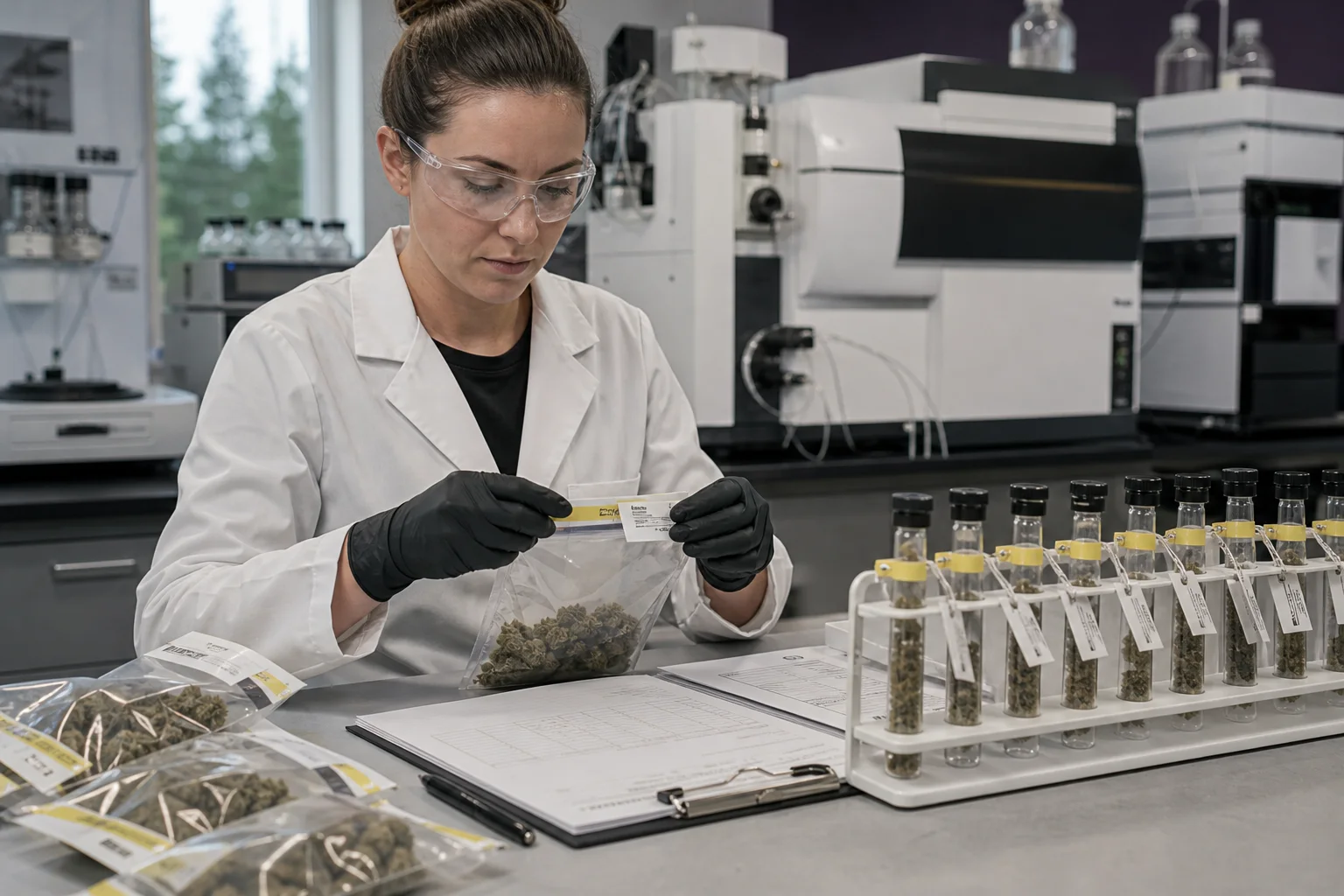
Documentary lab shot: shows the real point where adult‑use mandatory testing begins. This image emphasizes sample intake, chain‑of‑custody labels, and sealed sample handling — items referenced in OCP testing guidance and the COA workflow. Does not show readable COA values or identifiable patient information. Source materials describe the certified labs and testing processes used in Maine.
Why this matters right now
Maine operates two separate cannabis systems: a medical‑use program and an adult‑use (recreational) program. Those program identities aren’t just bureaucratic labels — they shape who can sell and buy what, whether a product must be lab‑tested before it reaches a shelf, how traceability and recalls work, and what information shows up on the label and Certificate of Analysis (COA). This article maps the participants and processes, explains the testing and labeling differences in plain language, and points to questions that growers, registered qualifying patients, and curious adults may consider asking when source and safety matter. (www1.maine.gov)
1) Two programs, two legal identities — a short map
Maine keeps medical and adult‑use cannabis as distinct programs. The medical program is governed by its own statutes and rules that recognize registered qualifying patients, caregivers, and registered dispensaries; the adult‑use program runs through a separate licensing and regulatory track with licensed cultivators, manufacturers, testing facilities, and stores. That separation matters because the rules that follow from each identity — especially around required testing, labeling, and who may sell to whom — are different. (maine.gov)
Practically: a flower or edible sold through the adult‑use retail system is required to pass mandatory testing and be accompanied by a COA (or COA data), whereas medical program materials are not subject to the same blanket mandatory testing requirements; some medical suppliers voluntarily test, and OCP may sample during investigations or for verification. If you’re a grower or a registered qualifying patient, knowing which program a product was produced and moved through changes what questions are reasonable to ask. (maine.gov)
Where both programs meet: the Office of Cannabis Policy (OCP) still oversees both tracks and publishes guidance, data, and the lists of certified testing labs — but the regulatory duties differ depending on whether the product was produced for medical or adult‑use sale. This is why seeing the program identity printed on a package is a first, useful piece of evidence about how that product was handled before it reached you. (www1.maine.gov)
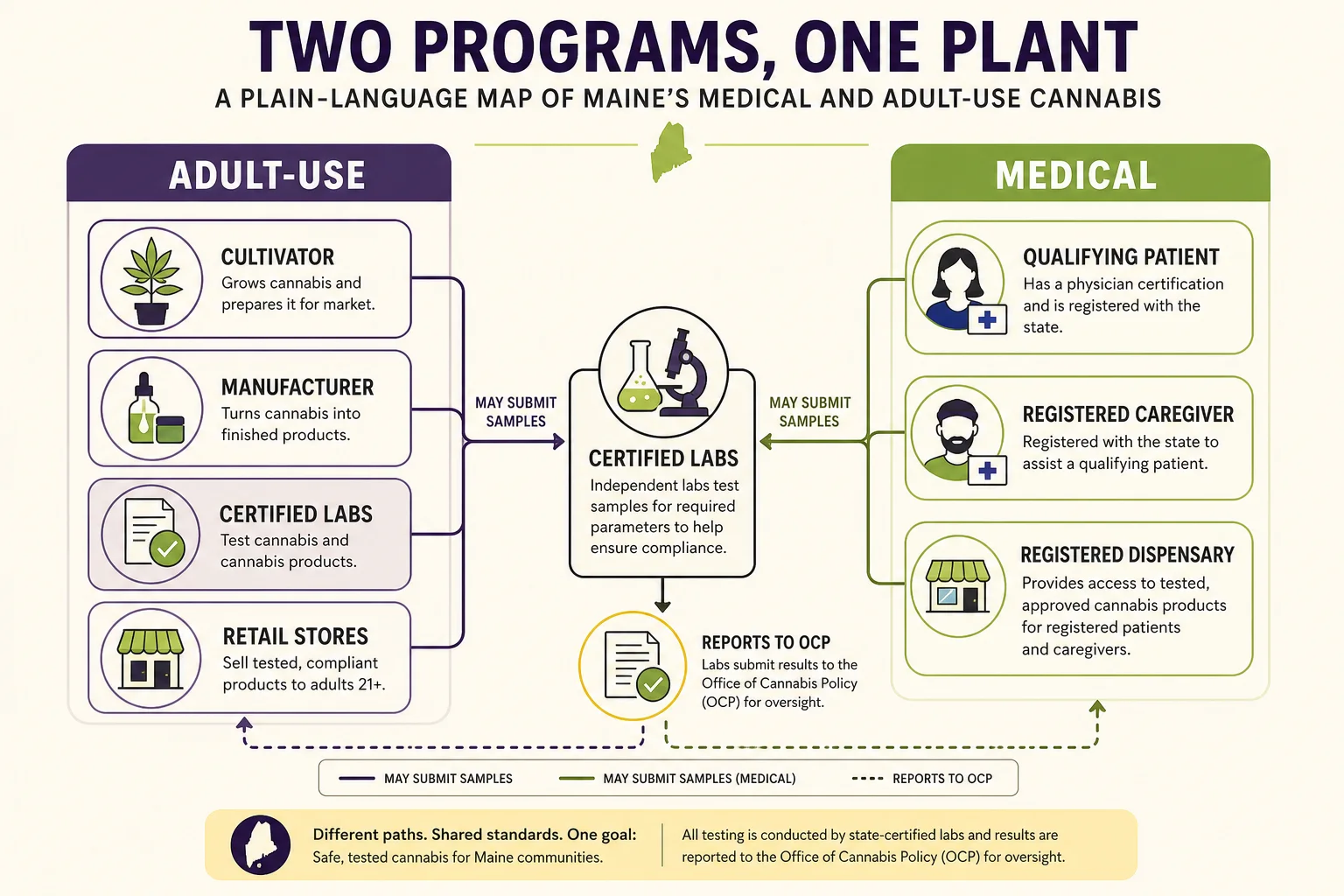
Participant map: an explanatory diagram that lays out licensed cultivators, manufacturers, certified testing labs, retail stores, registered caregivers, and qualifying patients — and which program each typically participates in. This teaches program differences and pathway options without implying causal outcomes. It is based on OCP program descriptions and statutes. ([www1.maine.gov](https://www1.maine.gov/dafs/ocp/open-data/adult-use/testing-data))
Research context:2) Who’s in the room: participants and pathways
Participants in Maine’s adult‑use track include licensed cultivators (growers), manufacturers (extractors and processors), licensed testing facilities certified by the Maine CDC (to run mandatory tests), licensed retail stores (cannabis stores), and OCP as the regulator collecting data and publishing rules and results. In the medical track the primary participants are qualifying patients, registered caregivers, and registered dispensaries. While testing labs can accept medical samples for certain services, the chain of mandatory testing and electronic data reporting that applies to adult‑use licensees does not automatically apply to medical product movement in the same way. (www1.maine.gov)
Pathways differ too. Adult‑use product is required to be batch‑tracked in Metrc (Maine’s inventory system) from cultivation through retail, and mandatory test results are reported to OCP by the testing lab as electronic data deliverables (EDDs) and COAs; those EDDs are the basis for OCP’s public testing data. In the medical track, caregivers and registered dispensaries have different inventory and dispensing rules and are not required to submit the same mandatory test EDDs for every item offered to patients. The difference changes what information is likely to be available simply by scanning a label or requesting a COA. (www1.maine.gov)
If you grow: those pathways affect business choices. A small‑batch grower deciding to sell into adult‑use retail is required to use certified labs, meet mandatory analyte lists, and accept the recordkeeping burden that comes with retail testing. Selling into the medical channel may not require the same mandatory testing, but voluntary testing is still a strong traceability and quality signal for customers. (maine.gov)
3) Testing: what’s mandatory for adult use, and what “voluntary” means for medical
For adult‑use sale in Maine, the law and OCP rules require mandatory testing across several analyte categories: residual solvents, heavy metals, dangerous yeasts/molds (and certain mycotoxins), harmful microbes (e.g., E. coli, Salmonella), pesticides, and THC potency/homogeneity/cannabinoid profile. Labs certified by the Maine CDC perform those tests and are required to report initial test results to the licensee and OCP within two business days as a COA and EDD. Those requirements are what make the adult‑use COA a predictable and comparable data product. (www1.maine.gov)
Medical program products are not subject to the same blanket mandatory contaminant testing before sale. Some registered dispensaries and caregivers voluntarily submit medical items for analysis (potency and contaminants) and produce COAs; others do not. OCP’s consumer materials explicitly advise registered qualifying patients to inquire whether a medical product was tested and to request the COA if available. That voluntary/mandatory difference is not a value judgment — it’s a procedural fact that changes the default evidence one can expect to find on a package. (maine.gov)
Important nuance: mandatory testing focuses on pass/fail thresholds for categories of contaminants with action limits defined in rule. A pass does not mean “sterile” or “zero exposure risk,” and a COA describes the test scope and result type. Labs use validated instrumental methods (ICP‑MS for metals, LC‑MS/MS or GC‑MS/MS for pesticides and mycotoxins, headspace or GC methods for solvents), and method sensitivity or matrix effects can vary. This scientific variability is why a COA needs context from the lab method and the sample matrix. (pubmed.ncbi.nlm.nih.gov)
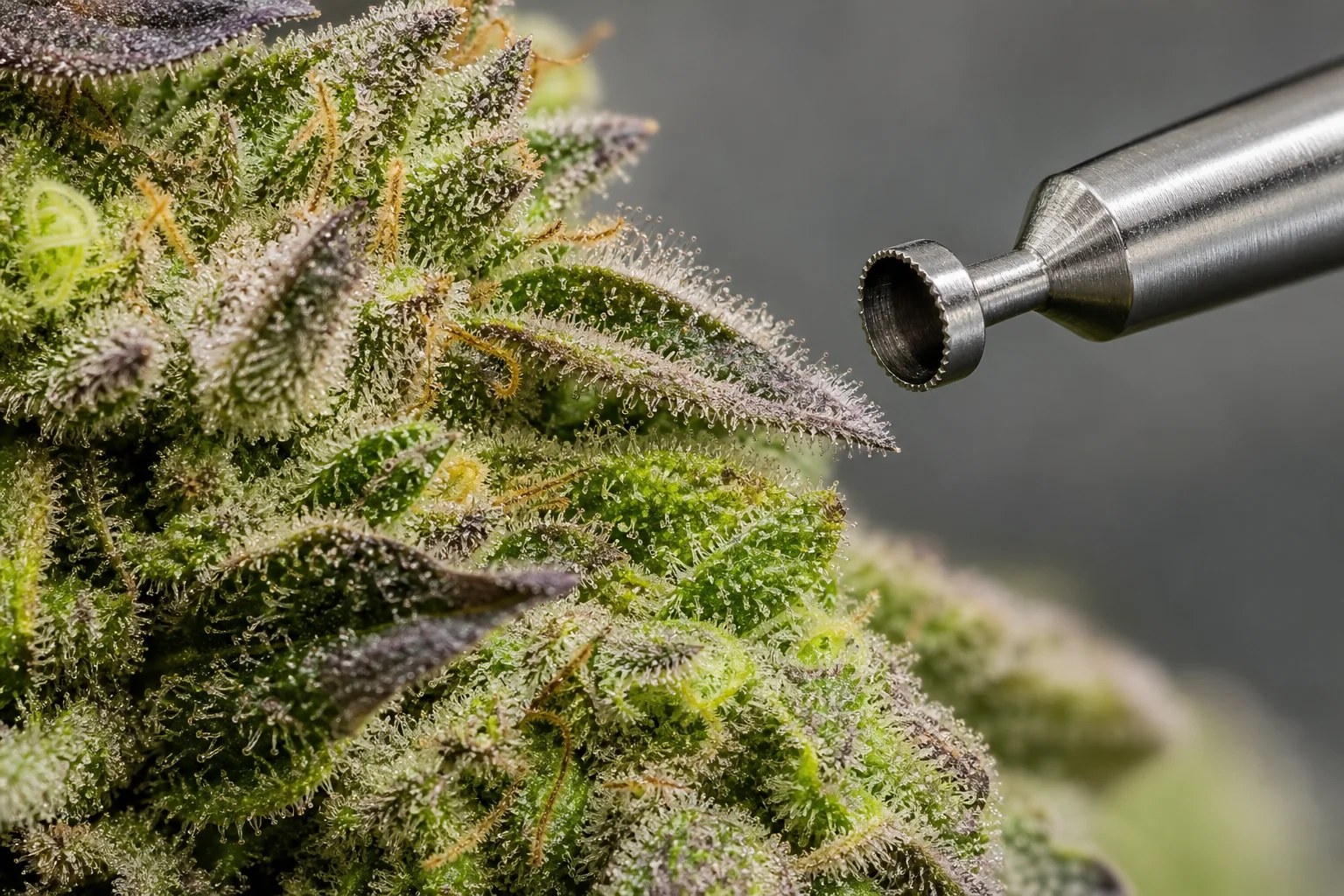
Sampling for potency: a botanical macro that illustrates where and how a lab sample might come from on a bud — trichome density, sample punch, and representative flower. Useful for explaining why homogeneity and sampling method matter for potency results. Does not show any COA or numeric values. Relates to COA and potency testing practices discussed by OCP and lab method reviews.
4) Labels and COAs: what to look for and what they don’t tell you
On a compliant adult‑use product label one can typically find the declared THC (and other cannabinoids) used for consumer information, a batch or lot number, and often an indication that the product was tested. The COA — the certificate prepared by a certified testing facility — is the document that shows which analytes were tested, the date, and whether each test passed or failed relative to OCP thresholds. A plain‑language COA summary is one of the clearest pieces of evidence available when comparing products. (maine.gov)
A few cautions: COAs differ in format, and many are designed for technical readers. They rarely — and should not — include patient‑level guidance. COAs show what was tested and the numerical result; a single COA does not represent every batch or every harvest. A COA applies to the specific sample tested under specific conditions; retesting, remediation, and natural batch variability are all reasons results can differ from sample to sample. Common vendor questions include: “What is the batch number? Is this the COA for that batch? Which lab ran the tests?” (maine.gov)
Also note what a COA does not reliably show: long‑term storage history, how a grower handled the crop pre‑harvest (except insofar as contaminants show up), or the precise sensory profile of the flower in a later package. COAs are rigorous about lab results; they are not a forensic record of every handling choice. (pubmed.ncbi.nlm.nih.gov)
5) Traceability, recalls, and public data — where adult use gives more public doors
Because mandatory adult‑use testing produces EDDs and COAs that are reported to OCP, OCP can and does publish aggregated testing data and recall notices. Adult‑use batches that fail tests are subject to quarantine, documentation, remediation (in narrow circumstances), retest, or destruction under rule and statute — and OCP’s open‑data pages report quarterly aggregate test outcomes and fail rates. That public data makes adult‑use product provenance and testing outcomes easier for researchers, advocates, and consumers to inspect. (www1.maine.gov)
Medical product failures are handled differently because the same mandatory framework does not apply across the board; OCP retains investigatory authority and may test medical cannabis as part of complaint or enforcement actions, but routine, statewide EDD reporting for every medical item sold does not exist. For registered qualifying patients, voluntary testing is the typical mechanism to close the information gap for medical products. For growers who value transparency, publishing voluntary COAs and tracking batch metadata the same way adult‑use licensees do is a clear trust signal. (maine.gov)
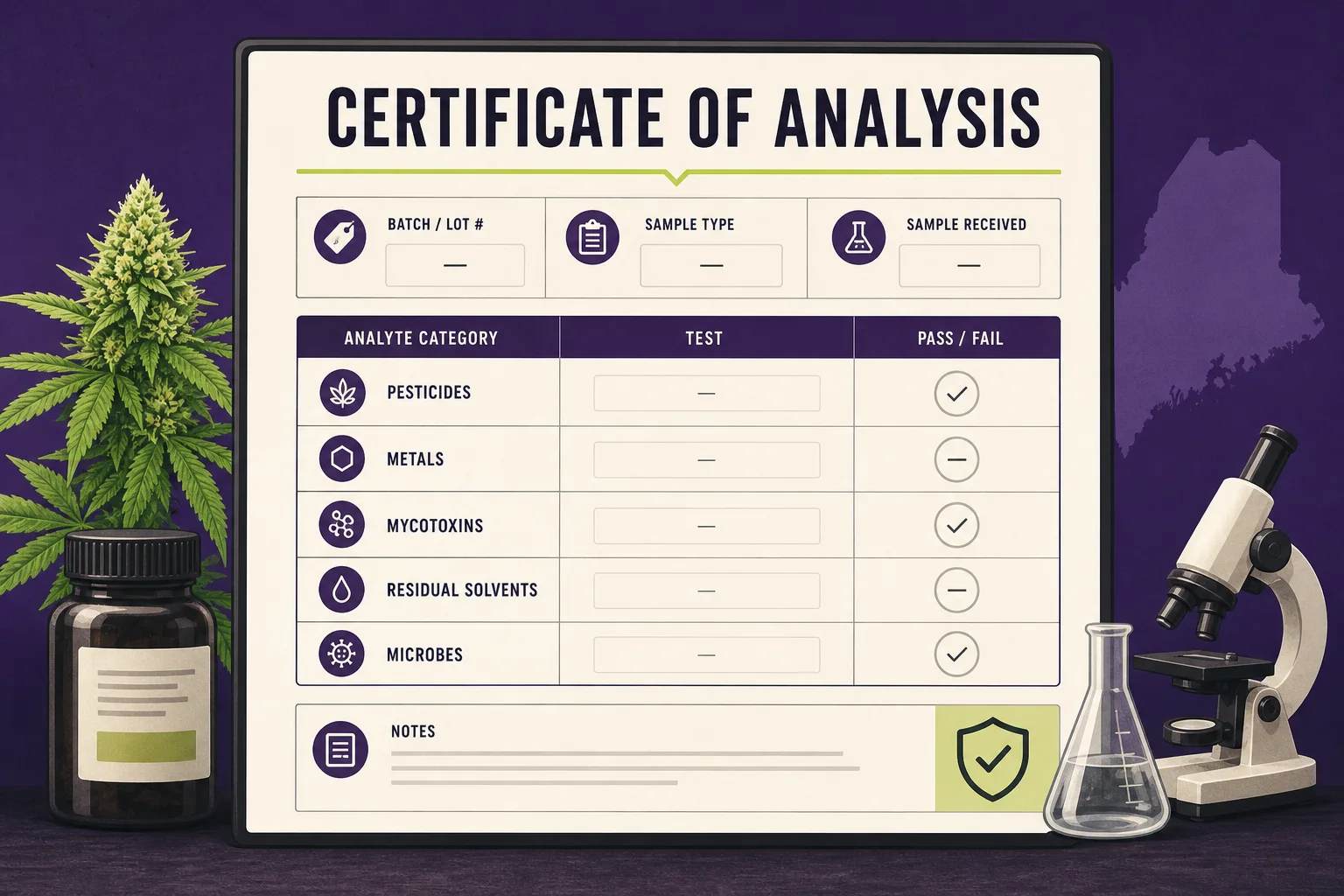
COA anatomy: an instructional illustration of the parts of a Certificate of Analysis — batch number, sample type, analyte categories, result columns, and lab cert stamp — shown with placeholder text only (no readable numbers or actual results). This teaches users what to look for when requesting a COA and is grounded in OCP consumer guidance.
Research context: Understanding Cannabis Testing Requirements & Results in Maine · Adult Use Testing Data6) Evidence limits: science, inter‑lab variability, and why one COA isn’t an oracle
Analytical laboratories use robust methods, but cannabis is a complex plant matrix and method performance depends on sample prep, extraction, instrumentation, and lab proficiency. Recent reviews of cannabis testing and contaminant detection emphasize wide variation in regulatory allowable limits across jurisdictions, differences in methods (ICP‑MS, LC‑MS/MS, GC‑MS), and the need for harmonized performance criteria to improve comparability. In short: a COA is a strong piece of evidence, but differences between labs, matrices (flower vs. concentrate vs. edible), and sampling methods mean results are context‑dependent. (pubmed.ncbi.nlm.nih.gov)
Mycotoxins and fungal contaminants deserve special attention: fungal ecology on harvested plant material varies by drying, storage, and handling. Reviews show Aspergillus and other fungi can appear on poorly dried or stored botanical material, and mycotoxin assessment methods vary. That’s why water activity, drying/curing procedure documentation, and a lab’s mycology methods matter when interpreting a COA’s mold/yeast findings. (pubmed.ncbi.nlm.nih.gov)
Put another way: when making decisions based on lab data, consider COAs as technical snapshots of a sample tested by a particular lab using particular methods. Multiple COAs over time, transparent batch records from the grower, and knowledge of a lab’s certifications and methods give a much clearer picture than a single report. (maine.gov)
7) Practical questions for growers, patients, and adult buyers
A common consumer question is: “Was this product tested? Can I see the COA for this batch?” For adult‑use products the lab‑tested COA is required by rule; for medical products it may be voluntary. When a vendor shares a COA, look for matching batch numbers on the package and the COA and confirm that the COA comes from a laboratory certified by Maine CDC or otherwise recognized in the testing guidance. (maine.gov)
If you’re a grower deciding which channel to sell into: adult‑use retail carries required testing and reporting duties that add cost and recordkeeping, but also creates a clearer public signal of traceability that many customers and retailers rely on. Voluntary testing for medical‑channel sales is an available alternative but requires proactive handling of COAs and batch records if the grower wants to make those materials accessible to buyers. (www1.maine.gov)
For both growers and consumers, transparency about drying, curing, pest management choices, and which lab performed the analysis will make COAs more interpretable — and will reduce the chance that a single unexpected result surprises everyone after the sale. (pubmed.ncbi.nlm.nih.gov)
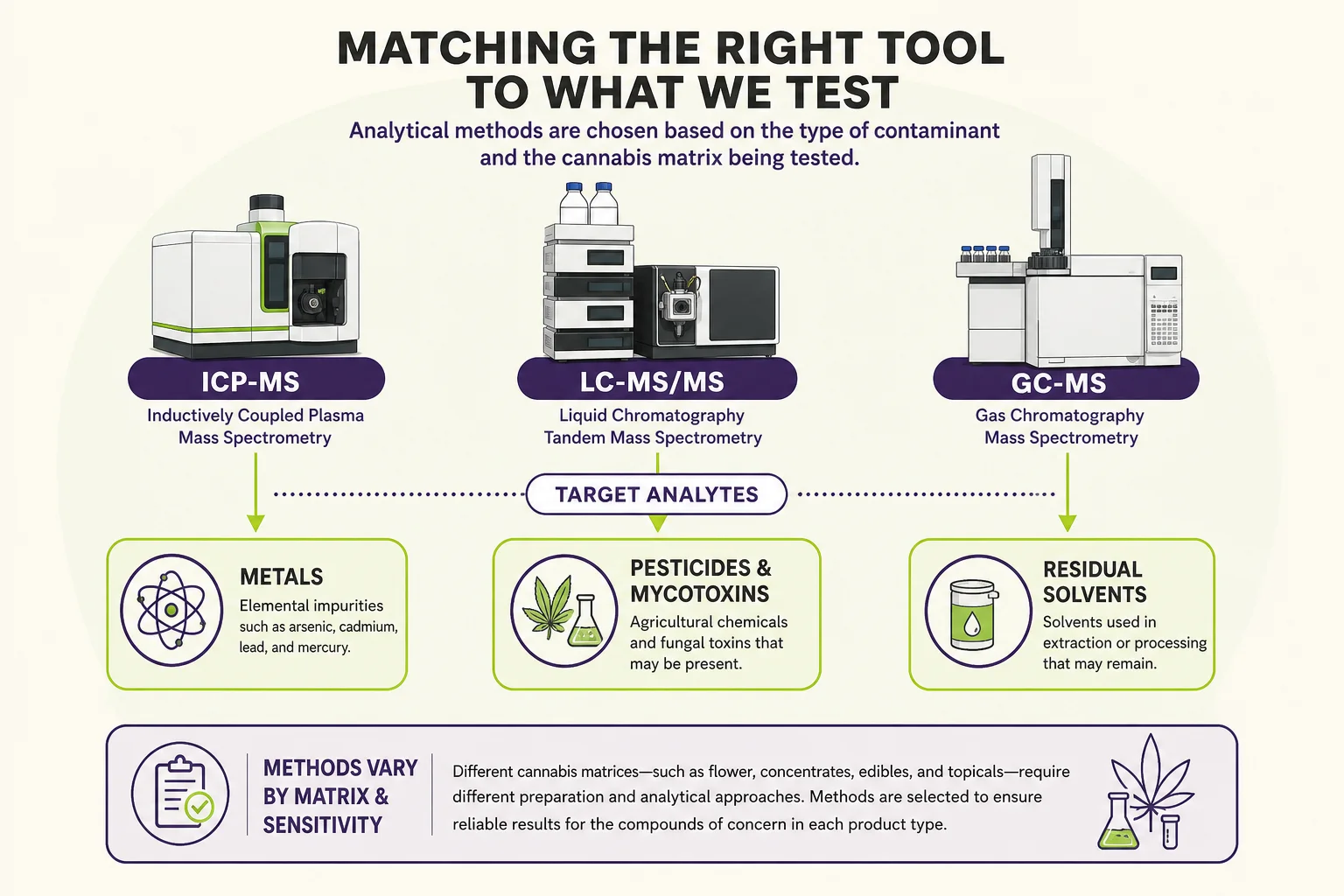
Analytical methods map: an explanatory diagram linking common laboratory techniques (ICP‑MS, LC‑MS/MS, GC‑MS) to the analytes those instruments typically measure (metals, pesticides/mycotoxins, residual solvents). This visual summarizes the methodological limits researchers discuss in reviews and explains why method detail on a COA matters. It does not report any lab results. ([pubmed.ncbi.nlm.nih.gov](https://pubmed.ncbi.nlm.nih.gov/41952362/?fc=None&ff=20260415050152&v=2.19.0.post6+133c1fe))
Research context: Cannabis Products and Contaminant Detection: Critical Review of Regulatory Oversight and Analytical Methodologies8) Wrap and practical next steps
Maine’s dual‑program approach is deliberate: it preserves a medical channel with its own access rules while creating a regulated adult‑use marketplace with mandatory testing and public reporting. That difference shapes the default evidence available on a label and in a COA. Reading the program identity on a package and asking questions about batch number, COA, testing lab, and whether the product was voluntarily or mandatorily tested typically provides more information than relying on a single number or a strain name. (www1.maine.gov)
If you want to dig deeper, OCP’s testing guidance and the COA for the specific batch in question are the most direct starting points. For research‑grade perspectives on what COAs can and can’t resolve, see recent reviews of contaminant detection and mycotoxin risk in cannabis. Science is improving fast; lab methods and inter‑state standards are still catching up to a marketplace that has diversified rapidly in the last decade. (pubmed.ncbi.nlm.nih.gov)
Key evidence limits and a short reading guide
- A COA is a lab report on the specific sample tested; it is not a full record of handling or a guarantee of sterility. (maine.gov)
- Adult‑use COAs are generated under mandatory testing rules and reported to OCP; medical product testing is often voluntary and is typically made available upon request rather than through routine statewide EDD reporting. (www1.maine.gov)
- Lab methods and inter‑lab variability mean results are context‑dependent; multiple COAs and grower records are better evidence than one result. (pubmed.ncbi.nlm.nih.gov)
Questions this guide answers
Does Maine require testing for medical cannabis?
No — medical cannabis in Maine is not subject to the same blanket mandatory contaminant testing that adult‑use products are. Some medical suppliers voluntarily test and provide COAs; OCP can test in investigations. Ask your caregiver or dispensary whether a medical product was tested and to see the COA. ([maine.gov](https://www.maine.gov/dafs/ocp/sites/maine.gov.dafs.ocp/files/2023-10/Understanding%20Maine%20Cannabis%20Testing%20Requirements%20%26%20Results.pdf))
What analytes are mandatory for adult‑use testing in Maine?
Adult‑use mandatory testing covers several analyte categories including residual solvents, heavy metals, dangerous yeasts/molds (and mycotoxins), harmful microbes, pesticides, and THC potency/homogeneity/cannabinoid profile; labs must report results to OCP. ([www1.maine.gov](https://www1.maine.gov/dafs/ocp/open-data/adult-use/testing-data))
What is a COA and why ask for it?
A Certificate of Analysis (COA) is the lab’s report that lists tests performed, dates, and pass/fail or numerical results for the sample tested. For adult‑use products COAs are part of mandatory reporting; for medical products they may be voluntary. Match the package’s batch number to the COA before accepting it as evidence for that item.
If a product passed testing, is it completely risk‑free?
No — a test pass indicates the tested sample met action limits for the analytes included. It’s not a guarantee of zero risk or that every item from the same cultivar or harvest will test the same. Multiple COAs, clear batch records, and transparent handling history improve confidence. ([pubmed.ncbi.nlm.nih.gov](https://pubmed.ncbi.nlm.nih.gov/41952362/?fc=None&ff=20260415050152&v=2.19.0.post6+133c1fe))
Where can I see Maine’s adult‑use testing data?
OCP publishes adult‑use testing data, aggregated reports, and recalls on its open data pages; those reports summarize fail rates and analyte categories reported through the EDD system. ([www1.maine.gov](https://www1.maine.gov/dafs/ocp/open-data/adult-use/testing-data))
Educational information only. Cannabis affects people differently and this is not medical advice.