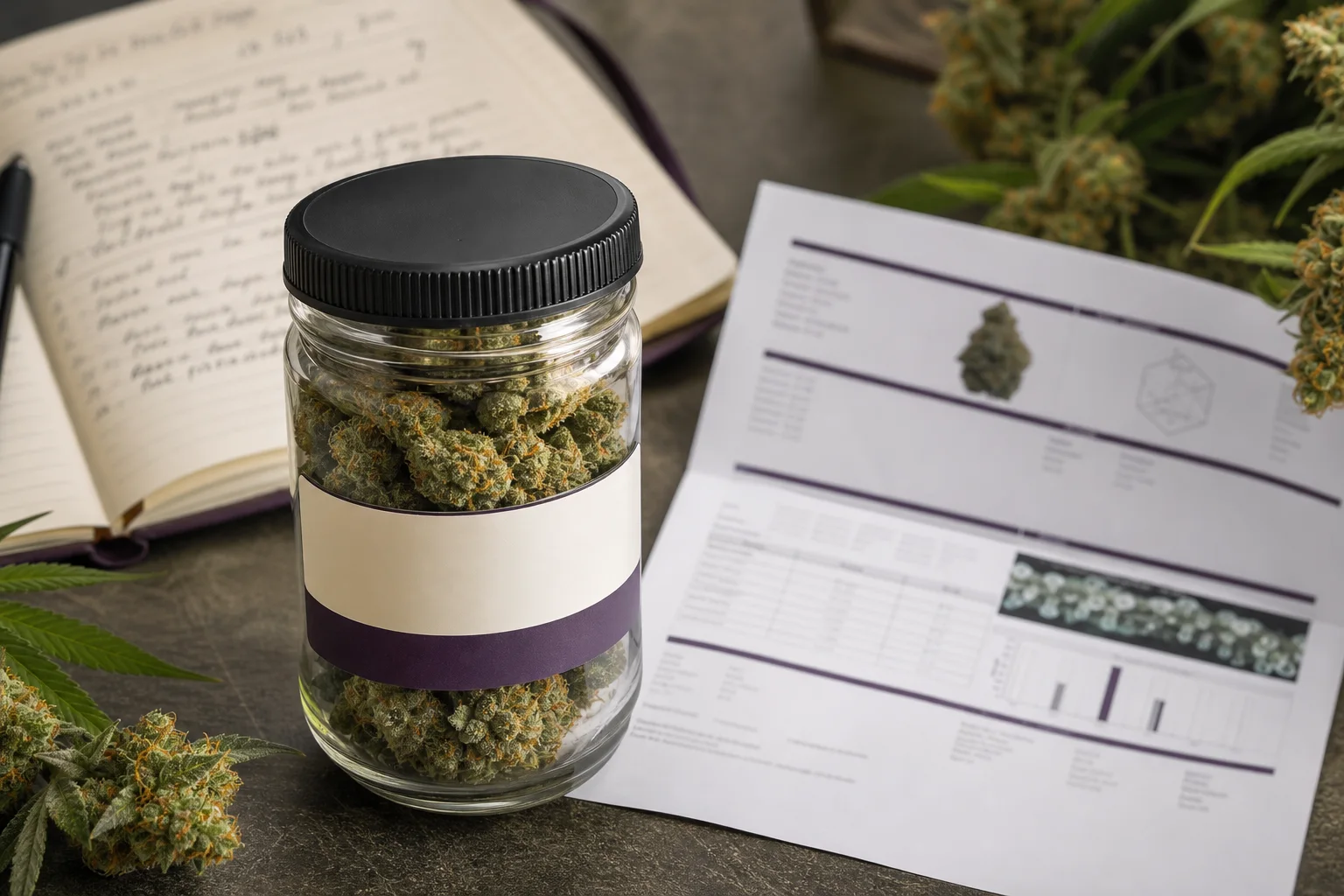
Hero image showing the three key evidence types discussed: the product label (name), the batch COA, and garden/harvest notes. This photograph is meant for documentary orientation only; a COA is a snapshot and must be read together with source records. Limit: the image is illustrative and does not show real Mainezilla lab values or patient outcomes.
Why a name is a useful starting point — and why it’s not a prediction
Strain names are shorthand created by breeders, retailers, and culture. They can point you toward a lineage, a breeder’s selection goals, or a flavor profile that many people associate with that label. But a name alone doesn’t lock chemistry, effects, or safety into place — several independent systems (genetics, cultivation, post-harvest handling, and an individual user’s biology and context) all influence the final experience. This is important in Maine, where medical and adult-use programs are governed by statute and agency rule, and where packaging and labeling standards (including the universal cannabis symbol) exist to increase clarity for consumers rather than to guarantee identical outcomes from different batches. (maine.gov)
If you want a more predictable read on a packaged product, look past the brand name and seek evidence: breeder lineage or varietal pedigree, batch-specific lab results, documented sampling and testing practice, and clear notes from the garden or processor. Those are the pieces that, when assembled, give you a picture that’s actually testable. As a rule of thumb for adults in Maine: a strain name starts the conversation; laboratory results and batch documentation carry the facts. (maine.gov)
This article walks through five distinct kinds of information you can use to turn a label into useful expectations: the name and lineage, the plant’s genotype and chemotype, batch-level lab data, garden observation and harvest/curing notes, and the variability of individual experience. I’ll point to primary, official, and peer-reviewed sources so you can follow the evidence yourself. (pmc.ncbi.nlm.nih.gov)
What a strain name usually tells you (and what it usually doesn’t)
A strain name most reliably signals human choices: a breeder’s selection, a marketing identity, or a lineage (for example, an F1 cross of two named parents). Names also carry cultural expectations — “Blue” often signals certain berry-like terpenes in folklore, and “Diesel” tends to promise fuel-like aromatics. But those associations are not chemical laws: independent breeders can call genetically different plants by the same name, and the same genetic line can be given new names as it moves through different seed or clone suppliers. In short, names are social metadata. (pmc.ncbi.nlm.nih.gov)
Several systematic surveys of commercial cannabis chemistry in the U.S. find that strain names are at best an imperfect proxy for chemical profile. Large-scale testing across states shows wide variability in cannabinoid and terpene content among samples sharing a label; the label correlates with chemistry sometimes, but far from perfectly. That’s why relying on a name instead of a batch-specific measurement invites error. (pmc.ncbi.nlm.nih.gov)
When someone hands you a name, regard it as an invitation to investigate, not a promise. Ask for the breeder or source, the propagation method (seed vs. clone), and whether the product is a single cultivar or a blended trim or mixed-lot product — each of those factors affects how closely the label will track chemistry in the jar.
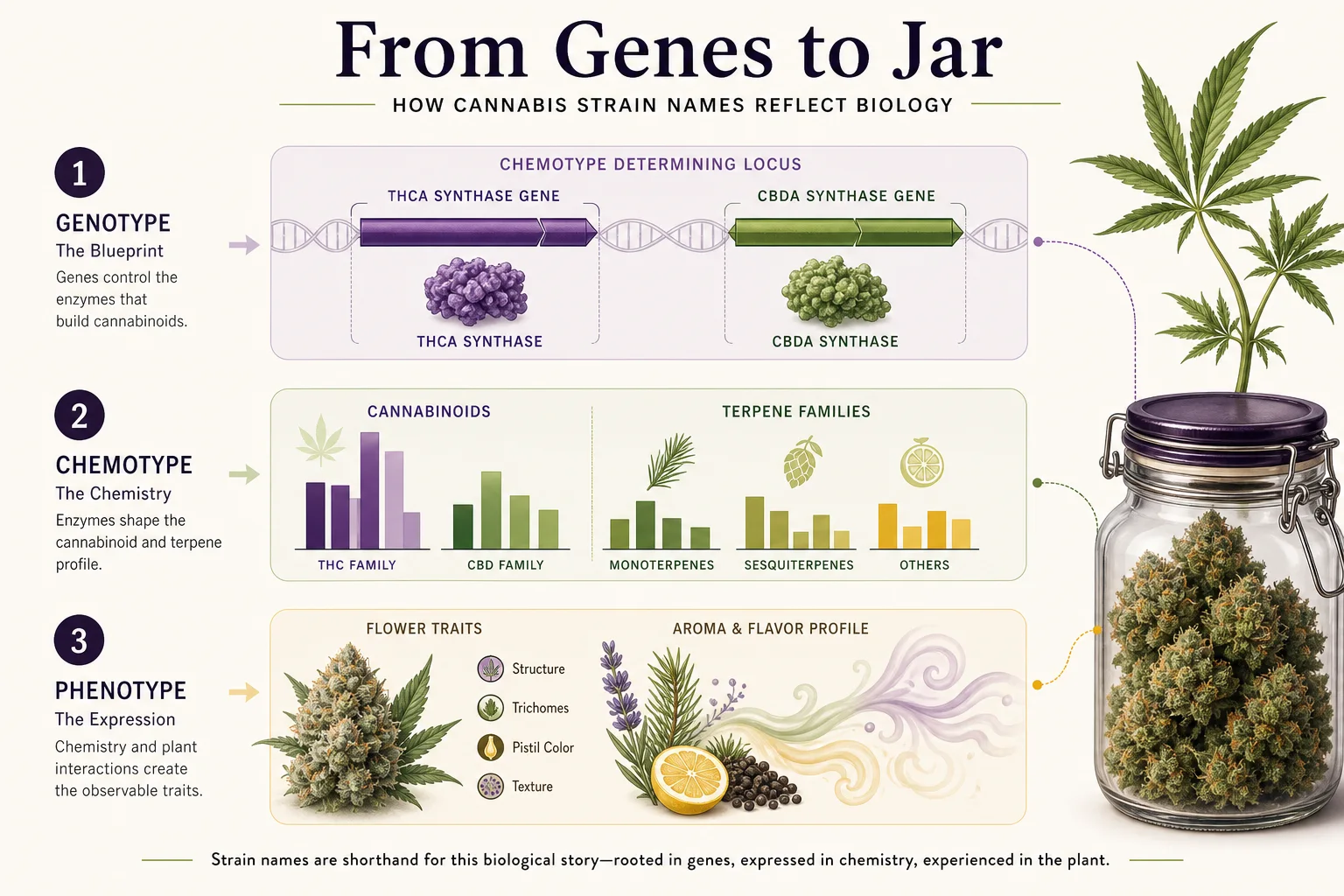
A clear explanatory diagram that separates genotype (genes/enzymes), chemotype (cannabinoid/terpene profiles), and phenotype (aroma, growth habit). It teaches how genetics set baselines while environment and processing change the final product. Limit: schematic only; it must not imply deterministic one-to-one outcomes.
Research context: The Structure of the Chemotype Determining Locus in Cannabis sativa (Plant Direct)Genetics and chemotype: the baseline the plant gives you
At a fundamental level the plant’s genotype determines the enzymes available to make cannabinoids and to a large degree which cannabinoid profile (chemotype) the plant will tend toward. Modern genomic work shows that the locus (or tightly linked loci) for THCA and CBDA synthesis largely governs the THC/CBD ratio of a plant, so genotype is a true baseline for cannabinoid chemistry. However, genes are necessary but not sufficient: expression, growing conditions, and plant age affect the final concentrations. (pmc.ncbi.nlm.nih.gov)
Terpene production — the aromatic compounds often tied to flavor and perceived effect — is similarly rooted in genetics but encoded across a larger family of terpene synthase genes. Different cultivars express these genes at varying levels; because terpene loci are inherited somewhat independently from cannabinoid-synthesis genes, a plant can inherit a THC-biased cannabinoid profile while showing any number of terpene combinations. That helps explain why two plants with similar THC may smell and feel different. (pmc.ncbi.nlm.nih.gov)
In practice, combining basic genetic information (seed or clone source and known parentage) with early-stage chemotyping and careful record-keeping gives growers and lab scientists the best chance of predicting chemical categories. But unless a large number of plants from the same pedigree are tested and show narrow variability, genotype alone will not perfectly predict every harvested bud. (pmc.ncbi.nlm.nih.gov)
Batch lab data: what a certificate of analysis (COA) can — and can’t — tell you
A lab report or COA for a specific batch is the best objective evidence you’ll get about a packaged product’s chemical profile: cannabinoids, often terpene panels, and contaminant screens where required. In Maine, the Office of Cannabis Policy sets testing rules for adult-use testing and provides guidance documents for sample collection and labeling; look for batch-specific identifiers on packaging and any links to an accompanying COA. (maine.gov)
But test results have limits. Labs sample a defined portion of a lot and report what that sample contained at the time of testing. Differences in sampling method, the portion of plant tested (whole-flower vs. trim vs. concentrate), and analytical protocols can shift numbers. National regulators and federal agencies have noted label inaccuracies in some cannabis-derived products and the need for standardized testing and transparent labeling; that’s an ongoing area of regulatory focus. Always check that the COA is from a certified lab and that the sample ID matches the product batch. (fda.gov)
Also note that for some Maine program pathways (historically), routine contaminant testing and statewide inventory tracking have differed between medical and adult-use streams; OCP guidance explains current testing requirements and where voluntary testing still occurs. That regulatory difference affects what data you can reasonably expect to find attached to a package labeled for medical patients versus adult-use. (maine.gov)
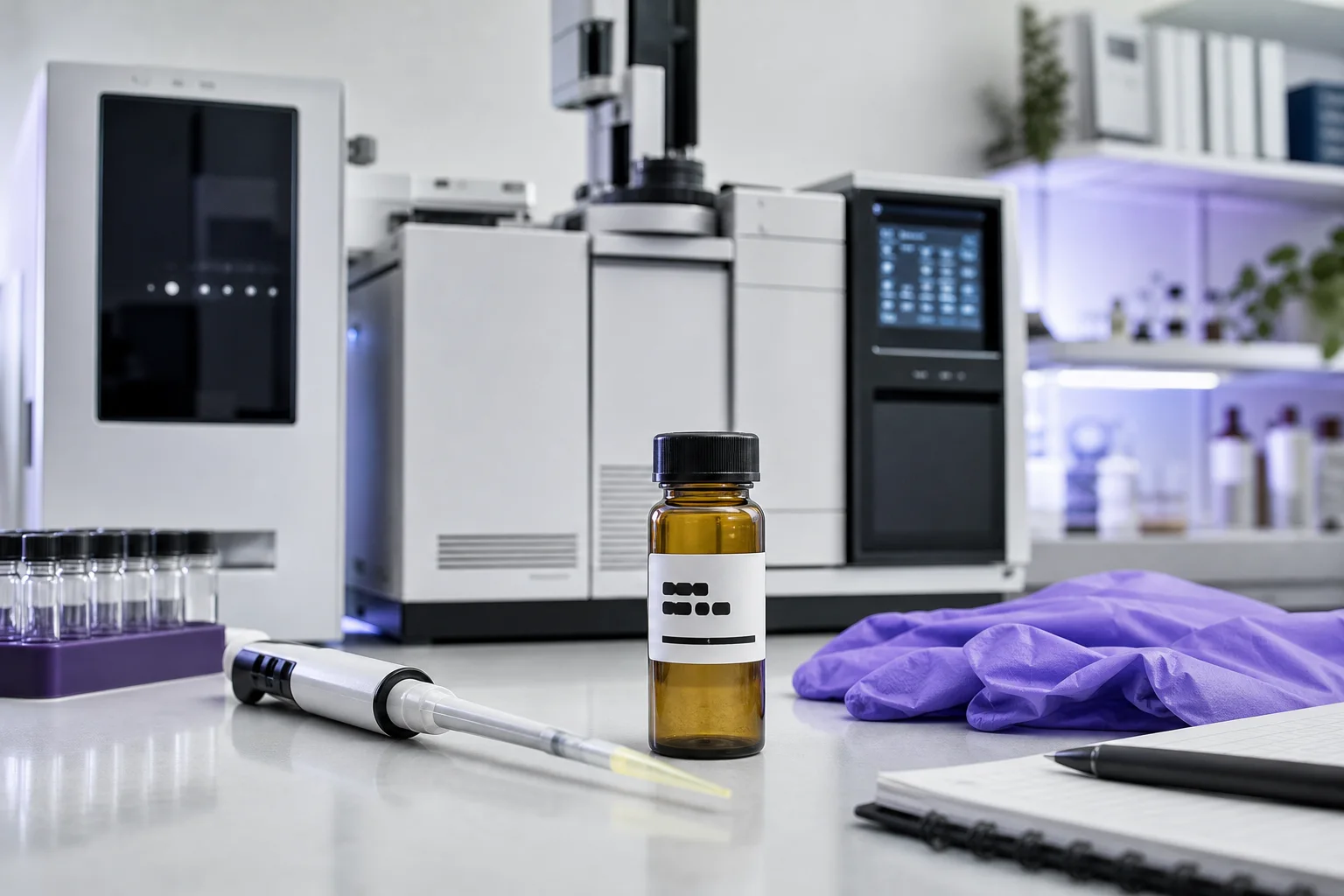
Documentary macro of a cannabis analytical lab bench and a sample vial with anonymized sample ID. This visual supports the article’s discussion of COAs and lab sampling practices. Limit: do not show readable lab values or certification logos.
Research context: FDA Regulation of Cannabis and Cannabis-Derived Products, Including Cannabidiol (CBD)Garden observation and post‑harvest change: why timing matters
Hands-on garden notes — when plants were flushed, the days-to-harvest, trichome maturity observed under magnification, and whether a batch was wet- or dry-trimmed — matter. Terpenes are volatile organic compounds; drying, curing, packaging, and storage all change their abundance and bouquet. A lab test taken before or after a particular drying/curing regimen will reflect those steps, so two COAs on the same genetic lot can look different if sampling timing or post-harvest handling differed. (pmc.ncbi.nlm.nih.gov)
Practical garden logs — even brief ones attached to a batch ID — let you interpret the COA. If a sample shows unexpectedly low levels of a particular monoterpene, a log that notes a long drying time, high temperature, or oxidizing packaging helps explain the result. These observations aren’t mystical; they’re part of traceable evidence that connects the plant in the field to the sample on the bench. Good growers document them; cautious consumers ask for them.
Remember: some changes happen after you buy the product. If you store flower improperly (hot, humid, or in sunlight), terpenes decline and moisture changes can alter aroma and combustibility. The COA is a snapshot — garden notes provide the context that helps you read that snapshot accurately.
Individual experience: why two people report two different outcomes
Even with identical genetics, identical lab results, and identical storage, people vary. Tolerance, body chemistry, prior exposure, medication interactions, sleep, and the method of consumption all shape how someone experiences a product. Public health agencies emphasize that THC concentration and method of use are major drivers of acute effect and that differences in potency over recent decades are meaningful to users’ risk profiles. This is why patient and adult education emphasizes caution with unfamiliar products. (cdc.gov)
Put simply: the same jar can produce different subjective reports for different people. That variance is not a failure of the label; it’s human physiology acting on chemical exposure. That’s also why Maine’s informational materials remind users that concentration, route, and co‑use with other substances affect risk. (maine.gov)
For people enrolled in Maine’s MMCP, pairing available product evidence with personal records can be helpful. Keeping short notes about amount consumed, timing, and context can make it easier to compare subjective responses across different batches. Over time those notes become a personal reference.
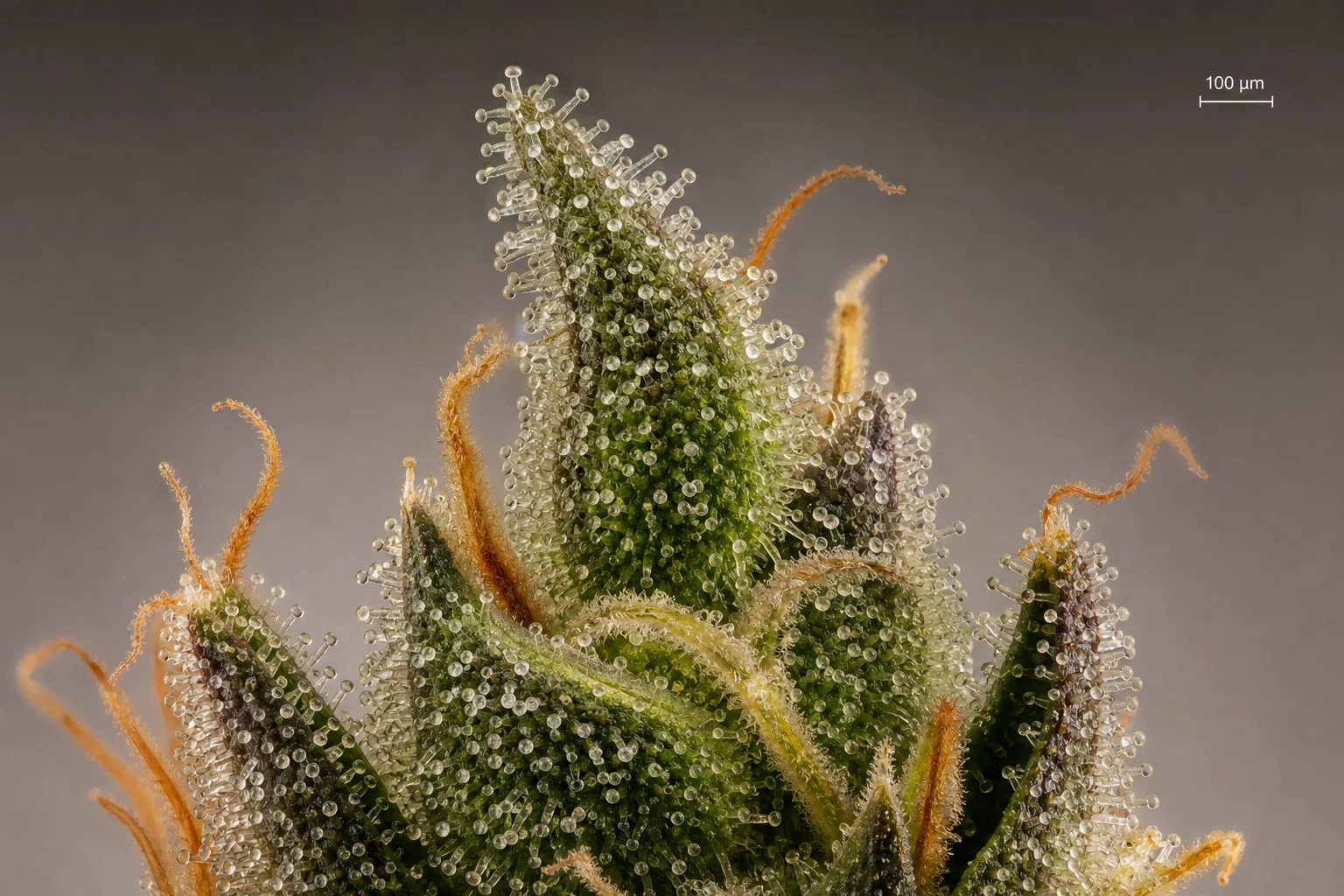
Close-up botanical macro showing glandular trichomes (the plant structures that produce cannabinoids and terpenes). This teaches the biological origin of many active compounds while reminding readers that chemistry varies across tissues and time. Limit: no consumption imagery, no claims about effects.
Research context: Terpene Synthases and Terpene Variation in Cannabis sativaPractical checklist for translating a name into reasonable expectations (Maine-ready)
-
Ask for batch-specific COA: confirm the sample ID matches the batch on the package. If the COA lacks a lab name, chain-of-custody, or date, regard the data skeptically. (fda.gov)
-
Check the pedigree or breeder info: is the product a named cultivar propagated from a known parent or a mixed-lot blend? Seed-to-sale or pedigree claims increase confidence but still aren’t guarantees. (pmc.ncbi.nlm.nih.gov)
-
Read garden or processor notes when available: drying/curing method, harvest date, and storage recommendations matter for aroma and perceived effect. (pubmed.ncbi.nlm.nih.gov)
-
Consider your own history: tolerance, route of use, and the time of day influence experience. Public health pages encourage caution with high-potency products and with unfamiliar routes like edibles or concentrates. (cdc.gov)
-
Respect Maine labeling and symbol rules: the universal symbol and clear batch identifiers are there to help you spot cannabis products quickly; use them to verify you have the product you intended to buy. (maine.gov)
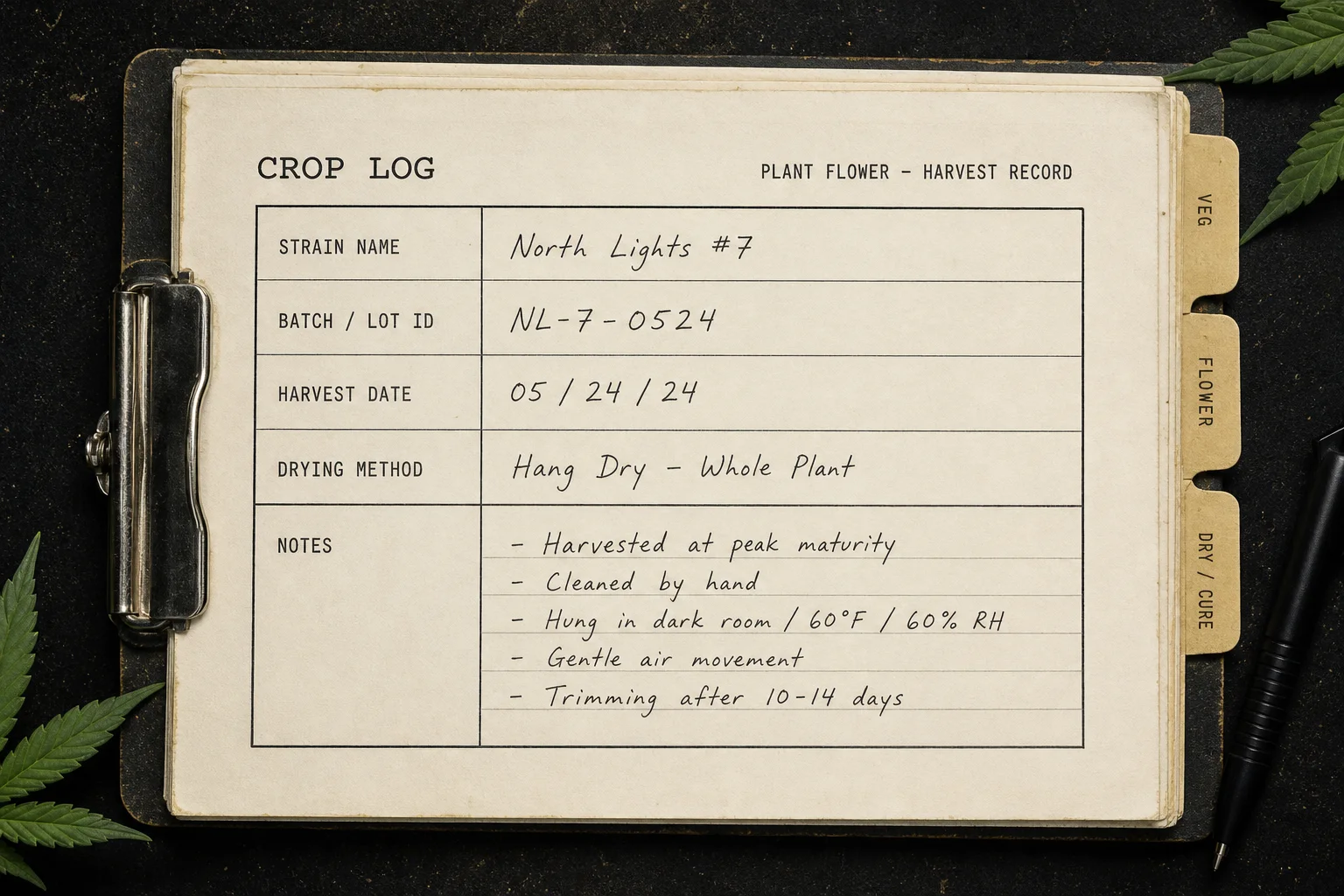
An archival-style visual showing a plausible example of the garden/processor notes that help interpret a COA. The image demonstrates the practical value of traceability. Limit: anonymized; do not present as a Mainezilla internal record.
Research context: Maine Medical Use of Cannabis ProgramLimits of the evidence and what’s still uncertain
Science has made big strides — we can now map cannabinoid-synthesis loci and many terpene synthases — but the full mapping from genotype + environment to human experience remains incomplete. Large surveys show weak-to-moderate correlations between name and chemistry, and terpene-rich nuances often explain differences not captured by THC percentage alone. Standardization of sampling and analytic methods is improving, but variation across labs and sampling methods persists; regulatory and scientific communities are working to tighten these gaps. (pmc.ncbi.nlm.nih.gov)
Finally, regulatory frameworks differ. Maine’s Office of Cannabis Policy sets program rules and guidance, but historical differences between medical and adult-use testing, recordkeeping, or voluntary vs. mandatory reporting mean that the documents and datasets you can access may vary depending on program and product path. Always check OCP resources for the latest guidance. (maine.gov)
A short practice closing: how to use a strain name the smart way
Think of a strain name as a bookmark. It quickly points you toward a lineage, an expected bouquet, or a market category, but it doesn’t replace batch evidence. Combine name + breeder pedigree + batch COA + garden/processor notes + your personal history to make the most informed choice. In Maine, use OCP resources for labeling rules and the universal symbol as a quick verification step before you lean on a name. (maine.gov)
Key takeaways
- A strain name is useful shorthand but not a chemical guarantee. (pmc.ncbi.nlm.nih.gov)
- Genotype sets the chemotype baseline; terpenes and expression add variety. (pmc.ncbi.nlm.nih.gov)
- Batch COAs and garden notes are the most actionable evidence for a packaged product. (fda.gov)
- Individual experience depends on tolerance, route, and context — not just the label. (cdc.gov)
- In Maine, use OCP guidance and the universal symbol to verify product identity and labeling. (maine.gov)
Questions this guide answers
If two products share the same strain name, will they be identical?
Not necessarily. The same strain name can be applied to genetically different plants, and growing conditions, harvest timing, and post-harvest handling all change chemistry. Batch-level COAs and pedigree information are the best indicators of similarity. ([pmc.ncbi.nlm.nih.gov](https://pmc.ncbi.nlm.nih.gov/articles/PMC9119530))
What does a COA actually show me?
A COA shows the measured cannabinoids in the tested sample, often a terpene panel, and sometimes contaminant screens. It applies to the specific sample tested; differences in sampling and timing can change results. Check that the COA lists the lab, date, and batch identifier. ([fda.gov](https://www.fda.gov/news-events/public-health-focus/fda-regulation-cannabis-and-cannabis-derived-products-including-cannabidiol-cbd?trk=article-ssr-frontend-pulse_little-text-block))
How important are terpenes compared with THC percentage?
THC concentration is an important metric but doesn’t capture the full chemical profile. Terpenes contribute to aroma and may modify subjective experience; they are genetically determined and sensitive to post-harvest change. Use both metrics together. ([pmc.ncbi.nlm.nih.gov](https://pmc.ncbi.nlm.nih.gov/articles/PMC7479917/))
Does Maine require universal labeling on cannabis products?
Yes: Maine’s Office of Cannabis Policy publishes universal symbol guidance and program rules that require the universal symbol for many adult-use products and provide labeling and packaging standards. Check OCP guidance documents for details. ([maine.gov](https://www.maine.gov/dafs/ocp/resources/universal-symbol/))
Can lab testing or labels guarantee how I will feel?
No. Lab tests describe chemistry for a sampled portion of a batch — they don’t predict personal response. Tolerance, route of administration, co-use with other substances, and your physiology influence effects. Public health guidance recommends caution with unfamiliar, high-potency products. ([cdc.gov](https://www.cdc.gov/cannabis/health-effects/cannabis-use-disorder.html))
Educational information only. Cannabis affects people differently and this is not medical advice.