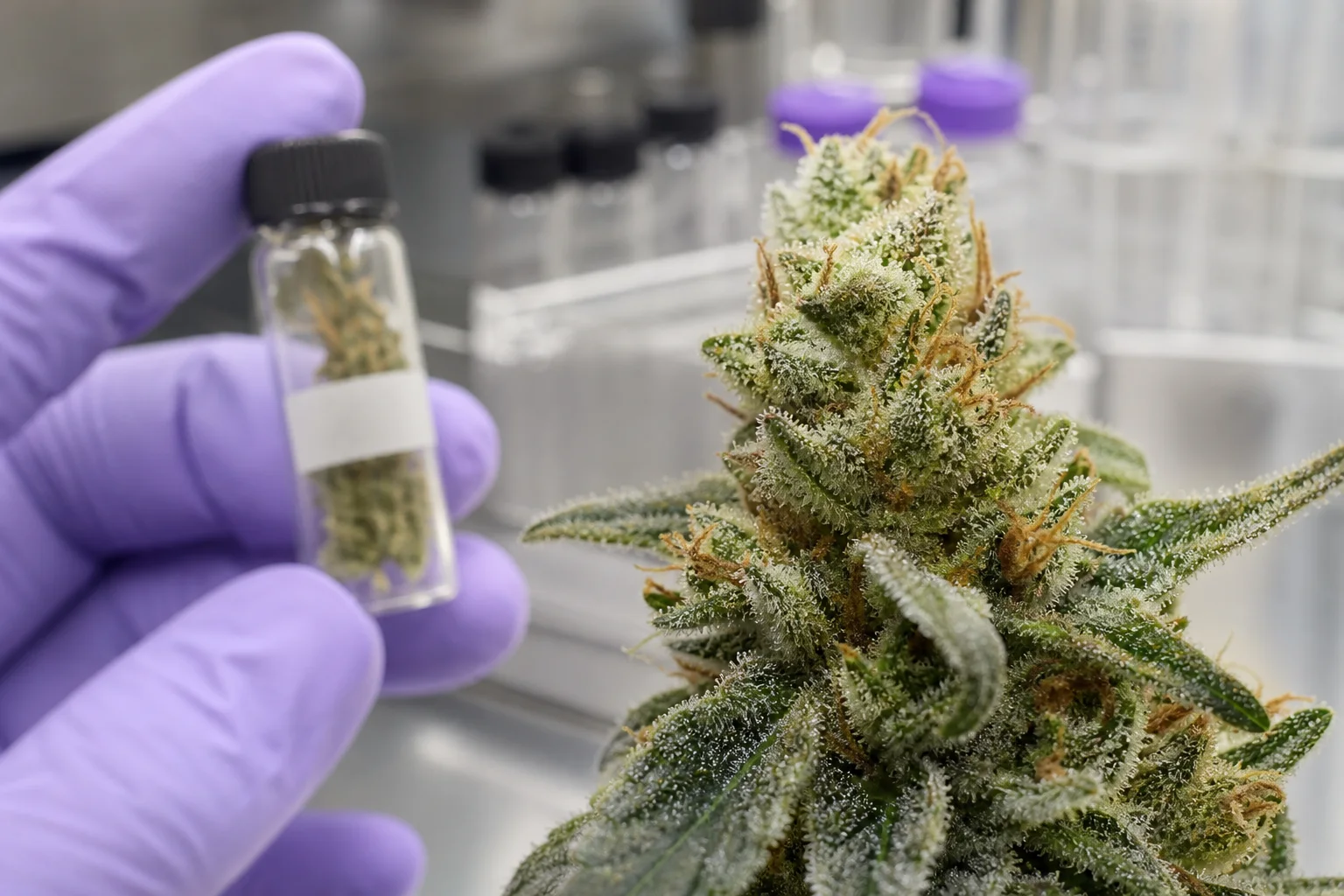
Documentary botanical macro: shows trichome density and a retained sample vial to connect grower observations to laboratory testing. Useful for visualizing why precise sampling matters for potency and contaminant checks. This image supports discussion about measurement and lab QA but does not imply any outcome or product claim.
Introduction
Adults who want to make sense of cannabis research face two temptations: (1) to regard any single study as the final word, and (2) to dismiss formal science because it doesn’t match a patient’s or grower’s immediate experience. Both are avoidable. This guide explains the common types of cannabis evidence, how each contributes (and where it misleads), and how to fold lived experience into responsible judgment—especially for people using Maine’s medical or adult‑use systems. Key public resources we rely on include federal summaries of health effects, regulatory guidance, Maine’s Office of Cannabis Policy, measurement work from NIST, and toxicology/tox‑prevention guidance. (cdc.gov)
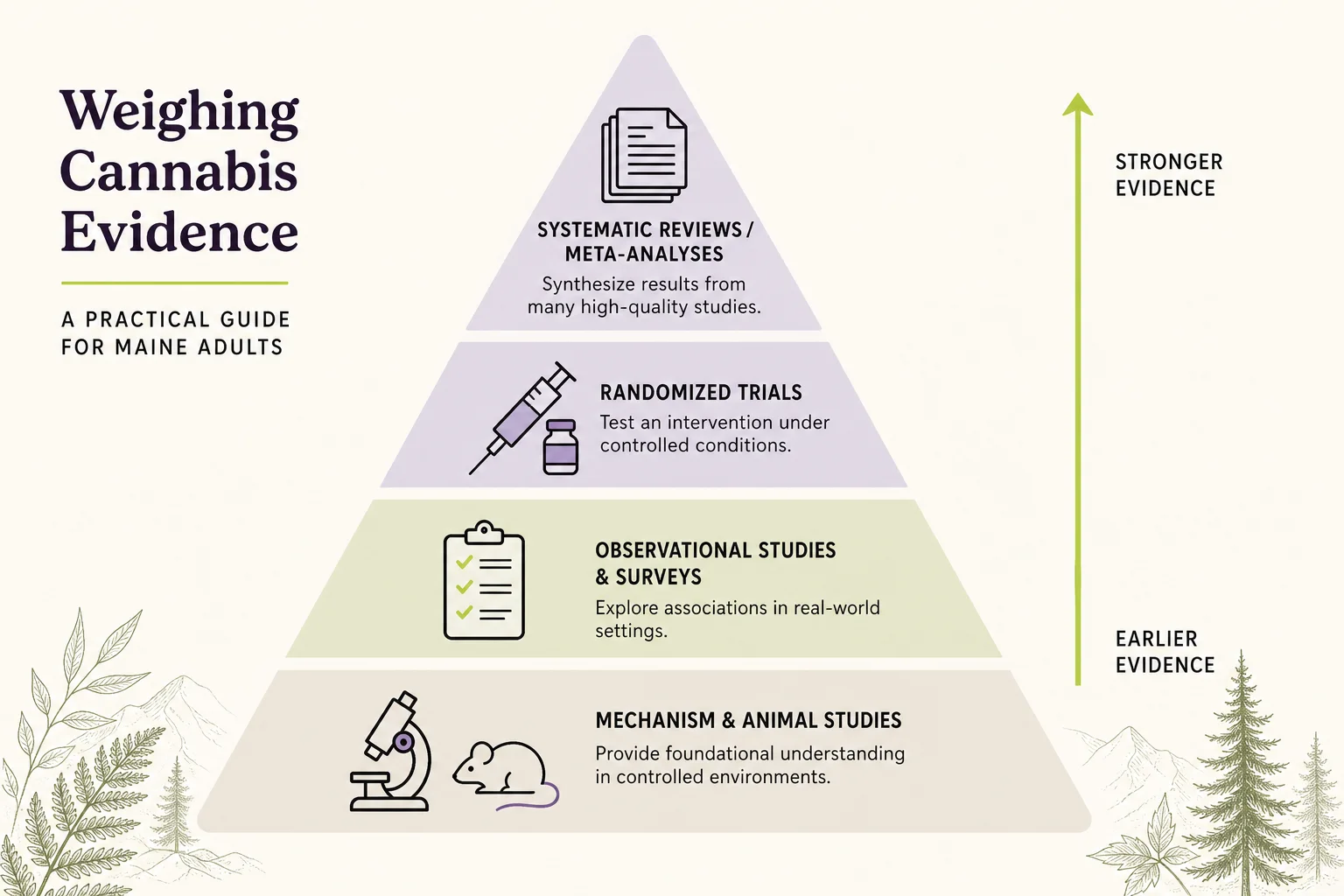
An explanatory evidence diagram that maps common study types discussed in the article. It visually clarifies where mechanism work, animal models, observational studies, randomized trials, and systematic reviews sit in a hierarchy and emphasizes complementary roles. This is a teaching diagram—not a statistical chart or claim of effect.
Research context: Hierarchy of evidence: a framework for ranking evidence evaluating healthcare interventions - PubMedWhy this matters
Evidence is not a binary pass/fail. A laboratory mechanism paper can explain how cannabinoids interact with cells; a randomized trial can measure an outcome in people; a survey can reveal what users actually notice. Each has value when read for what it is. Knowing the strengths and limits of each study type helps adults (and growers) avoid overclaiming and also avoids throwing out the signal in lived reports.
A quick primer on evidence types
Science about cannabis commonly appears in these flavors:
- Mechanism / in vitro studies (cell, receptor, biochemical work)
- Animal models (rodent or non‑rodent experiments)
- Surveys and cross‑sectional studies (snapshots of people’s reports)
- Observational cohort and case‑control studies (following people or comparing groups)
- Randomized controlled trials (RCTs) and clinical experiments
- Systematic reviews and meta‑analyses (syntheses of multiple studies)
- Case reports, field notes, and lived experience (individual or group observations)
Each type answers different questions. Mechanisms explain how something might happen; RCTs test whether it does in people under defined conditions; observational work describes real‑world patterns; lived experience signals what may matter to patients and growers in day‑to‑day life.
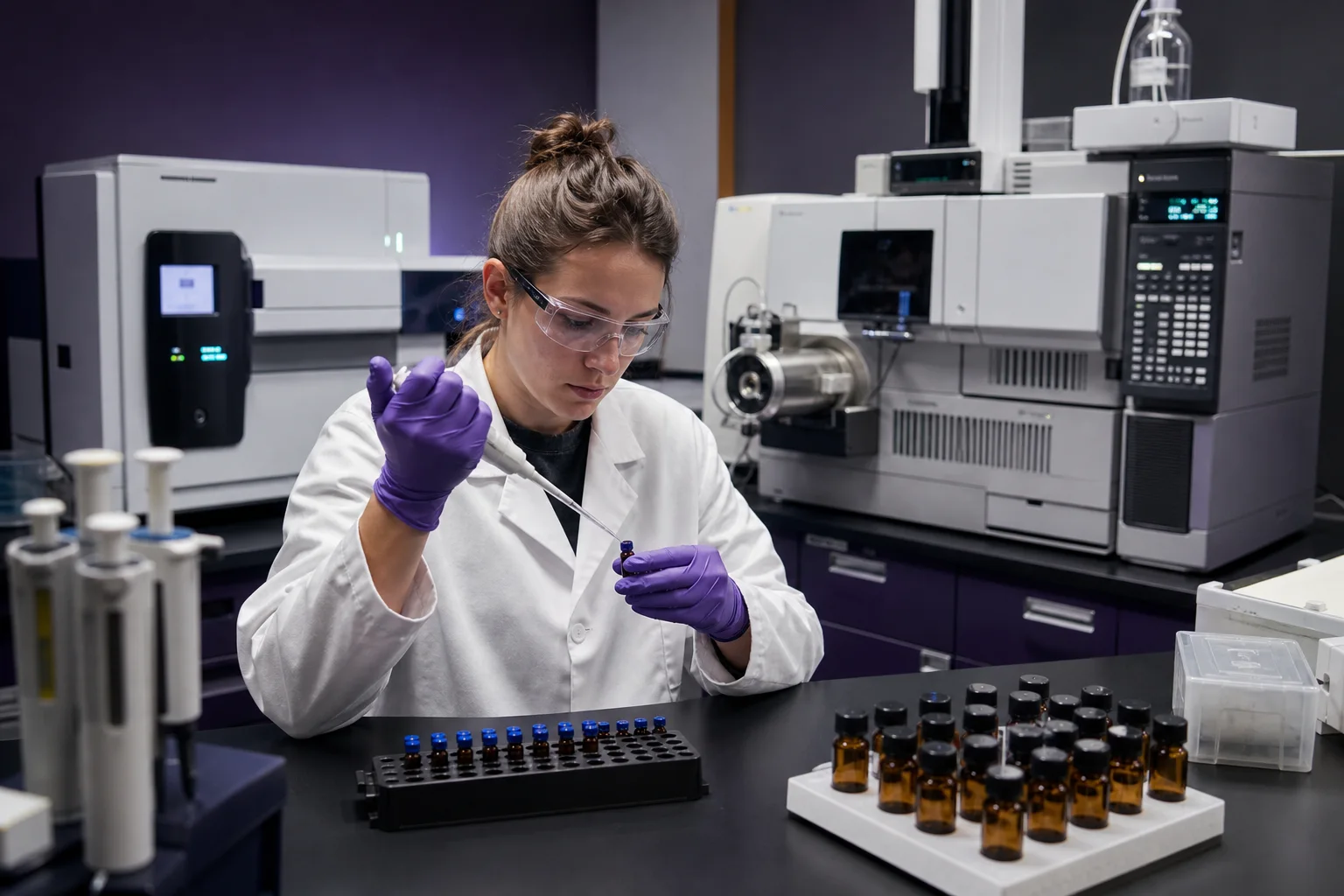
Laboratory context photo highlighting chromatography instruments and certified reference materials. This illustrates the measurement and QA tools NIST promotes to improve potency and contaminant testing. Photo is instructional—showing equipment and unlabeled reference vials—without displaying test results or specific data.
Research context: NIST Tools for Cannabis Laboratory Quality AssuranceHow to weigh each type—strengths and blind spots
Mechanism and animal work
Mechanism studies are where hypotheses start. They can show how cannabinoids bind receptors, how plant chemistry changes cell signaling, or how growth conditions alter cannabinoid pathways. These papers are indispensable for understanding plausibility—what could happen given biology. But they do not prove what happens in people or under Maine growing and product conditions. Translation across species and from isolated cells to whole humans often fails or only partially holds. View mechanism work as a map of possible routes, not a travel itinerary. (pubmed.ncbi.nlm.nih.gov)
Observational studies and surveys
Observational and survey research capture what people report, often across many real‑world settings. These studies can flag associations (for example, between heavy concentrated product use and higher rates of dependence symptoms) and reveal patterns of use that lab trials seldom capture. Their limits are the familiar ones: association is not causation; recall bias and self‑selection shape results; confounders (other drugs, socioeconomic factors) can skew apparent links. Still, they’re where lived experience meets large numbers and should inform safety conversations. (cdc.gov)
Randomized trials and systematic reviews
Randomized controlled trials are designed to isolate the effect of a single variable by random assignment and blinding. Well‑done RCTs offer the strongest causal evidence for clinical questions. Systematic reviews that pool multiple homogenous RCTs provide an even stronger picture—when the trials are enough, well‑conducted, and similar enough to combine. But RCTs can be narrow in population, dose, product, and outcome; cannabis RCTs often use specific formulations and short durations that may not match a given patient’s situation. Check whether the trial population, product formulation, and outcome match the question you care about. (pubmed.ncbi.nlm.nih.gov)
Case reports and lived experience
Individual notes, patient stories, and grower field records are the raw data of everyday practice. They are essential for hypothesis generation, for noticing unexpected effects, and for guiding practical troubleshooting in cultivation and dosing experiments. Their limitation is obvious: they are not controlled, often anecdotal, and vulnerable to placebo, expectation, and observer bias. That doesn’t make them worthless—just different. Good practice is to document precisely (what product, batch, timing, environment) and to seek corroboration where possible.
Mechanism and animal research—what growers and adults can reasonably take from it
Mechanism studies give growers and curious adults vocabulary and testable steps. A paper that maps the enzymatic pathway for cannabinoid biosynthesis can help cultivators think about nutrient timing or breeding priorities. Laboratory work from forensic and measurement labs also informs how we test for potency and contaminants. NIST’s cannabis measurement program, for example, creates reference materials and lab‑QA tools that improve the reliability of THC/CBD measurement across labs. Those advances matter for anyone who reads a lab report. But remember: a lab result or enzyme map does not say how a product will affect a particular person in a particular setting. Use these studies to ask better questions of test results and to demand better lab QA. (nist.gov)

A practical safety illustration showing secure storage of cannabis products—directly tied to poison center guidance on preventing pediatric exposures. The image demonstrates a behavior recommended in observational safety guidance and should be used to reinforce prevention steps rather than imply any product safety. Faces may be out of focus to maintain privacy.
Research context: Marijuana | Poison ControlObservational research and surveys—real people, real limits
If you want to know “what people actually experience,” observational studies and well‑designed surveys are where to look. These studies can reveal prevalence of use, patterns of edible exposure in children, or signals that high‑potency products are linked to more severe dependence markers. Poison centers and toxicology compilations highlight concrete safety issues—like pediatric exposures from edibles and acute adverse events that lead families to call for help. These sources are practical and actionable: they inform storage, packaging, and household safety decisions. At the same time, observational findings rarely isolate a single cause; they are valuable for safety guidance and for shaping what definitive trials should ask. (poison.org)
Trials and reviews—what “top of the pyramid” really means
Systematic reviews and meta‑analyses are often described as the apex of evidence because they synthesize multiple studies and reduce random error. But not all reviews are equal: quality depends on study selection, heterogeneity, and bias control. A systematic review of small heterogeneous trials that use different products and outcomes may be less useful than a large, well‑run observational cohort on a single product used in the wild. Modern evidence synthesis methods emphasize transparency about limits and whether the body of work addresses effectiveness, feasibility, or appropriateness. Learn to read a review’s inclusion criteria, population, and product descriptions as carefully as you would read a single trial’s methods. (pubmed.ncbi.nlm.nih.gov)
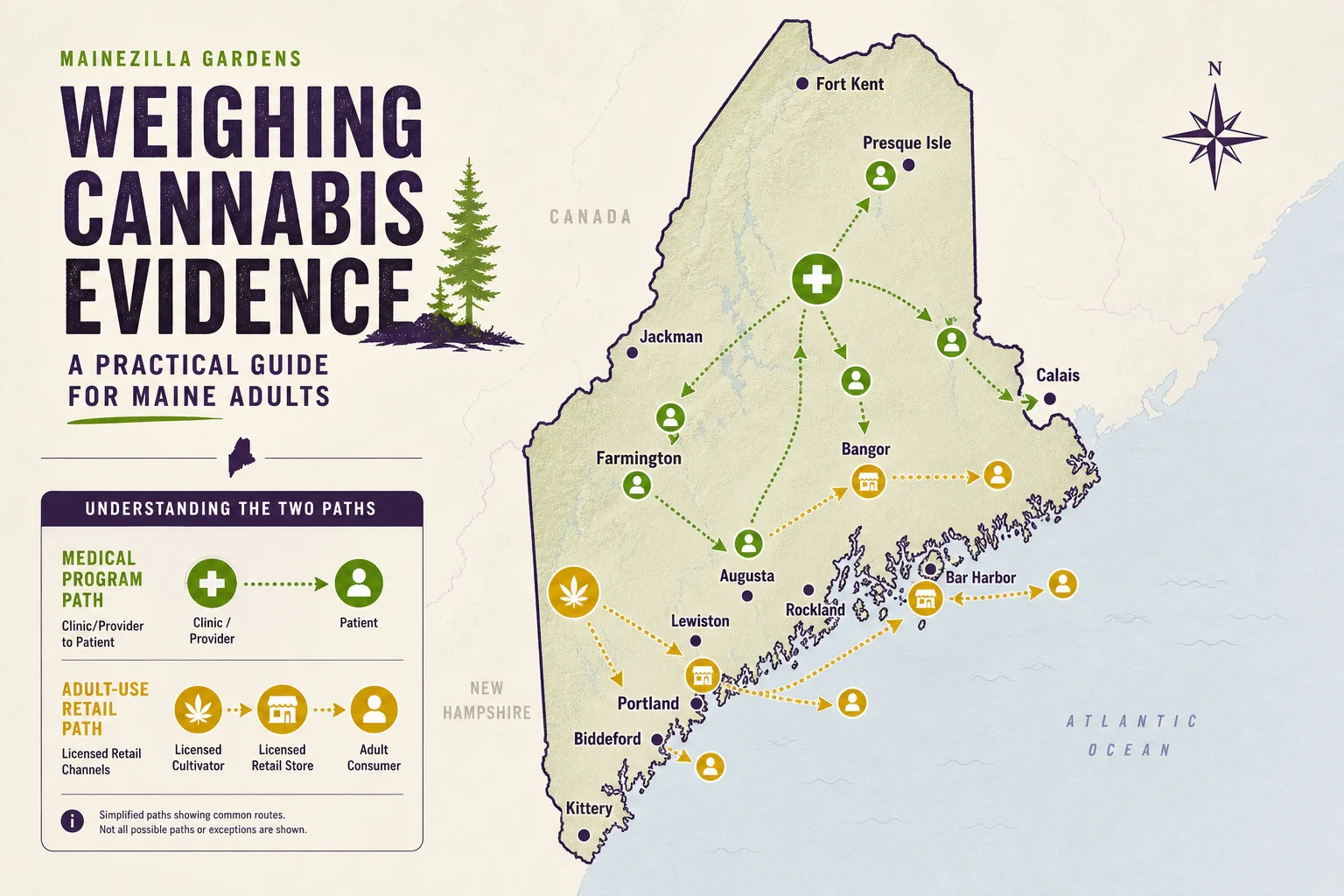
An archival-style program map that distinguishes Maine’s medical and adult‑use supply streams and notes that regulations and recall authorities differ. This visual connects the article’s practical guidance to Maine’s program structure and OCP guidance. It is informational, not legal advice.
Research context: Frequently Asked Questions (FAQs) | Office of Cannabis PolicyLived experience—how to keep it from being dismissed or misused
Lived reports and grower field notes are essential signals. They often arrive earliest when something unexpected shows up in a batch or a patient notes a consistent pattern. The right way to honor lived experience is to regard it as preliminary data: document carefully, ask clarifying questions, and seek corroboration. Practical steps:
- Record batch IDs, harvest dates, environmental conditions, and any lab certificates you have. Good records let you cross‑check a single observation against lab results or other growers’ reports.
- When a patient or caregiver reports an observed change or an untoward event, request timing, formulation, and co‑used substances. These details make the report useful to clinicians or investigators.
- Use lived signals to generate testable questions, and then look for corroborating observational or experimental data before generalizing.
Putting evidence into Maine practice—medical vs. adult‑use distinctions and safety
Maine’s Office of Cannabis Policy manages adult‑use and medical systems that are legally distinct: medical patients and adult consumers use different supply streams, and certain protections and program rules differ. For example, dispensing and distribution have program‑specific rules, and in January 2026 OCP issued a patient advisory related to contaminated medical products—an operational detail that matters to patients and cultivators alike. If you’re making decisions as a patient, caregiver, or grower, know which program applies to you and the program rules that shape product testing and recall authority. (maine.gov)
Safety implications
Federal agencies also provide practical guidance: CDC summarizes known risks and ongoing uncertainties about cannabis health effects; FDA differentiates approved medicines from unregulated products and underscores regulatory gaps in consumer cannabis goods. These federal statements are not moralizing—they are safety‑focused: on dosing unknowns, labeling limits, and the need for rigorous product testing and pediatric safety practices. Bring those formal safety notes into your everyday checklist—especially secure storage, careful label reading, and conservative decisions about driving or operating machinery. (cdc.gov)
A practical, evidence‑informed checklist for ranking claims
-
Identify the study type. Is it mechanism work, an animal model, an observational paper, a trial, or a review? Each has a different evidentiary role.
-
Ask whether the population and product match your question. Trials using a single CBD formulation don’t directly answer questions about a household edible or a plant‑grown flower.
-
Look for measurement quality. Does the report reference validated assays, reference materials, or accredited labs? NIST’s measurement program improves lab comparability; seek labs that participate in QA programs. (nist.gov)
-
Corroborate lived reports. If a patient or grower sees a pattern, check observational studies, poison center alerts, or other field reports before generalizing.
-
Prioritize safety signals. Even weak evidence of serious harms (pediatric exposure, adulterated vape cartridges, contamination) merits conservative action: secure storage, avoiding driving while impaired, and checking batch test results. Poison centers are a free, immediate resource for suspected exposures. (poison.org)
Closing
Ranking cannabis evidence is not an exercise in hierarchy worship; it’s a toolkit for asking better questions and making safer, more honest decisions. Use mechanism work to understand plausibility, observational studies to see patterns, trials and reviews to judge cause when they exist, and lived experience to seed realistic hypotheses. In Maine, fold in program rules and lab QA standards when choosing and documenting products. That combination—curious, evidence‑literate, and grounded in careful record‑keeping—lets adults respect lived experience without mistaking a single note for universal proof.
Key takeaways
- Evidence types answer different questions; value each for what it is. (pubmed.ncbi.nlm.nih.gov)
- Mechanism and lab work inform plausibility and testing quality. (nist.gov)
- Observational studies capture real‑world patterns but do not prove causation. (cdc.gov)
- Systematic reviews are powerful but depend on underlying study quality. (pubmed.ncbi.nlm.nih.gov)
- Consider lived experience useful preliminary data—document it, then corroborate.
Questions this guide answers
How should I treat a single patient or grower report?
Treat it as a valuable observation: document product, batch, timing, and context. Use it to form a question, then look for corroborating reports, observational studies, or lab data before generalizing.
Are systematic reviews always the best evidence?
Systematic reviews are powerful when they include many high‑quality, similar trials. Their usefulness depends on the quality and comparability of the underlying studies; read inclusion criteria and heterogeneity notes.
Where can Maine patients find program‑specific safety info?
Maine’s Office of Cannabis Policy has program details and consumer guidance; OCP has issued product advisories and separates medical and adult‑use streams. Check OCP resources for program rules. ([maine.gov](https://www.maine.gov/dafs/ocp/resources/faq))
What do federal agencies recommend about cannabis safety?
CDC summarizes known health effects and gaps; FDA emphasizes regulatory limitations for most consumer cannabis products. Use their guidance for safety steps like secure storage and careful labeling review. ([cdc.gov](https://www.cdc.gov/cannabis/health-effects/index.html))
If I’m a grower, how can I make my observations useful to researchers?
Keep precise records (batch IDs, dates, environmental data), retain representative samples, and request lab QA documentation. Clear records make it possible to compare field notes to lab results and published studies.
Educational information only. Cannabis affects people differently and this is not medical advice.