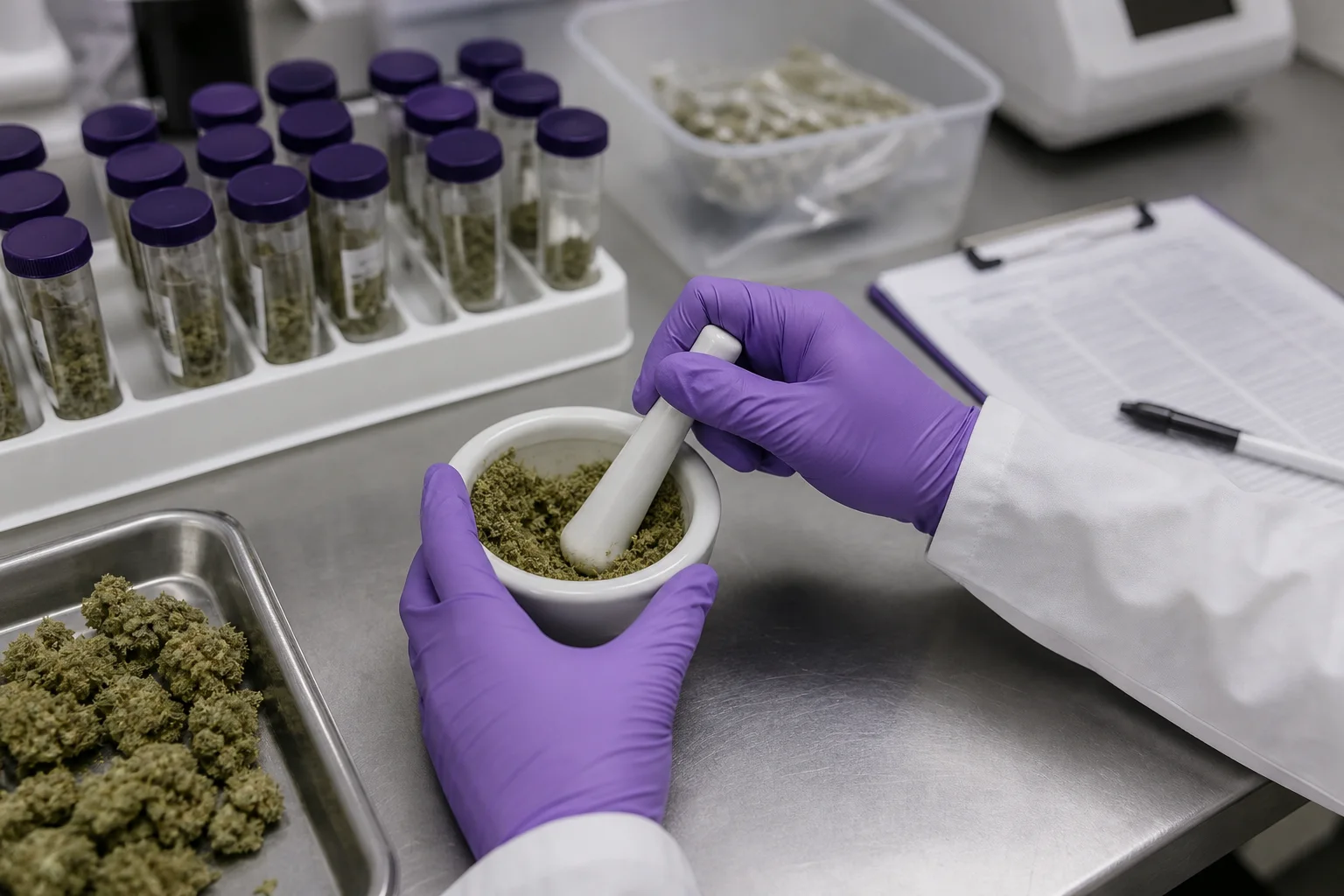
Documentary lab scene: shows how a homogenized test portion is prepared and linked to batch paperwork. This image teaches sampling and traceability but does not show any real lab result or readable report. Limits: cannot display analytical data or guarantee lab practices shown.
Why lab testing exists — and what a single result is meant to be
Licensed labs exist to answer narrow, technical questions about a discrete sample: what cannabinoids were detected and at what concentration, whether the sample contains regulated contaminants (pesticides, heavy metals, solvents, microbial hazards), and whether the sample meets the program’s pass/fail rules. In Maine, testing requirements, the analytes that must be reported, and the certification of testing facilities are set by the Office of Cannabis Policy and accompanying rules. These rules create the framework for what a lab result is intended to communicate to consumers and licensees. (www11.maine.gov)
A single lab result represents one analytical snapshot of one batch or sample collected at a specific time under specific procedures. It is not a label for an entire cultivar, an assurance about effects, or a lifetime statement about freshness or safety. The Office of Cannabis Policy’s consumer materials emphasize that results indicate whether a sample passed the mandatory tests and show measured values for analytes — but those values come with context and limits that matter for interpretation. (maine.gov)
Put simply: a lab report is a technical record about a specific sample. For an adult consumer, it is powerful evidence — but not a full story. What follows explains the key pieces of that story and the places where reasonable uncertainty lives.
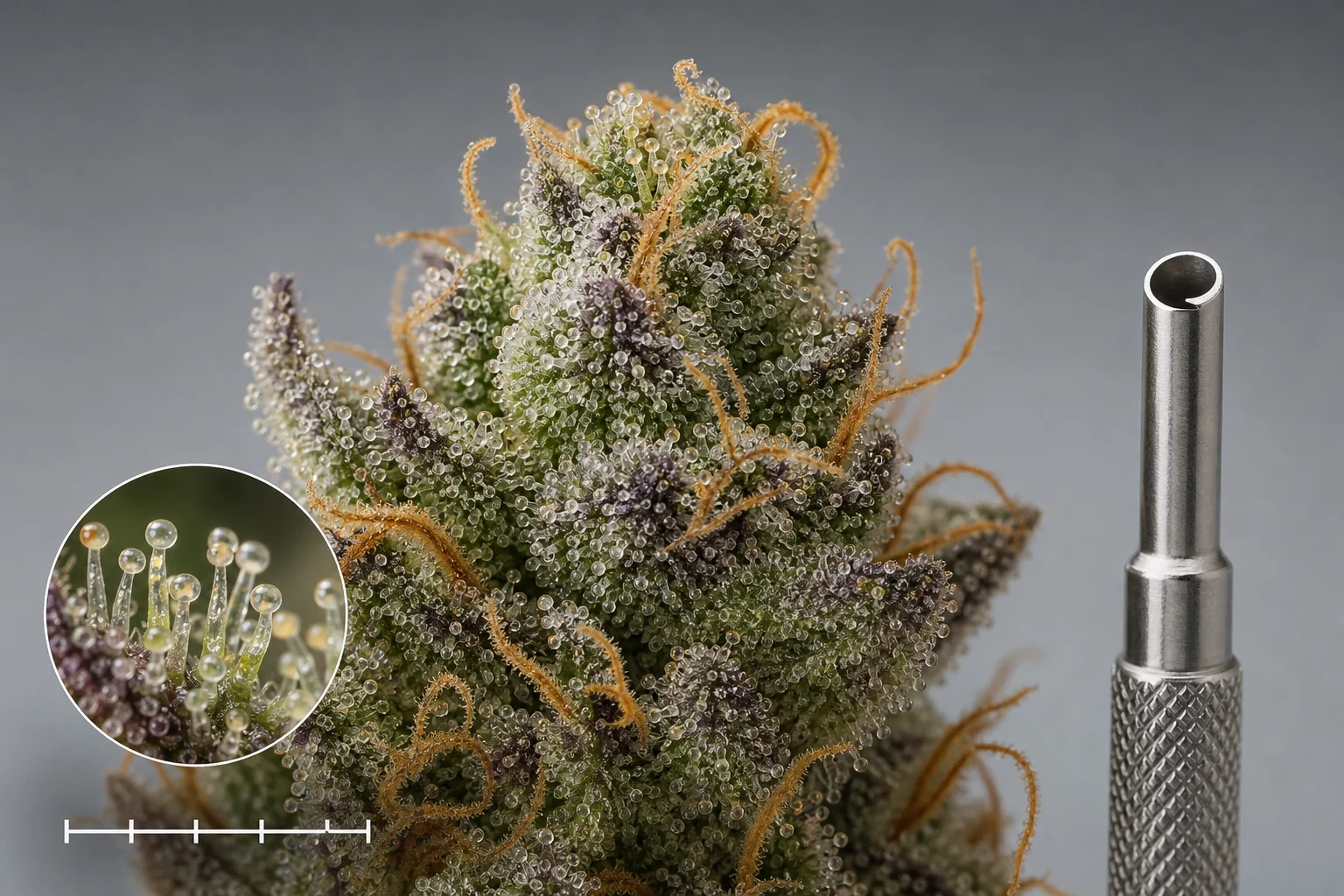
Macro botanical image illustrating why sampling multiple buds matters. The scale bar shows context; the punch tool demonstrates a common sampling technique. Limitations: not a COA and contains no quantitative lab values.
Research context: Adult Use Cannabis Program Rules | Office of Cannabis PolicyHow a single batch result is created: sampling, prep, and the lab workflow
The first and most important source of variation is sampling. Labs analyze either a homogenized portion of the batch or a sample collected by a licensee or an inspector; if that sample does not represent the whole batch, the result may not reflect every package. Effective sampling means taking material from multiple parts of a lot and creating a homogenous test portion. If a single bud or a single cookie is tested, the result applies to that sample — not necessarily to every unit in the batch. Maine’s testing rules and guidance documents describe sample collection and the mandatory analytes that licensed labs must cover, underscoring the importance of traceability and batch numbering on labels. (www11.maine.gov)
Laboratory preparation matters next: drying, grinding, solvent extraction, and dilution introduce sources of analytical variability. Different sample prep approaches can change the proportion of acidic cannabinoids (e.g., THCA) vs. neutral cannabinoids (THC), depending on whether decarboxylation occurs. Instrumental choices (HPLC, GC, LC–MS/MS) and separation conditions can alter how closely structural isomers and acid/neutral forms are measured. Interlaboratory research shows measurable differences across methods and labs, especially for some analytes and complex product matrices. That variability is a signal that a single number should be read with method context in mind. (pmc.ncbi.nlm.nih.gov)
Finally, quality controls and reference materials are used to check accuracy. The National Institute of Standards and Technology (NIST) has developed reference materials and a laboratory quality assurance program that help labs validate their cannabinoid measurements and compare performance. Reference materials are a key reason why two respected labs can still report different numbers: the calibration standards, how they’re used, and the lab’s internal quality systems all shape the reported values. In short: sampling + prep + instrumentation + QC = the single result on your report. (nist.gov)
What potency numbers mean — and what they don’t
When you read “THC 18%” or “Total THC 18.3%” on a lab panel, that figure is the lab’s quantitative estimate for that analyte in the tested sample, usually reported as percent weight for flower or mg per serving for edibles. “Total THC” typically converts acid form (THCA) to THC using a standard formula and reports the sum as the potential THC after decarboxylation. That is a chemically useful number, not a predictor of how an individual will feel. Physiologic effects depend on route of administration, body chemistry, tolerance, and timing — things a lab number cannot capture. Interpreting potency in consumer terms requires remembering that potency is only one piece of the pharmacologic puzzle. (pmc.ncbi.nlm.nih.gov)
Analytical nuance matters: some cannabinoids are unstable or coelute with others depending on the method, and method-specific biases can push numbers up or down. Interlaboratory studies have found better agreement for major analytes like Δ9‑THC and CBD than for some acid forms or minor cannabinoids; nevertheless, even major analytes show lab‑to‑lab scatter. That means a potency difference of a small number of percentage points between reports can be within expected analytical variation rather than evidence of fraud or a different plant. Understanding the lab method and the lab’s quality practices can help you decide how much weight to give small differences. (pmc.ncbi.nlm.nih.gov)
For edibles and manufactured products, the lab’s per‑serving numbers are useful for packaging and safety limits, but unit‑to‑unit variation and changes over shelf life are still possible. Maine law requires per‑serving information for edibles and batch numbers so that testing and labeling align with what was tested. That traceability is useful — but it does not convert an analytical mean into an assurance of a particular user experience. (legislature.maine.gov)
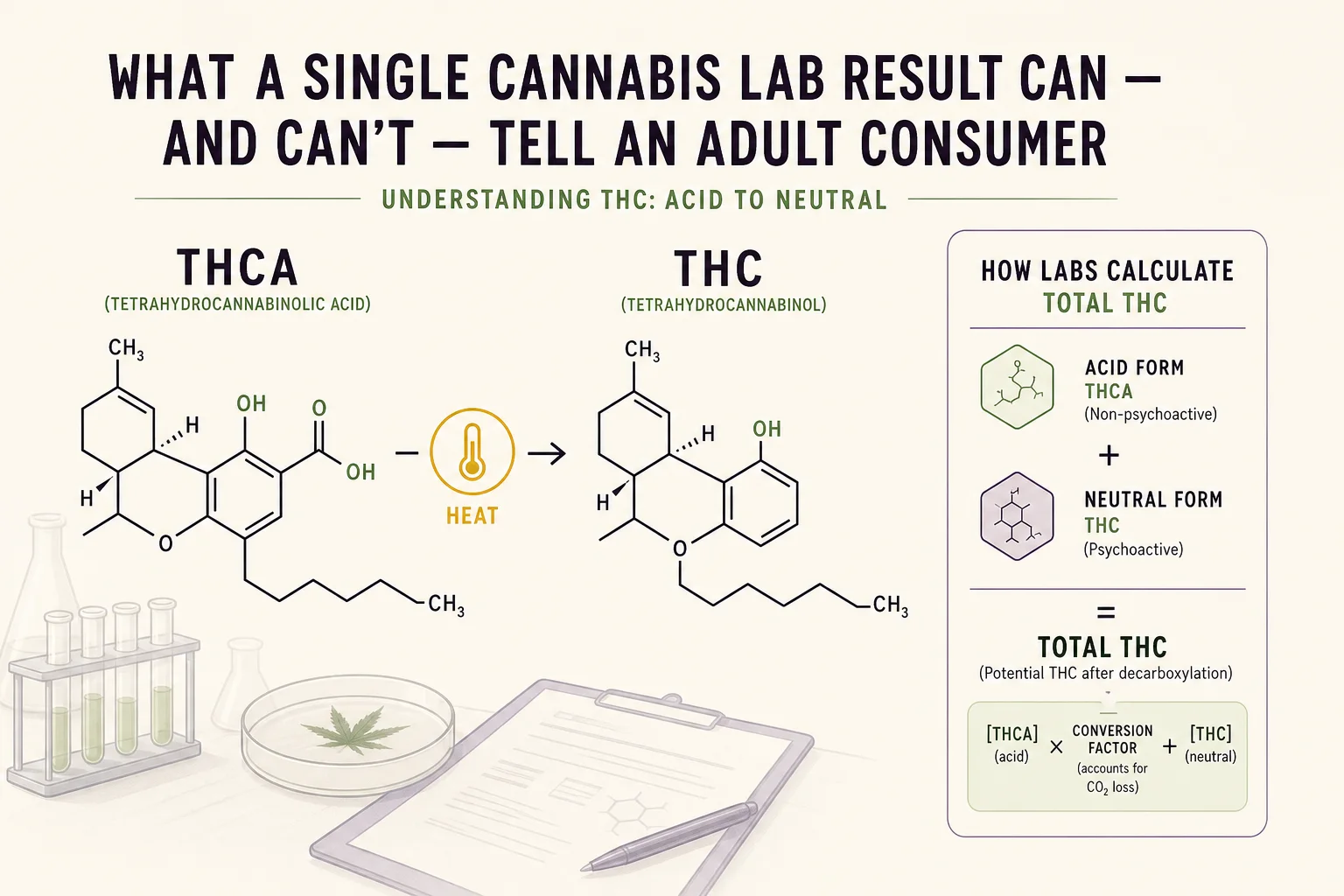
Explainer diagram of acidic-to-neutral cannabinoid conversion and how labs report 'total THC.' This visual teaches calculation concepts, not clinical effects. Limitations: schematic only, no real sample data.
Research context:Contaminants, pass/fail windows, and limits of what a test can protect you from
One of the clearest roles of regulated testing is contaminant screening: pesticides, residual solvents, heavy metals, microbial organisms, and foreign matter are measured against program limits. A “pass” means the tested sample met the mandatory analyte limits at the time of testing. However, a pass applies to that sample and that moment: post‑lab handling, storage, and rework (e.g., remediated batches, repackaging) can change contamination risk. Maine guidance and rules specify mandatory analytes and describe remediation paths for certain failures, which helps manage but does not eliminate downstream risk. (www11.maine.gov)
Testing also has detection limits — the smallest amount the method can reliably see. Non‑detection is not proof of absolute absence; it means the analyte, if present, is below the method’s limit or not captured by that method. For highly toxic contaminants that appear in trace amounts, the interplay of sample size, extraction efficiency, and instrument sensitivity determines whether a given run will detect them. That is why regulators and labs focus on validated methods and proficiency testing — to keep detection limits fit for the analyte and matrix. NIST’s work on reference materials and interlaboratory exercises is directly aimed at shrinking those uncertainties. (nist.gov)
Finally, some harms are not measurable by routine lab panels. For example, new synthetic adulterants or contaminants not on the mandatory analyte list can slip through until regulators add them. Similarly, illicitly manufactured products sometimes contain unexpected cutting agents or novel compounds that standard panels do not include. For these reasons, a single clean report reduces—but does not eliminate—risk, and responsible labeling, appropriate storage, and consumer caution remain important. (fda.gov)
Why different labs sometimes report different numbers (and what “lab shopping” means)
Interlaboratory differences stem from real, technical causes: method selection (HPLC vs GC), how acid cannabinoids are handled, instrument calibration, the use of internal standards, matrix effects, and human factors. Scientific reviews show that while modern methods can be precise, comparability between labs depends on harmonized methods, shared reference materials, and proficiency testing. NIST and interlaboratory studies document both progress and remaining gaps in standardization. (pmc.ncbi.nlm.nih.gov)
“Lab shopping” refers to sending samples selectively to labs believed to report more favorable numbers. Statistical analyses in other states have found suspicious clustering of THC values around commercially desirable thresholds, which is circumstantial evidence that incentives can shape reporting patterns. That scholarship supports Maine’s move to robust lab certification, mandatory testing rules, and transparent reporting so consumers can have greater confidence in results from certified facilities. Understanding the local rules for lab certification and mandatory analytes helps put an individual report in context. (pmc.ncbi.nlm.nih.gov)
Indicators of comparability include labs that document validated methods, participate in proficiency testing, use reference materials, and openly describe sample preparation. Maine’s OCP maintains lists of certified testing facilities and publishes guidance about required analytes for mandatory testing — those materials are the best place to start when judging a report’s reliability. (www11.maine.gov)
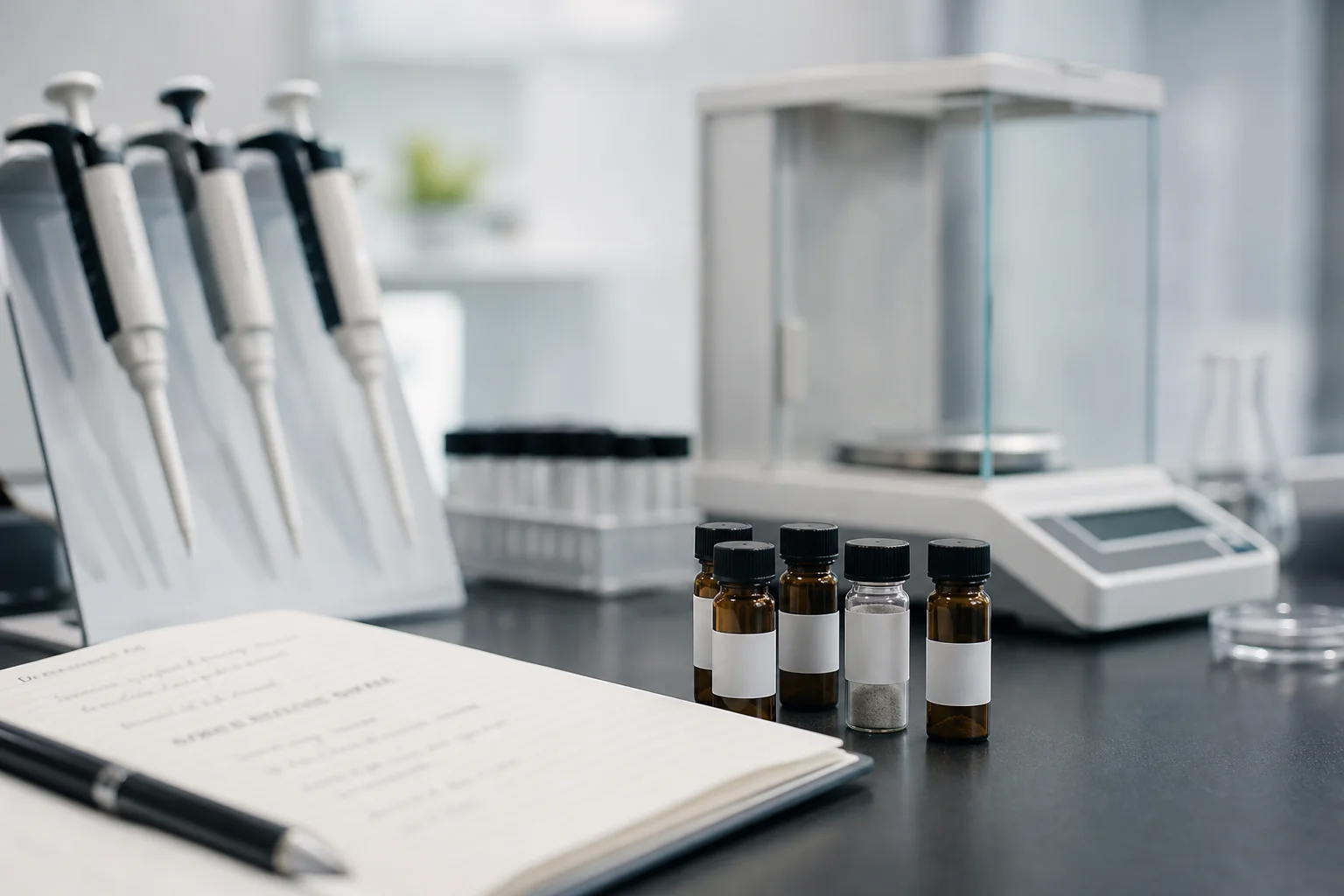
Reference material in quality assurance: demonstrates why calibration and certified reference materials matter when comparing labs. Limitations: does not reveal test results or proprietary methods.
Research context: NIST’s new Hemp Reference Material will help ensure accurate cannabis measurementsMaine specifics: labeling, batch numbers, and distinctions between medical and adult‑use programs
Maine statute requires labels to include the cultivation, manufacturing, and store license numbers; an identity statement; batch numbers; net weight; and potency information for THC and other cannabinoids. For edibles, law requires per‑serving cannabinoid content and number of servings per package. These rules are designed to link what’s on the shelf back to the tested batch and to give consumers the basic facts the law prescribes. That legal framework also creates obligations for licensees about retesting and relabeling if they claim different potency based on a retest. (legislature.maine.gov)
Maine operates both a medical program and an adult‑use program with overlapping but distinct statutory paths. Medical program recordkeeping and labeling rules can differ, and the medical statute includes its own reporting and transport label requirements. If you participate in the medical program, review the relevant medical statute and the Office of Cannabis Policy materials to understand differences in testing, packaging, and labeling obligations. Maine’s OCP publishes separate resources for adult‑use and medical testing rules and for sample collection reminders and mandatory analyte lists. (www11.maine.gov)
Regulation is an active process: Maine’s rules and guidance documents are periodically updated (for example, changes to mandatory pesticide testing and clarifications about sample collection). For consumers and small growers who value traceability, the presence of batch numbers and a lab report tied to that batch is the most direct link the system provides between a packaged product and the analytical record. But the batch‑bound nature of the result ties the tested outcome back to that batch, not to a cultivar name or to an entire farm’s output across seasons. (maine.gov)
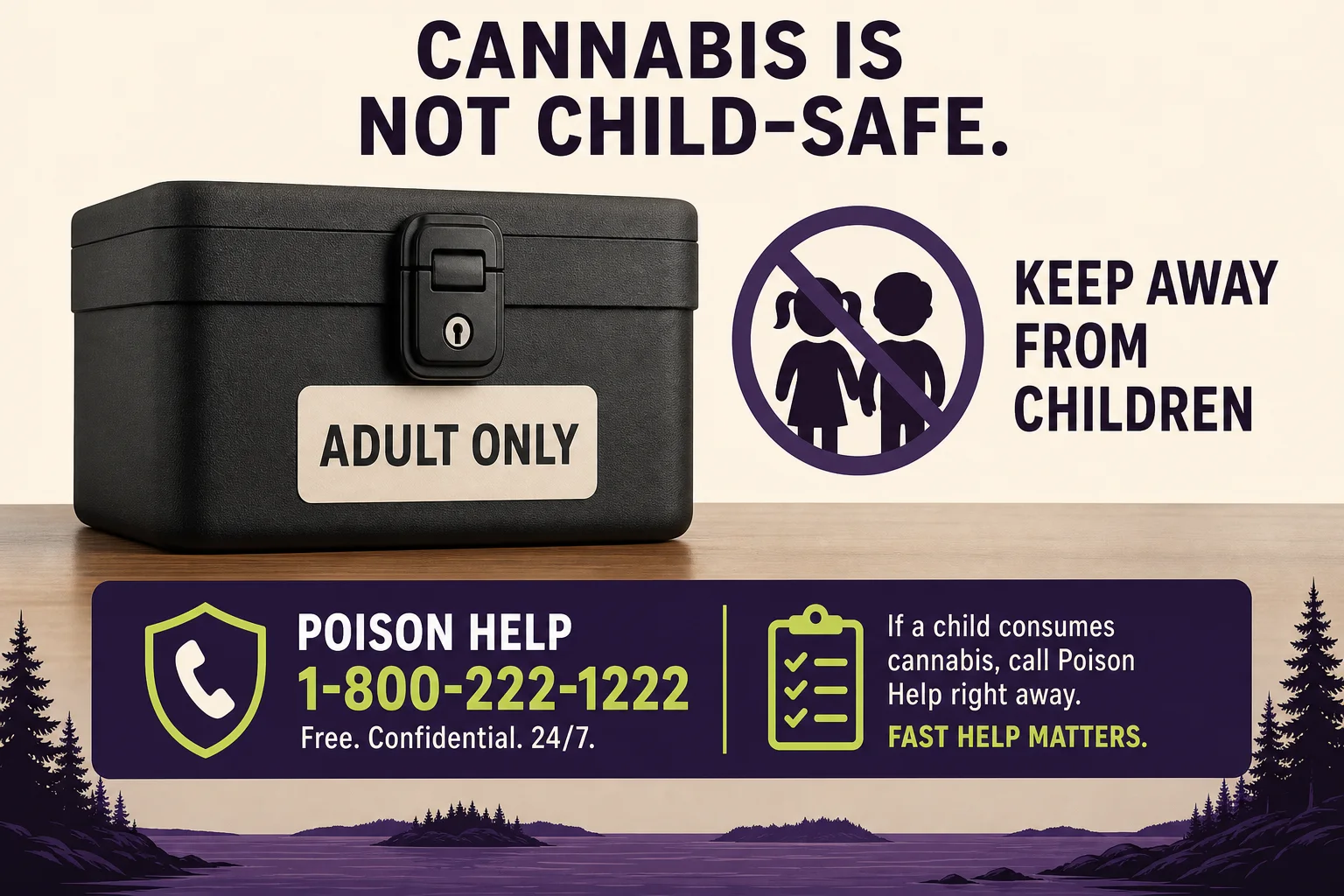
Safety and prevention visual: emphasizes keeping edibles and cannabis products out of children’s reach and lists Poison Control as the first immediate help resource. Limitations: educational graphic only, not legal advice.
Practical checklist: how to use one lab result when you’re deciding what to buy or keep
-
Verify the report corresponds to the batch you’re holding. A useful check is whether the package’s batch number matches the lab report and whether the report is from a Maine‑certified lab. OCP maintains lists of certified testing facilities and the rules that define mandatory analytes. A missing or non‑matching batch number suggests the report may not represent the package. (www11.maine.gov)
-
Consider the methods and reporting limits when they’re provided. Many labs include method notes and limits of detection; those details help contextualize measured values. An unfamiliar method or unusually low reporting limits can warrant follow‑up with the licensee or OCP. Small percentage‑point differences in THC between labs are often within expected analytical variability; large differences or surprising contaminants merit further inquiry. (pmc.ncbi.nlm.nih.gov)
-
View the contaminant panel as a source of safety signals rather than proof of absolute sterility. A clean pesticides/heavy metals/microbes panel reduces risk, but non‑detection depends on method sensitivity and sampling. Proper storage and careful handling also affect downstream risk, and Poison Control recommends calling 1‑800‑222‑1222 or using webPOISONCONTROL® if a child ingests a cannabis product. (poison.org)
-
Regard potency as labeling information that aids comparison, not as a predictor of individual experience. Potency figures help with packaging and regulatory compliance but do not capture individual variability in response. Labeling and per‑serving information can help indicate pacing and onset considerations for edibles. (legislature.maine.gov)
-
If a lab report is being used to address safety concerns, transparency options include confirming which lab ran the test, requesting the full certificate of analysis (COA), and verifying that the lab is certified by Maine OCP. The OCP guidance documents describe mandatory testing analytes and the certification process for testing facilities. (www11.maine.gov)
Closing note on uncertainty and practical confidence
Science always comes with uncertainty; regulated testing reduces uncertainty but does not abolish it. A single, well‑documented COA from a Maine‑certified lab is valuable evidence about a batch’s measured chemistry and compliance status. Reading the COA in tandem with packaging dates, batch traceability, storage history, and the lab’s method and certification details provides a fuller basis for evaluating a product. When questions remain about safety or a suspicious report, Maine’s Office of Cannabis Policy materials and certified lab lists are appropriate starting points for follow‑up. (maine.gov)
Key takeaways
- A lab result is a snapshot of a single sample from a single batch; it is powerful evidence but not definitive proof of future experience or perpetual safety. (maine.gov)
- Sampling, sample prep, and method choice drive much of the numerical variability between labs; small differences in percent THC are often method noise. (pmc.ncbi.nlm.nih.gov)
- Maine law requires batch numbers, potency info, and certified testing — use those legal links to confirm a COA applies to your package. (legislature.maine.gov)
- Contaminant pass/fail is meaningful for the tested sample, but non‑detection depends on method sensitivity; keep edibles away from children and use Poison Control if needed. (poison.org)
Frequently asked questions
Q: Does a single lab result tell me how a product will affect me? A: No. A COA reports measured chemistry for a specific sample. Individual effects depend on route, tolerance, metabolism, and timing; the report can inform choices but cannot predict experience. (pmc.ncbi.nlm.nih.gov)
Q: If two labs give slightly different THC numbers, which one is right? A: Both can be technically correct within method and sampling variability. Look at methods, QC, and whether labs use validated reference materials; Maine‑certified labs and proficiency testing increase confidence. (nist.gov)
Q: If my product passed lab testing, can I ignore storage or safety concerns? A: No. A passing COA applies to the tested sample at that time. Poor storage, repackaging, or unit variability (especially with edibles) can change outcomes. Keeping products secure and stored appropriately, and ensuring edibles are inaccessible to children, are commonly recommended practices. ()
Sources
- Rules for the Certification of Cannabis Testing Facilities, Adult Use Cannabis Program Rules. Office of Cannabis Policy. https://www11.maine.gov/dafs/ocp/adult-use/rules-statutes/rules
- Title 28‑B §701: Labeling and packaging. Maine Legislature. https://legislature.maine.gov/legis/statutes/28-B/title28-Bsec701.html
- Understanding Cannabis Testing Requirements & Results in Maine (consumer guidance PDF). Office of Cannabis Policy. https://www.maine.gov/dafs/ocp/sites/maine.gov.dafs.ocp/files/2023-10/Understanding%20Maine%20Cannabis%20Testing%20Requirements%20%26%20Results.pdf
- NIST: NIST’s new Hemp Reference Material will help ensure accurate cannabis measurements. https://www.nist.gov/news-events/news/2024/07/nists-new-hemp-reference-material-will-help-ensure-accurate-cannabis
- The frequency distribution of reported THC concentrations ... (interlaboratory / lab‑shopping analysis). PubMed Central. https://pmc.ncbi.nlm.nih.gov/articles/PMC7958443/
- FDA: Regulation of Cannabis and Cannabis‑Derived Products, including CBD. U.S. Food and Drug Administration. https://www.fda.gov/news-events/public-health-focus/fda-regulation-cannabis-and-cannabis-derived-products-including-cannabidiol-cbd
- My child ate a cannabis edible. Poison Control. https://www.poison.org/articles/my-child-ate-a-cannabis-edible
Visual briefs
-
role: "hero" after_section: -1 alt: "Laboratory technician preparing a homogenized cannabis sample for extraction on a clean bench, labeled tubes and batch paperwork visible but unreadable." caption: "Documentary lab scene: shows how a homogenized test portion is prepared and linked to batch paperwork. This image teaches sampling and traceability but does not show any real lab result or readable report. Limits: cannot display analytical data or verify lab practices shown." prompt: "Documentary-style photograph in a certified testing lab: close-up of gloved hands preparing a homogenized cannabis sample for extraction on a stainless bench, labeled sample tubes and a batch manifest (blurred), neutral cool lighting, clinical but non-promotional, depth of field to emphasize homogenization tools and chain-of-custody paper. No logos or readable documents." source_urls: ["https://www.maine.gov/dafs/ocp/sites/maine.gov.dafs.ocp/files/2023-10/Understanding%20Maine%20Cannabis%20Testing%20Requirements%20%26%20Results.pdf"]
-
role: "section" after_section: 0 alt: "Botanical macro of cannabis trichomes with a millimeter scale bar and a micro-punch sampling tool nearby." caption: "Macro botanical image illustrating why sampling multiple buds matters. The scale bar shows context; the punch tool demonstrates a common sampling technique. Limitations: not a COA and contains no quantitative lab values." prompt: "High resolution botanical macro: cannabis bud trichomes and capitate-glandular heads, include a millimeter scale bar and a stainless micro‑punch sampling tool positioned to one side; neutral gray background, documentary scientific lighting, no branding or text, accurate plant morphology." source_urls: ["https://www11.maine.gov/dafs/ocp/adult-use/rules-statutes/rules"]
-
role: "section" after_section: 2 alt: "Annotated diagram showing decarboxylation conversion from THCA to THC and where 'total THC' calculations come from." caption: "Explainer diagram of acidic-to-neutral cannabinoid conversion and how labs report 'total THC.' This visual teaches calculation concepts, not clinical effects. Limitations: schematic only, no real sample data." prompt: "Clear scientific illustration: chemical schematic showing THCA converting to THC with heat, side panel showing formula used to calculate 'total THC' from acid + neutral forms, minimalist lab-style art, readable chemistry labels but no numerical lab values, neutral palette." source_urls: ["https://pmc.ncbi.nlm.nih.gov/articles/PMC7958443/"]
-
role: "section" after_section: 4 alt: "Photograph of a stack of NIST reference material vials and a lab notebook entry (blacked/blurred out) in a quality‑assurance workflow." caption: "Reference material in quality assurance: demonstrates why calibration and certified reference materials matter when comparing labs. Limitations: does not reveal test results or proprietary methods." prompt: "Documentary photograph: small vials labeled as reference material (labels non-readable), a lab notebook page with method headings visible but text blurred, precision pipettes and a balance in soft focus, clinical lighting and neutral background; no logos, no numeric results." source_urls: [""]
Questions this guide answers
Does a single lab result tell me how a product will affect me?
No. A COA reports measured chemistry for a specific sample. Individual effects depend on route, tolerance, metabolism, and timing; the report can inform choices but cannot predict experiences. ([pmc.ncbi.nlm.nih.gov](https://pmc.ncbi.nlm.nih.gov/articles/PMC8838193/))
If two labs give slightly different THC numbers, which one is correct?
Both can be technically correct within method and sampling variability. Compare methods, QC, and whether labs use validated reference materials; Maine‑certified labs and proficiency testing increase confidence. ([nist.gov](https://www.nist.gov/programs-projects/nist-tools-cannabis-laboratory-quality-assurance))
If my product passed testing, can I ignore storage and safety?
No. A passing COA applies to the tested sample at that time. Poor storage, repackaging, or unit variability—especially with edibles—can change outcomes. Keep products secure and out of reach of children; call Poison Control for ingestion concerns. ([maine.gov](https://www.maine.gov/dafs/ocp/sites/maine.gov.dafs.ocp/files/2023-10/Understanding%20Maine%20Cannabis%20Testing%20Requirements%20%26%20Results.pdf))
How do I verify a lab is certified in Maine?
Use the Office of Cannabis Policy’s resources and certified lab lists. OCP publishes guidance on required analytes, sample collection, and certification. ([www11.maine.gov](https://www11.maine.gov/dafs/ocp/adult-use/rules-statutes/rules))
What should I do if a COA shows a concerning contaminant?
Contact the licensee and Maine’s Office of Cannabis Policy for guidance. For acute medical concerns—especially with children—contact Poison Control at 1‑800‑222‑1222 or use webPOISONCONTROL®. ([www11.maine.gov](https://www11.maine.gov/dafs/ocp/resources/guidance-documents/mandatory-testing))
Educational information only. Cannabis affects people differently and this is not medical advice.