
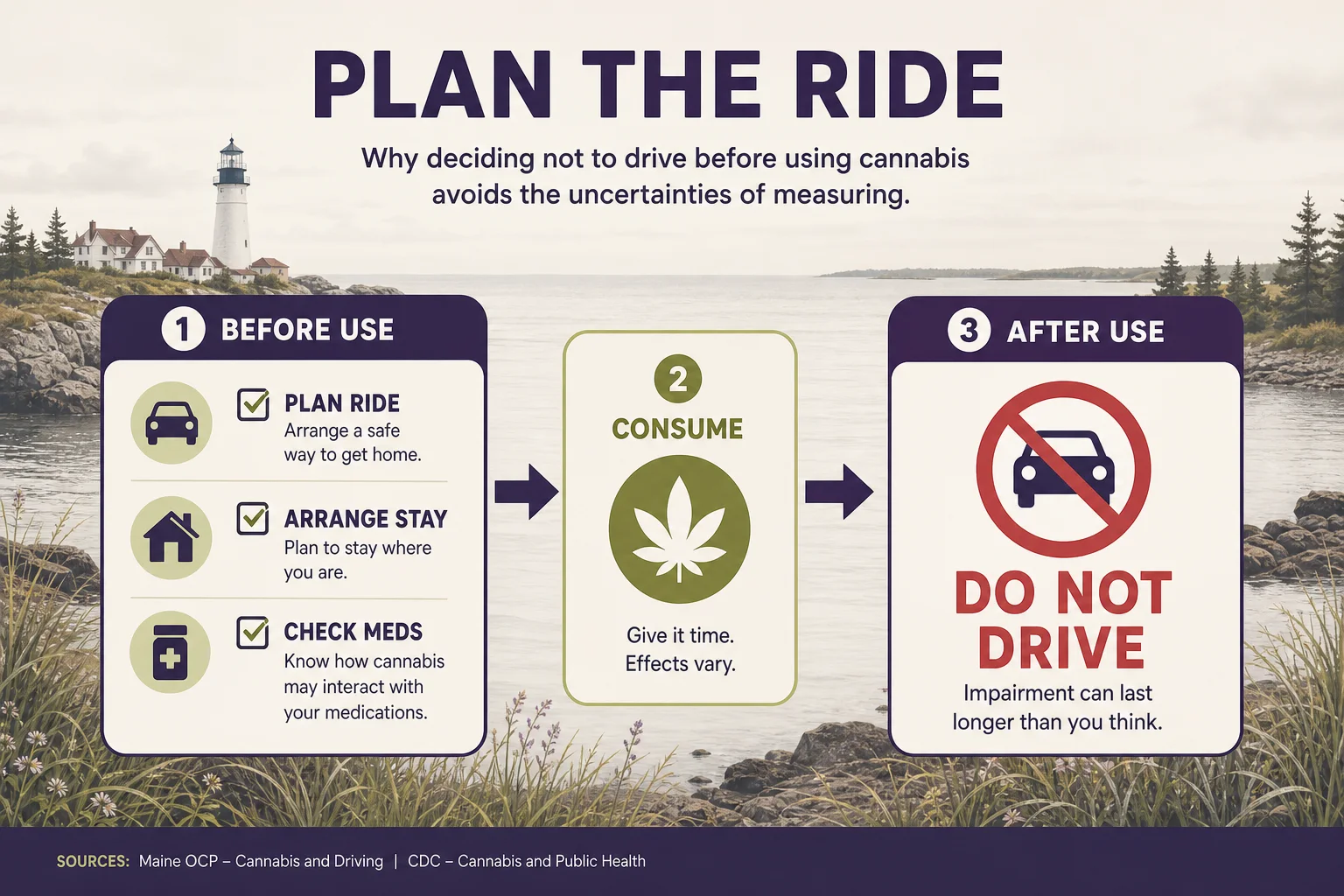
Documentary‑style decision flow that shows the recommended step: choose a no‑drive plan before cannabis use. This visual teaches the article’s central practical advice and avoids suggesting any specific measurement method. Sources used for guidance: Maine OCP consumer materials and CDC guidance on cannabis and driving. Limit: this is instructional, not a legal document or impairment test.
Decide before you use: the no‑drive decision
Choosing not to drive before you consume cannabis is a clear safety option. Driving is a complex, split‑second activity that relies on reaction speed, coordination, perception, and judgment — all of which cannabis can affect. Public health authorities advise avoiding alcohol or drugs, including cannabis, if you plan to drive. (cdc.gov)
When you make the no‑drive decision ahead of time, you remove the guesswork that follows use: you don't have to measure your impairment, chase a blood or oral fluid test, or rely on a subjective feeling of being "okay." Planning ahead creates predictable choices (ride, stay, sleep it off, or arrange transit) and reduces the chance that an uncertain moment will lead to a risky one.
From the perspective of people who grow and work with cannabis, planning a ride is also respectful of variability — product strength, route, and tolerance all vary. In a regulated market like Maine's, labeling and testing reduce some uncertainty about product contents, but they don’t convert a decision about your ability to drive into a simple math problem.
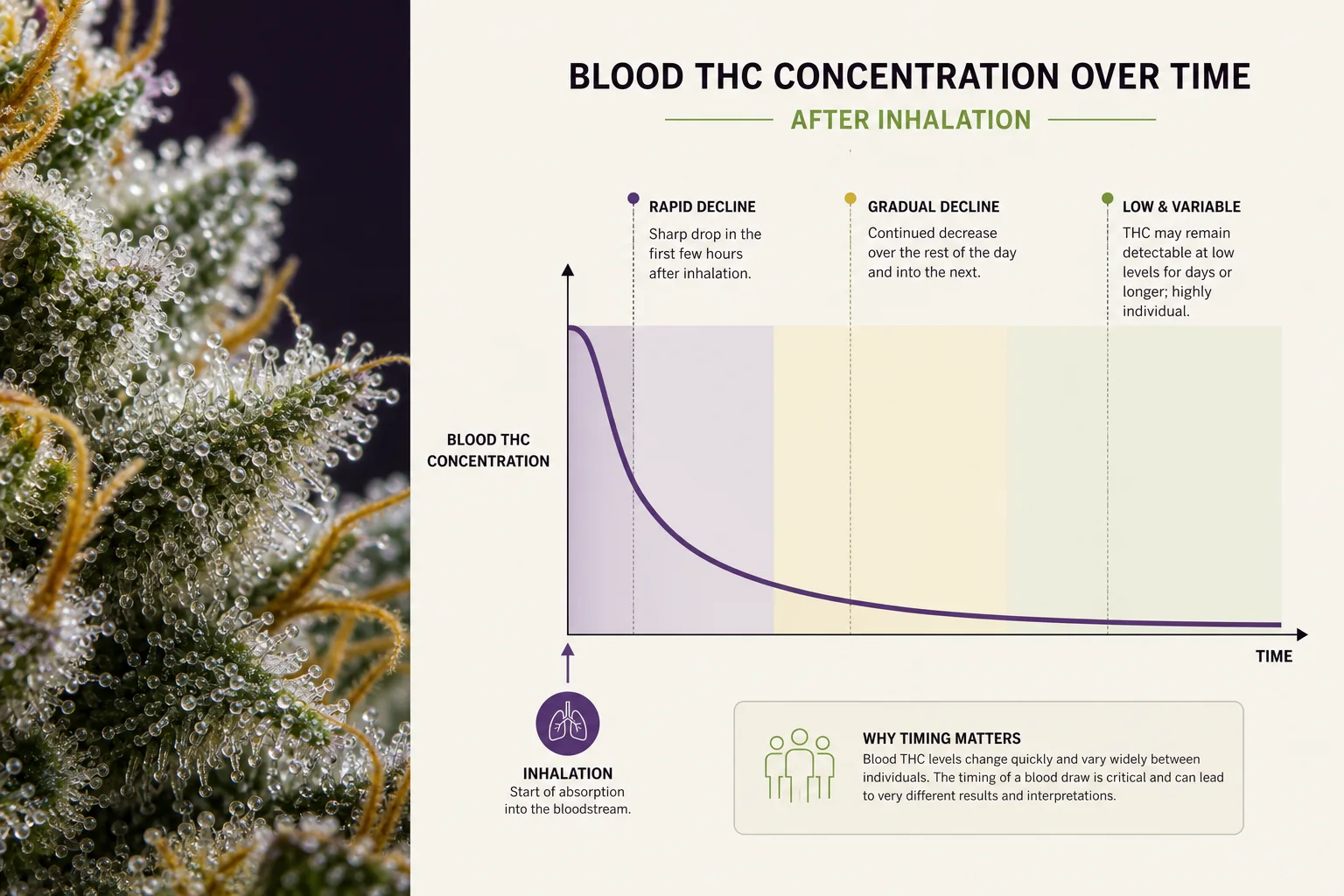
A botanical macro that pairs plant detail with an explanatory timeline showing how blood THC concentrations can fall quickly after inhalation. This visual links plant form to pharmacokinetics but does not imply a specific concentration‑to‑impairment threshold. It’s based on pharmacokinetic research showing rapid post‑use declines. Limit: timeline is schematic and not for forensic use.
Research context: Effect of Blood Collection Time on Measured Δ9‑Tetrahydrocannabinol Concentrations: Implications for Driving Interpretation and Drug PolicyWhy impairment is hard to measure after the fact
You may have heard about THC counts in blood, saliva, or urine and thought a test could tell you whether you are fit to drive. In practice, those measures are blunt instruments for on‑the‑spot decisions. THC concentrations in blood change rapidly after inhalation or ingestion; levels that would have been present while you were driving can fall substantially by the time a sample is drawn. One controlled human study showed rapid declines in blood THC in the hour after use, demonstrating that forensic concentrations often cannot be back‑extrapolated to reliably estimate impairment during driving. (pubmed.ncbi.nlm.nih.gov)
Beyond kinetics, the relationship between a single biomarker level and real‑world driving performance is noisy. Systematic reviews and meta‑analyses find associations between recent cannabis use and driving performance decrements, but they also highlight that the correlation between measured THC and impairment is inconsistent for individuals — meaning a given THC number does not map neatly to a given level of crash risk for every person. These limitations make post‑use testing a poor tool for personal, immediate decision‑making. (pubmed.ncbi.nlm.nih.gov)
For this reason, public health guidance — and many state programs — emphasize behavioral strategies (don’t drive) rather than relying on biological measures after the fact. It’s a pragmatic approach: a prior decision reduces both risk and the need to interpret imperfect tests under pressure. (cdc.gov)
Individual variability: tolerance, metabolism, and timing
People differ in how quickly they absorb and clear THC, how intensely they feel its effects, and how their cognition responds. Tolerance alters subjective and objective responses: a person who uses frequently can have measurable THC without obvious impairment, while an inexperienced user can be strongly affected by a small amount. This heterogeneity means that knowing "how much THC" a product contains or how many milligrams you consumed does not translate directly into knowing whether you can safely drive. (pubmed.ncbi.nlm.nih.gov)
Route of use matters too. Inhaled cannabis generally produces faster, shorter peaks of THC in blood and mind, while edibles produce delayed and sometimes longer‑lasting effects. That shift in timing adds unpredictability: edibles can peak hours after consumption, which complicates any after‑the‑fact decision to drive if you weren't expecting the timing. Maine OCP consumer education highlights differences between medical and adult‑use contexts and underscores the importance of understanding product forms and onset times when planning activities like driving. (maine.gov)
Finally, recent research shows that even within the same person, measured THC concentrations can fluctuate and decline quickly, so a single measurement may not reflect impairment during a prior driving episode. That variability at the individual level is precisely why pre‑planning reduces reliance on uncertain, post‑hoc measurements and provides a clearer framework for choices about travel after use. (pubmed.ncbi.nlm.nih.gov)
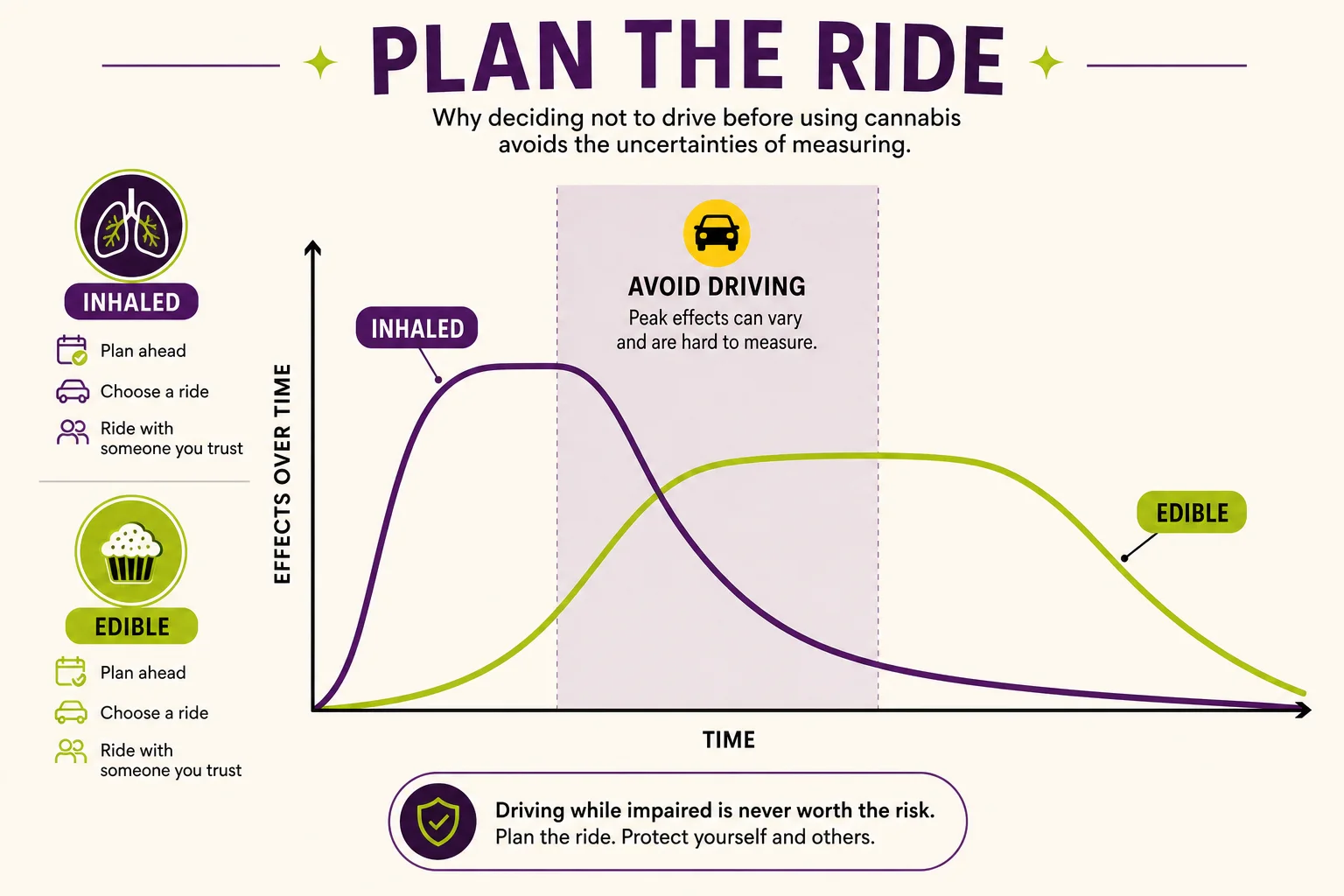
An evidence‑informed explanatory illustration showing relative onset and peak timing for inhaled versus edible cannabis, emphasizing planning implications (e.g., delayed onset for edibles). This teaches why timing matters when you decide not to drive ahead of use. Limit: it avoids numeric dosing or guaranteed timelines.
Research context: Resource Library | Maine Cannabis 101 (Office of Cannabis Policy) · Are blood and oral fluid Δ9‑tetrahydrocannabinol (THC) and metabolite concentrations related to impairment? A meta‑regression analysisCombined substances: why "two together" is more than double risk
One of the clearest and most consistent findings in the literature is that combining substances — especially alcohol and cannabis — increases driving impairment more than either substance alone. Meta‑analyses and controlled studies report additive or even synergistic effects on key driving behaviors like lane keeping, reaction time, and crash risk. In other words, having a beer with cannabis can magnify impairment in ways that small, separate doses would not predict. (pubmed.ncbi.nlm.nih.gov)
This interaction isn't limited to alcohol. Common prescription and over‑the‑counter medications (antidepressants, benzodiazepines, some antihistamines, and opioids) can change how cannabis affects cognition or combine to reduce alertness. Those interactions vary by dose and timing and are often under‑recognized by consumers. For that reason, pre‑use planning can include an honest accounting of other substances taken that day. If other sedating substances are present, avoiding driving is a commonly recommended option. (pubmed.ncbi.nlm.nih.gov)
A practical implication: after you use, it’s much harder to undo combined‑substance effects or to reliably measure them. If multiple substances are in play, the no‑drive decision prior to consumption acknowledges real biological interactions that make quick, accurate self‑assessment unlikely.
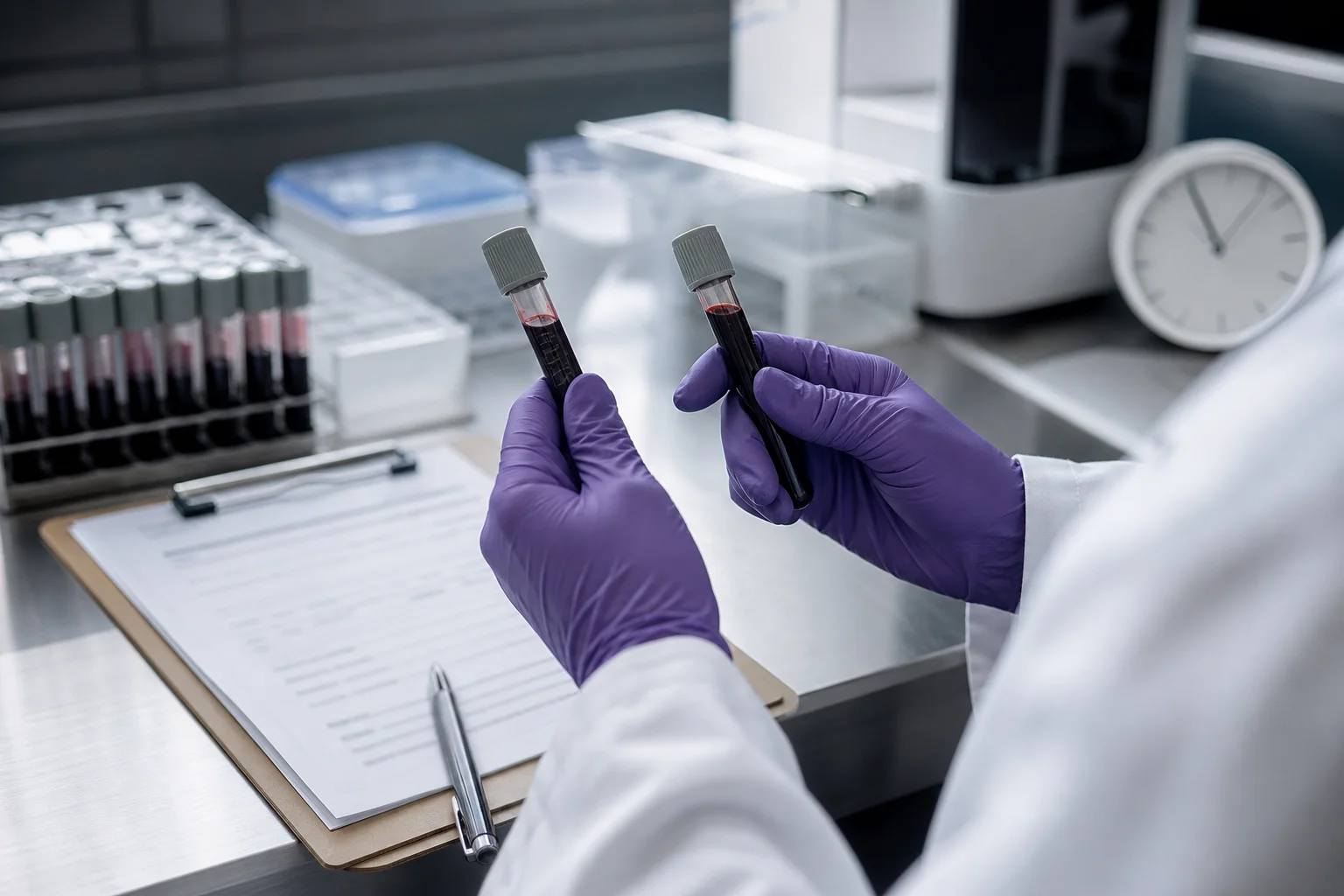
A laboratory documentary image that illustrates how blood sampling and timing affect measured THC concentrations, supporting the article’s point that a single sample is an imperfect indicator of impairment. Limit: do not display readable names, test results, or suggest forensic thresholds.
Research context: Effect of Blood Collection Time on Measured Δ9‑Tetrahydrocannabinol Concentrations: Implications for Driving Interpretation and Drug Policy · The effects of cannabis and alcohol on driving performance and driver behaviour: a systematic review and meta-analysisThe limits of personal confidence: "I feel fine" is a fragile metric
People routinely overestimate their fitness to drive after using substances. Perceived impairment and willingness to drive do not always move in lockstep: some studies show that users report feeling impaired yet still indicate willingness to drive, especially after mixing substances. Conversely, experienced users may feel subjectively "okay" while showing measurable performance decrements on simulator or psychomotor tests. Self‑reports are influenced by mood, social pressure, and prior beliefs about tolerance. (pubmed.ncbi.nlm.nih.gov)
Confidence is not evidence. The human brain is poor at making fine discriminations about small deficits in reaction time, divided attention, or spatial judgment. These are precisely the faculties that traffic safety depends on. For growers and people who spend long hours watching plants, it can be tempting to use experience as a heuristic: "I know my limits." But experience can mask subtle deficits that matter in a dynamic driving environment.
One practical habit is adopting a fixed, simple rule: avoid using cannabis when you expect to drive later. A prior rule removes the unreliable and emotionally loaded step of asking yourself after the fact whether you "feel okay." Framing the decision in advance turns an on‑the‑spot judgment into a predictable choice.
Maine rules and how they shape the decision
Maine law prohibits consuming cannabis in a vehicle on a public way and establishes regulatory frameworks for both adult‑use and medical programs. The Office of Cannabis Policy provides consumer education and clarifies differences between Maine’s programs, including safe use and possession limits. These rules operate alongside general impaired‑driving statutes enforced by law enforcement. In practice, a no‑drive plan also reduces legal exposure and keeps behavior within the state's public safety expectations. (www1.maine.gov)
For medical patients, there are separate program rules (Title 22) that structure how the medical program functions, but that does not change the basic safety calculus for driving — impairment risks remain. The Office of Cannabis Policy and Maine CDC emphasize consumer education, storage safety, and avoiding driving after use as part of broader public health messaging. (maine.gov)
When planning, think of legal boundaries and safety together: a prior decision not to drive is both a compliance step and a harm‑reduction option. It keeps the focus on predictable choices rather than situational judgment under the influence.
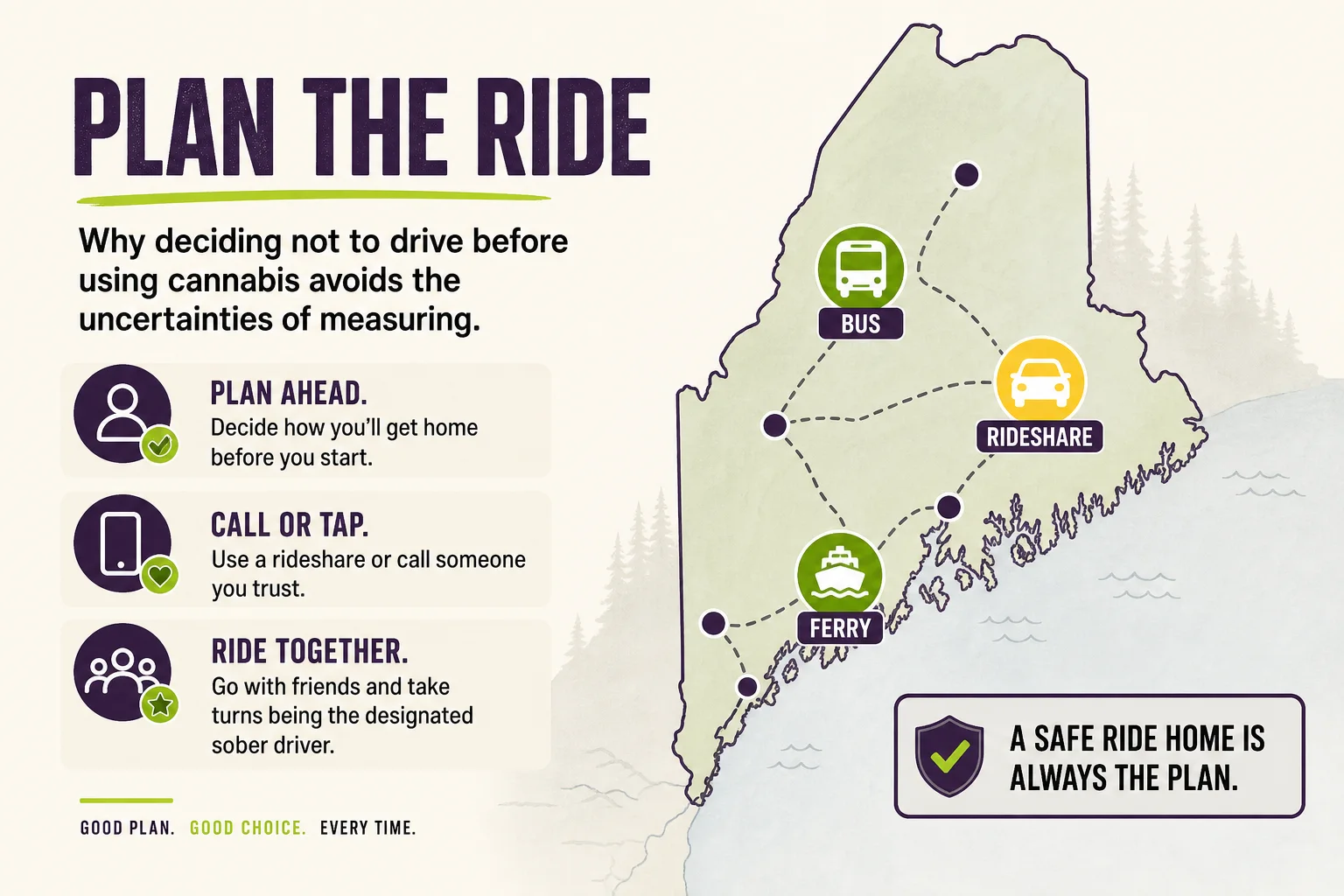
A practical map showing the idea of planning alternatives: public transit, rideshare zones, and staying options in Maine communities. This visual helps readers translate the no‑drive decision into specific local options. Limit: it’s illustrative and not a transit schedule or endorsement.
Research context: Resource Library | Maine Cannabis 101 (Office of Cannabis Policy)Practical planning: alternatives, scripts, and low‑regret choices
A no‑drive decision is easy to stick with if you prepare a few practical alternatives. Here are reliable, low‑effort options:
- Arrange a sober ride (friend, family, taxi or rideshare) before you use. If public transit serves your route, check schedules and plan your return.
- If you're at home or a trusted friend’s place, plan to stay longer — have water, light snacks, and a quiet space. Resting out the peak effect is often the most practical harm‑reduction choice.
- Use a simple script: "I’m not driving tonight — I’m taking a ride home in an hour." Having a phrase ready reduces on‑the‑spot negotiation and social pressure.
These precommitments reduce cognitive load after consumption. The goal is to replace a high‑stakes, high‑uncertainty judgment with a small set of predictable, low‑regret choices.
Bottom line and what the evidence does — and doesn't — show
The science shows cannabis can impair skills needed for driving, that THC biomarker levels are an unreliable single indicator of impairment for individuals, and that combining substances increases impairment. Together these lines of evidence support a practical conclusion: deciding not to drive before you use reduces uncertainty and simplifies decisions compared with trying to measure impairment after the fact. (cdc.gov)
Limitations: research on cannabis and driving continues to evolve. Laboratory and simulator studies give important insights, but real‑world crash risk is influenced by many factors including driving environment, driver experience, and the presence of other substances. Laws and testing protocols vary across jurisdictions, and Maine’s regulatory materials aim to help consumers make informed choices but do not provide an individual impairment test. Where research is uncertain, a simple preplanned no‑drive rule is a straightforward way to reduce risk.
Key takeaways
- Decide whether you'll drive before you use cannabis — it removes guesswork. (cdc.gov)
- Single THC numbers (blood or saliva) often don’t tell you if you were impaired while driving. (pubmed.ncbi.nlm.nih.gov)
- Mixing cannabis with alcohol or other sedatives magnifies impairment. (pubmed.ncbi.nlm.nih.gov)
- Self‑confidence is an unreliable gauge of driving safety; plan alternatives ahead of time. (pubmed.ncbi.nlm.nih.gov)
- Maine OCP offers consumer education and program guidance — use it to understand product forms, rules, and safe choices. (maine.gov)
Questions this guide answers
Can a blood or saliva test reliably tell me if I was impaired while driving?
No. THC in blood or oral fluid declines quickly after use and varies by person and route of use. Studies show concentrations at the time a sample is drawn often cannot be back‑extrapolated to accurately reflect impairment while driving. ([pubmed.ncbi.nlm.nih.gov](https://pubmed.ncbi.nlm.nih.gov/26823611/))
Does Maine law allow cannabis use in a vehicle?
No. Maine prohibits consuming cannabis in a vehicle on a public way. The Office of Cannabis Policy provides consumer guidance and program rules for both adult‑use and medical programs. ([www1.maine.gov](https://www1.maine.gov/dafs/ocp/resources/faq))
If I’m an experienced user and feel fine, is it safe to drive?
Feeling fine is not a reliable indicator of safety. Experience can alter subjective effects while objective performance deficits may still be present. Planning a no‑drive alternative removes this uncertainty. ([pubmed.ncbi.nlm.nih.gov](https://pubmed.ncbi.nlm.nih.gov/40077985/))
How does mixing alcohol with cannabis change driving risk?
Research shows combining alcohol and cannabis produces greater decrements in driving performance than either drug alone, often in additive or synergistic ways. Avoid driving if you’ve used both. ([pubmed.ncbi.nlm.nih.gov](https://pubmed.ncbi.nlm.nih.gov/35083810/))
Where can I find reliable Maine consumer information about cannabis?
The Maine Office of Cannabis Policy maintains resources, FAQs, and consumer education materials about safe use, storage, and differences between the medical and adult‑use programs. ([maine.gov](https://www.maine.gov/dafs/ocp/resources/library))
Educational information only. Cannabis affects people differently and this is not medical advice.