
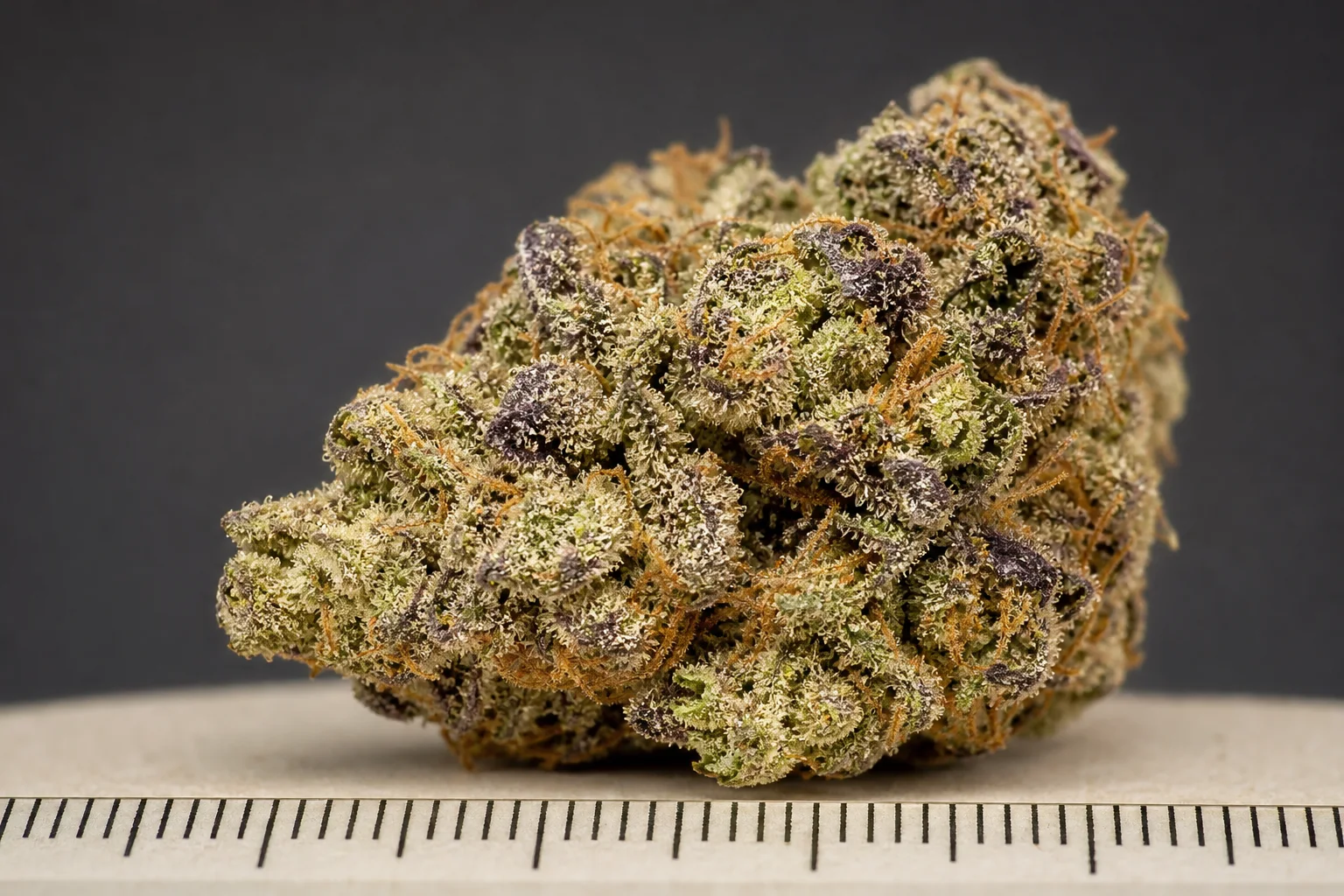
Macro botanical image showing glandular trichomes (where cannabinoids concentrate). This photo connects the lab measurement to the plant microstructure that makes sampling challenging. It illustrates heterogeneity: trichome density varies across buds and alters measured potency. Photo does not imply any lab values or consumer guidance beyond visual biology.
Introduction
THC percentage — the big number on many labels and menus — is useful. It tells you how much of the principal psychoactive cannabinoid was present in a sample at the time the lab tested it. But people who grow, test, or rely on cannabis every day know a number is only a single piece of evidence. This article walks through what potency actually measures, the laboratory steps that create that number, why uncertainty and sample choice matter, how route of use changes experienced effect, and the practical questions a percent value simply cannot answer. Wherever possible, I point to Maine-specific rules and national measurement guidance so you can follow up.
What the THC percentage actually means
THC percentage is a concentration — usually listed as percent by weight for flower (e.g., "20% THC") or as milligrams per serving for edibles. In regulated lab reports, analysts commonly report "total THC," which accounts for Δ9‑THC and the acidic precursor THCA (converted into an equivalent THC value by a factor determined by molecular weight differences). That conversion and the choice to report percent versus mg/g are important for clarity: mg/g is simply percent expressed on an SI basis (1% = 10 mg/g) and can reduce confusion across product matrices.
A potency number is only valid for the sample the lab received and the method the lab used. For adult‑use products in Maine, potency testing is a mandatory category among several analyte groups that are required to undergo testing before sale. That requirement ensures the number exists on a Certificate of Analysis (COA), but it does not guarantee every other safety or quality metric has been evaluated. Maine publishes aggregate adult‑use testing results and requires labs to report Certificates of Analysis and electronic data deliverables to the Office of Cannabis Policy (OCP). (maine.gov)
Because the percent is a snapshot, it reflects the chemical composition at the time of sampling, not how the product will behave days, weeks, or months later. Environmental factors, handling, drying, and storage change chemistry after the cut — so the reported percent is a useful measurement but not a timeless truth.
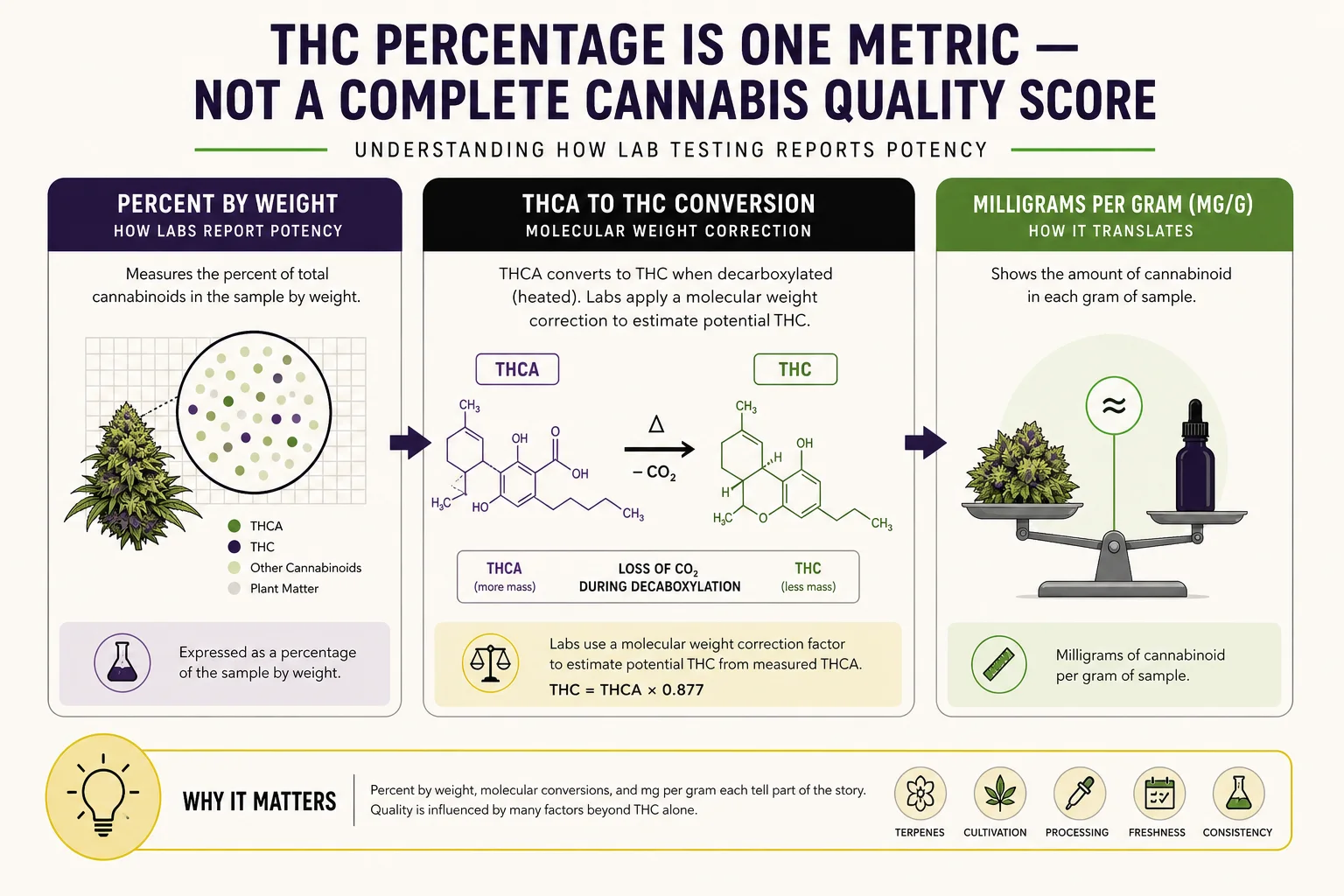
A clean explanatory illustration showing unit conversions (percent ↔ mg/g) and how THCA is converted into a ‘total THC’ reporting value. This diagram links everyday label language to lab reporting practice; it intentionally shows no patient dosing guidance or numeric COA values.
Research context: Adult Use Testing DataHow labs create that number: sampling, prep, and instruments
The journey from a jar of flower to a single THC percent on a COA has several steps that each introduce variability. First, sampling: cannabis is physically heterogeneous. Two buds on the same plant can differ substantially; the top‑cola may test higher than lower colas. A representative sample must be taken and homogenized to produce a meaningful measurement for the batch. Maine’s sampling rules and guidance documents explain when and how testing facilities and licensees are required to collect and submit samples for mandatory testing. (maine.gov)
Next comes sample preparation. For flower and many extracts, labs use solvents to extract cannabinoids and then analyze them using chromatography (HPLC or LC‑MS/MS are common). Different extraction chemistries, calibration standards, and instrument settings affect measured concentrations. Peer‑reviewed work shows validated liquid chromatography methods and mass spectrometry can quantify many cannabinoids but require method validation and quality controls to be reliable. (pmc.ncbi.nlm.nih.gov)
Finally, instruments and data processing matter. Labs use internal standards, calibration curves, and quality control samples. Interlaboratory studies and certified reference materials help labs align results. NIST’s work creating reference materials and running multilaboratory studies aims precisely to reduce this source of variability and to help labs characterize and report measurement uncertainty. (nist.gov)
Measurement uncertainty and why identical samples sometimes report different numbers
Every measurement has uncertainty. In chemistry that uncertainty comes from sample heterogeneity, extraction efficiency, instrument repeatability, calibration uncertainty, analyst technique, and data processing. NIST and national metrology guidance emphasize estimating and reporting uncertainty so users understand the likely range around a reported value. For cannabis, NIST has published technical work and reference materials intended to make potency measurements more comparable across labs. (nist.gov)
In practice, the uncertainty attached to a THC percent can be large. Interlaboratory comparisons and some published studies report differences between labs that imply uncertainty in the tens of percent for certain matrices and workflows — especially when sampling and matrix effects (e.g., vape oil versus flower versus a gummy) are added. That’s why Maine’s OCP provides guidance about the use of laboratory uncertainty when deciding whether a product meets potency thresholds and why retesting is allowed in limited circumstances. (maine.gov)
Lab-to‑lab or sample‑to‑sample differences don’t necessarily mean a lab is "bad." They reflect the real limits of current methods, the variable nature of plant material, and the evolving state of cannabis measurement science. The right response is transparency: clear COAs, uncertainty statements, and accessible sampling records.
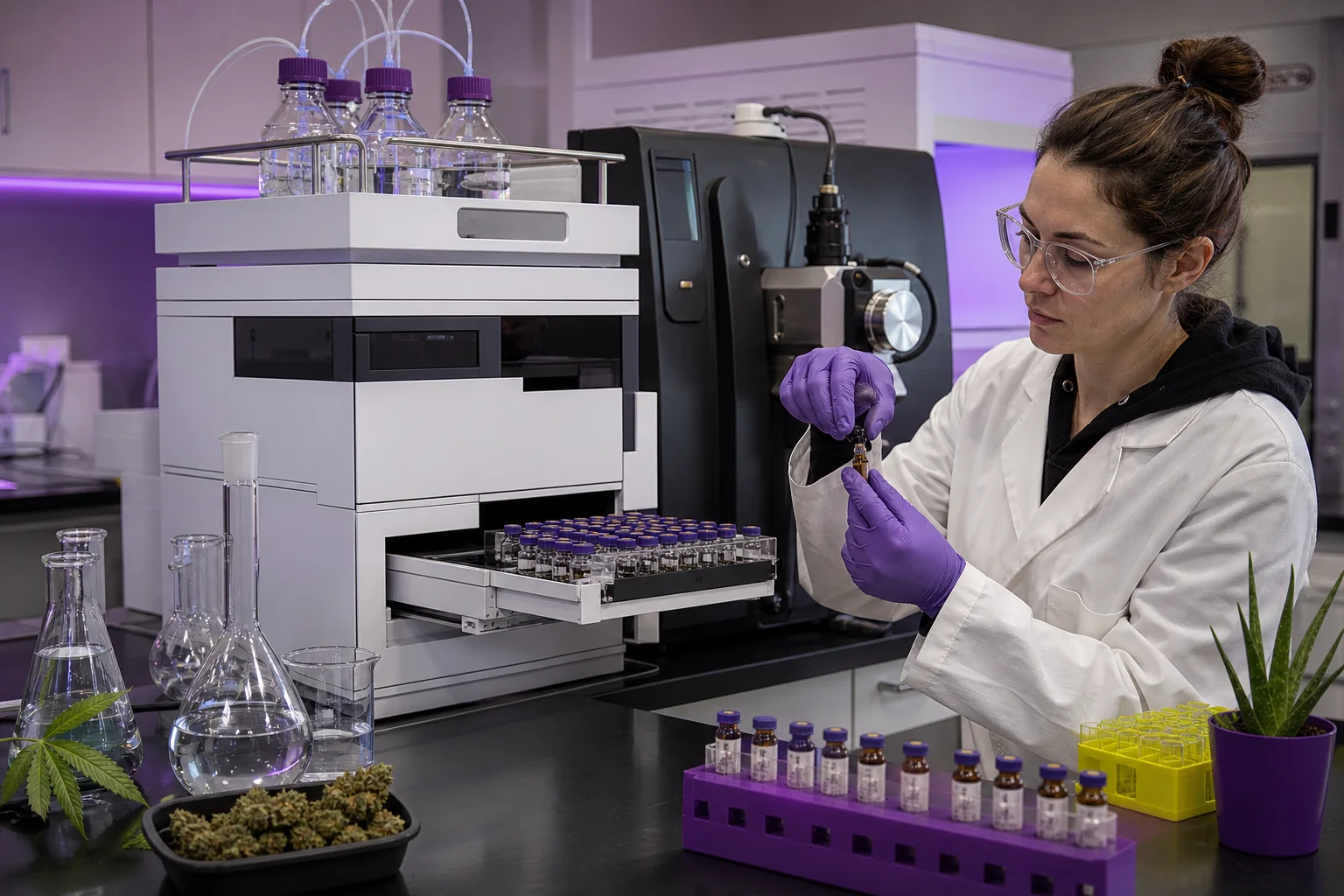
Documentary laboratory photograph showing an HPLC system and sample vials in an analytical lab setting. This image illustrates the extraction and instrument step that produces potency numbers and ties to method validation discussions. It does not show readable reports or any accreditation badges.
Research context: Quantitative determination and validation of 17 cannabinoids in cannabis and hemp using liquid chromatography‑tandem mass spectrometryWhat THC% cannot tell you — the blind spots a single number creates
A single THC percentage does not measure terpenes (the volatile compounds contributing aroma and some pharmacology), minor cannabinoids (CBG, CBC, CBN), contaminants (pesticides, metals, microbes), homogeneity across a batch, or freshness. It also doesn’t indicate how the product was grown, cured, or handled — factors that substantially affect the sensory and storage qualities of flower. Maine’s rules explicitly separate potency testing from contaminant/pass‑fail testing: potency is one mandatory category among several analyte groups for adult‑use items, but medical cannabis in Maine is not subject to the same mandatory contaminant testing program. That regulatory split is important for patients and caregivers to understand. (www11.maine.gov)
A THC percentage won’t tell you whether a product is homogeneous (two pieces from the same package can vary), nor will it reveal degradants. For example, elevated CBN may suggest age or oxidation; residual solvents or pesticides are invisible to a potency number. That’s why COAs that include the full panel — potency, terpenes, pesticide screens, metals, micro results — give the most context for consumers and caregivers. Maine’s public data and guidance documents show which analyte categories are mandatory for adult‑use products and encourage licensees and consumers to consult full COAs. (maine.gov)
Finally, a percent number says nothing about effect timing, onset, or impairment. It’s not a prescription; it’s a measured chemical quantity.

A documentary still combining the Maine OCP testing guidance document cover with an anonymous clipboard of sample collection notes (handwritten, intentionally blurred). This visual connects state sampling guidance to the practical work of collecting representative samples. It does not reveal personal data or readable testing results.
Research context: Understanding Cannabis Testing Requirements & Results in MaineRoute of administration changes outcome — why percent doesn’t map to effect
The same mass of THC behaves differently depending on route. Inhalation delivers Δ9‑THC quickly to the brain and metabolizes differently than oral ingestion, which creates a delayed onset and produces active metabolites (e.g., 11‑OH‑THC) that can change subjective intensity and duration. A 20% flower smoked will not have the same onset, peak, or duration as an edible containing an equivalent milligram amount of total THC. Clinical and analytical literature documents these kinetic differences and the need to think about mg of THC and the product matrix, not percent alone, when estimating onset window and potential intensity. (pmc.ncbi.nlm.nih.gov)
A potency percent on a flower label also fails to communicate serving size. For a concentrate or edible, mg per serving is more directly useful for planning a single administration. Maine’s guidance on verifying potency information on medical cannabis product labels clarifies how potency should be represented and verified in different product contexts. When COAs report mg/g and total mg per container alongside percent, consumers and clinicians have a firmer basis for comparing products. (www1.maine.gov)
Individual factors — tolerance, body composition, prior use, medication interactions, and genetics — still dominate subjective effect. That’s why measurable chemistry must be paired with education about route, onset timing, and individualized responses.
Questions a single number cannot answer — a practical checklist for consumers and growers
When you see a THC percent, ask these follow‑ups: Was this an initial test or a retest? What sample was taken and how was it homogenized? Is there a COA showing the full analyte panel (pesticides, metals, microbes, terpenes)? What is the lab’s name, accreditation, and reported uncertainty? Does the lab publish method validation or participate in proficiency testing? Maine requires COAs for mandatory adult‑use testing and provides public data — licensees are required to receive COAs and labs are required to submit electronic data deliverables to OCP. (maine.gov)
For growers: documentation of batch and sampling records, retention of small retest sample packages when available, and collaboration with testing facilities to understand matrix‑specific extraction choices are common practices. NIST’s reference materials and interlaboratory studies are intended to help labs and producers align their methods and reduce variability; participating labs that use validated methods and reference standards are easier to evaluate than unknown testing houses. (nist.gov)
For patients and adult consumers in Maine: note that medical‑program items may not have undergone the same mandatory contaminant screens as adult‑use products. When contaminants are a priority, look for voluntary COA testing or licensees that publish full panels. The OCP guidance documents and the FAQ explain this distinction and direct readers to how to find COAs. (www1.maine.gov)
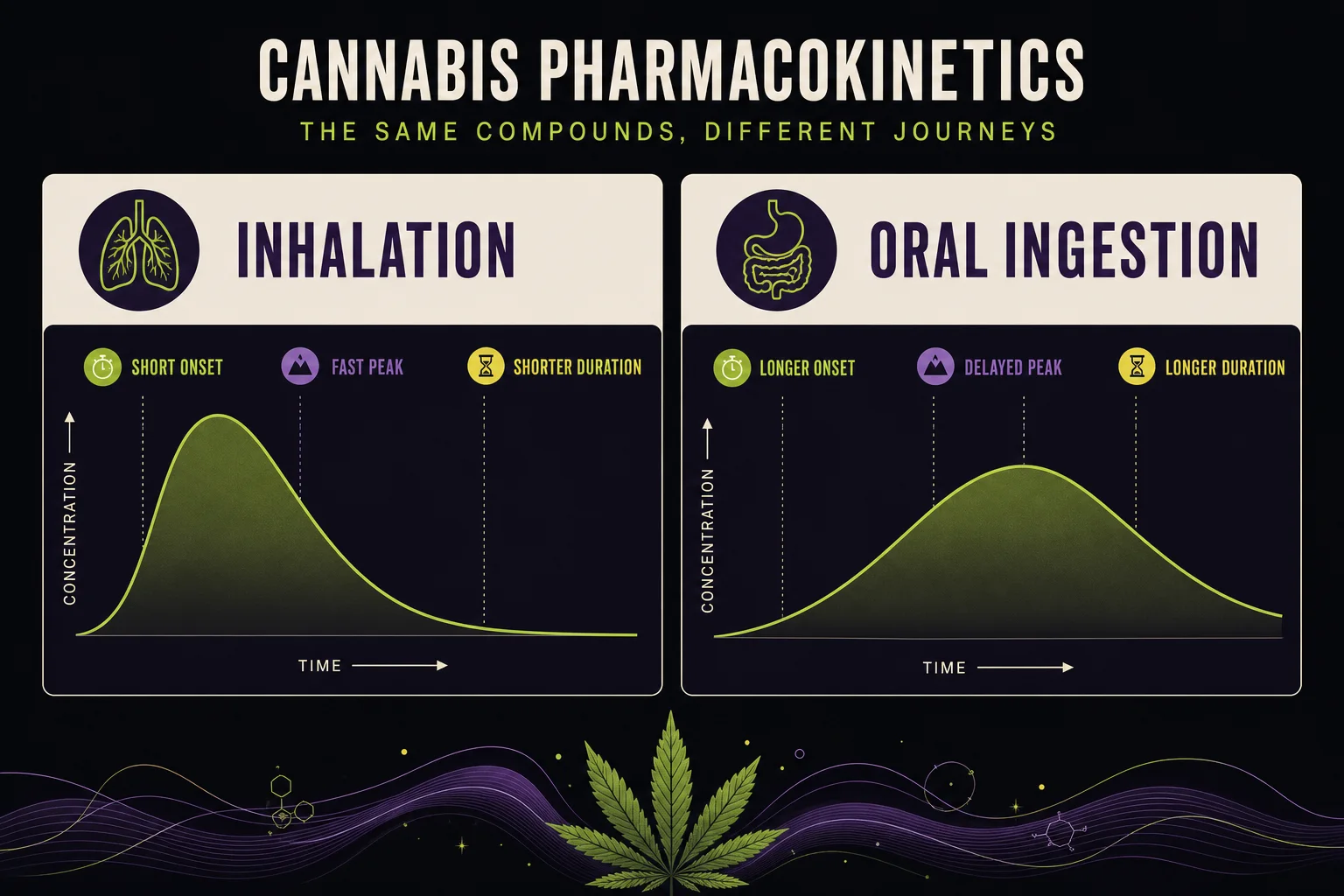
A clear infographic comparing inhalation and oral routes: onset, peak, and duration visualized as qualitative timing bars with labels (fast/medium/slow) but no numeric doses. This teaches how identical THC amounts may act differently by route without implying dosing guidance.
Research context: NIST’s New Hemp Reference Material Will Help Ensure Accurate Cannabis MeasurementsPractical steps: reading a COA and using percent responsibly
A useful COA shows product identity, sample ID, sample matrix, date sampled and tested, the lab name and methods, analyte results with units, and a statement of uncertainty or method detection limits. If the COA reports mg/g, total THC per package, and includes a full contaminant panel, you can place the potency number in context. Maine’s OCP guidance documents describe label verification and how potency results are submitted and displayed for adult‑use items. (maine.gov)
Percent functions best as a comparative tool within the same product type and testing context, not as an absolute predictor of experience. Compare COAs from the same lab or from labs that publish method documentation and participate in proficiency testing; look for COAs that include terpenes and contaminants if those matter to you. Finally, appropriate storage matters: humidity, light, and heat drive chemical changes after testing, so a lab result is only as valuable as the post‑test care a product receives.
Conclusion
THC percentage is a powerful, simple measurement — and an incomplete scorecard. It tells you how much of a specific cannabinoid was present in the tested sample, under a particular lab method, on a particular day. It does not capture homogeneity, contaminants, terpenes, age, route of administration, or individual response. The most informed decisions pair a potency number with a full COA, basic questions about sampling and lab practices, and an understanding of how route of use interacts with body and dose. Maine’s OCP resources and the ongoing work by national labs like NIST improve the reliability and transparency of these measurements — but the responsibility for educated use still sits with growers, dispensaries, patients, and adult consumers.
Key takeaways
- THC% is a concentration measured for a specific sample and method, not a universal quality score. (maine.gov)
- Sampling, extraction, instrument choice, and lab competence all affect measured potency. (pmc.ncbi.nlm.nih.gov)
- Measurement uncertainty can be large; Maine allows retesting and publishes guidance on uncertainty. (maine.gov)
- A percent does not report terpenes, contaminants, homogeneity, or age — check the full COA. (maine.gov)
- Route of administration and individual factors determine effect; percent alone cannot predict experience. (pmc.ncbi.nlm.nih.gov)
FAQ
Q: Is a higher THC% always stronger for me? A: No. Higher percent means more THC per gram in that tested sample, but effect depends on route (smoking vs edible), individual tolerance, and product matrix. Use mg amounts and onset timing to compare across routes. (pmc.ncbi.nlm.nih.gov)
Q: Why do two labs report different THC% for the same strain? A: Differences arise from sampling heterogeneity, extraction and analysis methods, calibration standards, and how labs estimate uncertainty. Interlaboratory variation is documented and NIST reference materials aim to reduce it. (nist.gov)
Q: Are medical cannabis products in Maine tested for pesticides and microbes like adult‑use products? A: Not automatically. Maine’s adult‑use program requires mandatory testing for several contaminant categories; medical program items are not subject to the same mandatory contaminant testing, though they may be tested voluntarily. Consumers can request COAs from dispensaries. (www11.maine.gov)
Q: Can COAs posted by sellers be trusted? A: COAs are useful evidence; verification steps include checking that the COA lists the testing lab, method, date, sample ID, and full analyte panel. Prefer labs that participate in proficiency testing and publish method details. Maine requires licensees to receive and keep COAs for mandatory adult‑use testing. (maine.gov)
Q: What does “total THC” mean on a COA? A: “Total THC” accounts for Δ9‑THC plus THCA converted to a THC equivalent (a molecular weight correction). It’s a reporting convention to estimate the maximum THC available after decarboxylation. Check the COA for the lab’s definition and calculation. (pmc.ncbi.nlm.nih.gov)
Q: Can storage change the THC% reported on a COA? A: Yes. Light, heat, oxygen, and humidity can degrade cannabinoids and volatile terpenes. A COA reflects the chemistry at test time, not indefinitely. Proper storage preserves chemistry longer. (pmc.ncbi.nlm.nih.gov)
Sources
- Adult Use Testing Data. Maine Office of Cannabis Policy. https://www.maine.gov/dafs/ocp/open-data/adult-use/testing-data. Maine Office of Cannabis Policy. (maine.gov)
- Understanding Cannabis Testing Requirements & Results in Maine. Maine Office of Cannabis Policy. https://www.maine.gov/dafs/ocp/sites/maine.gov.dafs.ocp/files/2023-10/Understanding%20Maine%20Cannabis%20Testing%20Requirements%20%26%20Results.pdf. Maine Office of Cannabis Policy. (maine.gov)
- Lab uncertainty guidance for whole industry — October 2022 update (guidance). Maine Office of Cannabis Policy. https://www.maine.gov/dafs/ocp/sites/maine.gov.dafs.ocp/files/inline-files/Lab%20uncertainty%20guidance%20for%20whole%20industry%20October%202022%20update.pdf. Maine Office of Cannabis Policy. (maine.gov)
- NIST: NIST’s New Hemp Reference Material Will Help Ensure Accurate Cannabis Measurements. https://www.nist.gov/news-events/news/2024/07/nists-new-hemp-reference-material-will-help-ensure-accurate-cannabis. National Institute of Standards and Technology. (nist.gov)
- Quantitative determination and validation of 17 cannabinoids in cannabis and hemp using liquid chromatography‑tandem mass spectrometry. PMC. https://www.ncbi.nlm.nih.gov/pmc/articles/PMC7533253/. (pmc.ncbi.nlm.nih.gov)
Disclaimer
Educational information only. Cannabis affects people differently and this is not medical advice.
Questions this guide answers
Is a higher THC percentage always stronger for me?
No. Higher percent means more THC per gram in that tested sample, but effect depends on route (inhaled vs oral), individual tolerance, and product matrix. Consider mg per serving and onset timing.
Why can two labs report different THC percentages for the same strain?
Differences can result from sample heterogeneity, extraction chemistry, instrument calibration, analyst technique, and how labs estimate uncertainty. Interlaboratory variation is documented; certified reference materials and method validation reduce differences.
Are Maine medical cannabis products tested for contaminants like adult‑use products?
Not automatically. Maine’s adult‑use program requires mandatory contaminant testing; medical items are not subject to the same mandatory contaminant testing unless labeled and verified. Ask your provider for COAs.
What should I check on a COA?
Look for lab name and accreditation, sample ID and date, units (mg/g or %), total THC calculation, reported uncertainty or method detection limits, and a full analyte panel including pesticides and microbes when relevant.
Does storage change the THC percentage reported on a COA?
Yes. Light, heat, oxygen, and humidity can degrade cannabinoids and terpenes. A COA reflects chemistry at the time of testing; proper storage helps maintain chemistry.
Educational information only. Cannabis affects people differently and this is not medical advice.