
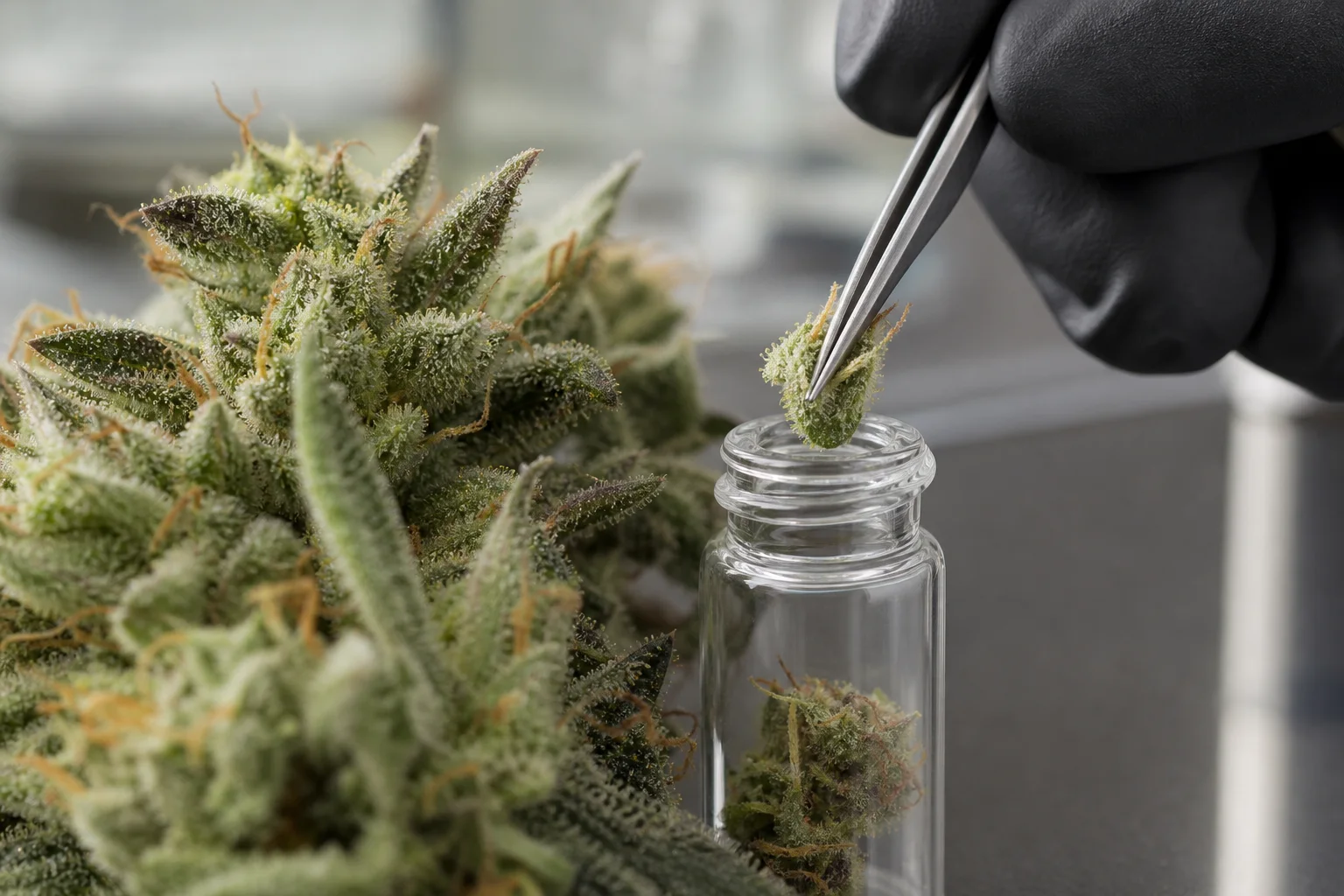
Botanical macro plus sampling scene: shows where volatile compounds originate (trichomes) and the moment a headspace sample is collected for lab analysis. Useful to connect plant anatomy with the sampling step that produces a terpene panel. This image teaches the link between plant tissue and the sample chemistry; it does not imply consistent terpene amounts across harvests.
1) What a terpene panel actually reports — and why that matters
Laboratories measure volatile organic compounds using analytical chemistry: headspace capture, gas chromatography, and mass spectrometry (GC–MS) or similar detectors. A standard terpene panel reports identified compounds (names), their measured concentration (often in percent or mg/g), and sometimes a summed “total terpenes.” Those numbers are laboratory measurements of specific molecules present in the tested sample at the time of sampling. (pmc.ncbi.nlm.nih.gov)
That first sentence is the most important: a terpene panel is a snapshot of the chemistry in the jar or vial sent to the lab. It is not, by itself, a sensory report, a stability forecast, or a definitive description of what a different bag, a differently cured bud, or the same flower on a different day will smell like. A panel’s numbers depend on sampling method, how the sample was stored and shipped, the lab’s extraction and instrument settings, and which terpenes the lab's reference library recognizes. (nist.gov)
Keep that distinction in mind: measured molecules ≠ experience. Measured molecules + method + sample history → a useful data point.
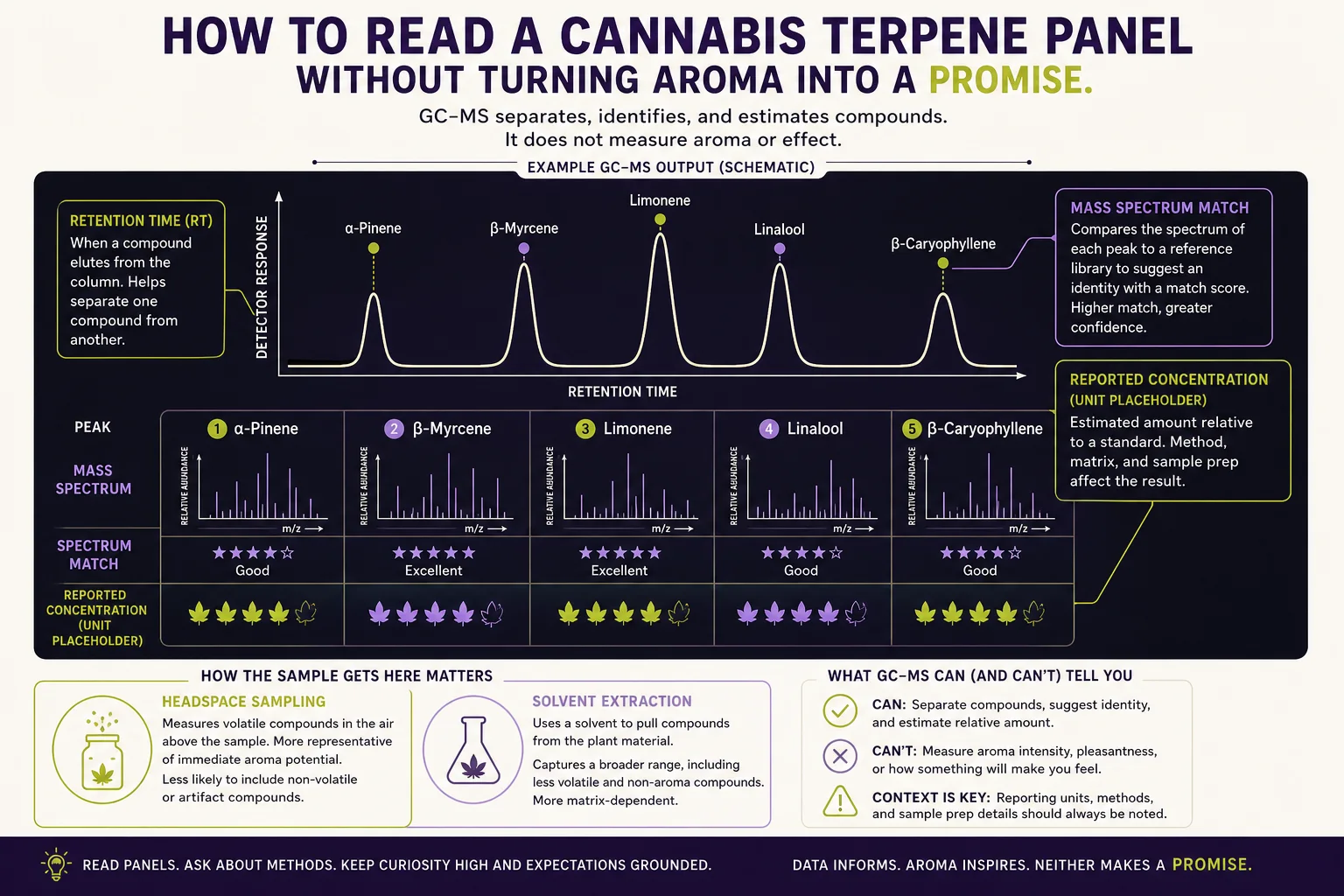
Annotated GC–MS schematic explaining how peaks correspond to compound identity and how labs report concentrations. The diagram teaches analytical method basics and highlights where method differences (columns, extraction) affect results. No real COA values or brand names are shown.
Research context: Development of Standards for the World Meteorological Organization, Global Atmosphere Watch Program2) Cannabis chemistry is real — so are limits to prediction
Cannabis synthesizes an array of terpenoids through plant metabolic pathways; those pathways are genetically and environmentally regulated. Work in plant molecular biology shows clear genetic networks that underlie variations in cannabinoid and terpenoid accumulation across cultivars and tissues. This is why different cultivars often yield different dominant terpenes in testing. (pmc.ncbi.nlm.nih.gov)
But olfaction and flavor are emergent properties: they arise from the concentrations of multiple volatiles, their relative ratios, enantiomeric (mirror-image) forms, and how individual human noses perceive them. Scientific studies across plants and foods show that a single terpene’s concentration rarely predicts perceived aroma on its own; interactions, thresholds, and matrix effects matter. For example, limonene’s presence does not always make a sample smell strongly citrus, and low‑concentration compounds can have outsized sensory effects below the level of a dominant terpene. (pubmed.ncbi.nlm.nih.gov)
In short: chemistry gives us reliable facts about what’s present; prediction of aroma or subjective response from those facts is probabilistic and often wrong if stated as a promise.
3) Sensory description and the science of smell: why words and numbers live in different houses
Human aroma description is useful but messy. Descriptive panels and trained sensory teams convert smell impressions into terms like “pine,” “citrus,” “earthy,” or “floral.” Those labels are shorthand for patterns of volatile compounds, not literal translations. Sensory science shows that perception depends on concentration (is the compound above its odor threshold?), context (what other volatiles are present?), and the route of smelling (orthonasal — sniffing; retronasal — flavor while eating), plus personal factors like prior experience and cultural associations. (pubmed.ncbi.nlm.nih.gov)
So when a COA lists beta‑myrcene, limonene, and pinene and a strain description reads “earthy, citrus, pine,” that pairing is informative but not determinative. Consider the sensory label a translator’s best interpretation based on common odor associations, not a chemical law. A good sensory descriptor complements lab numbers: it points toward likely aroma notes and helps guide choices, especially for people who prefer particular scent families.
Finally, remember that a trained sensory panel’s descriptors are reproducible only within the trained group and specific protocol used. Consumer experience can — and often will — differ.
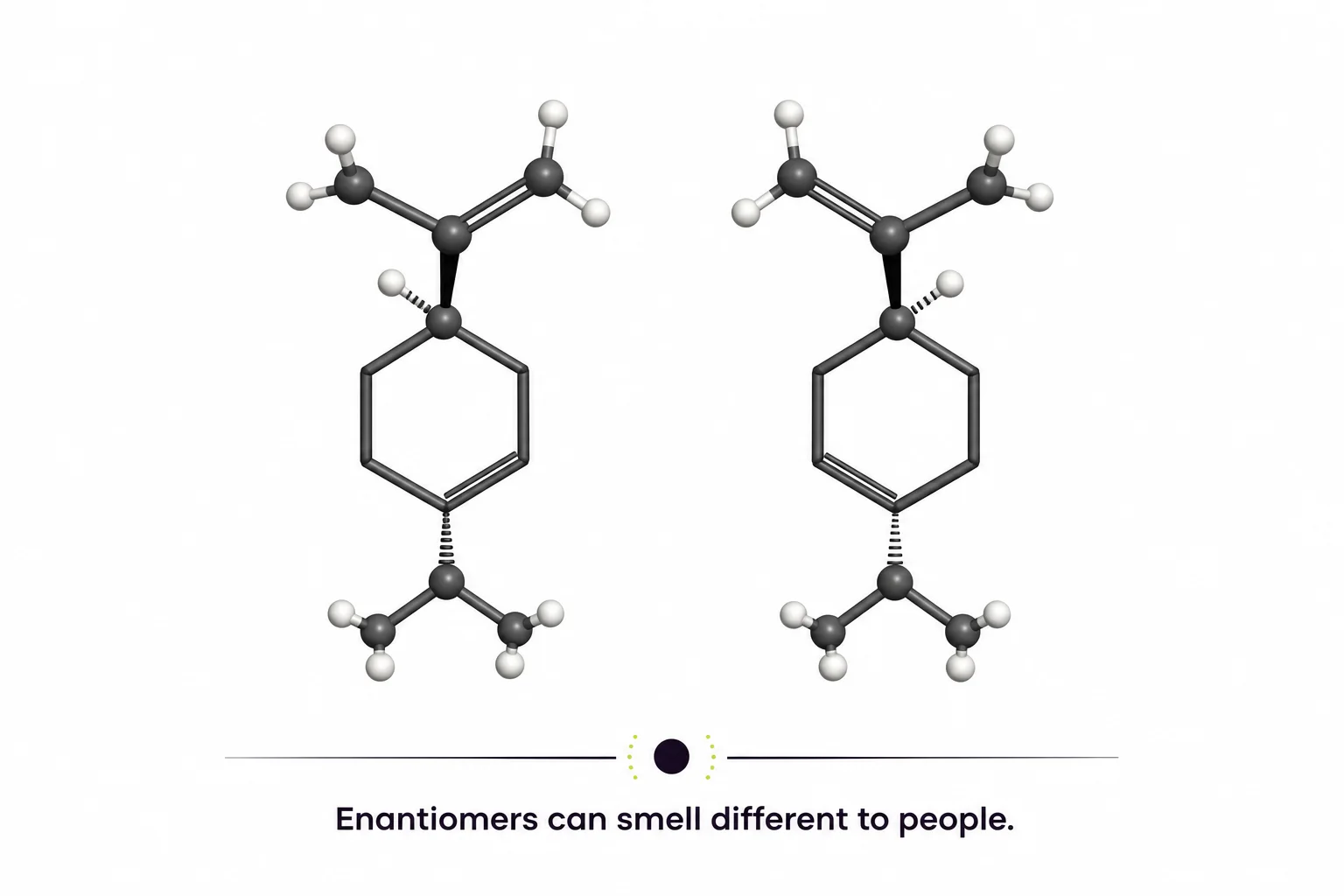
Simple molecular illustration showing enantiomers (mirror-image molecules) of limonene with a note that enantiomeric form can change odor quality. The image teaches why chemistry identity alone can miss sensory nuance. It intentionally avoids implying a specific sensory outcome.
Research context: The Persistent Myth of Limonene's Smell4) Batch context: post‑harvest handling, curing, packaging, and storage change what the panel reports
Terpenes are volatile. They evaporate, oxidize, and sometimes transform into other molecules during drying, curing, trimming, and storage. Tests run on a freshly jarred sample will read differently than tests run on the same flower after months in a warm cupboard. NIST and analytical metrology work show both the need for traceable standards and the practical instability of some monoterpenes under storage conditions; what was measured at t=0 may not remain identical. (nist.gov)
Maine’s regulatory context also matters for reading a panel. The Office of Cannabis Policy documents that medical and adult‑use programs are governed by distinct statutes and rules; testing requirements differ across program types and over time, and some medical products have historically not been required to undergo the same mandatory contaminant testing that adult‑use products must meet. Check the COA for collection and test dates, and whether the sample was representative of the packed batch. (maine.gov)
Because of this, batch IDs, harvest and test dates, storage notes, and chain‑of‑custody information are as valuable as the terpene numbers themselves when you try to interpret how that sample will smell in real life.
5) Analytical method limits and why comparison across labs is fraught
Not all labs run the same method. Differences include headspace vs solvent extraction, GC column selection, calibration standards, detection limits, and compound libraries for identification. Measurement units can be percent by weight, mg/g, or micrograms per gram, and a lab may report only compounds above a reporting threshold. NIST’s role in developing terpene reference standards and in evaluating stability underlines why metrology matters: without shared standards and traceable calibrations, comparing a “limonene 0.8%” from Lab A to a “limonene 0.5%” from Lab B is risky. (nist.gov)
NIST work also documents chemical transformations that can occur even inside calibration cylinders and during storage, reminding us that even carefully prepared standards require monitoring and that some terpenes chemically interconvert over time. That reality places practical limits on absolute precision for volatile profiles. (nist.gov)
When you read a COA, look for method details: extraction technique, instrument type, reporting units, and whether the lab participates in external proficiency testing or follows state certification rules. In Maine, rules for testing facilities and certification are published by the Office of Cannabis Policy and list which methods and accreditations the state expects labs to meet for adult‑use testing programs. (maine.gov)
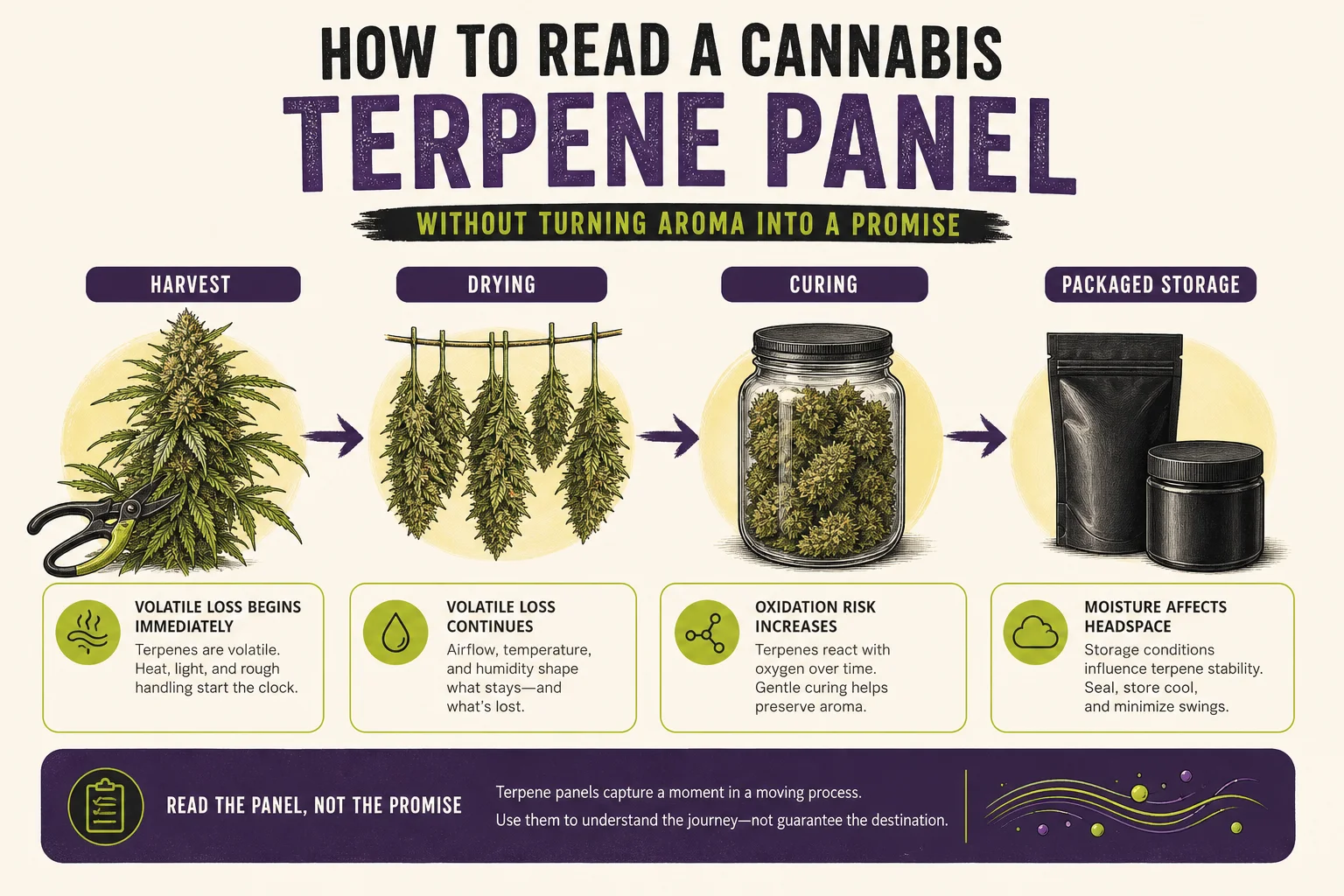
A practical post‑harvest evidence chart linking each stage to expected changes in volatile profile. It teaches the reader that drying, curing, and storage alter terpene concentrations and why test timing matters. No numerical values, no causal claims about effects.
Research context: Development of Standards for the World Meteorological Organization, Global Atmosphere Watch Program6) From chemistry to claims: keeping sensory description, chemistry, batch context, and effect language separate
There’s a durable temptation in marketing to convert a terpene list into an implied promise, for example phrasing such as “feel X” or suggesting a compound like myrcene produces calming effects. Responsible education resists that jump. While terpenes interact with biology in ways researchers study, the direct translation of a compound list into predictable human responses is not supported by robust, generalizable evidence. For guidance about risks and population health, public health agencies provide better context than product copy. The CDC offers clear, non‑product guidance on cannabis health effects and advises caution, particularly for youth, pregnancy, and activities like driving. (cdc.gov)
Likewise, use safety resources to interpret risk language on labels: accidental ingestion, particularly of edibles, is a common source of harm described by poison control centers; keeping products stored securely and following packaging guidance matters more for safety than a terpene profile. (poison.org)
In short: let the lab numbers speak to chemistry; let trained sensory notes speak to expected aroma notes in context; and rely on public health sources for safety‑related information. Avoid using a terpene list as a substitute for sober, evidence‑based language about risk.
7) Practical checklist: how to read a COA for terpenes (what to look at, what to sigh about)
- Is the COA for the same batch/lot as the product you have? Check batch ID and packaging date. If not, consider it a reference rather than a definitive statement.
- Are harvest, sample collection, and test dates listed? Short gaps between harvest and test are more likely to represent the product’s aroma. Large gaps mean terpenes could have shifted. (nist.gov)
- Does the COA list method and units (GC–MS headspace, mg/g, % w/w)? Look for labs that report methods transparently. (nist.gov)
Bonus marks: look for lab accreditation or participation in proficiency programs, an explicit reporting limit (LOQ/LOD), and a chain‑of‑custody note. If a COA lacks method detail or dates, consider terpene numbers limited evidence rather than definitive answers.
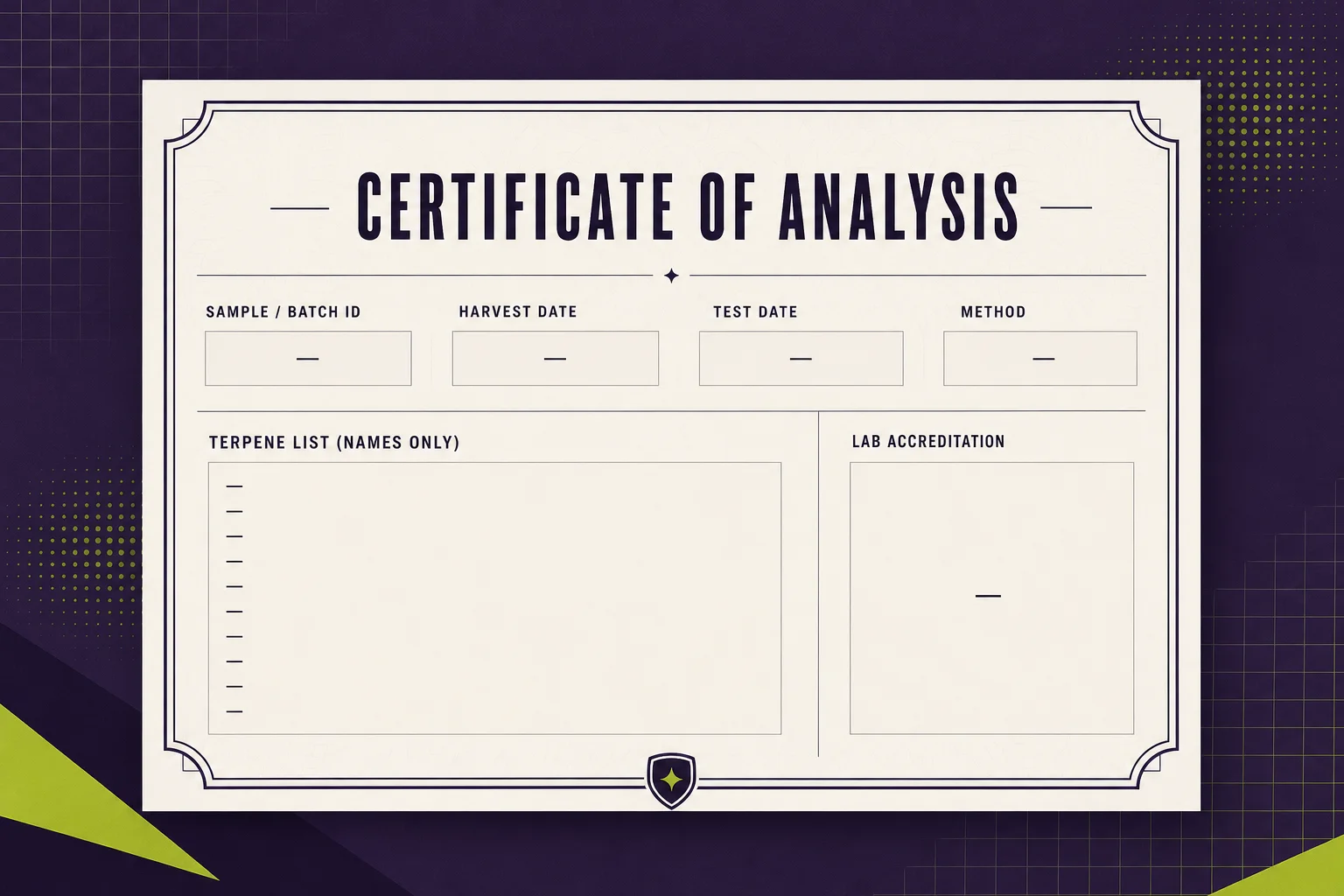
A redacted COA template demonstrating the fields that matter when interpreting a terpene panel: batch/sample ID, harvest and test dates, method, and accreditation. The educational image teaches which metadata give context to terpene numbers. No real values, no lab logos, and all numeric fields shown as placeholders.
Research context: Rules and Statutes | Office of Cannabis Policy8) A grower’s humility and a learner’s toolkit
As people who grow cannabis, the practical lesson is simple: keep clear records, understand that your drying and curing decisions change terpene outcomes, and provide COAs and sensory notes with transparent context. Avoid conflating a panel with an experience; instead, use the panel to track consistency across harvests and to spot quality control problems (unexpected compounds, high oxidation markers, or unexplained shifts). NIST’s metrology resources and peer‑reviewed plant chemistry work remind us that measurement is a craft with standards — useful, but not infallible. (nist.gov)
Final practical thought: when in doubt, document. Good batch records, dated COAs, and honest sensory notes do more for learner trust than heroic claims based on a single number.
Key takeaways
- A terpene panel is a measured snapshot of volatile molecules, not a definitive predictor of sensory experience or human response. (pmc.ncbi.nlm.nih.gov)
- Post‑harvest handling, storage, and lab method differences change reported terpene levels. (nist.gov)
- Human aroma perception depends on thresholds and interactions; single‑compound explanations are usually incomplete. (pubmed.ncbi.nlm.nih.gov)
- Check batch ID, harvest/test dates, method, and lab accreditation before you act on a COA. (maine.gov)
- For safety and population‑level risk context, consult public health sources rather than product marketing. (cdc.gov)
Questions this guide answers
Does a high amount of a single terpene guarantee a matching smell?
No. Odor perception depends on many compounds, concentration thresholds, and human variability. A dominant terpene can suggest a likely note, but it doesn’t guarantee how the product will smell to every person. ([pubmed.ncbi.nlm.nih.gov](https://pubmed.ncbi.nlm.nih.gov/40191954/))
Should I trust a terpene panel from months-old packaging?
Treat it cautiously. Terpenes evaporate and oxidize over time; look at harvest and test dates. If months have passed, the profile may no longer reflect the aroma in the package. ([nist.gov](https://www.nist.gov/publications/stability-assessment-gas-mixtures-containing-monoterpenes-varying-cylinder-materials))
Are all testing labs equal?
No. Labs vary in methods, reporting units, and calibration standards. Prefer labs that disclose methods, report limits of detection, and participate in accreditation or proficiency testing. ([nist.gov](https://www.nist.gov/srm))
Can terpenes tell me how a product will affect me?
No. Terpene lists are chemical data, not predictors of individual responses. For safety and health context, consult public health guidance rather than marketing claims. ([cdc.gov](https://www.cdc.gov/cannabis/health-effects/index.html))
What are the most useful items to check on a COA?
Batch or lot ID, harvest and test dates, test method and units, the lab’s accreditation status, and whether limits of reporting are stated. These give context to the terpene numbers.
Educational information only. Cannabis affects people differently and this is not medical advice.