

Documentary-style macro: a grower’s batch label, lab-style sample vials, and a written log. This image teaches how accurate, consistent labeling and careful notes turn lived experience into data that researchers can evaluate. It does not imply any clinical outcome or endorsement.
Why ranking evidence matters — and why lived experience counts
If you’ve spent any time around growers, clinicians, online forums, or a kitchen table with a jar of labeled flower, you already know two things: the chemistry is complex and people notice effects that matter to them. Those observations are not noise. They’re signals — often the starting point that points researchers where to look. But individual experience is different from population-level evidence: an anecdote can suggest a hypothesis but can’t by itself show cause or generalizability. (pubmed.ncbi.nlm.nih.gov)
Researchers arrange study types into an informal ladder, a “hierarchy of evidence,” so we can prioritize findings that reduce bias and confounding. At the top are systematic reviews and meta-analyses of well-conducted randomized trials; lower down are observational studies, surveys, case reports, mechanism work, and animal studies. That ladder is a useful tool — but it’s a tool, not a rule that erases human experience. (pubmed.ncbi.nlm.nih.gov)
The goal here is practical: help adults read research with the same care they use when evaluating a batch of flower — know what the tests actually measure, what a study can reasonably show, and how to fold in consistent, repeated lived reports without elevating a single story to proof.
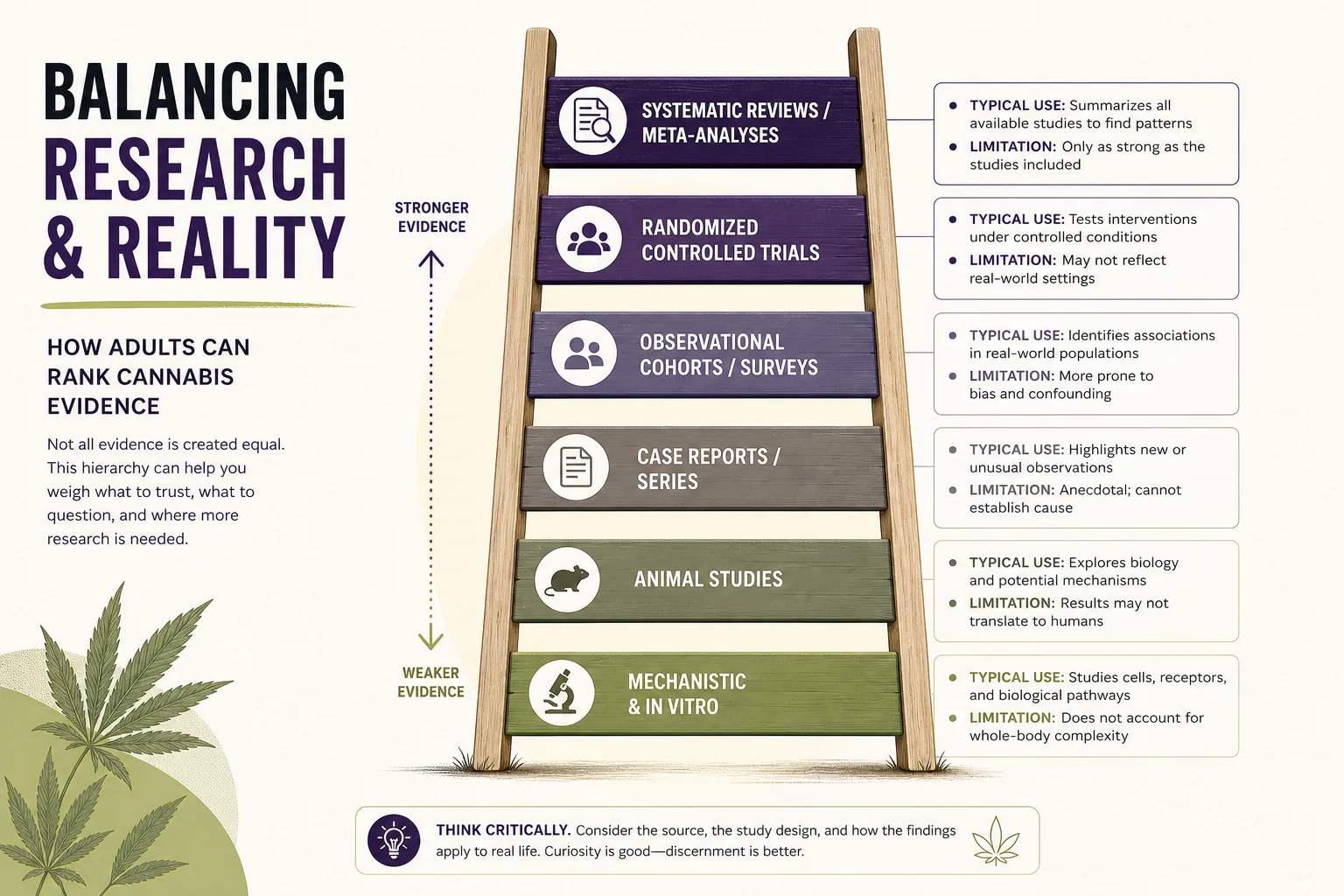
An evidence-ladder diagram that teaches the relative strengths and typical limitations of study types (mechanism, animal, case reports, observational, RCTs, systematic reviews). Use it to orient appraisal priorities. Diagram should not present specific numeric outcomes or causal arrows.
Research context: Hierarchy of Evidence Within the Medical Literature (PubMed)A quick tour of study types: what each design can (and can’t) show
Mechanism and in vitro studies explore how cannabinoids interact with receptors, cells, or metabolic pathways. These studies explain plausibility — how something might work — but they don’t tell you whether the effect seen in a dish or cell culture will happen in a person. Mechanistic work is indispensable for developing hypotheses and for identifying safety flags, but it’s the farthest from population-level certainty. (pmc.ncbi.nlm.nih.gov)
Animal studies allow controlled experiments in whole organisms and can reveal dose–response patterns, toxicities, or developmental effects not ethical to test directly in people. Translating animal doses and exposures to humans is tricky; metabolic and behavioral differences mean animal results are informative, not definitive. They’re most helpful when considered alongside human data. (pmc.ncbi.nlm.nih.gov)
Surveys, observational cohorts, and case series capture what’s actually happening in the world. Well-designed cohort or case–control studies can suggest associations and risk factors. Surveys can show patterns of use, preferred products, and self-reported effects. But these designs cannot fully eliminate confounding (other factors explaining the observation) or placebo and recall biases — so they’re strongest when they show consistent signals across multiple, independent datasets. (pubmed.ncbi.nlm.nih.gov)
Randomized trials and systematic reviews: why they’re ranked high, and where to watch for traps
Randomized controlled trials (RCTs) reduce bias by randomly assigning participants to an intervention or control, so differences between groups are less likely to be due to preexisting differences. When well-powered and well-blinded, RCTs give the clearest estimates of effect size in a studied population. Systematic reviews and meta-analyses that synthesize multiple rigorous RCTs sit at the top because they pool evidence and assess consistency. (pubmed.ncbi.nlm.nih.gov)
But RCTs are not invulnerable. Small trials, short follow-up, selective outcomes, or trials funded by vested interests can all skew results. In cannabis research, heterogeneity is a particular problem: product variability (THC/CBD ratios, terpenes, formulation), dosing regimens, and consumption route make combining studies difficult. That’s why reading the methods section matters as much as reading the headline. (fda.gov)
Systematic reviews are strongest when they transparently search, pre-register methods, and grade the certainty of evidence. Even then, a meta-analysis that pools heterogenous cannabis products or mixes short and long studies may tell you less than a small, carefully controlled trial with a single, well-characterized product. Regard the review’s quality grading as part of the evidence, not a black box.

Mechanistic lab context: cell culture plates and a simplified, accurate diagram of cannabinoid–receptor interaction. This teaches where plausibility comes from and where translational gaps appear. Do not depict clinical dosing or claim human outcomes.
Research context: Cannabis and Cannabinoid Signaling: Research Gaps and Opportunities (PMC)Observational work and surveys: pattern recognition at scale
Large observational studies and patient registries show what happens when people use products under real-world conditions. They are where safety signals and population trends often appear first: more emergency visits after an edible wave, or increased pediatric exposures in a state after retail legalization. These signals are vital for public health responses, but correlation is not causation. Confounding (other variables tied to both exposure and outcome) is the core limitation. (health.nih.gov)
Surveys add voice and context — they capture who uses what, why, and how people report outcomes in their daily lives. Repeated, independently conducted surveys that point in the same direction strengthen confidence in the pattern. Short, single-survey results or convenience samples (for example, a single online forum) deserve caution; selection bias can make a small group look like the whole population. (pubmed.ncbi.nlm.nih.gov)
When observational findings and trials point the same way, confidence grows. When they diverge, ask whether differences in population, product, dose, or outcome measurement might explain the gap. Often they do.
Mechanistic and animal evidence: how plausibility and warning signals develop
Mechanistic studies are the laboratory’s compass: they point to plausible biological pathways and help explain why a clinical effect might occur. For cannabis, mechanistic work clarified the endocannabinoid system and receptor pharmacology that make human effects plausible. But plausibility does not equal population effect — an idea supported in cells or rodents can fail in people because of dosing, metabolism, or behavioral context. (pmc.ncbi.nlm.nih.gov)
Animal work also flags safety concerns that may be unethical to test directly in humans, such as developmental or reproductive signals. For example, some preclinical data have shown effects on male reproductive organs in animals exposed to certain cannabinoids; researchers flag these for careful human study rather than immediate extrapolation. That’s an example of how early evidence creates questions to answer in human research and surveillance. (fda.gov)
Use mechanistic and animal results to shape hypotheses and safety monitoring. Do not regard them as proof of human benefit or harm; consider them essential context for what to test, in whom, and how.
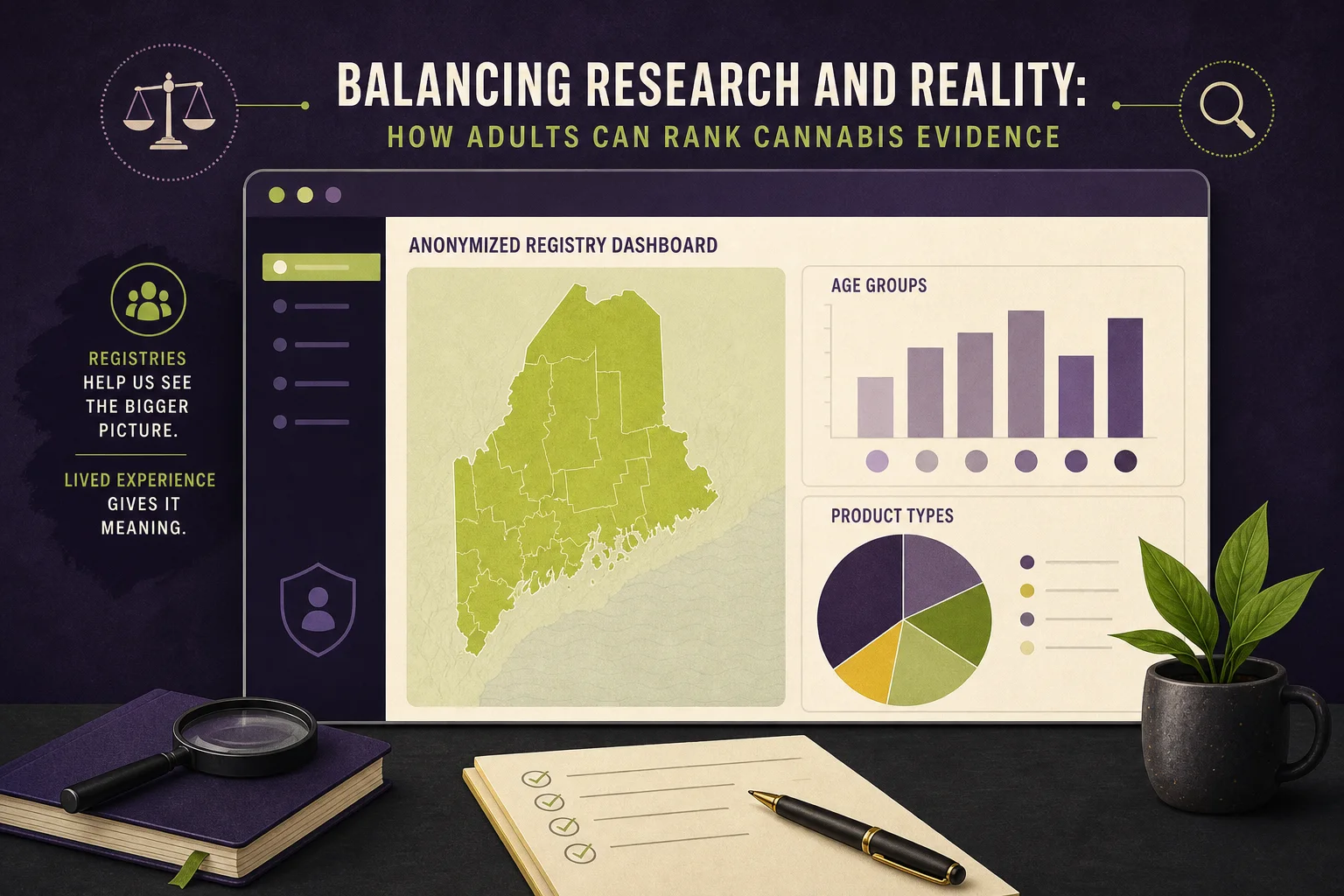
An anonymized, schematic registry dashboard — maps of participation, age bands, and product-type tallies — shows how public-health and program data (like Maine’s dashboards) can contextualize lived reports. The mockup must contain no real personal data or exact figures.
Research context: Maine Medical Use of Cannabis ProgramIndividual notes, case series, and patient voice: the value and limits of stories
A single patient note, a bedside observation, or a grower’s written log is where many discoveries begin. Case reports have historically signaled new adverse effects or surprising findings that later prompted formal study. They are low on the hierarchy for generalization but high in practical utility: they tell you what to watch for. (ncbi.nlm.nih.gov)
When a patient, caregiver, or experienced cultivator reports a repeated, consistent pattern across multiple people and contexts, those stories accumulate into a signal worth investigating. The key is replication and documentation: if multiple independent observers report similar effects under different conditions, that raises the prior probability that a relationship exists — worthy of cohort or trial-level scrutiny. (pubmed.ncbi.nlm.nih.gov)
That said, anecdotes are vulnerable to placebo effects, regression to the mean, selective memory, and expectation. View them as an invitation, not proof. Respect the voices, document carefully, and look for corroborating observational or experimental data.
A practical checklist: how an adult can rank cannabis evidence in four steps
-
Identify the study type and sample. Is this a mechanistic paper, an animal study, an observational cohort, a randomized trial, a systematic review, or an individual note? Higher-level designs reduce some biases but check sample size and funding transparency. (pubmed.ncbi.nlm.nih.gov)
-
Look at outcomes and methods. Did the study measure what matters (clinically meaningful outcomes) or a surrogate (biomarker, receptor binding)? How were exposures defined — product type, dose, route, frequency? Poor exposure measurement is a common problem in cannabis studies. (pmc.ncbi.nlm.nih.gov)
-
Cross-check external consistency. Do other high-quality studies or independent registries show similar results? If case reports and surveys point one way but rigorously conducted trials do not, probe the differences in population, product, and outcome. If many independent sources align, confidence rises. (ncbi.nlm.nih.gov)
-
Fold in lived experience carefully. Give weight to repeated, well-documented, independent observations — but require replication. If a grower’s batch notes show consistent effects across multiple consumers and contexts, that’s stronger than a single testimonial. Use lived reports to generate testable questions and to prioritize harms to monitor (for example, pediatric exposures or interactions with medications). For safety flags and public-health signals, rely on surveillance systems and poison-control reporting. (poison.org)
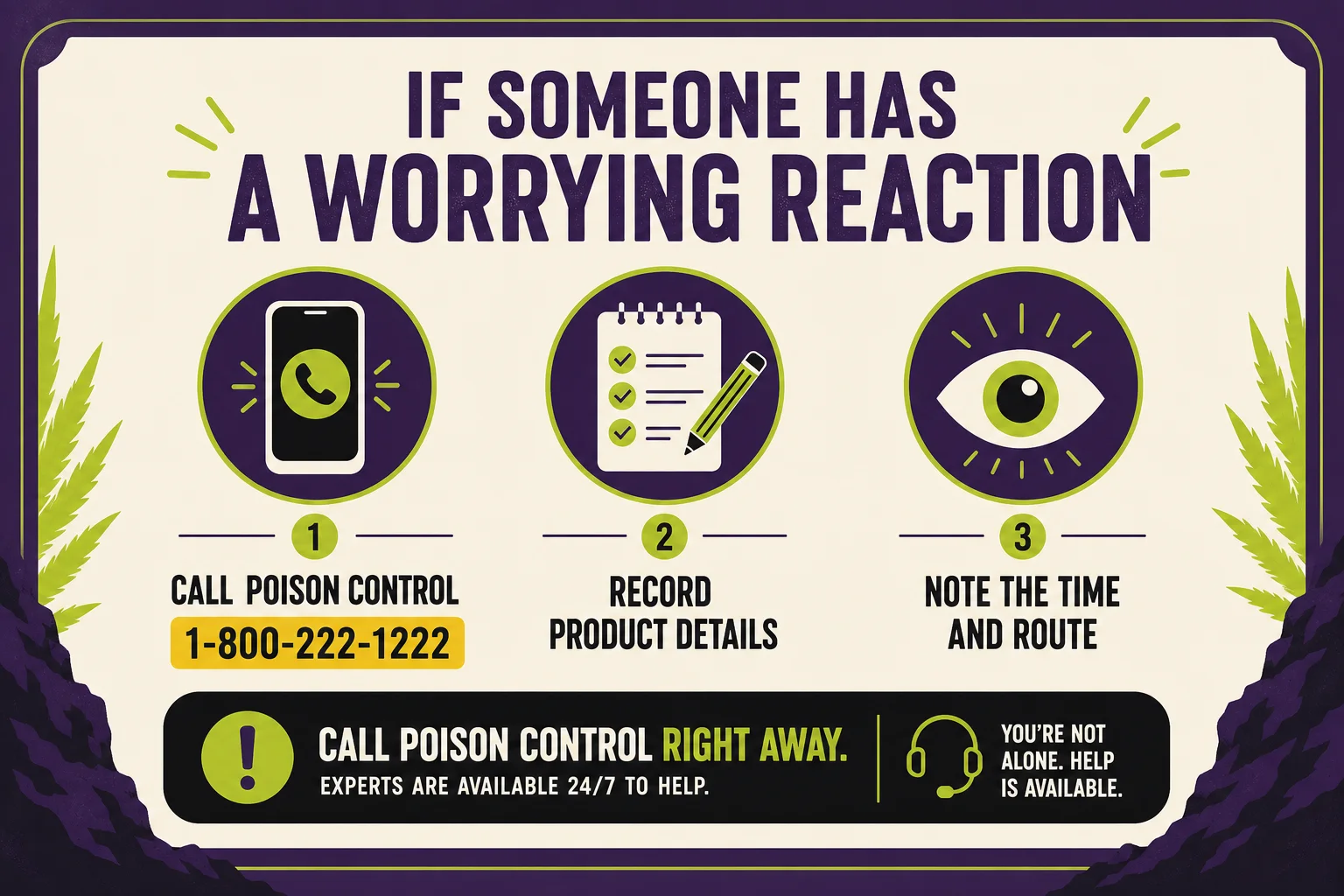
Action-oriented public-health brief: an educational visual describing when to contact poison control, what details to record, and how documentation supports surveillance. This ties safety advice to the article’s emphasis on combining lived experience with official reporting.
Research context: Cannabis: Risks and effects (webPOISONCONTROL / Poison.org)Where Maine’s systems fit and why the distinction matters
Maine maintains a regulated medical program and an adult-use program with different rules, participants, and policy aims. Medical programs typically include patient registries and clinical authorizations that can facilitate better record-keeping and targeted research questions; adult-use markets emphasize access and consumer choice. Because the populations and product distributions differ, evidence from one program does not automatically generalize to the other. For example, patient-reported outcomes in a medical cohort may not reflect patterns among adult recreational consumers. Consult Office of Cannabis Policy resources for Maine-specific program details. (maine.gov)
Maine’s Office of Cannabis Policy also publishes guidance and dashboards that can help adults and growers understand program data, participation trends, and compliance priorities. Those public resources are useful when you want to ground lived experience in program-level numbers — for example, to see whether reported upticks in exposures are local trends or statewide patterns. (maine.gov)
Remember: the regulatory differences affect who’s studied, what products are available, and how data are collected. When evaluating research, ask whether the study population and products resemble the Maine context you care about.
Closing: a culture of careful curiosity
Ranking evidence is an act of disciplined curiosity. Use the ladder of evidence as a map, not a ruler. Consider mechanistic and animal studies essential hypotheses; view surveys and observational cohorts as pattern detectors; and regard randomized trials and high-quality systematic reviews as the most reliable estimates for specific populations and interventions. Across all of this, lived experience — well-documented, replicated, and independent — remains a valuable input that can point researchers to new questions and help prioritize safety surveillance. (pubmed.ncbi.nlm.nih.gov)
People who care for someone using cannabis, or who grow and share product within a community, may choose to keep careful records of product details, dose (how it’s prepared and used), timing, and concurrent medications or substances. Those notes are the raw material that can turn a story into data worth studying. When questions arise about safety concerns, consult poison-control resources and official public-health guidance. (poison.org)
Questions this guide answers
Can a single patient’s note be useful as evidence?
Yes — as a hypothesis generator and an early signal. Single notes should prompt documentation and, ideally, replication across other independent observations before being treated as generalizable evidence. ([ncbi.nlm.nih.gov](https://www.ncbi.nlm.nih.gov/books/NBK621597/?report=reader))
Are randomized trials always better than observational studies for cannabis?
RCTs reduce some biases but aren’t always feasible for every question. Well-conducted observational studies remain essential — especially for real-world safety and long-term effects where trials are limited. ([ncbi.nlm.nih.gov](https://www.ncbi.nlm.nih.gov/books/NBK99035/bin/app10.pdf))
How should I treat animal or mechanism studies?
Treat them as proof of concept and as safety flag sources. They guide human research priorities but don’t establish human outcomes alone. ([pmc.ncbi.nlm.nih.gov](https://pmc.ncbi.nlm.nih.gov/articles/PMC11493439/))
Where can I find Maine-specific program information?
The Office of Cannabis Policy publishes program details, dashboards, and guidance for Maine’s medical and adult-use programs — useful context for assessing whether study populations match Maine realities. ([maine.gov](https://www.maine.gov/dafs/ocp/medical-use/))
Who should I call if someone has a bad reaction?
For acute concerns or suspected poisoning, use webPOISONCONTROL or call your local poison center at 1-800-222-1222 for immediate expert guidance. ([poison.org](https://www.poison.org/articles/marijuana))
Educational information only. Cannabis affects people differently and this is not medical advice.