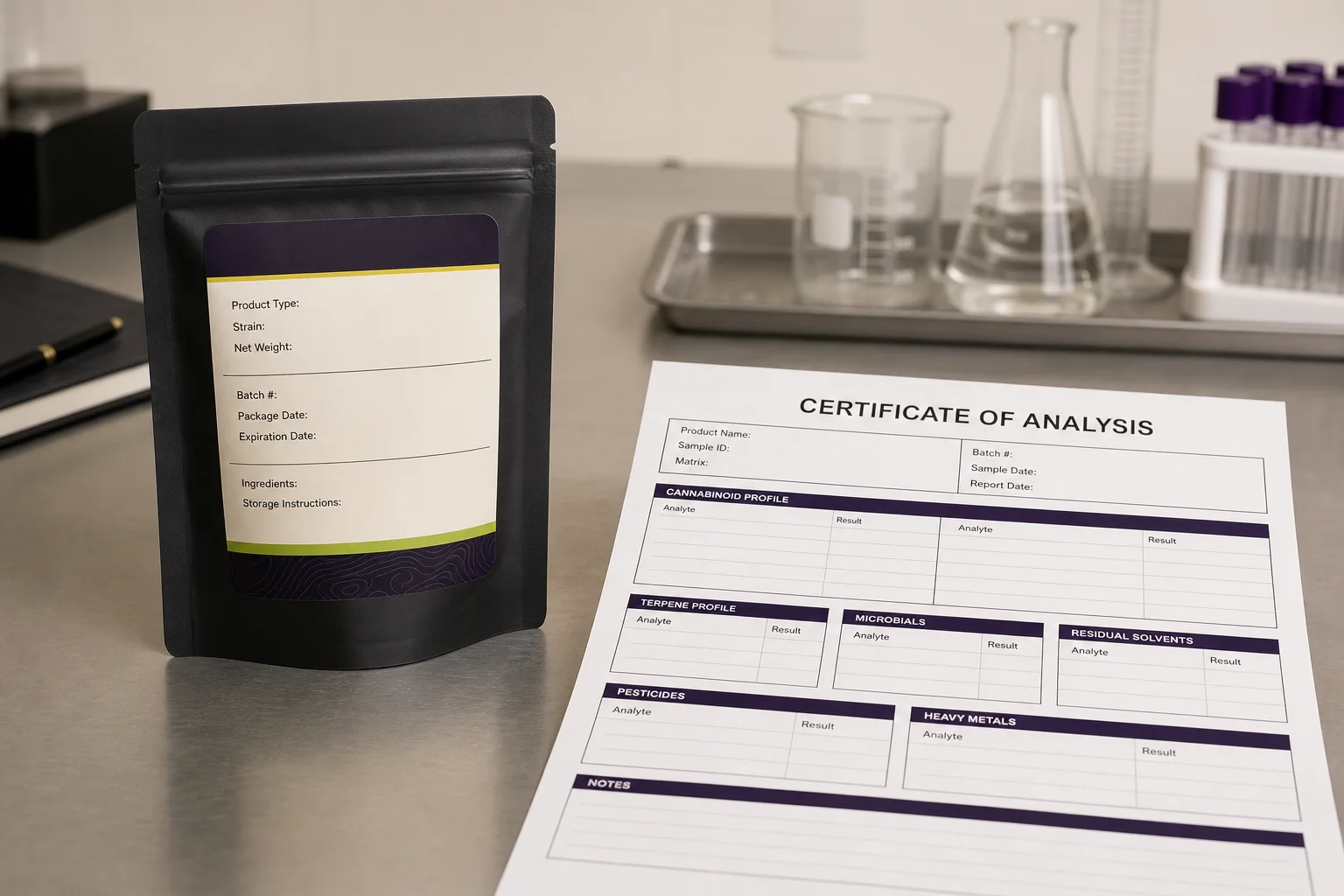
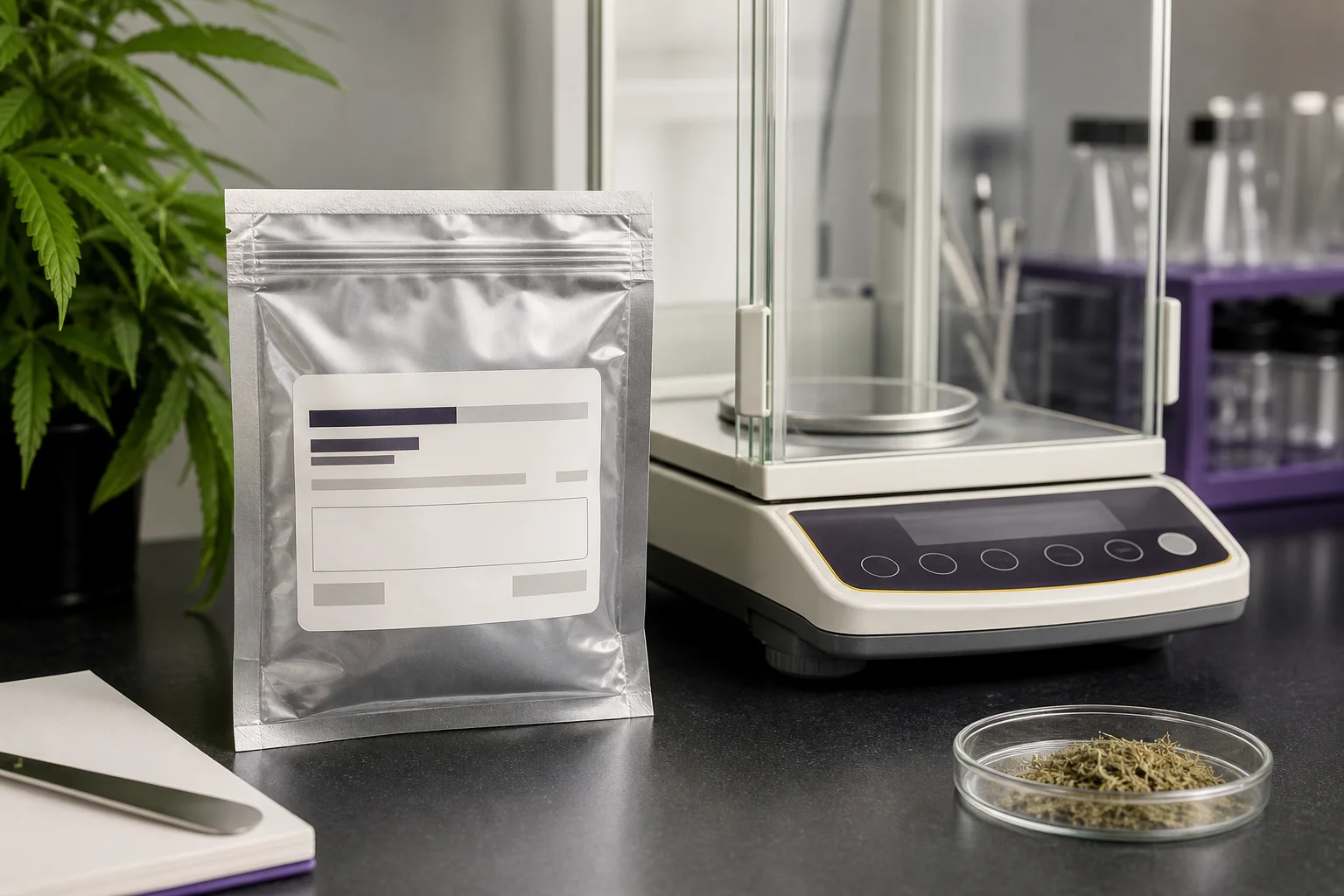
Hero: A labeled product and its Certificate of Analysis (COA) illustrate the link between state-required labeling (including batch numbers) and the laboratory report that documents tests for that batch. This image teaches the connection between package traceability and COA evidence while preserving privacy by not showing readable lab values. Source documents inform what fields to expect on a Maine COA.
Quick orientation: why a single lab report matters — and why it’s partial
When you pick up a licensed cannabis product in Maine, there’s often a Certificate of Analysis (COA) attached or available for the batch. That COA is valuable: it shows which tests were run, the lab that ran them, and the result values for potency (THC, CBD, and other measured cannabinoids), terpenes when available, and contaminant screens. But a single COA is a laboratory snapshot of a defined sample taken at a precise time — not an immutable truth about every nug in a jar or every bite of an edible.
Maine’s statutes require labeling that includes batch numbers and potency information, and the Office of Cannabis Policy (OCP) sets specific rules for testing and labeling that shape what appears on a COA and on the package. See Maine law on labeling and packaging (Title 28‑B §701) for required label elements, including batch number and potency statements: https://legislature.maine.gov/legis/statutes/28-B/title28-Bsec701.html. For state testing requirements and an accessible guide to COAs, see the OCP guidance PDF: https://www.maine.gov/dafs/ocp/sites/maine.gov.dafs.ocp/files/2023-10/Understanding%20Maine%20Cannabis%20Testing%20Requirements%20%26%20Results.pdf.
Consider a COA as credible evidence that a tested sample met Maine’s testing standards on that date — and as a starting point for questions about traceability, sampling, and lab competence. It is not a guarantee about how the product will perform for every person or the exact composition of every unit inside the same package over time.
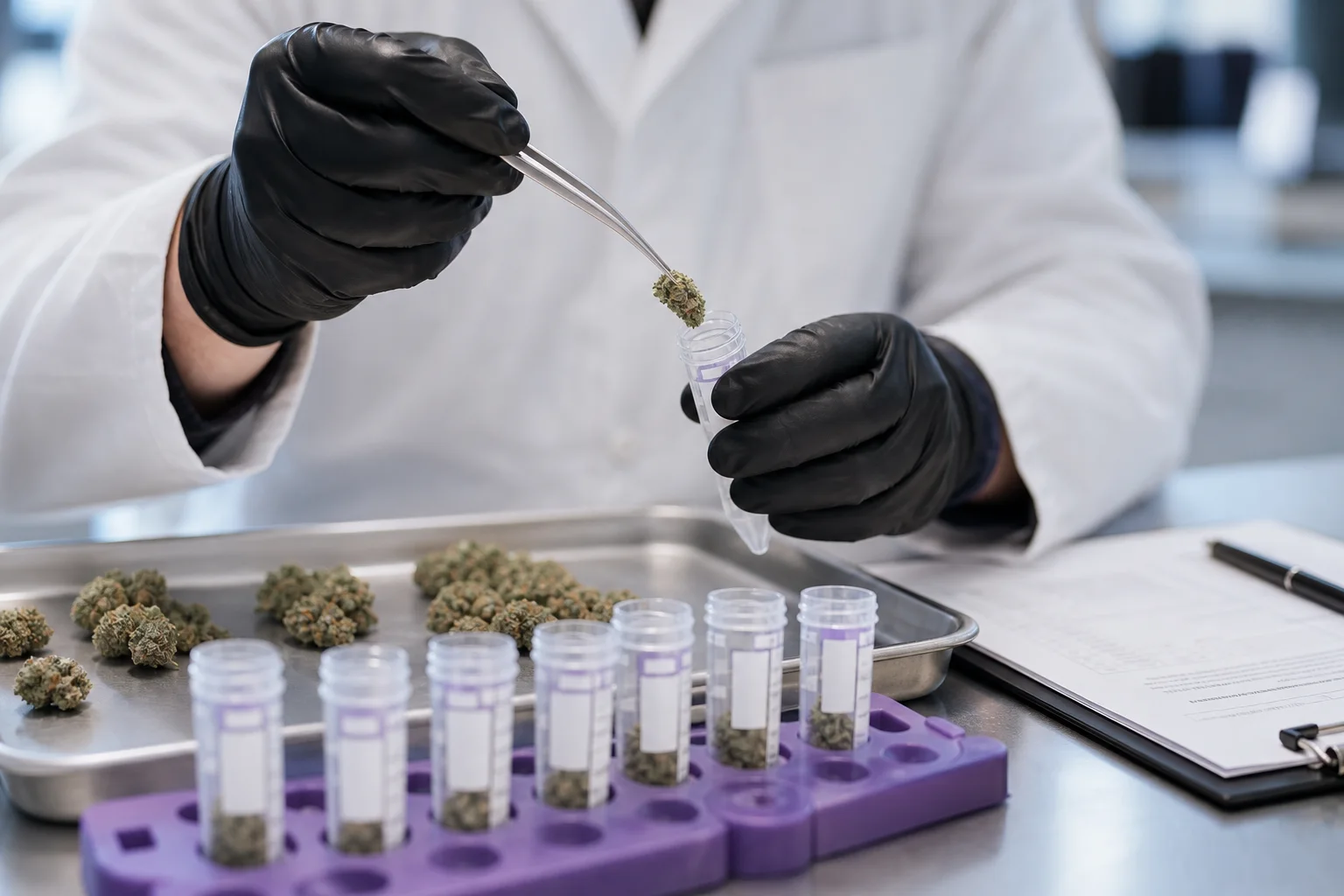
Sampling in practice: this macro image demonstrates why multiple subsamples are needed to represent a batch. It teaches the visual concept of pooled sampling and chain-of-custody tubes while not implying any particular lab method. Limit: a photograph cannot reveal the statistical plan or the exact representativeness metrics for a lot.
Research context: Adult Use Cannabis Program Rules | Office of Cannabis PolicyWhat a typical COA contains — read this like a lab notebook
A properly completed COA usually lists: the lab name and accreditation/certification details, the sample identifier and batch number, the tests performed (potency, terpene profile when done, residual solvents, pesticides, microbial screens, heavy metals, mycotoxins), the methods or method codes, units and limits of quantitation, result values, and signatures or electronic attestations. You’ll often also see sample weight, date of testing, and a unique report number. Maine OCP’s consumer guidance explains common fields on a COA and which analytes are mandatory under state rules.
Why those fields matter: accreditation/certification points toward an oversight framework; method names and LOQs (limits of quantitation) show what the lab could reliably detect; batch or lot numbers let you trace the result to packaging and distribution records. But none of these fields alone remove the need to consider sampling, representativeness, or analytical uncertainty when interpreting the numbers. For OCP technical requirements and list of mandatory analytes, see the OCP testing guidance and rules. (OCP rules and testing resources: https://www.maine.gov/dafs/ocp/adult-use/rules-statutes/rules.)
Sampling and representativeness: the weak link in a single-batch story
A COA reports the analysis of a specific sample. That sample is usually a small sub‑portion removed from a larger harvest or production run. How that sub‑sample was collected matters more than many shoppers realize. If the sampler took the flower from a single jar, a single plant, or the top of a drying rack, the COA reflects that small piece — not necessarily the entire batch.
Good sampling practice uses a statistically defensible plan (multiple subsamples from different bags, plants, trays, or mixing lots) to create a pooled test unit that better represents the whole. The OCP rules and testing facility certification requirements require documented chain-of-custody and sampling records for testing facilities, and regulators expect traceability (batch numbers, sampling records) so consumers and inspectors can follow a result back to a specific production unit. But it remains true that many COAs come from a limited number of sub-samples, which raises the potential for within-batch variability.
Put plainly: if a COA shows 18% total THC for the tested sample, other pieces from that harvest might be higher or lower. The magnitude of variability depends on cultivation, drying, trimming, and how well the producer homogenized the lot before sampling.
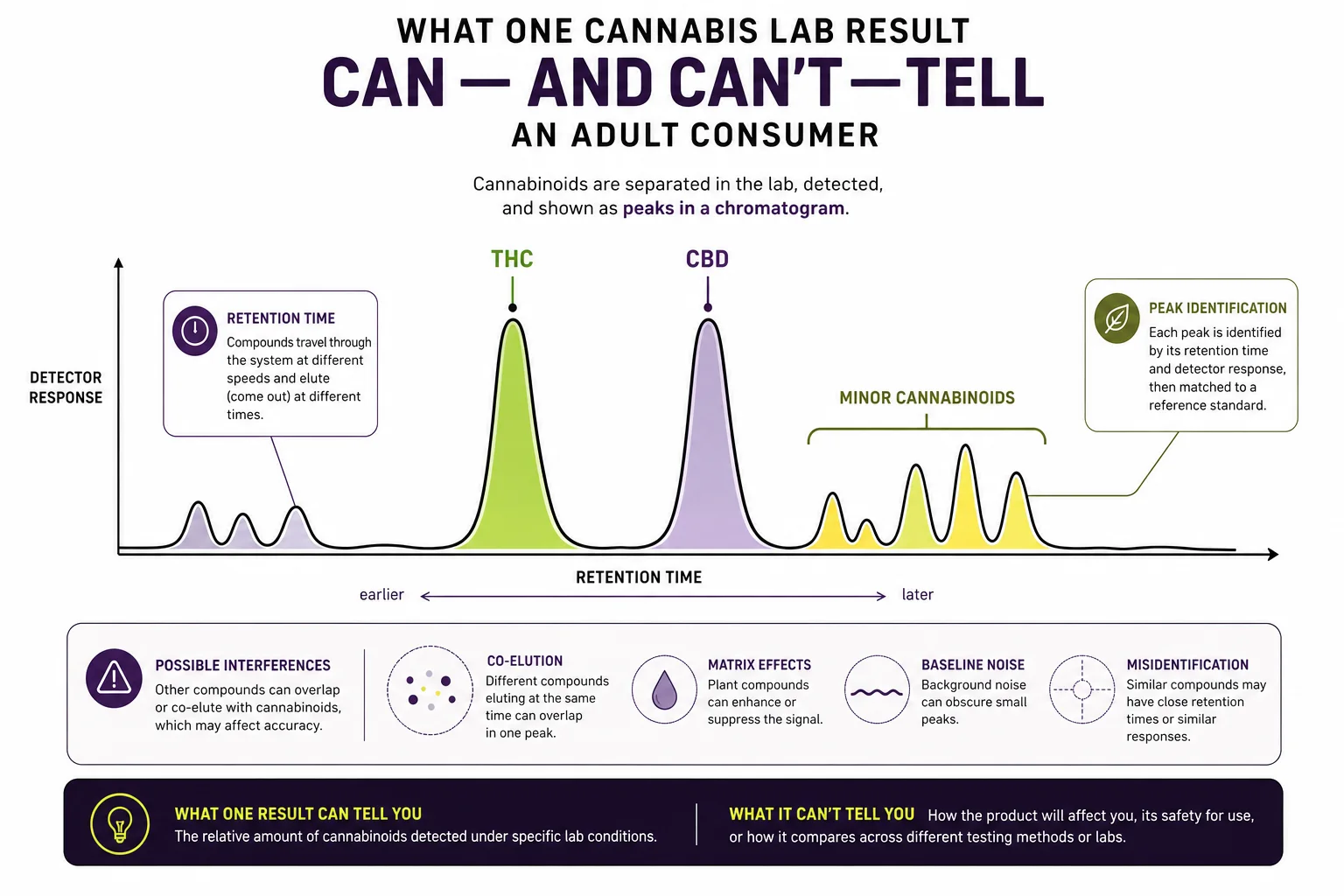
Chromatography explained: a clear, labeled diagram shows how chromatography separates cannabinoid peaks and why method choice matters. It teaches the visual basis of potency testing without showing numeric results or implying clinical effects. Limit: schematic peaks are illustrative and not from an actual report.
Research context: Methods for quantification of cannabinoids: a narrative reviewPotency numbers: what percentage labels measure — and what they don’t
Potency results (e.g., percent THC or mg per serving) are direct laboratory measurements of analytes in the tested sample. Labs use validated analytical methods — commonly liquid chromatography (LC) or gas chromatography (GC) with various detectors — to quantify cannabinoids and their acidic precursors. These methods are well-established, but they are also sensitive to method choice, sample preparation, and instrument calibration.
Important measurement realities: different labs and methods can give different numeric potency results for the same physical material. Interlaboratory studies and NIST’s Cannabis Laboratory Quality Assurance Program (CannaQAP) show that while major cannabinoids like Δ9‑THC and CBD are typically measured with reasonable agreement, minor cannabinoids and some derived totals can show much larger between-lab variability. See the NIST interlaboratory report (NIST.IR.8519) for details on repeatability and reproducibility across labs: https://nvlpubs.nist.gov/nistpubs/ir/2024/NIST.IR.8519.pdf. Also consult method reviews summarizing technique strengths and weaknesses: https://pmc.ncbi.nlm.nih.gov/articles/PMC7819317/.
What potency does not tell you: it does not directly predict how you will feel, your sensitivity, or the time-course of effects. It’s a chemical quantity, not a personalized response metric.
Terpenes, minor cannabinoids, and the limits of detection
Some COAs include terpene profiles or lists of minor cannabinoids (CBG, CBC, CBN, etc.). Terpenes can help explain aroma and may influence consumer preference, but their presence on a COA should be read with caution. Terpene results are method‑dependent and fragile: terpenes are volatile and can change during drying, curing, and storage. A terpene profile on a COA is therefore a time‑stamped fragrance map, not a lifetime guarantee.
Minor cannabinoids are often present near method limits of quantitation, which raises the risk of higher relative measurement uncertainty. Published reviews and interlaboratory studies highlight that values near an assay’s LOQ can have a wide relative error; minor cannabinoids therefore show more variability and less interlab agreement than major cannabinoids. For technical background, see the methods review and NIST reports cited above. (See: https://pmc.ncbi.nlm.nih.gov/articles/PMC7819317/; https://nvlpubs.nist.gov/nistpubs/ir/2024/NIST.IR.8519.pdf.)
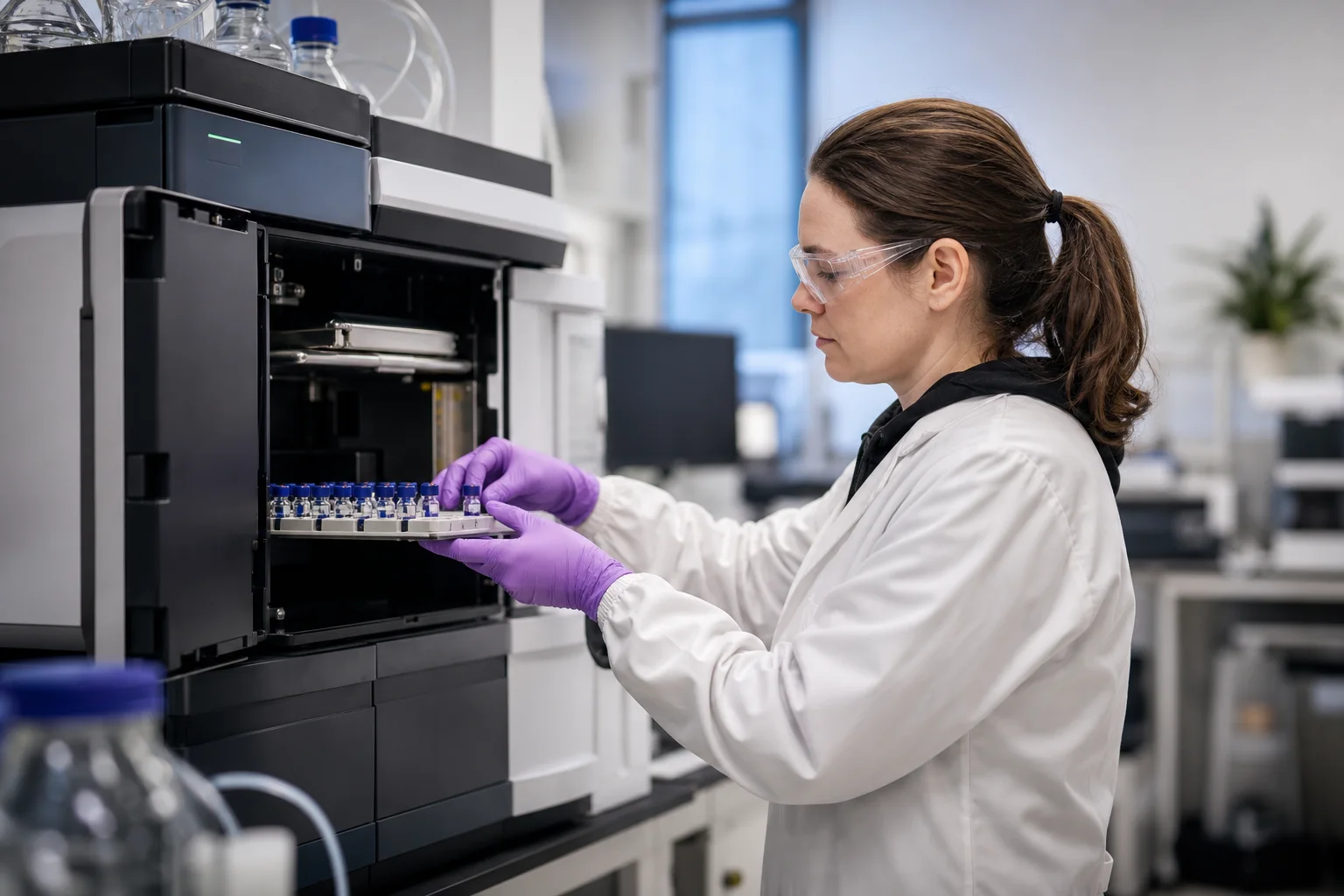
Laboratory context: an LC instrument and prepared vials show the instruments commonly used for potency and contaminant screens. This photograph teaches how instrument platforms and sample prep influence results while keeping display readouts and lab logos unreadable. Limit: the image cannot show the lab’s method validation or the numeric uncertainty for a result.
Research context: Cannabis Laboratory Quality Assurance Program: Exercise 2 Cannabinoid Final Report (NIST IR 8519)Contaminants testing in Maine: scope, detection, and practical limits
Maine’s regulatory framework and OCP rules require screening for certain contaminants depending on product type: solvents in extracts and edibles, a pesticides list, microbial loads, heavy metals, and mycotoxins where applicable. A COA that reports “non-detected” for a regulated pesticide means that the analyte was below the lab’s limit of detection for the method used; it does not prove absolute absence at any concentration. The choice of analyte panel, the method’s LOQ/LOD, and whether a lab used confirmatory testing all affect what “non-detected” means in practice. See OCP mandatory analytes and testing guidance for the regulated list and method expectations: https://www.maine.gov/dafs/ocp/adult-use/rules-statutes/rules and the OCP testing guidance document.
Safety note: Poison Control and public-health organizations note that edible formats can increase the risk of accidental exposure. Labels, packaging designed to limit unintended access, and accurate serving information are part of Maine’s labeling expectations, and product safety also depends on proper sampling and robust contaminant screening. For practical safety guidance, see Poison Control’s overview on cannabis risks: https://www.poison.org/articles/marijuana.
Reference materials in measurement: this image shows a unit of NIST reference material (RM 8210) used to harmonize cannabinoid and toxic element measurements. It teaches how reference materials support laboratory comparability; limit: a packaged RM does not reduce sampling error at the producer level.
Research context: Characterization of Reference Material 8210: Hemp Plant (NIST SP 260-248)Lab variability, standards, and measurement uncertainty — why experts disagree
Interlaboratory studies (including NIST’s CannaQAP exercises) reveal where analytic variability is highest and why. When a lab reports a value, the report should either list an uncertainty estimate or a method LOQ; where it doesn’t, ask the provider or lab for that information. NIST’s work shows that harmonized methods, standard reference materials (like RM 8210), and proficiency testing substantially improve measurement comparability, but they don’t remove uncertainty entirely: method choice, sample prep, chromatographic interferences, and instrument calibration all create measurable spreads in reported values. See NIST’s cannabis QA materials and the RM documentation for descriptions of how the agency quantifies uncertainty: https://nvlpubs.nist.gov/nistpubs/ir/2024/NIST.IR.8519.pdf and https://nvlpubs.nist.gov/nistpubs/SpecialPublications/NIST.SP.260-248.pdf.
For consumers: a lab’s certification and participation in proficiency testing, along with method transparency on the COA, are helpful signals. If a COA omits method names, LOQs, or lab accreditation status, that’s a legitimate reason to ask the seller or producer for more information.
How to use a single COA sensibly as an informed adult consumer
View a single COA as a verified measurement of a tested sample with clear value for traceability and risk-reduction. Use it to confirm that the product underwent the state-mandated screens for contaminants and to check that potency values are reported and tied to a batch number that matches the package. But pair that COA with practical questions: How was the sample taken? When was the material tested relative to harvest, drying, and packaging? Was the COA generated by a certified testing facility and does the COA list methods and LOQs? Maine’s rules require labeling elements (like batch number and potency) and direct consumers to expect traceability — those are useful anchors for evaluating a report. See Title 28‑B §701 for labeling requirements and batch numbering expectations: https://legislature.maine.gov/legis/statutes/28-B/title28-Bsec701.html.
If the COA and label align, it is reasonable to conclude the tested sample met the reported analyte thresholds on that date. For an additional level of confidence, some producers retest, document sampling, or run broader panels; in those cases, sampling logs or retest results provide more context. But remember: no single laboratory report eliminates sampling variability or predicts a person’s subjective response.
Bottom line: useful evidence, imperfect certainty
A COA is a useful piece of evidence: it documents that a sample from a named batch was analyzed and lists the results, method cues, and lab identity. Regulators, standards bodies, and reference-material programs (like NIST’s work and RM 8210) are steadily reducing measurement variability, but important limits remain — sampling representativeness, method differences, and intrinsic uncertainty near detection limits.
Use COAs to check for mandatory contaminant screens, to verify batch numbers and labels, and to compare how transparent different producers are about method and sampling. For technical background on methods and the limits of analytical agreement, consult NIST and peer-reviewed method reviews: https://nvlpubs.nist.gov/nistpubs/ir/2024/NIST.IR.8519.pdf; https://pmc.ncbi.nlm.nih.gov/articles/PMC7819317/.
Key takeaways
- A COA documents a tested sample from a named batch but is not a guarantee about every unit in that batch. (See Maine labeling law: https://legislature.maine.gov/legis/statutes/28-B/title28-Bsec701.html.)
- Potency and terpene numbers are method-dependent; minor cannabinoids show higher variability. (See NIST and methods reviews: https://nvlpubs.nist.gov/nistpubs/ir/2024/NIST.IR.8519.pdf; https://pmc.ncbi.nlm.nih.gov/articles/PMC7819317/.)
- “Not detected” means below the lab’s detection limit for that method — not absolute absence. (See OCP testing guidance.)
- Look for lab accreditation/certification, method names/LOQs, and matching batch numbers to evaluate a COA’s traceability. (See Maine OCP resources: https://www.maine.gov/dafs/ocp/adult-use/rules-statutes/rules.)
- Because accidental exposure is a recognized concern with edibles and other formats, consult Poison Control resources and state labeling rules for information on packaging and storage considerations. (See: https://www.poison.org/articles/marijuana.)
Sources
This article is based on Maine statutes and rules, state guidance, NIST technical reports and reference materials, and peer-reviewed method reviews:
- Maine Office of Cannabis Policy — Adult Use Cannabis Program rules and testing guidance: https://www.maine.gov/dafs/ocp/adult-use/rules-statutes/rules
- Maine Legislature — Title 28‑B §701, Labeling and packaging: https://legislature.maine.gov/legis/statutes/28-B/title28-Bsec701.html
- Maine OCP — "Understanding Maine Cannabis Testing Requirements & Results" (OCP consumer guidance). https://www.maine.gov/dafs/ocp/sites/maine.gov.dafs.ocp/files/2023-10/Understanding%20Maine%20Cannabis%20Testing%20Requirements%20%26%20Results.pdf
- NIST IR 8519 — Cannabis Laboratory Quality Assurance Program: Exercise 2, Cannabinoid Final Report. https://nvlpubs.nist.gov/nistpubs/ir/2024/NIST.IR.8519.pdf
- PMCID review — Methods for quantification of cannabinoids: a narrative review. https://pmc.ncbi.nlm.nih.gov/articles/PMC7819317/
- National Capital Poison Center / Poison Control — Cannabis: Risks and effects. https://www.poison.org/articles/marijuana
FAQs
Q: Does a COA prove a product is safe? A: A COA shows a tested sample met the analyte limits for the tests run on that date and method; it reduces risk by documenting screening, but it does not prove absolute safety for every user, nor guarantee uniformity across every unit in the lot.
Q: If COAs differ between two batches, which is “right”? A: Each COA reports the tested sample’s results; differences can come from real batch variability, sampling, or lab/method differences. Compare lab accreditation, method names, LOQs, and sampling notes to understand why results might differ.
Q: What should I look for on a COA to judge lab quality? A: Look for the testing facility’s name and certification, method identifiers or descriptions, LOQs/LODs, the batch number, sample chain-of-custody notes, and date of test.
Q: If the COA shows “non-detect” for a pesticide, is that safe? A: “Non-detect” means the analyte was below the lab method’s detection limit. It reduces the likelihood of exposure but does not absolutely prove absence at any conceivable concentration.
Q: How long after testing does a COA stay accurate? A: A COA is accurate for the tested sample at the time of analysis. Volatile constituents (like terpenes) and some unstable analytes can change during storage; potency may shift slowly over time depending on storage conditions.
Q: Who can I call if I suspect a bad reaction to a cannabis product? A: For immediate help or poisoning concerns, webPOISONCONTROL and regional poison centers provide contact resources (webPOISONCONTROL or 1‑800‑222‑1222). (See: https://www.poison.org/articles/marijuana.)
Questions this guide answers
Does a COA prove a product is safe?
A COA shows a tested sample met the analyte limits for the tests run on that date and method; it reduces risk by documenting screening, but it does not prove absolute safety for every user or every unit in a batch.
If COAs differ between two batches, which is correct?
Each COA reports the tested sample’s results. Differences can reflect true batch variability, sampling differences, or differences in laboratory methods and calibration. Check lab accreditation, methods, LOQs, and sampling notes to interpret disparities.
What does “non-detect” mean on a COA?
“Non-detect” means the analyte was below the laboratory method’s limit of detection. It lowers the likelihood of exposure but does not demonstrate absolute absence at any concentration.
Who should I contact for an acute reaction to cannabis?
For immediate help, use webPOISONCONTROL or call the national Poison Control number at 1-800-222-1222. Poison Control provides free, confidential guidance.
What should I look for to trust a COA?
Look for the testing lab’s name and certification, method descriptions or codes, limits of detection/quantitation, the batch number that matches the package, and test dates.
Educational information only. Cannabis affects people differently and this is not medical advice.