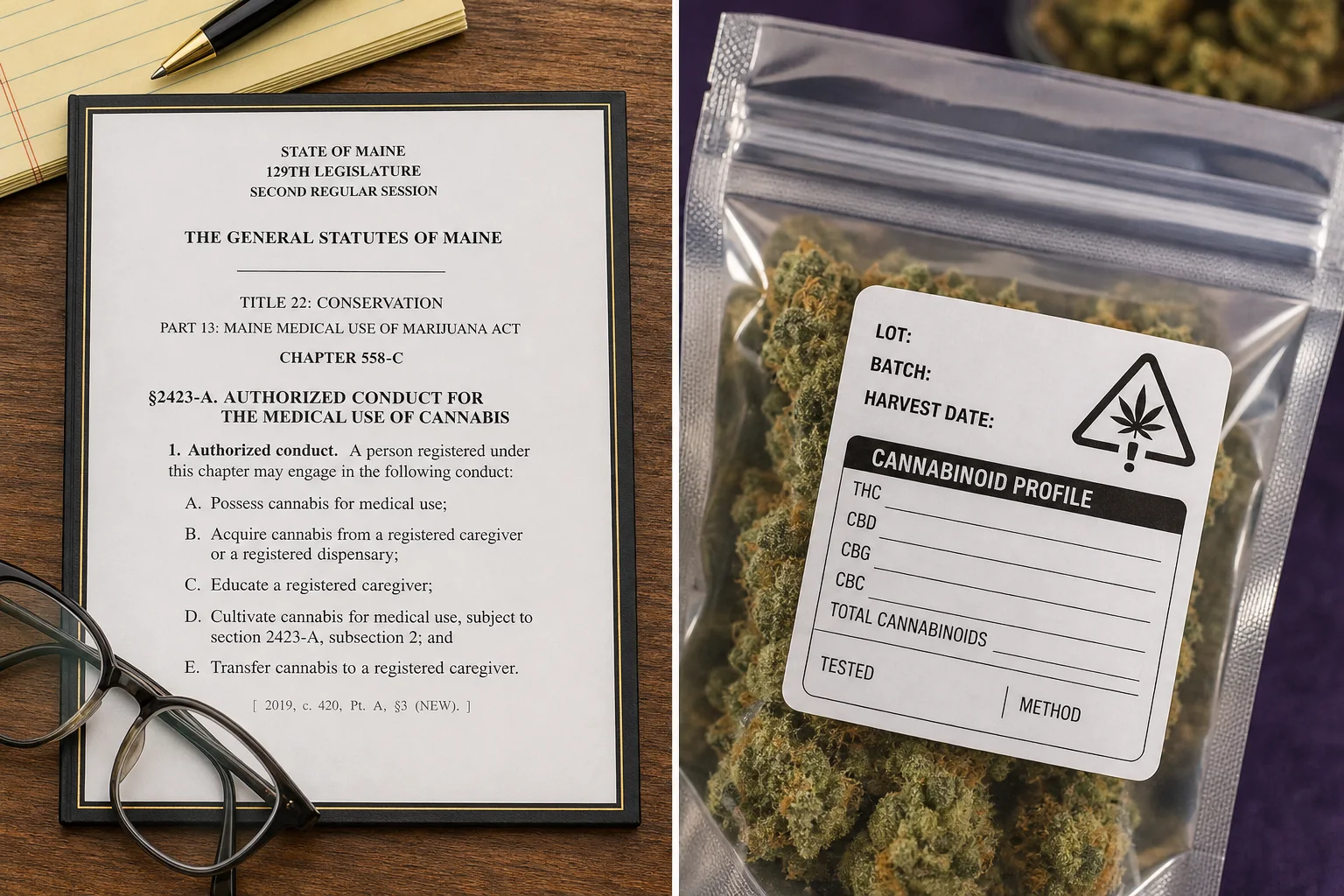
Hero evidence map: statute text (left) paired with the endpoint of regulation — a labeled package (right). The image teaches that law becomes label. Limitations: the statute page is archival and the package is a staged documentary prop that demonstrates labeling elements, not a real product sample. Source: Maine statute and OCP guidance pages.
Published October 24, 2026 — This article maps participants, testing, labels, and the practical reasons Maine keeps a medical‑use program separate from adult‑use. It draws on Maine statutes and OCP rules, national public‑health guidance, and peer‑reviewed work on laboratory methods and variability. Read with a grower’s eye: rules shape how seed becomes a labeled package, and testing is where traceability either works or fails.
1) Quick orientation: two programs, one plant, different rules
Maine operates a distinct Medical Use of Cannabis Program (MMCP) and a separate Adult Use Cannabis Program (AUCP). Both fall under state law and administrative rules, but they answer to different statutes and rule sets. The Office of Cannabis Policy administers the programs and publishes separate rules and resources for medical and adult‑use participants. (www11.maine.gov)
In plain terms: the same species of plant (cannabis) can be governed under different administrative identities depending on whether it moves through the medical‑use registration system or the adult‑use market. Those identities determine who can possess and cultivate how much, who may buy or receive certain products, and which labeling and testing rules apply. The legal texts that set those differences live at Title 22 for the medical program and Title 28‑B for adult use. (legislature.maine.gov)
Why the date matters: rulemaking and statutes change. This map reflects the law and guidance current as of October 24, 2026; if you rely on any single regulatory detail for a business or health decision, check the OCP pages and statutes for updates. (www11.maine.gov)
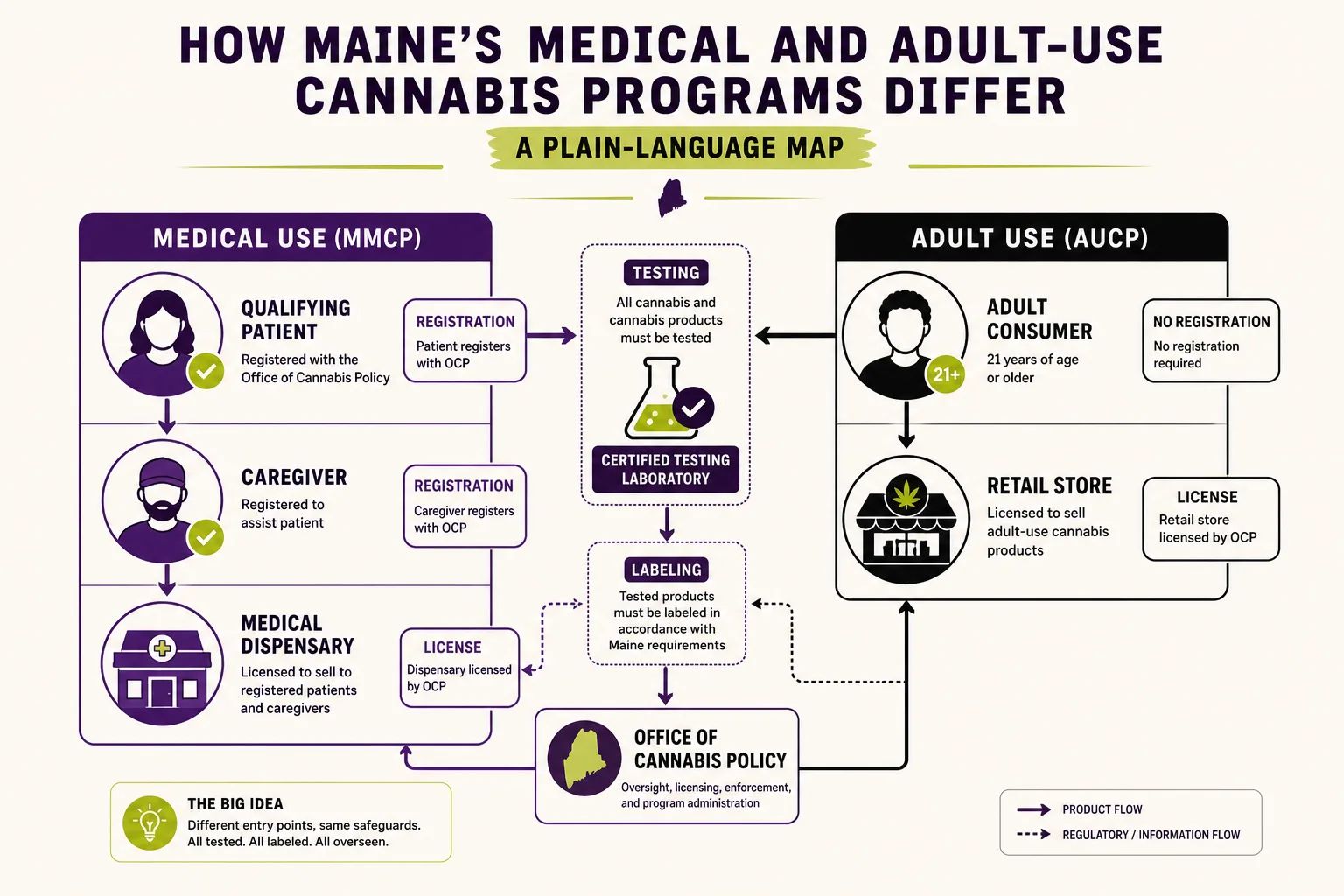
Participant map diagram: visualizes the distinct flows for medical registrants vs adult‑use consumers and where certified labs and OCP oversight intersect. Limitations: schematic representation simplifies administrative detail and is not legal advice.
Research context: Maine Medical Use of Cannabis Program2) Who the participants are — roles and responsibilities
Medical program participants include: qualifying patients (who may possess larger amounts and cultivate under patient limits), designated caregivers, medical dispensary registrations, and clinicians who certify patients for registry cards. The MMCP keeps records and registration mechanisms tailored to qualifying patients and their caregivers. These registration pathways affect who may legally possess larger quantities and how supply chains are tracked for medical registrants. (www11.maine.gov)
Adult‑use participants are adults 21+, licensed commercial growers and manufacturers, adult‑use retailers, and certified testing labs under the AUCP licensing framework. Adult‑use statutes set possession and transfer limits (for example, a typical possession cap is smaller for adults than medical registrants) and require licensing, municipal authorization, and compliance with packaging, advertising, and testing rules specific to the adult market. (legislature.maine.gov)
Both systems share some actors — notably independent testing laboratories and the Office of Cannabis Policy — but the path a product takes (medical registry channel vs. adult‑use retail channel) changes the paperwork, allowable possession, and some labeling and packaging requirements. That divergence matters for traceability, eligibility for tax exemptions, and how product recalls or advisories are handled. (www11.maine.gov)
3) Statutes and rules: where the legal differences live (and why that matters)
The medical program is established in Title 22, Chapter 558‑C (the Maine Medical Use of Cannabis Act); it lays out qualifying patient rules, cultivation and possession allowances for patients, and the MMCP administrative duties. Adult use is governed under Title 28‑B (the Cannabis Legalization Act) with separate chapters and rulemaking authority for the AUCP. These statutory choices create two distinct regulatory identities for similar products. (legislature.maine.gov)
Practically, statutes set ceilings (possession and cultivation), who may participate (age thresholds, qualifying conditions, registry cards), and which state office issues licenses or registrations. Administrative rules — the OCP’s chapters and testing rules — fill in technical details: lab certification procedures, contaminant limits, packaging and labeling formats, track‑and‑trace requirements, and compliance enforcement. Because rule language can be precise, the difference between a "registration" (medical) and a "license" (adult‑use) carries business and legal consequences. (maine.gov)

Laboratory documentary photo: shows the instruments and sample vials used in cannabinoid quantification to teach about method dependence and sampling. Limitations: this image illustrates typical lab equipment and cannot show specific method validation certificates or concrete numeric test outputs.
Research context: Methods for quantification of cannabinoids: a narrative review4) Testing: certification, methods, and why results can vary
Both programs require independent lab testing, and Maine has adopted rule structures to certify testing facilities for cannabis work. But testing isn’t uniform across states or across labs, and differences in sampling, methods, instrument calibration, and reporting can produce meaningful variation in measured THC, CBD, terpenes, and contaminants. Maine’s rules address lab certification and which analytes must be reported, but the science of cannabinoid and contaminant measurement is complex. (maine.gov)
Peer‑reviewed work shows wide methodological diversity across laboratories, and that variation can create systematic differences in reported potency or contaminant counts. In other words, two compliant, certified labs can report different THC percentages from the same batch because of sample preparation, instrument choice (LC vs GC), calibration standards, and matrix effects. That’s a technical challenge for anyone who wants a single definitive number for a batch. (pmc.ncbi.nlm.nih.gov)
The upshot for growers and dispensaries: maintain clear chain‑of‑custody and batch records, use labs that publish method validation or participate in inter‑laboratory comparisons, and understand that label numbers come with measurement uncertainty. Maine’s lab certification rules aim to reduce variability by setting standards for methods and reporting; nevertheless, uncertainty remains an evidence limit to keep in mind. (maine.gov)
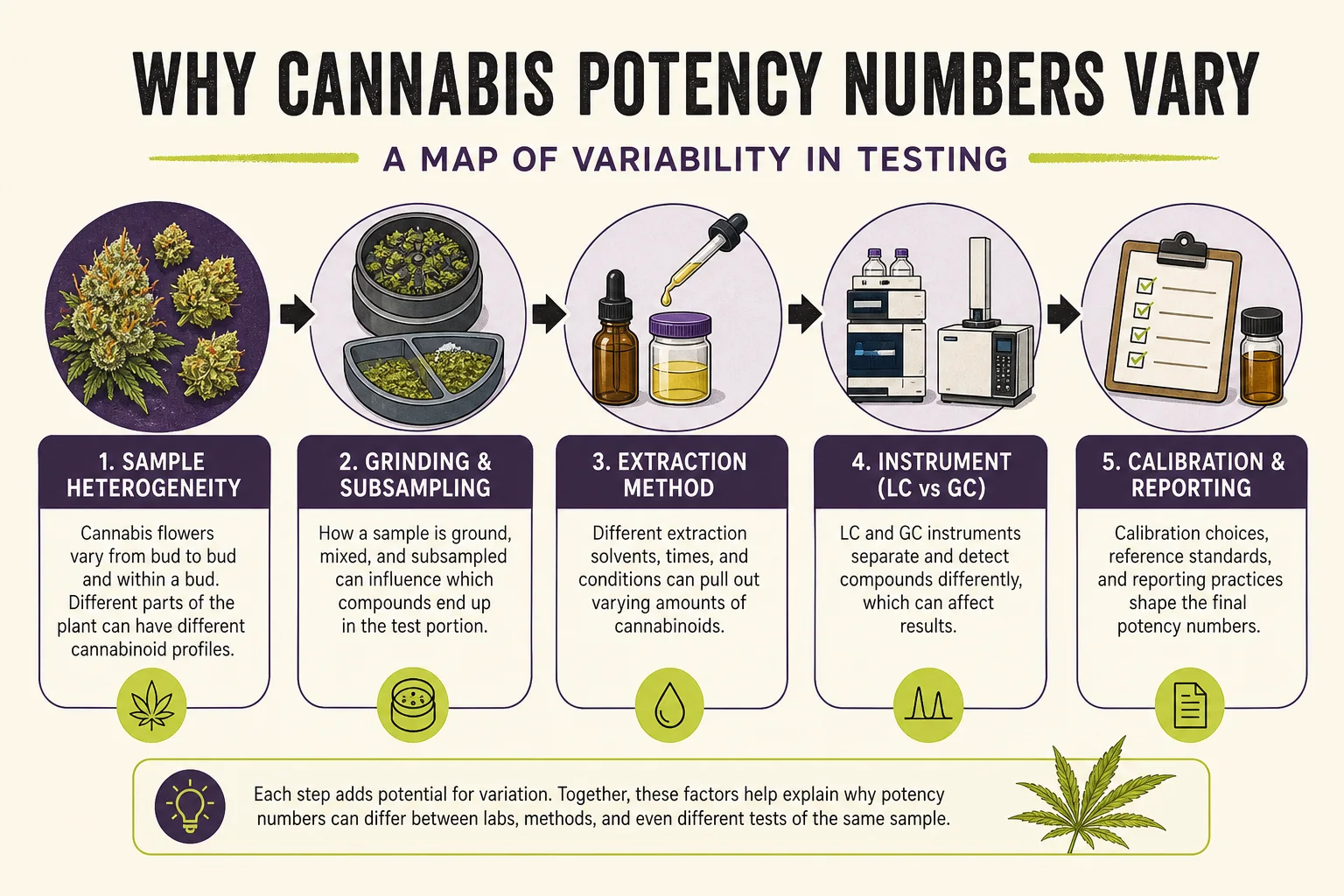
Analytical evidence diagram: an explanatory figure that teaches why different labs can report different potency numbers, linking sample prep, extraction, instrument choice, and reporting practices. Limitations: conceptual diagram only — does not show lab‑specific data or claim superiority of any method.
Research context: Methods for quantification of cannabinoids: a narrative review5) Labels and what they actually tell you (and don’t)
Labels are the practical translation of testing and rules into consumer information. Adult‑use and medical channels may use different label templates, sticker requirements, and warning language. Maine’s OCP publishes package, label, and advertisement review guidance that lays out required content (e.g., cannabinoid concentration, lot/batch identifiers, universal symbol, and safety warnings) and adult‑use rules include specific labeling and packaging requirements for consumer protection. (www11.maine.gov)
However, a THC percentage on a label is a measured value with an uncertainty range; it’s not a precise guarantee of effect or safety. Laboratories report point estimates derived from their analytic methods; variation between labs and between sub‑samples of the same batch means the single percentage is a useful indicator — not a definitive score. That limit matters more for medical registrants who may depend on consistent product characteristics, and it matters for adults who are trying to compare products across brands or labs. (pmc.ncbi.nlm.nih.gov)
Labels also communicate non‑chemical safety information that differs by program: child‑resistant packaging and certain warnings are universal, but medical packaging may include registry‑specific directions or documentation for caregivers that adult‑use packaging does not. Read labels as regulatory artifacts: they reflect what the program prioritized when the product left the lab and went into a package. (www11.maine.gov)
6) Why program identity matters in practice — supply chain, safety, and expectations
Program identity affects supply chains: MMCP cultivators and medical dispensaries may operate under different possession and cultivation caps, and some patients legally possess larger amounts than adults. That can alter cultivation scale, inventory practices, and the technical approach to batch records. For a small‑batch grower, choosing to serve one channel or maintain separate lots for each channel changes labeling, testing cadence, and administrative overhead. (legislature.maine.gov)
Program identity also shapes safety messaging. Public health agencies emphasize prevention of accidental pediatric exposures, careful storage, and awareness about delayed onset with edibles — messages that apply to both channels but which packaging and outreach may emphasize differently. Poison Control continues to advise precautions for households with children and makes clear that edibles are an exposure risk; those practical safety messages cut across program lines even when regulatory details differ. (poison.org)
Finally, expectations differ. Patients using the medical registry (or their clinicians) may expect repeatable chemical profiles from batch to batch; adult consumers may accept more variability between brands. That expectation gap is real, and it explains why program identity matters beyond paperwork: it shapes how people choose products and how growers document, test, and label each harvest. (legislature.maine.gov)
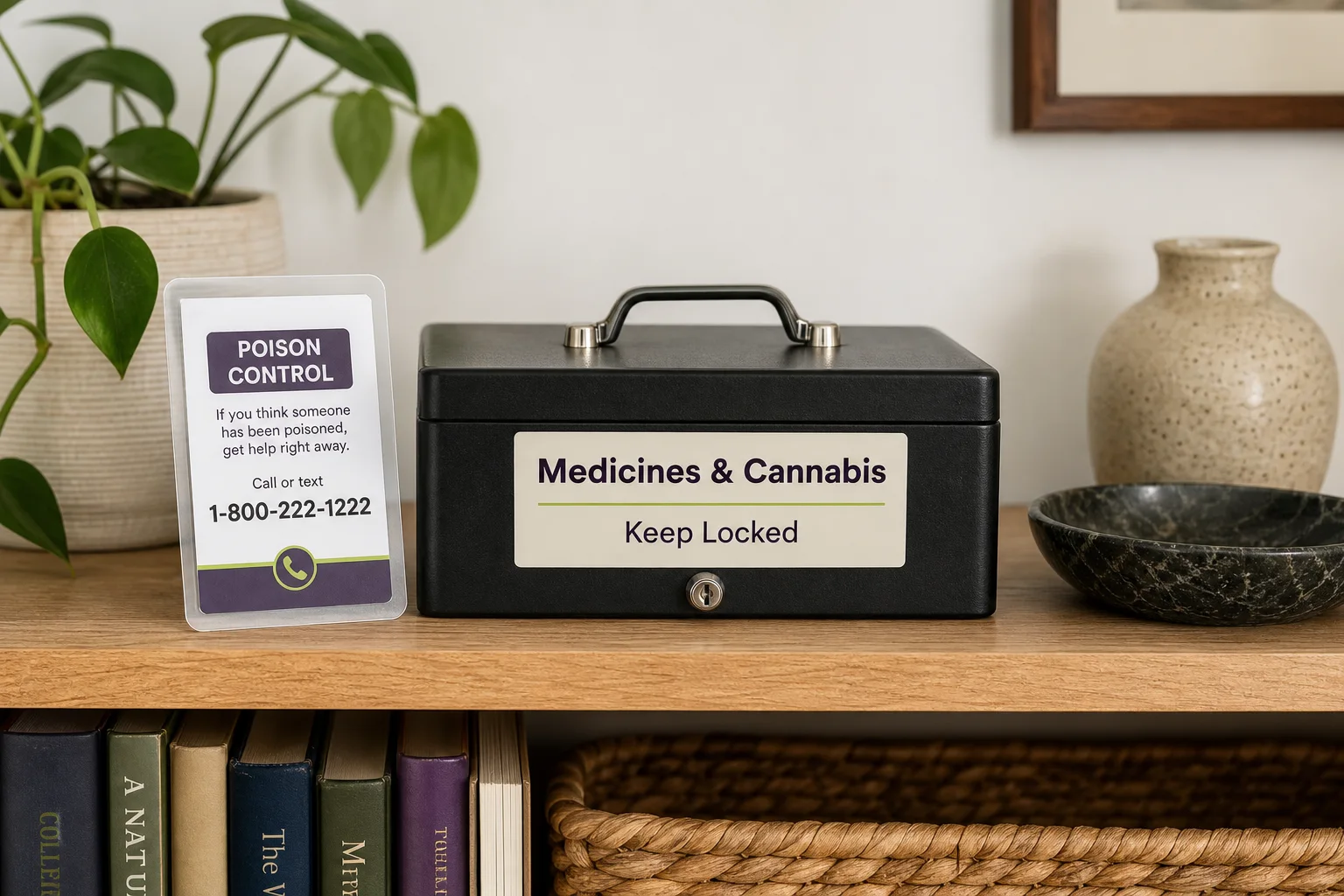
Child safety visual: teaches practical storage and the importance of Poison Control resources. Limitation: staged safety photo for education; does not replace real storage law or medical guidance.
Research context: Cannabis Frequently Asked Questions7) Evidence limits and practical steps for growers, dispensaries, and educators
Evidence limits — what the science and rules can’t yet do reliably — include: guaranteeing a single lab number as an unerring measure of potency, predicting individual human response from a label, or perfectly standardizing multi‑matrix analyses across every lab. Peer‑reviewed literature documents method differences and the need for standardized procedures and inter‑laboratory checks. Maine’s certification rules are part of that standardization effort, but they sit within a broader technical challenge. (pmc.ncbi.nlm.nih.gov)
Practical steps that respect those limits: keep rigorous batch and chain‑of‑custody records; choose labs that publish method validation and participate in proficiency testing; include lot numbers and testing dates on labels; and educate buyers about what labels mean (measured value with uncertainty, not a promise about experience). For educators and growers, be explicit about uncertainty: explain what was tested, when, and how; document storage conditions; and archive test certificates with harvest records. (www1.maine.gov)
When safety is the concern, default to conservative, program‑agnostic practices: child‑resistant packaging, secure storage, clear usage information for adults, and immediate contact information for Poison Control. These public‑health practices apply regardless of whether a product is labeled for medical or adult‑use channels. (poison.org)
Key takeaways
- Maine runs separate medical and adult‑use cannabis programs; statutes and OCP rules define distinct participant paths. (legislature.maine.gov)
- Lab results vary: testing method, sample prep, and lab validation can change reported potency and contaminant values. (pmc.ncbi.nlm.nih.gov)
- Labels show measured values with uncertainty; regard them as useful indicators rather than absolute guarantees.
- Program identity affects possession limits, recordkeeping, and label formats — which changes how growers manage batches. (legislature.maine.gov)
- For safety, emphasize storage, childproofing, and Poison Control resources across both programs. (poison.org)
Frequently asked questions
Q: Does the medical program give patients legal protections that adults don’t have? A: The medical program provides a registration pathway with different possession and cultivation allowances defined in Title 22; legal protections depend on statute and the specifics of individual circumstances. Check the MMCP pages and Title 22 for exact limits. ()
Questions this guide answers
Does the medical program give patients legal protections that adults don’t have?
The medical program provides a registration pathway with possession and cultivation allowances defined in Title 22. Legal consequences depend on statute and circumstances; consult the MMCP resources and statutes for details. ([legislature.maine.gov](https://www.legislature.maine.gov/legis/statutes/22/title22sec2423-A.html))
Are testing standards the same for medical and adult‑use products in Maine?
Maine’s rules set certification and testing requirements for both programs, but operational details and required analyte lists can differ. OCP testing rules and guidance are the place to confirm current requirements. ([maine.gov](https://www.maine.gov/dafs/ocp/adult-use/rules-statutes/rules))
If two labs report different THC numbers on the same lot, what should I do?
Expect some inter‑lab variation. Review labs’ method validation, sample handling, and proficiency testing participation. Maintain chain‑of‑custody and consider retesting with an agreed method if consistency is critical. ([pmc.ncbi.nlm.nih.gov](https://pmc.ncbi.nlm.nih.gov/articles/PMC7819317/))
Do label THC numbers predict how a product will affect me?
No. A label reports a measured concentration with uncertainty; individual effects depend on many factors such as tolerance, consumption method, and concurrent substances. ([pmc.ncbi.nlm.nih.gov](https://pmc.ncbi.nlm.nih.gov/articles/PMC7819317/))
Where do I find the most recent Maine rules and guidance?
The Office of Cannabis Policy’s website and the Maine Legislature’s statute pages host the current rules and laws for both medical and adult‑use programs. Check those pages before making regulatory decisions. ([www11.maine.gov](https://www11.maine.gov/dafs/ocp/medical-use))
Educational information only. Cannabis affects people differently and this is not medical advice.