

Familiar aromatic materials and lab glassware frame terpenes as measurable aroma compounds while avoiding unsupported effect promises.
Mainezilla original editorial visual · AI-assisted art directionOpening: Why a terpene panel is a useful but limited map
If you sniff a jar and think, “That smells piney” or “This one’s floral,” you’re doing something sensible: linking what your nose perceives to chemistry. Labs can measure dozens of volatile terpenes and report them on a Certificate of Analysis (COA), which gives growers, dispensaries, and patients a reproducible chemical description of a specific harvest and package.
That panel is valuable because it is specific: it applies to a single sample taken on a particular date, from a particular batch, after a defined drying and curing process. In Maine, testing facilities report mandatory results and COAs to the Office of Cannabis Policy (OCP) and to the licensee; the COA is the most direct way to compare what you smelled to what the lab measured.
What the panel does not do — and this is where the marketing myth usually begins — is deterministically tell you how any single adult will feel, or how a plant will perform clinically. That leap from “this compound was measured” to “this will make you sleepy” is a human story, not a laboratory fact. The best way to use a terpene panel is as a batch-level descriptor: a repeatable chemical fingerprint, not a prescription.
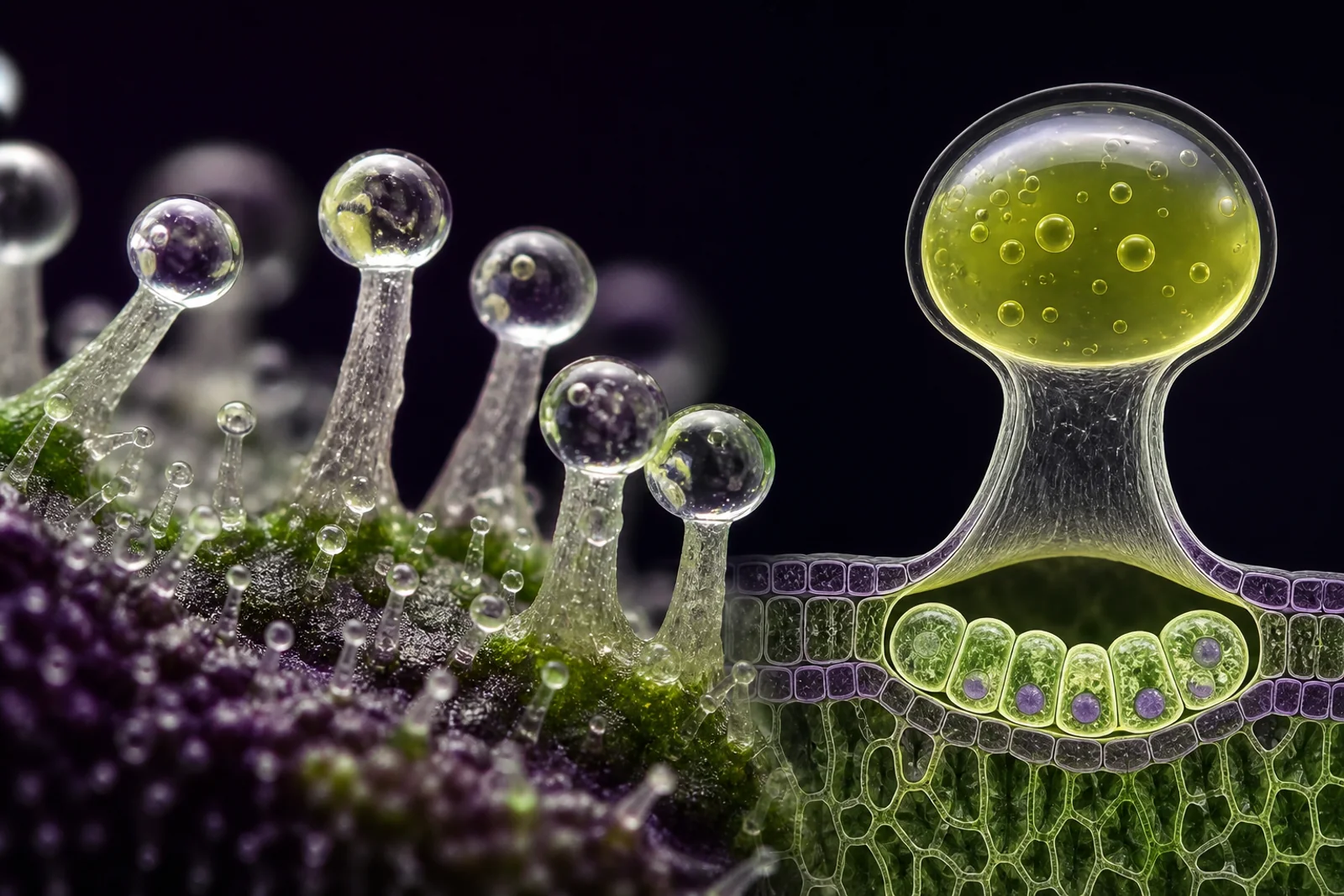
Cannabis glandular trichomes are specialized plant structures. Research describes secretory disk cells beneath the trichome head and a subcuticular cavity where terpenoids and cannabinoids accumulate. This explanatory visual is not a microscope image of a specific Mainezilla batch.
Research context: Cannabis Glandular Trichomes: A Cellular Metabolite Factory · Gene Networks Underlying Cannabinoid and Terpenoid Accumulation in CannabisWhat terpenes are, and how labs measure them
Terpenes (technically terpenoids when oxygenated) are volatile organic compounds plants make for ecology: attracting pollinators, repelling pests, or communicating with other organisms. In cannabis they’re a large family — pinene, myrcene, limonene, linalool, caryophyllene and many more — that together create the bouquet we call aroma. The plant’s genes and the enzymes they encode determine which terpenes a cultivar can produce. Molecular and transcriptome work has mapped gene networks underlying terpene biosynthesis in Cannabis, showing how specific terpene synthases drive major monoterpene and sesquiterpene profiles.
Analytical labs typically use headspace sampling followed by gas chromatography–mass spectrometry (GC–MS) or headspace GC with flame ionization detection to quantify terpenes. Measurement is a technical exercise: laboratories follow validated methods, report limits of detection, and provide a COA with concentrations (usually in % or mg/g) for the compounds they assay. National efforts such as NIST’s Cannabis Laboratory Quality Assurance Program (CannaQAP) work to improve inter-lab comparability — a practical reminder that not all COAs are created equal and that lab competency matters.
Because terpene assays require taking a volatile snapshot, reported values can depend on sample handling, extraction method, and instrument conditions. A well-run lab’s COA gives context — what was measured, how, and with what uncertainty — which is why growers who want a reliable batch record choose certified testing facilities and keep good metadata about sampling.
Evidence trail: [5], [4], [4], [1]
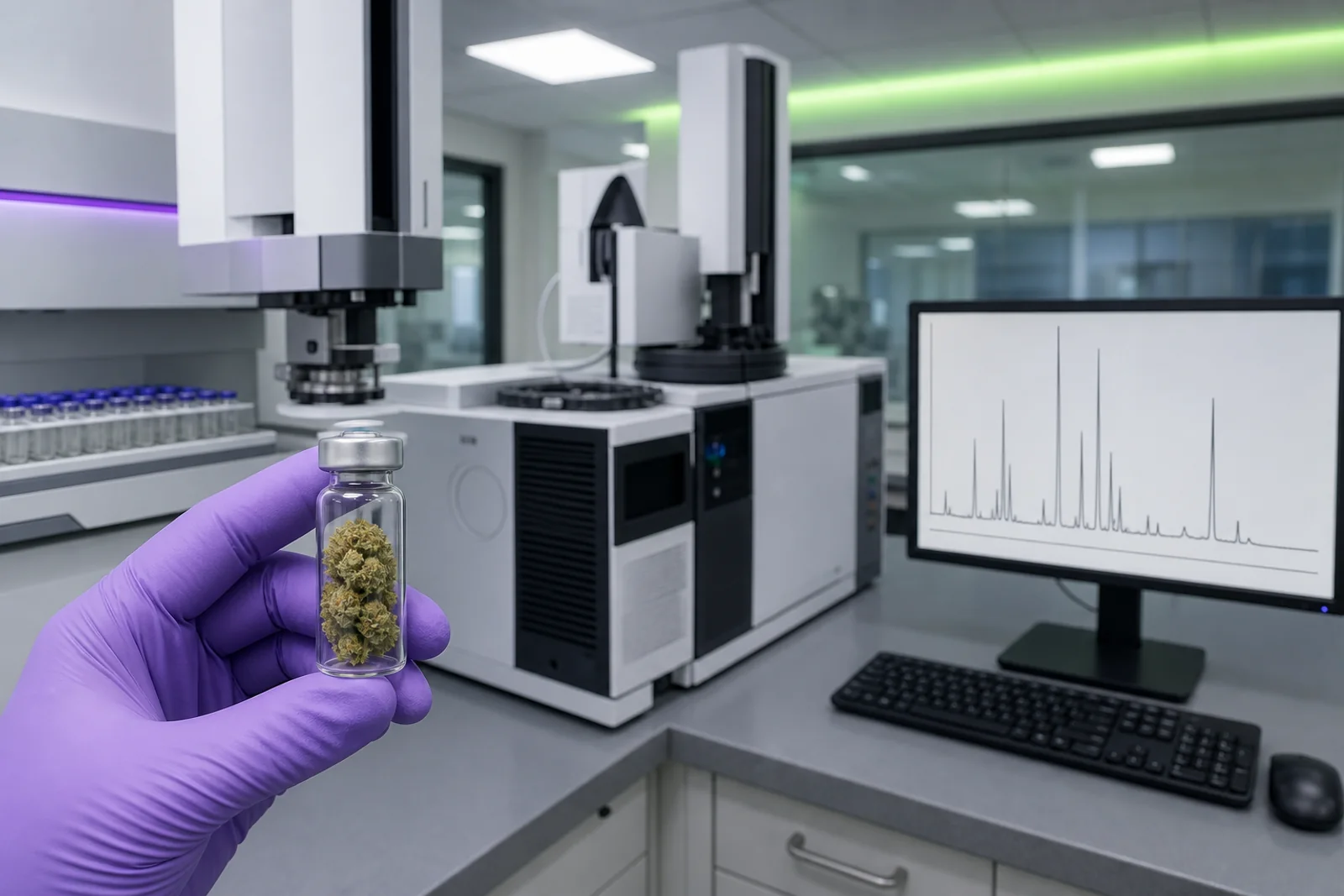
Terpene panels are measurements, not aroma horoscopes. Volatile compounds may be separated and measured with analytical workflows such as gas chromatography, producing a result tied to the submitted sample, method, date, and reporting limits.
Research context: Understanding Cannabis Testing Requirements & Results in Maine · Gene Networks Underlying Cannabinoid and Terpenoid Accumulation in CannabisBatch, date, and post-harvest chemistry: why the panel belongs to that jar
Volatile compounds are, by nature, volatile. Heat, drying, cure length, packaging choices, and storage conditions all shift the terpene profile after harvest. A terpene panel taken the day a lot was tested tells you about that moment — not the state of the jar after six months on a sunny shelf. That makes the sample date and storage notes as important as the numbers themselves.
Drying and curing change the plant’s matrix and alter volatile release. Terpenes can evaporate or transform; enzymatic and chemical reactions during cure will reshape the aroma bouquet. For growers, that’s why standardized drying programs and prompt, documented sampling are not vanity tasks but fundamental record-keeping. The chemistry work that links gene expression to terpene output also underscores that what’s in the plant when you harvest depends on the plant’s genetics plus how you grow and finish it.
For consumers and patients, the practical corollary is simple: treat a COA as a timestamped descriptor. If a COA matters to you, capture the COA number, the sample date, and how the product was stored after purchase. Over time, that metadata lets you tell whether differences you smell reflect genuine chemistry or merely differences in age and handling. Maine OCP guidance encourages keeping COAs and understanding lab reports as part of informed use.
Evidence trail: [5], [5], [1], [3]
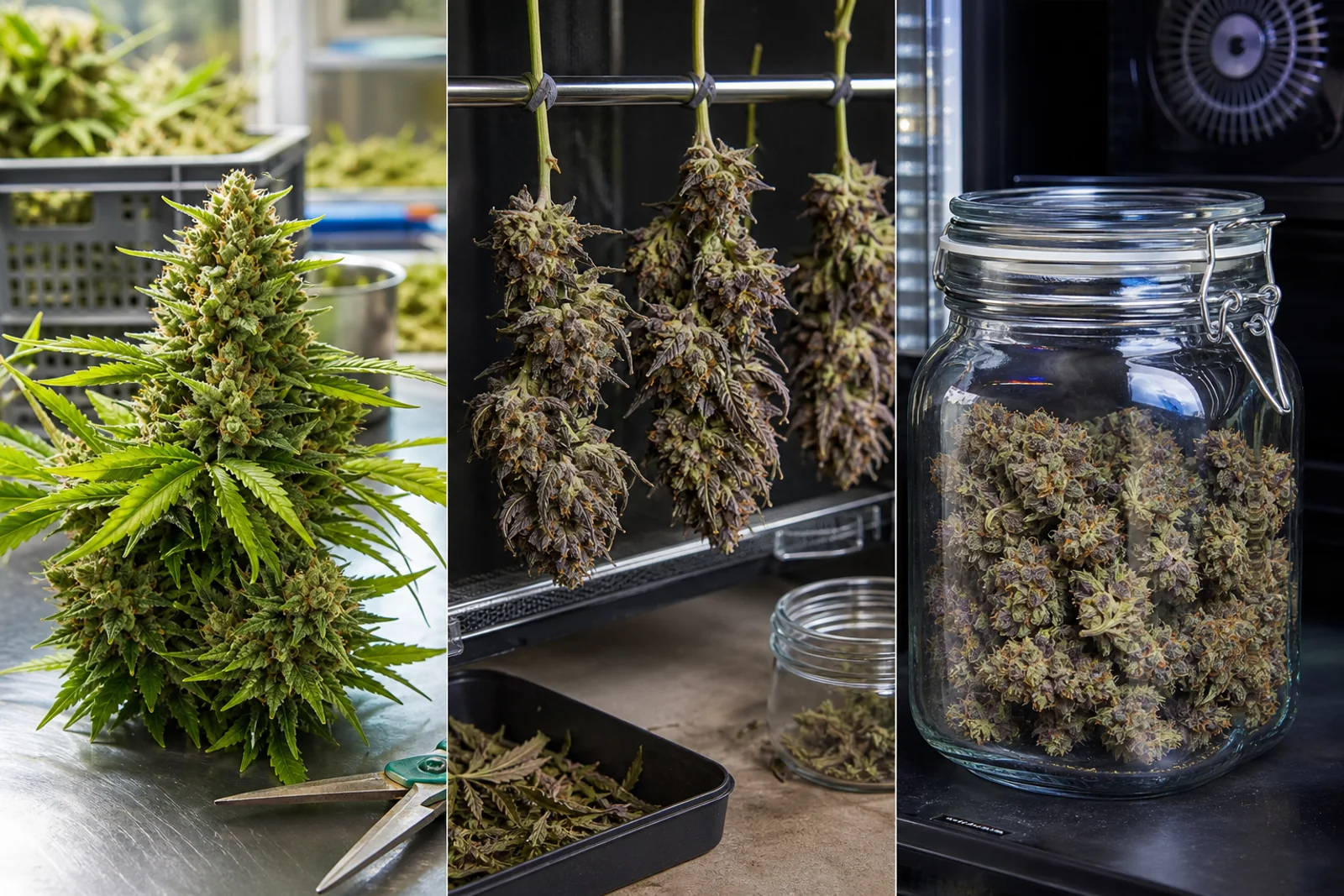
A terpene panel belongs to a moment in a batch’s life. Harvest timing, drying, handling, packaging, temperature, light, air, and elapsed storage time can all change the volatile material that reaches a nose or an instrument.
Research context: Postharvest Operations of Cannabis and Their Effect on Cannabinoid Content · Gene Networks Underlying Cannabinoid and Terpenoid Accumulation in CannabisThe evidence on aroma and effect: associations, experiments, and limits
Terpenes have bioactivity in cell and animal studies, and some are used in aromatherapy and herbal traditions. But turning that preclinical and ecological activity into reliable claims about human mood, cognitive effects, or symptom relief requires human trials. Reviews of the literature show that while the idea of an ‘‘entourage’’ or synergy between cannabinoids and terpenes is attractive, high-quality clinical evidence is sparse and mixed. Several studies explicitly tested whether terpenes modulate Δ9-THC at cannabinoid receptors and found no modulatory activity in those models. Other recent reviews conclude that the claimed terpene-mediated entourage effect is not established and that more rigorous human pharmacology is needed.
That doesn’t mean terpenes are irrelevant to human experience. Small controlled human studies are beginning to test individual terpene–cannabinoid combinations (for example, α‑pinene and THC) and observational patterns exist where adults report consistent responses to specific batches. But reports of a pattern in people are not the same thing as clinical proof. Anecdotes and consumer survey data are signals that point to hypotheses; they are not endpoints.
A good editorial rule for language — and for producer and dispensary copy — is to distinguish three things: (1) the lab measured a compound and reported its concentration; (2) some adults report a pattern after using a batch; and (3) neither of those statements guarantees any specific individual outcome. Maine providers and educators should use precise language that preserves uncertainty rather than packaging aroma profiles as promises.
Evidence trail: [6], [7], [7], [2]

Mechanism, human outcomes, and personal observation are different evidence layers. A receptor experiment can answer a molecular question without proving a predictable real-world effect, while a sensory note can preserve experience without becoming a universal claim.
Research context: Absence of Entourage: Terpenoids and CB1/CB2 Receptor Activity · Decoding the Postulated Entourage Effect of Medicinal CannabisHow to read a COA and what Maine’s testing rules mean for you
A COA is the most direct interface between the lab and your nose. Look for who tested the sample, the sample date, the analyte list and units, method notes, and any pass/fail statements for mandatory contaminants (pesticides, solvents, microbials). In Maine, testing facilities must report mandatory test results and COAs to the licensee and to the Office of Cannabis Policy; OCP provides guidance documents that explain required analytes and typical COA elements. That system gives consumers a regulatory baseline, but it doesn’t standardize every lab method or terpene list.
Key practical checks: is the COA for the same matrix (flower vs. concentrate) as what you purchased? Are terpenes reported as relative percentages or absolute concentrations, and does the COA include method notes or limits of detection? These details matter when you compare two jars or when a batch’s aroma feels inconsistent with what the COA lists. Maine OCP guidance documents and lab-certification rules point toward greater transparency and consistent reporting, but the onus remains on the purchaser to match COA metadata to product metadata.
Laboratory proficiency matters for the numbers to be meaningful. Programs such as NIST’s CannaQAP aim to improve measurement comparability across labs — a technical but important public-good project. If you’re a producer who pays for testing, choose labs that participate in recognized quality-assurance activities and ask for the EDD (electronic data deliverable) if you want fuller method detail; if you’re a patient, ask your dispensary for the COA and sample date.
- Check sample date and matrix (flower vs. extract).
- Look for method notes and limits of detection.
- Match COA metadata to the product and storage history.
Build a practical sensory record (what growers and adults can do)
The simplest and most useful habit for a grower or a consumer is to write things down. Record the producer, cultivar/strain name as labeled, batch or lot number, sample/COA date, storage after purchase, and your sensory notes in your own words before reading marketing copy. Describe the aroma in concrete terms — citrus peel, diesel, mint, woodsmoke — and note onset, duration, and any contextual details (food, sleep, other substances) when you try a sample. Over months this record becomes a personal dataset, not a universal claim.
If you’re a grower, keep harvest-to-test chains: harvest date, dry/cure parameters, trimming method, sample date sent to the lab, and resulting COA. That chain is how you connect horticultural practice to chemical outcome. If you’re a patient or an adult purchaser, flag COA numbers and compare them only to products with matching metadata; two “Blueberry” jars with different COAs may be different harvests entirely. Maine OCP materials and guidance for interpreting test results encourage this level of metadata awareness.
Finally, treat your pattern as a memory to inform conversations — with a clinician for medical questions, or with your dispensing staff for workplace or safety questions — never as a prescription. Personal patterns are legitimate and useful; they are not a substitute for rigorous clinical evidence. Documenting those patterns makes them sharable and actionable in a way that anecdotes alone are not.
- Describe aroma before reading labels.
- Record batch, sample date, COA number, and storage.
- Use patterns to inform, not to prescribe.
Evidence trail: [3], [1], [7], [8]
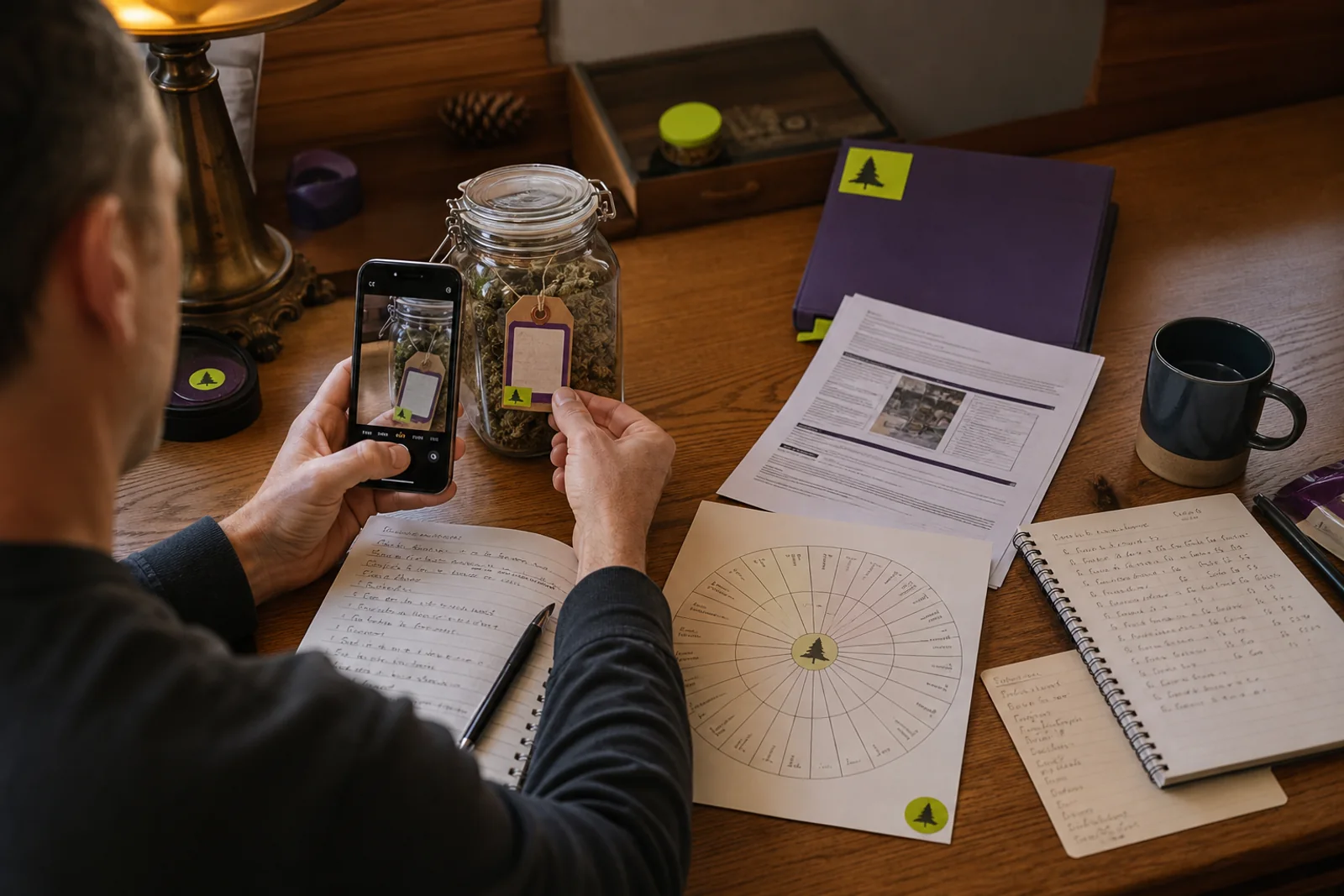
A useful sensory archive keeps the batch, date, storage context, laboratory report, and the adult’s own words together. It separates what was measured from what was noticed—and makes later comparison possible.
Research context: Understanding Cannabis Testing Requirements & Results in Maine · Gene Networks Underlying Cannabinoid and Terpenoid Accumulation in CannabisSafety, storage, and what to do with uncertainty
Terpenes are common in many foods and household products, so background exposure can complicate simple cause-and-effect stories. A 2013–2014 NHANES analysis, for example, shows population exposure to common terpenes from diet and environment; that matters when someone tries to attribute an effect solely to inhaled terpenes. Put plainly: just because a terpene is present in a lab report doesn’t mean it’s unique to that cannabis sample or that it’s the driver of a reported effect.
Storage choices change terpene expression over time. Keep jars in a cool, dark, airtight container to minimize volatile loss; avoid excessive heat or light, as both increase terpene evaporation and can accelerate cannabinoid degradation. Maine’s practical guidance on sample handling and COA interpretation underscores the importance of storage metadata for any consumer who cares about aroma fidelity.
When uncertainty remains — for example, if you smell a batch that the COA doesn’t seem to match, or if a product produces a stronger effect than you expect — lean on data collection and professional conversation. Record what happened, keep the COA, and discuss it with your dispensary or a clinician familiar with cannabis and medications. The CDC recommends caution around high-potency products and concentrates and encourages people to seek reputable information when making safety decisions.
Closing: Use panels to describe, records to learn, and evidence to promise
Terpene panels are powerful tools when used the way they were intended: as objective, batch-level descriptions of volatile chemistry. For growers they close the loop between cultivation choices and aromatic outcome; for patients and adult purchasers they offer a reproducible fingerprint to compare jars and lots. But panels are not destiny: they do not, by themselves, predict how any given adult will respond.
A practical, evidence-first approach is modest and useful. Keep COAs and storage metadata, write your sensory notes before you’re told what to expect, and treat personal patterns as pointers for future decisions — and as conversation starters with clinicians or trained dispensary staff when safety or medications are involved. Regulatory infrastructure in Maine and national efforts at lab quality assurance are strengthening the link between chemistry and reproducible information, but they do not obviate careful, humble language about effects.
If you want a short rule to take back to the garden or the dispensary: terpenes tell you what a batch smelled like on a day; people tell you what that batch meant to them over time. Both pieces of information are worth collecting. Neither piece is a universal promise.
Questions this guide answers
Do terpene panels predict whether a product will make me sleepy or energetic?
No. Panels describe which volatile compounds a lab measured in a specific sample and at what levels. While some people report consistent patterns, those are personal associations; human clinical evidence that reliably links specific terpene profiles to predictable effects is limited. Use panels as descriptors, not guarantees.
Why do two jars labeled the same strain smell different?
Different harvests, drying and curing programs, storage, age, and even lab sampling can change terpene profiles. A COA is timestamped: compare COAs by sample date and batch number rather than by strain name alone. Maine OCP guidance recommends matching COA metadata to the product.
Should I pick products with the highest terpene totals?
Higher totals tell you more volatile material was present when the sample was tested, but they don’t prove superior therapeutic value or a particular effect. Prioritize transparent COAs, reputable lab participation in proficiency programs, and your own documented response patterns.
Can terpenes be harmful?
Terpenes are common in foods and household products; at typical concentrations they are not usually harmful for adults. However, concentrated exposures (for example, industrial or some concentrated extracts) and contaminants in products are separate concerns; Maine’s testing framework and CDC guidance recommend checking COAs for contaminants and treating high-potency products with caution.
How can I make my terpene COAs more useful over time?
Keep the COA number, sample date, and storage notes with each purchase. Describe aroma before reading marketing copy, and log context (time of day, food, sleep). Over many entries you build a personal dataset that is more informative than a single claim or chart.
Educational information only. This guide is not medical or legal advice and does not recommend a product, dose, treatment, or outcome.