
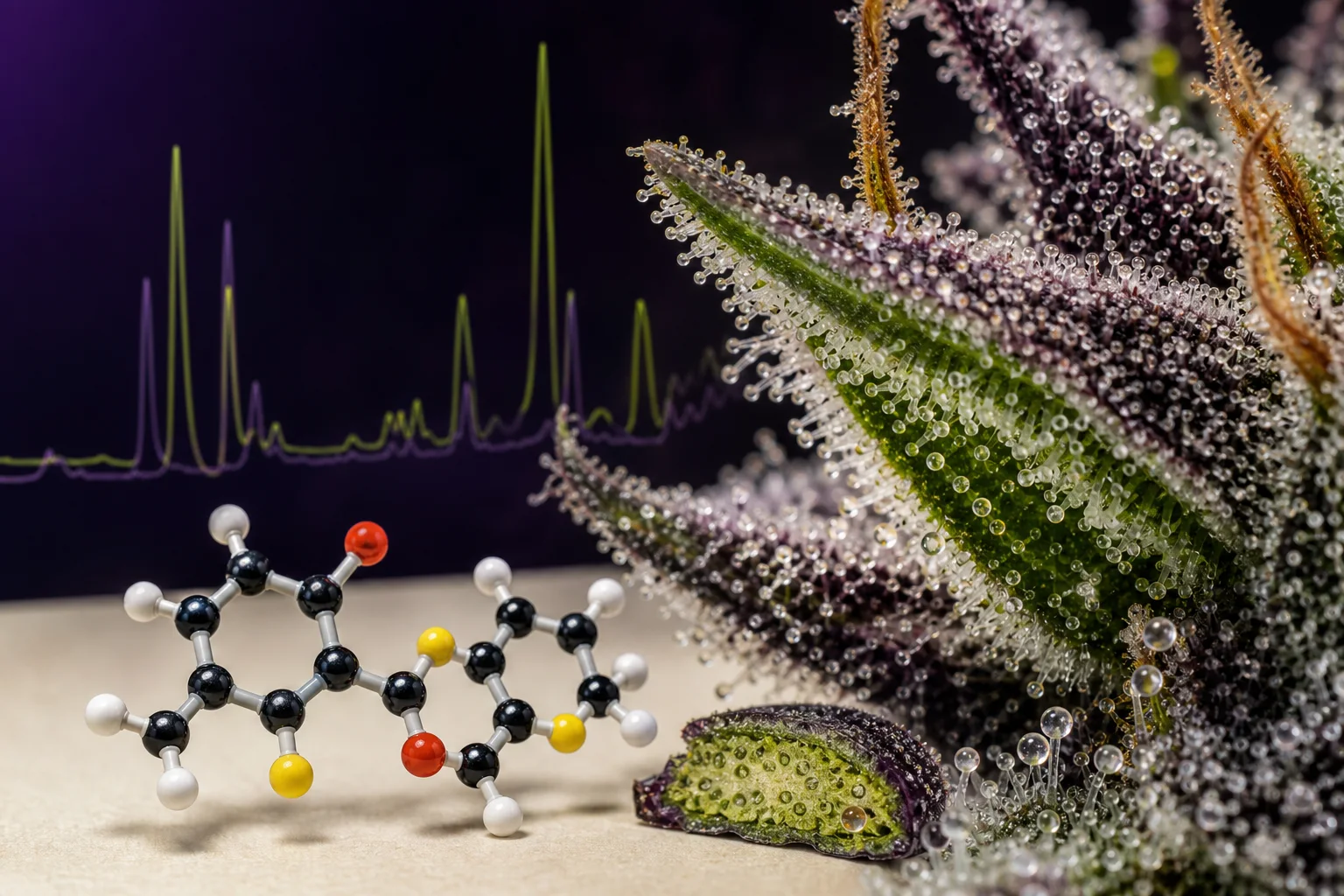
Cannflavins and other cannabis flavonoids: structural chemistry meets plant tissue — lab detections require chemical analysis and human pharmacokinetic context to interpret.
Mainezilla original editorial visual · AI-assisted art directionWhy 'preclinical' isn’t the same as 'clinical': a working definition
Scientific claims about plant molecules usually come packaged with a model attached: an enzyme assay, a cultured cell, a rodent, a human pharmacokinetic (PK) study, an observational cohort, or a randomized controlled trial. These models answer different questions. Enzyme and cell studies tell you whether a molecule can interact with a target; animal studies tell you whether that interaction produces an effect in a living organism under controlled conditions; PK and human trials are required to show whether the molecule reaches relevant tissues in humans and changes outcomes when used the way people would use it. ([pmc.ncbi.nlm.nih.gov](https://pmc.ncbi.nlm.nih.gov/articles/PMC10714118/))
‘Preclinical’ is an umbrella term that covers in‑test‑tube (biochemical), in‑cell (cell culture), and in‑animal (in vivo) research. These studies are essential for understanding mechanisms and for choosing candidates to test in humans, but they do not by themselves establish human efficacy or safety. Many promising preclinical leads fail in humans because of differences in exposure, metabolism, or physiological complexity. ([pmc.ncbi.nlm.nih.gov](https://pmc.ncbi.nlm.nih.gov/articles/PMC7931196/))
Clinical evidence sits on a hierarchy: controlled randomized trials are the strongest for efficacy, pharmacokinetic studies are essential for understanding dosing and exposure, and observational human data can generate hypotheses but are confounded by behavior, co‑exposures, and recall bias. Distinguishing these levels matters when you evaluate a claim — especially for cannabis flavonoids, where the majority of detailed mechanistic work is preclinical. ([pubmed.ncbi.nlm.nih.gov](https://pubmed.ncbi.nlm.nih.gov/33847202/))
- Enzyme/cell: shows mechanism, receptor binding, or inhibition in isolated systems. Useful, not conclusive.
- Animal: shows organismal effects, often at doses or routes not equivalent to human use.
- PK (human): shows whether the compound or active metabolite reaches systemic circulation.
- Observational human: associations only, many confounders.
- Randomized human trials: necessary to demonstrate causation for clinical claims.
What the laboratory (biochemistry and cell work) actually shows about cannflavins
Cannflavins (A, B, C, and isocannflavin B) are prenylated methoxyluteolin derivatives unique to Cannabis sativa and closely related species. Chemical isolation and structural work identify where these molecules sit in the flavone family and show plausible mechanisms (for example, inhibition of specific pro‑inflammatory enzymes or modulation of oxidative chemistry). Those chemical and mechanistic data are useful starting points for hypothesis generation. ([pmc.ncbi.nlm.nih.gov](https://pmc.ncbi.nlm.nih.gov/articles/PMC10714118/))
In vitro enzyme and cell assays frequently report that cannflavins reduce markers of inflammation (for example, inhibition of prostaglandin or leukotriene pathways) or scavenge reactive chemical species. Such assays can be precise — identifying IC50 values, binding affinities, or pathway modulation — but precision in a petri dish does not equal potency in a human body. Enzyme inhibition in a buffered solution tells you what the molecule can do if it reaches the enzyme at sufficient concentrations. It does not tell you whether those concentrations are achieved after oral ingestion, inhalation, or topical use. ([pmc.ncbi.nlm.nih.gov](https://pmc.ncbi.nlm.nih.gov/articles/PMC10714118/))
Because flavonoids are chemically diverse (glycosylated, methylated, prenylated) their behavior in simplified assays varies widely. Prenylation and methoxylation (chemical decorations present in cannflavins) can increase membrane affinity and alter enzyme binding — again, interesting mechanistic chemistry that must be tested further in organisms and then humans before clinical claims are justified. ([pmc.ncbi.nlm.nih.gov](https://pmc.ncbi.nlm.nih.gov/articles/PMC7931196/))
- Chemical identity and mechanism ≠ human benefit.
- Enzyme IC50s are model‑dependent; consider protein binding and tissue concentration.
- Structural modifications (prenylation/methylation) change behavior but don't prove human relevance.
Animal studies: interpretation, strengths, and common pitfalls
Animal models (typically mice or rats) let researchers study route, dose, and system effects in whole organisms. For cannflavins, several preclinical reports document anti‑inflammatory or neuromodulatory signals in rodents after parenteral or high‑dose oral administration. These findings demonstrate biological plausibility but raise two broad questions: were the doses comparable to plausible human exposures, and was the route of administration comparable to how people would realistically be exposed? ([pmc.ncbi.nlm.nih.gov](https://pmc.ncbi.nlm.nih.gov/articles/PMC10714118/))
Rodent metabolism often differs sharply from human metabolism. A dose that achieves micromolar blood concentrations in a rat after an injection may be unobtainable in humans via oral administration because of first‑pass metabolism, intestinal deglycosylation, or rapid conjugation in the liver. Therefore, a result that looks large in a rodent may be biologically irrelevant in humans if the molecule never reaches the same tissue concentration or is converted into inactive metabolites. ([pubmed.ncbi.nlm.nih.gov](https://pubmed.ncbi.nlm.nih.gov/33847202/))
That does not mean animal data are useless — they generate necessary safety signals and mechanistic direction — but they are not substitutes for human pharmacokinetic studies and controlled trials. If a product or paper cites only animal work to make human health claims, treat that claim as provisional. ([pmc.ncbi.nlm.nih.gov](https://pmc.ncbi.nlm.nih.gov/articles/PMC7931196/))
- Ask: what was the route and dose in the animal study?
- Compare animal exposure (measured blood or tissue levels) to plausible human exposure.
- Look for PK bridging studies that test whether animal exposures are attainable in humans.
Pharmacokinetics and bioavailability: the mechanics that often break translational stories
One persistent reason preclinical promise fails in humans is pharmacokinetics. Many plant flavonoids are present in plants as glycosides (attached sugars) or as modified forms; the molecules that enter circulation after eating a plant are often different chemical species produced by intestinal enzymes, the gut microbiome, or liver conjugation. For many flavonoids, deglycosylation by small‑intestinal beta‑glucosidases and subsequent phase II metabolism (glucuronidation, sulfation, methylation) largely determine what reaches systemic circulation. ([pubmed.ncbi.nlm.nih.gov](https://pubmed.ncbi.nlm.nih.gov/12594539/))
Reviews of flavonoid fate after oral administration emphasize low and variable oral bioavailability for many subclasses, with absorbed molecules present mostly as conjugated metabolites rather than the parent aglycones commonly tested in vitro. Bioaccessibility studies and in vitro digestion models show that food matrix and chemical form (O‑ versus C‑glycosides, prenylation) meaningfully alter how much of a flavonoid is released and available for absorption. These realities mean that even if cannflavins inhibit an enzyme in vitro, the orally absorbed form in humans might be a conjugate with lower activity or altered target affinity. ([pubmed.ncbi.nlm.nih.gov](https://pubmed.ncbi.nlm.nih.gov/39765748/))
Pharmacokinetic human studies also force clarity about dose and formulation. A randomized PK study of a non‑cannabis prenylated flavonoid (xanthohumol) shows that formulation and dose materially affect blood levels in humans, and that investigators must measure parent compound and metabolites when bridging preclinical to clinical evidence. For cannflavins there are, to date, comprehensive PK data gaps in humans — a central reason why preclinical mechanistic claims remain provisional. ([pubmed.ncbi.nlm.nih.gov](https://pubmed.ncbi.nlm.nih.gov/41723719/))
- Check whether a human PK study exists for the exact molecule (parent and metabolites).
- If only parent‑compound in vitro data are shown, ask whether human metabolism produces that parent compound in circulation.
- Formulation (solubility, co‑ingredients) can change bioavailability dramatically.
Observational human data and controlled trials: what counts as evidence in people
Observational human research — for instance, studies that correlate dietary flavonoid intake with health outcomes — is useful for hypothesis generation but cannot prove that a specific molecule produces an effect. Observational work is vulnerable to confounding: diet, lifestyle, and socioeconomic factors can explain associations. For cannabis flavonoids, observational human evidence is currently sparse and rarely specific to cannflavins. ([pubmed.ncbi.nlm.nih.gov](https://pubmed.ncbi.nlm.nih.gov/33847202/))
Randomized controlled trials (RCTs) are the gold standard for clinical efficacy. They are the only study type that can isolate the effect of a single compound or formulation when well designed, adequately powered, and controlled. In the broader flavonoid field, there are human RCTs (for some specific flavonoids or preparations) that measure PK and clinical endpoints; these trials show that design matters — endpoints, exposure timing, and formulation can make or break an otherwise plausible intervention. But for cannflavins specifically, published randomized human trials are extremely limited or absent, which leaves a large translational gap between lab work and real‑world human claims. ([pubmed.ncbi.nlm.nih.gov](https://pubmed.ncbi.nlm.nih.gov/41723719/))
When you see a human study cited on a product page or in the media, check whether it is an observational cohort or an RCT, whether it measures blood/tissue concentrations, and whether the study actually tested the molecule in question (rather than a different flavonoid class or a multi‑ingredient product). Those distinctions determine how much weight to give a human finding. ([pubmed.ncbi.nlm.nih.gov](https://pubmed.ncbi.nlm.nih.gov/33847202/))
- Observational = hypothesis generation, not causation.
- RCT = causation when well conducted. Look for blinding, placebo, and power calculations.
- Human PK bridging studies are essential before large RCT investments.
How to read cannflavin and flavonoid claims: a practical checklist
When you encounter a claim — on a label, press release, or news headline — pause and run a quick checklist. First, what model produced the headline? If the citation is to an in‑vitro paper, treat the claim as exploratory. If the citation is to an animal paper, ask about route and exposure. If the citation is to an observational human study, ask what confounders were controlled for. Only randomized human trials directly support clinical effect statements. ([pmc.ncbi.nlm.nih.gov](https://pmc.ncbi.nlm.nih.gov/articles/PMC10714118/))
Second, look for pharmacokinetic data. Did the investigators measure blood or urine levels of the actual molecule and its major human metabolites? If not, the claim is skipping a crucial step: assuming that an activity seen in an assay will appear in humans unchanged. Third, pay attention to formulation and dose. A molecule administered by intraperitoneal injection in rodents is not equivalent to an oral capsule or inhalation exposure in people. ([pubmed.ncbi.nlm.nih.gov](https://pubmed.ncbi.nlm.nih.gov/41723719/))
Finally, check credible program and regulatory resources for context. For Mainers, the Office of Cannabis Policy provides consumer information, guidance documents, and program data; these public resources are useful to understand what the state regulates and how labelling or product categories are organized, but they do not change the underlying pharmacology of a plant molecule. Use regulatory guidance to evaluate how a product is presented to consumers and whether appropriate testing data are available. ([www1.maine.gov](https://www1.maine.gov/dafs/ocp/resources/guidance-documents))
- Checklist: model → route/dose → PK → human trial type.
- If a product cites preclinical work only, treat human claims as hypothetical.
- Use official program resources (like Maine OCP) to check labelling and testing requirements.
What remains uncertain — and the next research steps that would matter
For cannflavins the major open questions are orderly and empirical: (1) reproducible human pharmacokinetics for cannflavin parent compounds and their major human metabolites after realistic routes and formulations, (2) well‑designed small randomized trials that measure PK, biomarkers, and safety, and (3) clarity about how plant genetics, cultivation, and processing affect concentration and form (glycosides, prenylation) in finished products. The literature identifies these gaps explicitly and recommends translational PK bridging before clinical efficacy claims. ([pmc.ncbi.nlm.nih.gov](https://pmc.ncbi.nlm.nih.gov/articles/PMC10714118/))
Methodologically, priority studies include human single‑ascending dose PK, identification of primary circulating metabolites, and small randomized crossover trials testing objective biomarkers rather than subjective endpoints in early phases. Robust analytical methods (LC‑MS/MS) to quantify parent and conjugated metabolites are already available in flavonoid research and should be applied to cannflavins. Until those data exist, robust claims that a cannflavin causes a particular clinical effect in humans remain speculative. ([pubmed.ncbi.nlm.nih.gov](https://pubmed.ncbi.nlm.nih.gov/41723719/))
That uncertainty is not a reason to distrust laboratory work: the lab evidence is valuable and guides biochemistry and breeding. But responsible communication requires distinguishing what has been shown in a dish, in an animal, or in a human, and labeling any extrapolation as provisional. Consumers and professionals both benefit from precise language that separates mechanism from proved human effect. ([pmc.ncbi.nlm.nih.gov](https://pmc.ncbi.nlm.nih.gov/articles/PMC7931196/))
- Needed: human PK for cannflavins (parent + metabolites).
- Needed: small randomized trials with objective biomarkers and safety data.
- Needed: standardized analytical methods and reporting for comparability.
Questions this guide answers
Are cannflavins proven to work in people?
No. Existing cannflavin research is mainly biochemical, cellular, or in animals. Those studies show biological plausibility but not proven human benefit; human pharmacokinetic data and randomized controlled trials are necessary to support clinical claims. ([pmc.ncbi.nlm.nih.gov](https://pmc.ncbi.nlm.nih.gov/articles/PMC10714118/))
If a laboratory report shows cannflavin content, does that mean the product will have a specific effect?
A lab report accurately measures chemical content at the time of testing, which is useful information, but it does not show that the measured molecule will reach effective concentrations in human tissues or produce a clinical effect. Measurement is necessary but not sufficient evidence for an effect in people. ([pubmed.ncbi.nlm.nih.gov](https://pubmed.ncbi.nlm.nih.gov/39765748/))
Can animal doses be scaled to predict a human dose?
Scaling is complex. Simple body‑weight scaling ignores differences in absorption, metabolism, and route‑dependent exposure. Translational predictions require measured blood or tissue concentrations in both species (PK bridging) rather than only dose comparisons. ([pubmed.ncbi.nlm.nih.gov](https://pubmed.ncbi.nlm.nih.gov/33847202/))
What should I look for in a credible human study on flavonoids?
Look for (1) a clear description of the molecule and formulation tested, (2) measured pharmacokinetics (parent and metabolites), (3) randomized, placebo‑controlled design when testing efficacy, and (4) objective endpoints or validated biomarkers. Studies lacking these elements are preliminary. ([pubmed.ncbi.nlm.nih.gov](https://pubmed.ncbi.nlm.nih.gov/41723719/))
Where can I find reliable program information about cannabis products in Maine?
Maine’s Office of Cannabis Policy publishes guidance documents, program data, and resources about labelling and consumer protections; these are useful for context about how products are regulated and presented in Maine, though they do not change the pharmacology of plant molecules. See OCP resources and guidance documents. ([www1.maine.gov](https://www1.maine.gov/dafs/ocp/resources/guidance-documents))
Educational information only. This guide is not medical or legal advice and does not recommend a product, dose, treatment, or outcome.