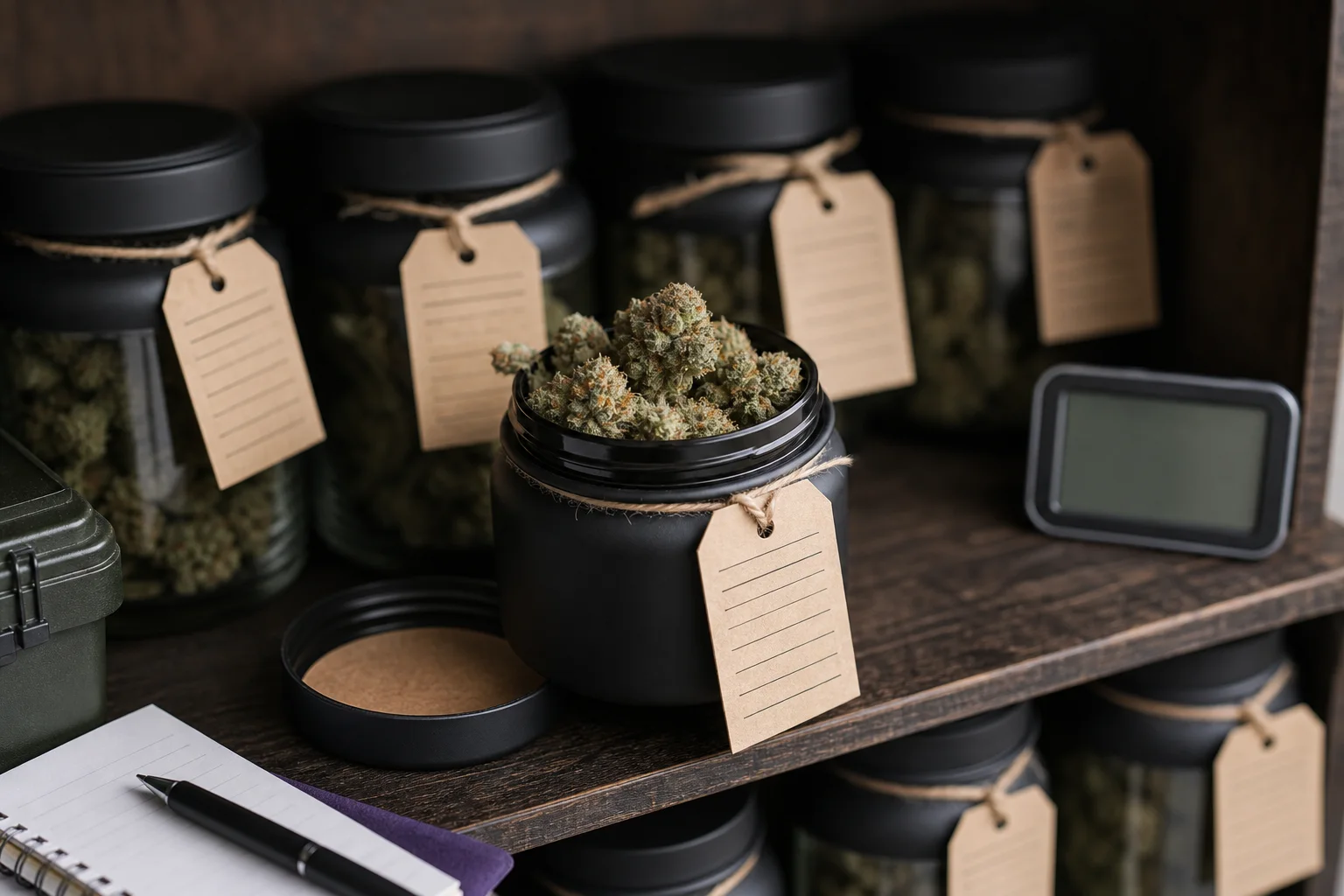
Documentary-style photo to show practical home storage: opaque/low-light placement, labeled jars, and small batch tags. This image demonstrates recommended practices but is not a controlled scientific test. Use as a visual checklist, not definitive proof of stability.
Introduction
Good storage isn’t glamour—it's the quiet work that preserves your harvest’s aroma and cannabinoid profile, reduces avoidable accidents at home, and creates a traceable record if questions arise later. Growers and patients share the same goals: keep products stable and identifiable, reduce the chance of accidental ingestion, and capture notes that explain what a batch was like at harvest and after a season on the shelf. The public health evidence reminds us that cannabis products have risks if accessed by children or used unknowingly; thoughtful storage is a simple, effective way to reduce accidental access. (cdc.gov)
Why storage matters: freshness, safety, and evidence
Storing cannabis correctly affects three things at once. First, chemistry: cannabinoids and volatile terpenes change with light, heat, oxygen, and moisture; improper storage accelerates those changes and alters aroma, potency, and the composition of the sample you might later test. Laboratory studies show measurable cannabinoid loss and conversion (for example, THC degrading toward CBN) when flower and extracts are exposed to room temperature, light, or long storage times. (pubmed.ncbi.nlm.nih.gov)
Second, household safety: edible and concentrated products are a documented source of accidental exposure to children and pets. Poison Control and Maine’s Office of Cannabis Policy advise locked, out‑of‑sight storage and preserving original child‑resistant packaging for edibles. If a non‑urgent exposure occurs, Poison Control can advise; call 1‑800‑222‑1222 for immediate guidance. (poison.org)
Third, records: clear labeling and batch notes help growers reproduce what a run looked like, identify when a product diverged (mold, off‑aroma), and provide traceability for patients and regulators. Maine’s statutes set labeling and recordkeeping expectations that differ for adult‑use and medical programs, so local rules matter for anyone producing, selling, or gifting cannabis in the state. (legislature.maine.gov)
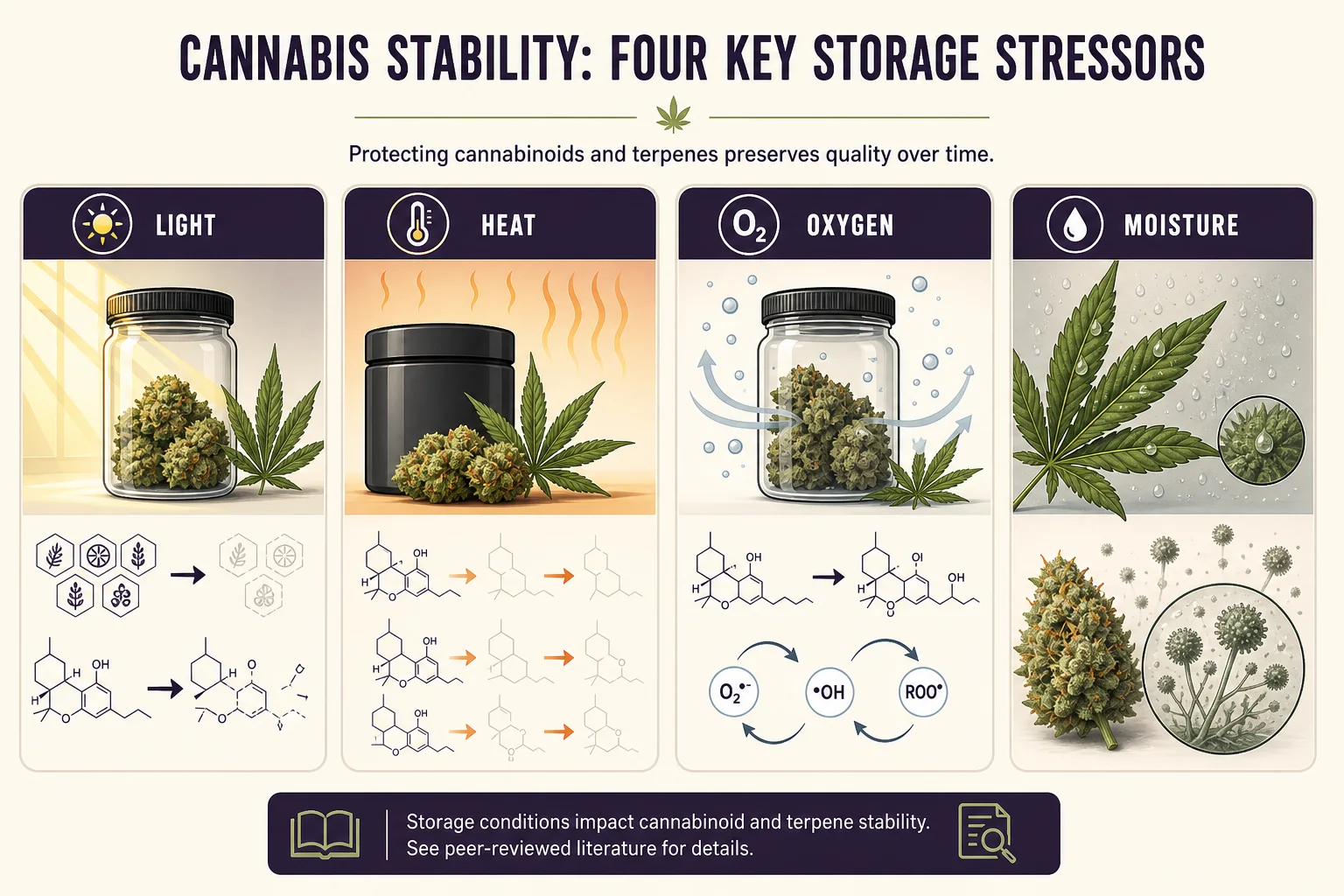
Explanatory diagram linking storage factors to likely chemical and sensory outcomes. Based on published stability literature but not a lab result—useful for teaching the mechanisms researchers study.
Research context: Stability of Cannabinoids in Cannabis: Plant Material, Extracts, Oil Formulations, and IsolatesLight and air: protect volatiles and slow oxidation
Light—especially ultraviolet and short‑wavelength visible light—drives photochemical reactions in cannabinoids and terpenes. Controlled studies and long‑term observations show light exposure is one of the strongest single drivers of degradation in stored cannabis material and solutions. The practical consequence is a flatter scent profile and gradual cannabinoid loss. Store away from direct sun and choose packaging that limits light transmission. (pubmed.ncbi.nlm.nih.gov)
Oxygen is another enemy. Oxidation alters cannabinoids (THC can convert to CBN under oxygen and light), and it strips delicate terpene notes. For small, short‑term storage (days to weeks), resealable opaque jars with a small headspace work well; for multi‑month storage, consider vacuum sealing or inert‑gas flushes where appropriate and legal. Avoid leaving product in paper bags or loosely sealed containers that exchange air with the room. (pubmed.ncbi.nlm.nih.gov)
Practical tip: when moving product from a retail package into long‑term storage, keep one thing consistent—label. Transfer the product’s batch number, harvest date, and any test lab identifiers to the new container so you don’t lose the chain of evidence that ties a jar to its test report or growing notes. Maine rules require certain labeling and tracking for commercial transfers; private storage may borrow that discipline. (legislature.maine.gov)
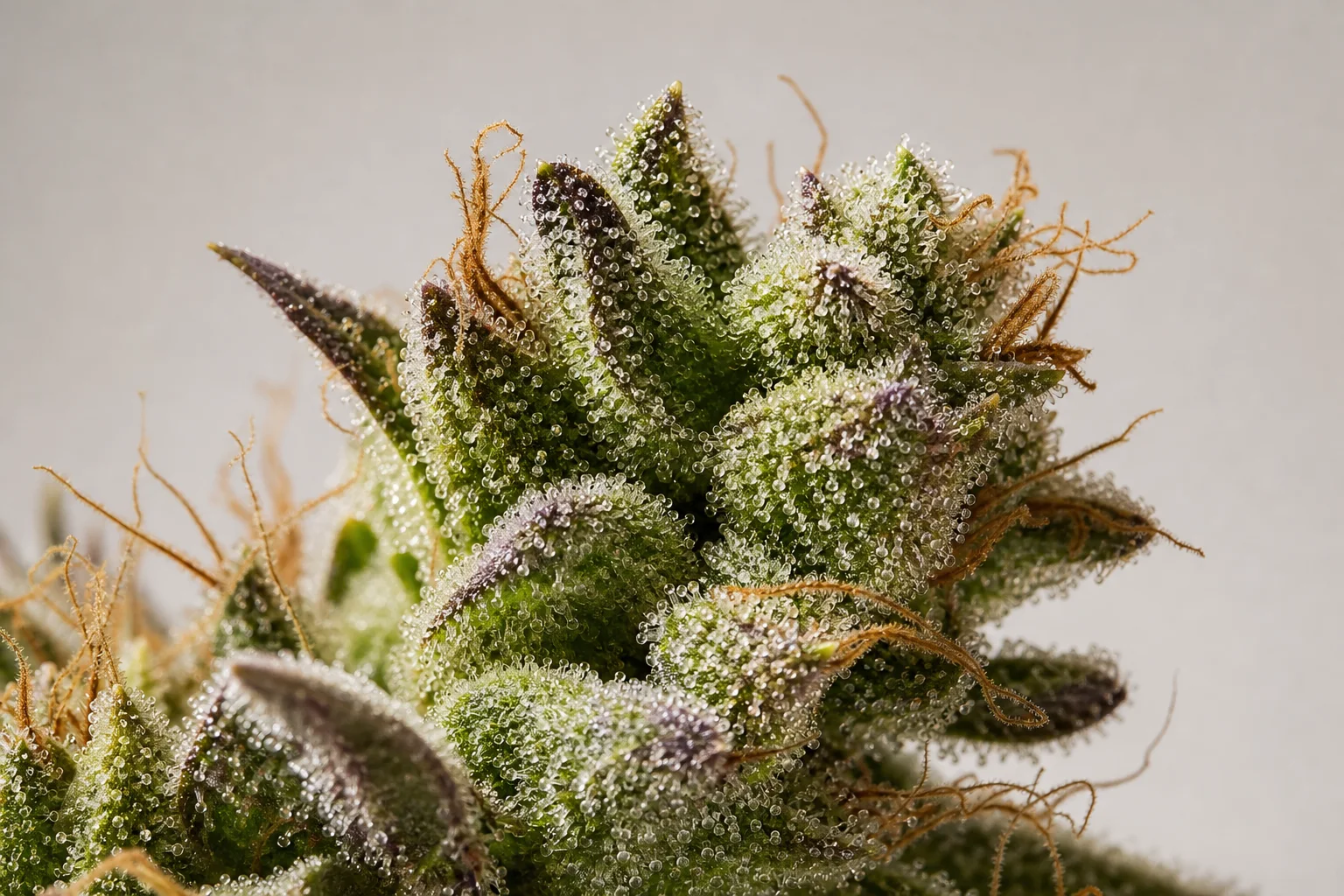
Botanical macro to show why mechanical and freeze damage matter: trichome heads are delicate. The photo supports lab findings on physical changes during freezing and handling, but it is observational and not a stability experiment.
Research context: Thermal stability of cannabinoids in dried cannabis: a kinetic studyHeat and temperature: kinetics matter
Temperature speeds chemistry. Multiple kinetic studies demonstrate that cannabinoid degradation accelerates with higher temperatures; storage at cool, stable temperatures preserves cannabinoids far better than fluctuating, warm conditions. A food‑science approach—store at cool, dark temperatures and avoid heat sources like ovens, hot attic spaces, or windows in winter that bake a container—is sensible and evidence‑based. (pubmed.ncbi.nlm.nih.gov)
Refrigeration is sometimes suggested for extracts and oils, but it comes with trade‑offs: cold can condense moisture if containers are opened in warm, humid rooms and may change texture. Freezing preserves cannabinoids for long timelines in research studies, but it can cause delicate trichomes to become brittle and break when flower is moved in and out of cold storage. For many home and small‑batch situations, a cool, stable cupboard or dedicated closet (away from water heaters and windows) balances preservation with practicality. (pubmed.ncbi.nlm.nih.gov)
Practical tip: avoid temperature cycling. If a closet in summer sits at 80°F by day and 65°F by night, degradation and moisture movement accelerate. A thermostat‑free, insulated box inside a conditioned part of the house beats a garage or attic nearly every time. (pubmed.ncbi.nlm.nih.gov)
Moisture and microbial risk: humidity control for flower
Too dry, and the bud becomes crumbly and loses terpenes; too damp, and you invite mold and bacteria. Research on plant material and extracts highlights that moisture is a two‑edged sword: maintaining a target relative humidity (RH) slows volatile loss, but above certain RH thresholds fungal growth becomes a real risk. For cured flower, many small producers aim for a middle ground and monitor RH with calibrated hygrometers in sealed jars. (pubmed.ncbi.nlm.nih.gov)
Don’t rely on household moisture tricks without measurement. Silica desiccants, humidity packs designed for botanical products, and properly dried/cured flower are tools—not panaceas. If you see visible mold, discard the product rather than trying to 'rescue' it; inhaling or ingesting moldy cannabis can cause harm and complicates any later testing. Maine’s OCP materials highlight that keeping products dry and separately packaged reduces contamination and accidental exposure. (maine.gov)
Practical tip: keep a small, inexpensive digital hygrometer inside the storage container or box. Note the RH in your batch record at transfer—if a jar shows sustained RH above your chosen threshold (for example, 65–68% RH is commonly discussed for cured flower), move it to a drier environment and reassess. (These target ranges come from horticultural practice and stability research; they are not universal mandates.) (pubmed.ncbi.nlm.nih.gov)
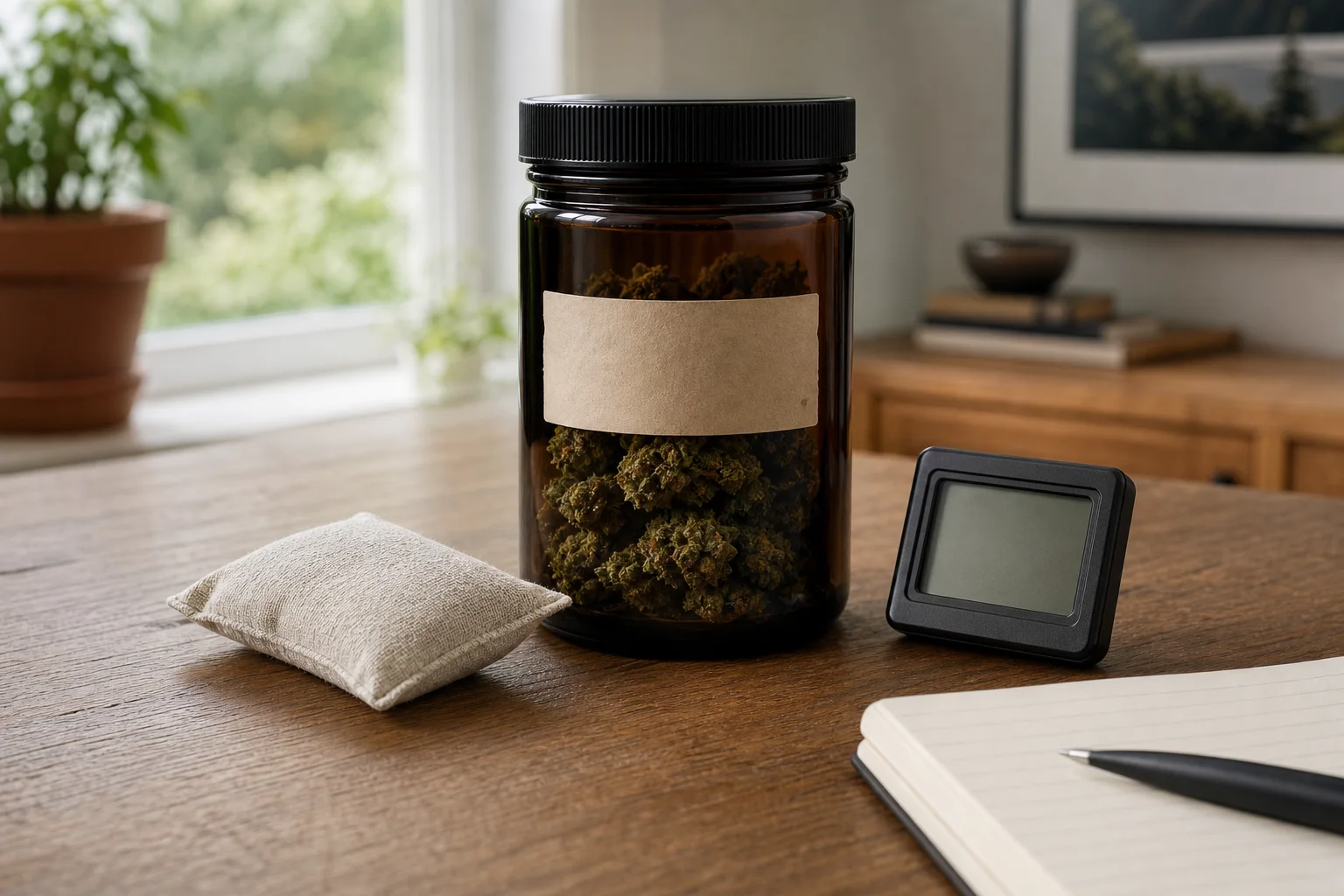
Practical photo showing humidity‑control tools used with sealed jars. It illustrates the tools recommended in horticultural and stability discussions; it does not guarantee mold prevention and should be paired with records and monitoring.
Research context: Stability of Cannabinoids in Cannabis: Plant Material, Extracts, Oil Formulations, and Isolates · Storing Cannabis Products Safely & Securely (Rack Card)Clear identification, labeling, and Maine program differences
Labeling matters for safety and traceability. Maine’s adult‑use and medical statutes set packaging and labeling expectations—adult‑use products must display identity statements, the universal symbol, and license numbers where applicable, while medical program rules include requirements for tamper‑evident and child‑resistant packaging and verified potency information on some labels. If you operate within Maine’s programs, follow the statute and OCP rules; for private home storage, consider adopting the same habit of clear, legible batch tags. (legislature.maine.gov)
What to put on a home batch label: source (grower or garden bed), strain/phenotype name, harvest date, drying/curing notes (length, container), final jar date, visible condition (e.g., "no visible mold"), humidity at jar time, and any lab ID if you sent a sample. Those notes help you compare how a batch aged and whether your storage strategy needs adjustment. Commercial entities in Maine are subject to stricter recordkeeping and labeling; private cultivators can learn from those practices even if not required. (legisweb0.legislature.maine.gov)
Practical tip: keep a small paper or digital log for each lot. Simple fields—"Batch ID, Harvest Date, Dry time, Jar RH, Storage temp, Last checked"—are surprisingly powerful when you want to spot a pattern across seasons. (legisweb0.legislature.maine.gov)
Child and pet safety: locks, original packaging, and what to do in an exposure
Keep edibles and concentrates in original, child‑resistant packaging when possible and store them in a locked container out of sight and reach. Maine’s "Safe Storage for ME" campaign distributes lockable storage bags and advises the same straightforward steps that poison centers advocate: locked storage, separation of edibles from ordinary food, and clear labeling. These steps reduce accidental ingestions, which are the main household safety concern with cannabis products. (maine.gov)
If a child or pet consumes a cannabis product, Poison Control is the recommended first contact for non‑emergency guidance; they maintain case data and specific clinical guidance on pediatric exposures. For severe symptoms (difficulty breathing, unresponsiveness), call 911 immediately. Keeping an inventory and original packaging can help clinicians and poison control give better advice quickly. (poison.org)
Practical tip: in a household with young children or animals, handle cannabis the way you handle medicines and household chemicals—locked, labeled, and separated from snacks. Consider distributing OCP’s lockable bag at your retail stop or ordering a small lockbox for the medicine cabinet. (www1.maine.gov)
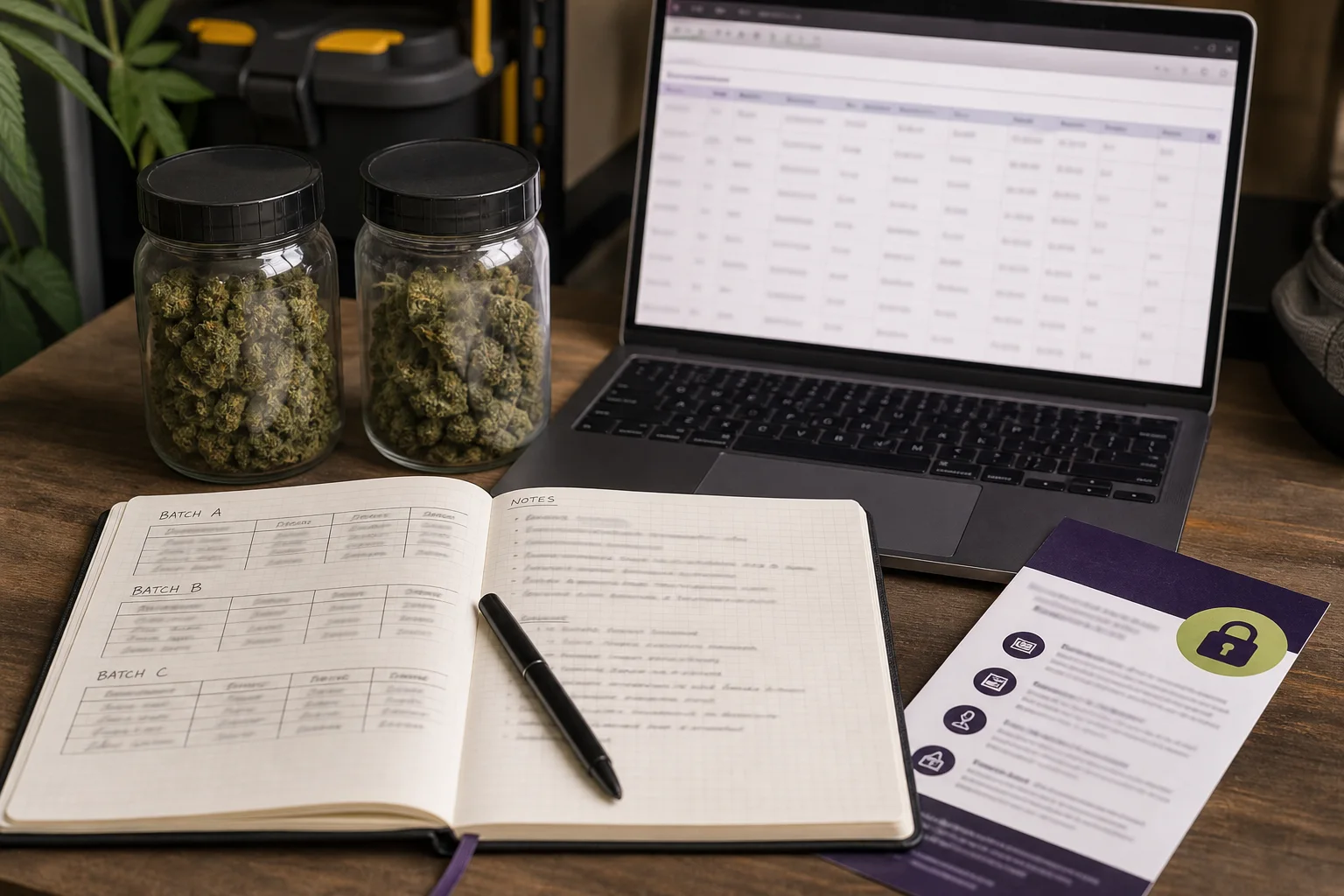
Evidence‑style recordkeeping image: notebook, non‑readable spreadsheet printout, and a rack card from Maine OCP. The image is intended to teach record fields and the habit of retaining packaging; it does not show private or personal data.
Research context: Storing Cannabis Products Safely & Securely (Rack Card) · Safe Storage for ME (program page)Batch notes: what growers should record and why it matters
Good batch notes are the difference between repeating a successful run and repeating a problem. At minimum, capture: pedigree or mother, planting and harvest dates, dry/curing regime (temperature, RH, container), final jar date, jar RH at sealing, storage location and temperature, any lab test IDs and results, and sensory notes at key milestones (post‑dry, post‑jar, one month, three months). These entries let you correlate storage conditions with later outcomes like aroma loss or unexpected microbial growth. (pubmed.ncbi.nlm.nih.gov)
From a regulatory perspective, commercial participants in Maine’s programs maintain more formal records; private growers may emulate that discipline for safety and to preserve product quality. If you ever share product with a patient or another adult, provide clear identifiers so the recipient knows what they have and when it was packed. That reduces confusion and accidental misuse. (legislature.maine.gov)
Practical tip: a single spreadsheet with one row per batch and columns for the fields above works well for microgrowers. Photograph your jars with labels visible when you seal them—that visual record helps when a jar later smells off or if you need to match a jar to a lab report. Remember that laboratory tests and studies provide population‑level insight; individual batches vary, so records are how you learn what matters for your garden. (pubmed.ncbi.nlm.nih.gov)
Evidence limits and a cautious, local approach
The literature on long‑term storage is growing but not uniform: studies differ by product type (flower, oil, isolate), container, and storage conditions. Some research supports freezing for long preservation of cannabinoids, while other work cautions against freezer trauma to trichomes. Photodegradation and thermal kinetics are well documented, but the exact rate of change for any lot depends on cultivar, initial moisture, and packaging. Consider published ranges and target RH/temperature windows as informed starting points—not absolute rules. (pubmed.ncbi.nlm.nih.gov)
Finally, Maine’s OCP materials and statutes focus on reducing accidental exposure and ensuring transparency for consumers and patients. For those participating in Maine’s licensed programs, follow OCP guidance and statutory labeling/packaging rules. Private users and small growers may borrow that rigor for safety and to make their batch notes meaningful. (maine.gov)
Key takeaways
- Light, heat, oxygen, and moisture change cannabis chemistry—store cool, dark, and with limited air exchange. (pubmed.ncbi.nlm.nih.gov)
- Keep edibles and concentrates in original child‑resistant packaging and locked away; call Poison Control at 1‑800‑222‑1222 for non‑emergent exposures. (maine.gov)
- Record basic batch metadata at harvest and jar time (batch ID, harvest date, jar RH, storage location) to learn what storage practices work. (legisweb0.legislature.maine.gov)
- Maine statutes require specific labeling and packaging for commercial adult‑use and medical products—follow program rules if you sell or transfer product. (legislature.maine.gov)
- If you see visible mold, do not attempt to salvage the product; discard and document. (pubmed.ncbi.nlm.nih.gov)
FAQs
Q: How long will properly stored flower keep its character? A: Research shows that cooler, darker, low‑oxygen storage slows chemical change, but exact timelines vary. Many small growers report a noticeable decline in terpene character after several months at room conditions; cooler, stable storage preserves freshness longer. Use batch notes to track your own timeline. (pubmed.ncbi.nlm.nih.gov)
Q: Is freezing flower a good idea? A: Freezing preserves cannabinoids in studies, but it can make trichomes brittle and affect texture. For extracts and oils, freezing often preserves chemical integrity better than room temperature. Choose freezing only if you plan careful handling and understand the tradeoffs. ()
Questions this guide answers
How long will properly stored flower keep its character?
There’s no single expiration date. Cooler, darker, low‑oxygen storage slows chemical change; many growers note sensory changes after several months at room conditions; track your own batches to learn patterns.
Is freezing flower a good idea?
Freezing preserves cannabinoids in research but may make trichomes brittle. For extracts and oils, freezing often preserves chemical integrity better than room temperature. Choose freezing only if you plan careful handling and understand the tradeoffs.
What humidity should I keep in a jar?
There’s no universal RH—research and practice commonly target mid ranges often discussed around 58–65% for cured flower; measure and record RH rather than guessing and avoid sustained high RH where mold risk rises.
If a child eats an edible, what should I do?
For non‑emergent guidance call Poison Control at 1‑800‑222‑1222. For severe symptoms—difficulty breathing, unresponsiveness—call 911. Preserve packaging to help clinicians.
Do Maine rules require batch records for small home grows?
Formal recordkeeping requirements apply to licensed commercial participants and medical program participants in different ways. Home growers aren’t bound by commercial regulations but should adopt clear labeling and records for safety and traceability.
Educational information only. Cannabis affects people differently and this is not medical advice.