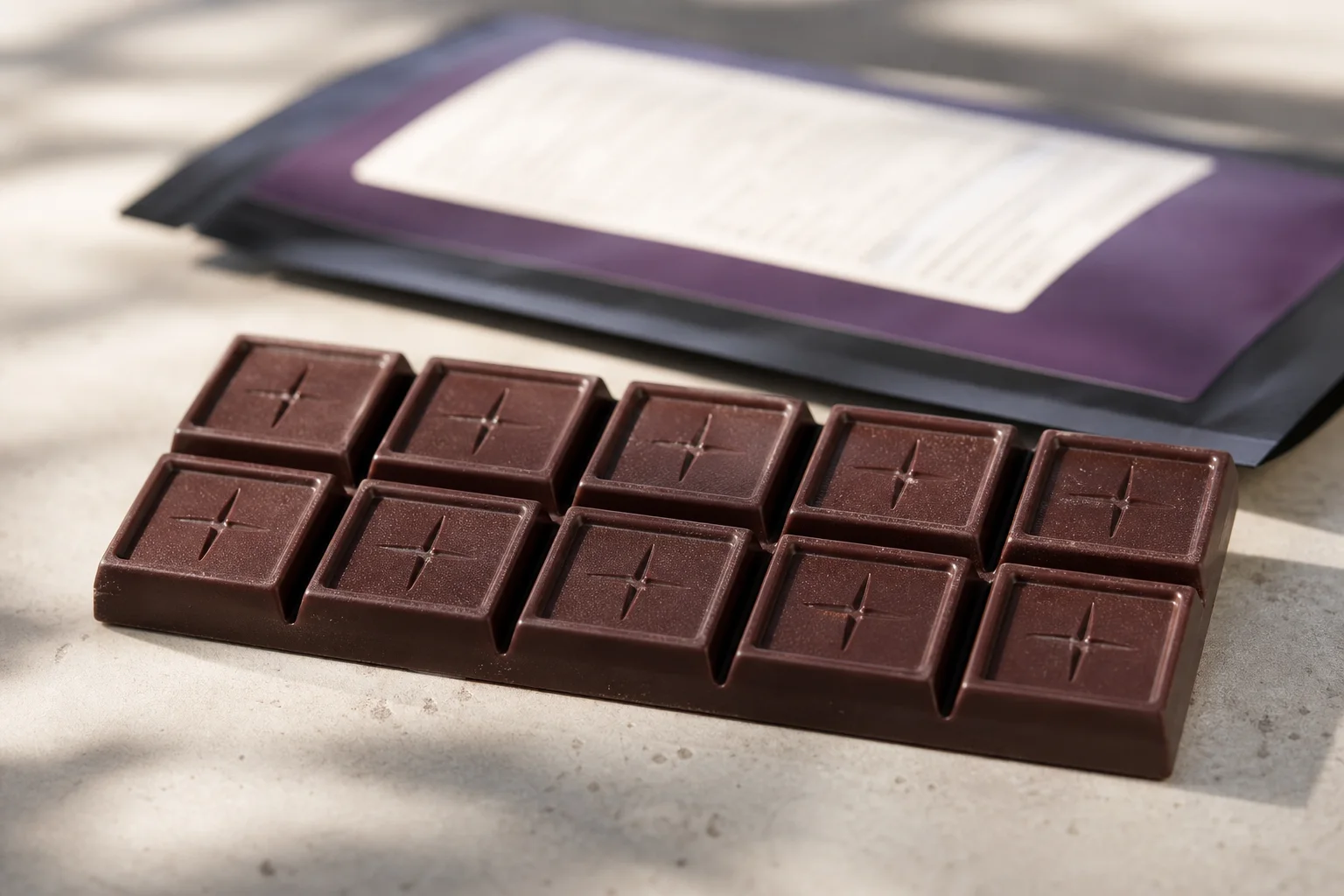
Documentary-style macro photo of a multi-serving edible showing per-serving stamps. This image teaches how physically marked servings on edibles help consumers count doses and reduce confusion between per-serving and package totals. It does not show real potency values and is not a product endorsement. Source: Maine OCP consumer guidance and packaging rules. ([maine.gov](https://www.maine.gov/dafs/ocp/sites/maine.gov.dafs.ocp/files/2023-08/Maine%20Cannabis%20101.pdf))
Introduction: more than a tasty snack
Edible cannabis deserves its own etiquette. Unlike smoked or vaped cannabis, the effects of an edible arrive slowly, can last for many hours, and are more variable from person to person. This combination explains why accidental overconsumption is common and why regulators in Maine and public-health agencies advise extra caution with edibles. (cdc.gov)
As growers and educators we say this plainly: edibles are concentrated doses delivered through food technology, not a uniform, predictable drug-delivery system like an inhaler. Labels, packaging and the product’s physical form all matter — for safety, for dosing choices, and to reduce emergency department visits involving children and pets. The rest of this piece walks through the science of delay and variability, how to read serving and package labels, why patience is a central harm-reduction approach, and what Maine’s rules say about packaging and marking. (maine.gov)
How edible cannabis behaves in the body: slow, variable, and metabolically unique
When you eat THC, the molecule travels through the digestive tract and the liver before reaching the bloodstream and brain. This “first-pass” metabolism changes how much active THC circulates and how quickly people feel effects. Peak subjective effects from standard edible preparations are commonly delayed into the 1–3 hour range and can last many hours; plasma concentration and subjective intensity vary much more than with inhalation. Clinical and review literature documents this pharmacokinetic difference and its variability between products and people. (pubmed.ncbi.nlm.nih.gov)
Factors that change onset and intensity include the edible’s formulation (fat content, emulsifiers), whether someone has eaten recently, individual digestion and liver enzymes, and co-used substances like alcohol or certain medications. These are not hypothetical concerns—clinical studies show wide inter-individual differences even when experienced volunteers take controlled doses. That’s why two people can eat the same piece of chocolate and have very different timelines and intensities of effect. (pubmed.ncbi.nlm.nih.gov)
Because of first-pass metabolism, a portion of oral THC is converted to 11-hydroxy-THC, a metabolite associated with different psychoactive properties. That biochemical route helps explain the sometimes stronger or longer subjective effects people report from edibles versus inhalation at similar THC milligram amounts. Researchers continue to study exactly how formulation and human variation interact, but the practical takeaway is simple: timing and dose-response are less predictable with edibles. (pubmed.ncbi.nlm.nih.gov)
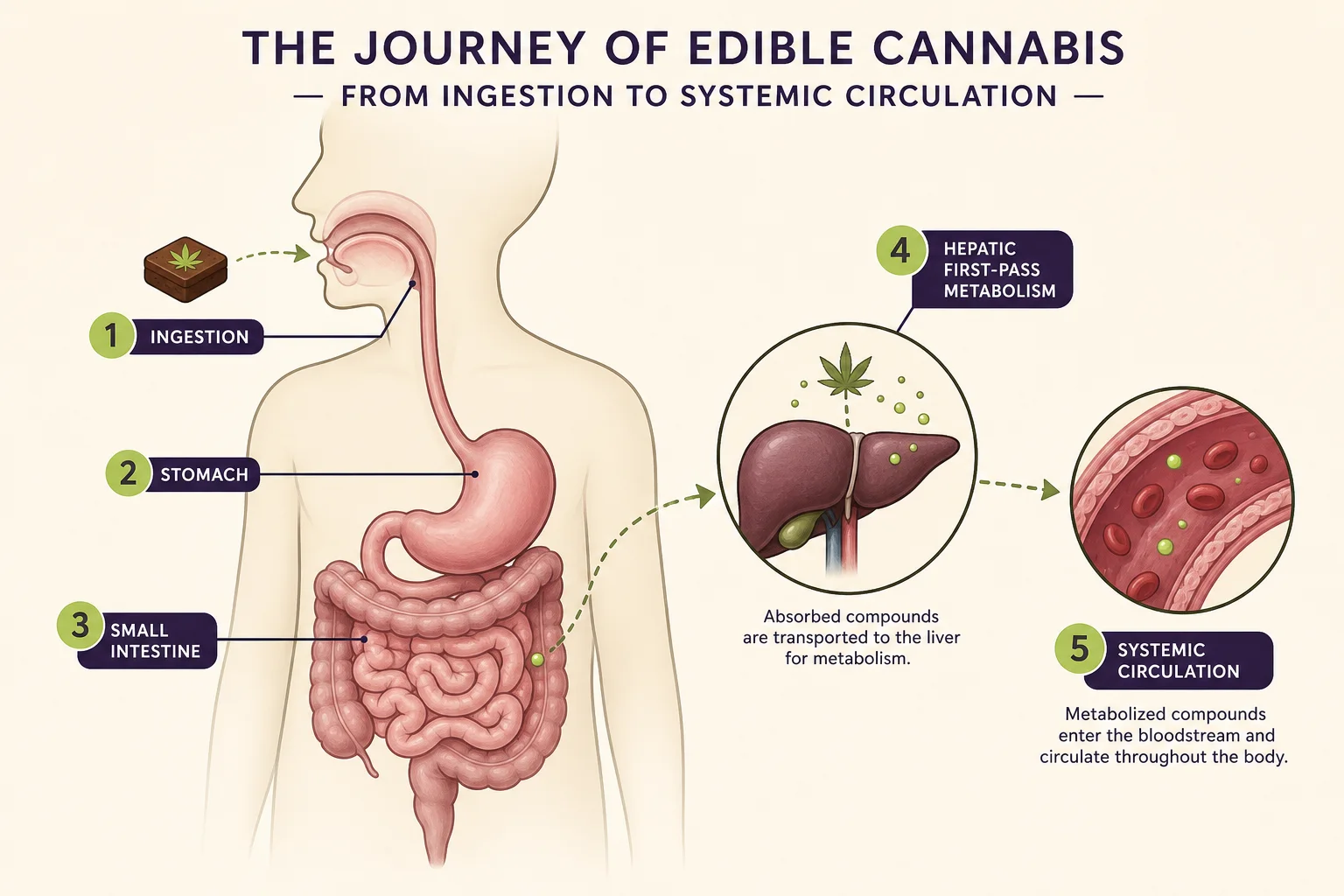
Evidence diagram illustrating the digestive route and liver first-pass metabolism that contribute to delayed and variable onset of oral THC. The diagram is schematic and not a diagnostic image; it shows mechanism concepts referenced in pharmacokinetic literature. Source: PubMed systematic review on oral THC pharmacokinetics. ([pubmed.ncbi.nlm.nih.gov](https://pubmed.ncbi.nlm.nih.gov/32585912/))
Research context: Oral Administration of Cannabis and Δ-9-tetrahydrocannabinol (THC) Preparations: A Systematic ReviewServing labels versus package labels: what the label actually tells you
Read labels twice. Many edible packages show two numbers: a total THC content for the package and a per-serving amount. The per-serving number is what matters for one bite or one standardized piece; the package total is the sum of all servings inside. In regulated Maine adult-use rules and guidance, regulations require that the single serving be clearly identified and that the package state total THC and per-serving THC so consumers can see and count servings. But those numbers are not guarantees of identical effect across users. (legislature.maine.gov)
Watch for marketing language that obscures serving math. A chocolate bar may be marketed with a prominent “10 mg” figure; always check whether that 10 mg is per serving or per whole bar. Packaging layers (inner tray, outer carton) matter too—Maine requires the “marketing layer” to show required warnings and the universal symbol for THC so consumers and caregivers can identify the product quickly. If you can’t immediately find per-serving THC, put the product down and re-check the label. (maine.gov)
Be especially cautious with homemade or unregulated products: tested, regulated products include potency statements and batch-testing metadata; illicit or homemade edibles do not, and their milligram content can be widely inconsistent. Maine’s regulated system attempts to reduce this uncertainty with testing and labeling requirements, but label accuracy still has a tolerance band—regulated programs often allow a small percent variance between labeled and measured potency. That’s why doing the serving math and waiting are common risk-reduction practices. (maine.gov)
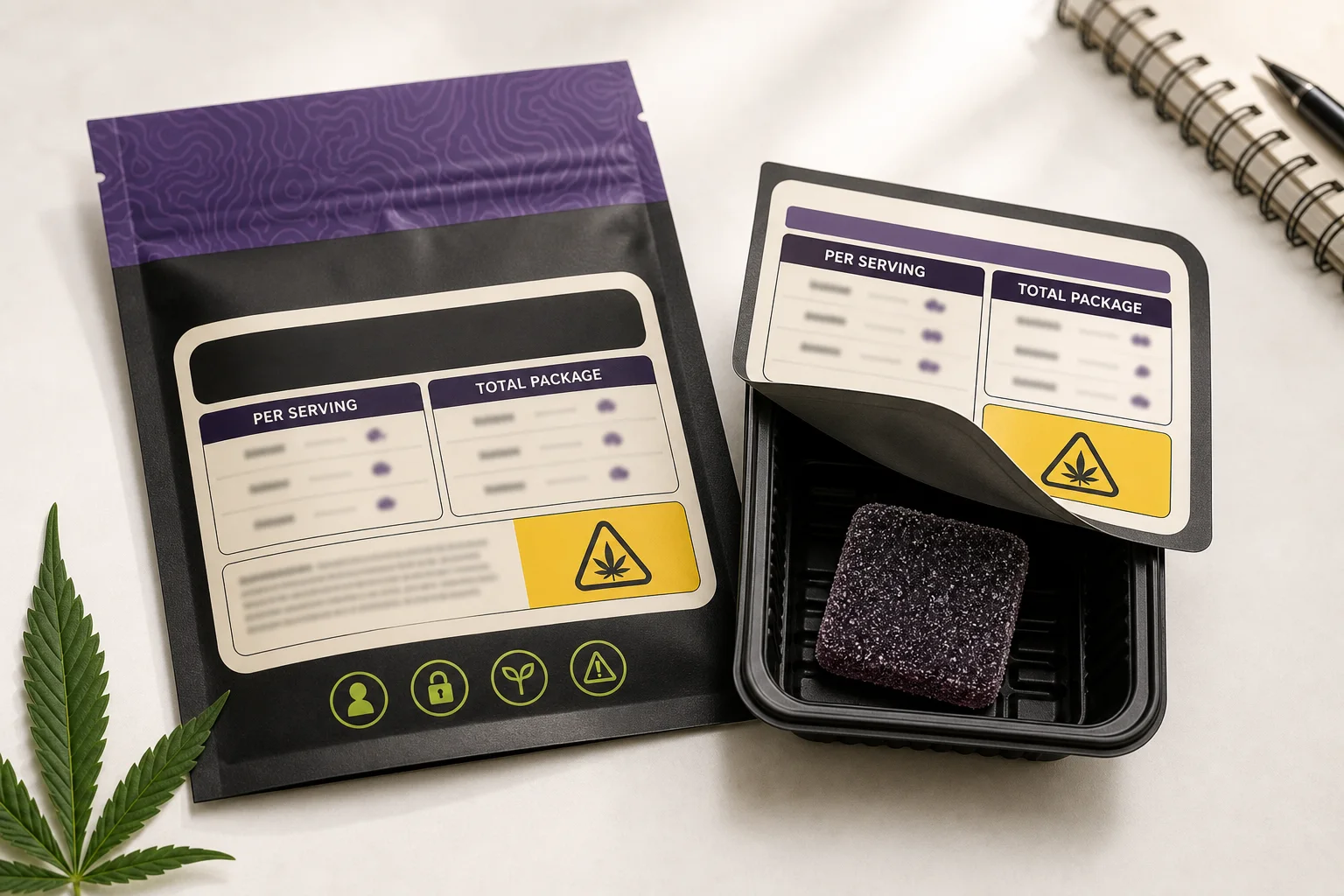
Photographic study of a multi-layer package where the marketing layer displays per-serving and total THC statements. The photo is meant to teach consumers where to look for serving math; label text should be unreadable in the image to avoid implying specific potency accuracy. Source: Maine OCP packaging guidance. ([maine.gov](https://www.maine.gov/dafs/ocp/resources/universal-symbol))
Why patience—wait, and then wait some more—is a practical control strategy
A commonly repeated harm-reduction phrase is “start low and go slow,” but that’s an instruction about behavior, not a prescription. For edibles, the practical form of that idea is to use a single standardized serving as an initial test, allow sufficient time to observe effects, and avoid re-dosing while the first dose is still ramping. Clinical studies and public-health guidance note that 30–120 minutes is a typical onset window for many products, but variability means some people report later peaks. Waiting reduces the risk of compounding doses when the first one simply hasn’t had time to show effects. (cdc.gov)
Patience also lowers the probability of a difficult experience: when people re-dose quickly they increase peak concentration and duration, which contributes to a significant share of emergency visits related to edibles. The Centers for Disease Control and Prevention and poison-control centers report that delayed onset and sweet, snack-like forms make accidental overconsumption more likely—another reason to regard edibles as measured compounds, not casual food. (cdc.gov)
For people unfamiliar with a product, treating the first session like a single experiment can be useful: note the time, remain in a safe environment, and avoid driving or complex activities for the day. Some people find it helpful to have a sober friend aware of their plans if timing anxiety is a concern. Those are practical safety behaviors grounded in the pharmacology described above. (cdc.gov)
Fast‑acting edibles and new formulations: the timing landscape is changing
The market now includes “fast-acting” or “sublingual-style” edibles designed to show effects in minutes rather than an hour or two. Preliminary controlled studies indicate pharmacokinetic differences between fast-acting and standard edibles, with some fast-acting products shortening onset and narrowing the window of uncertainty, but these products are distinct and should be regarded on their own terms. They are not interchangeable with standard edibles. (pubmed.ncbi.nlm.nih.gov)
Fast-acting formulations may rely on different emulsifiers or dissolved-THC approaches that favor quicker absorption in the mouth or upper GI tract. While attractive for some consumers who dislike long waits, they add complexity: a consumer who is used to standard edibles and switches to a fast-acting product without reading the label could mistakenly assume the timing will be the same. Regulatory testing and labeling need to keep pace with these formulations so consumers can make informed timing choices. (pubmed.ncbi.nlm.nih.gov)
Because evidence on long-term relative safety or comparative effects across these newer formats is still emerging, public-health guidance tends toward conservatism: it commonly recommends reading labels, regarding new formulations as experimental, and allowing longer intervals before changing dose. That approach is intended to reduce short-term risks while the science matures. (pubmed.ncbi.nlm.nih.gov)
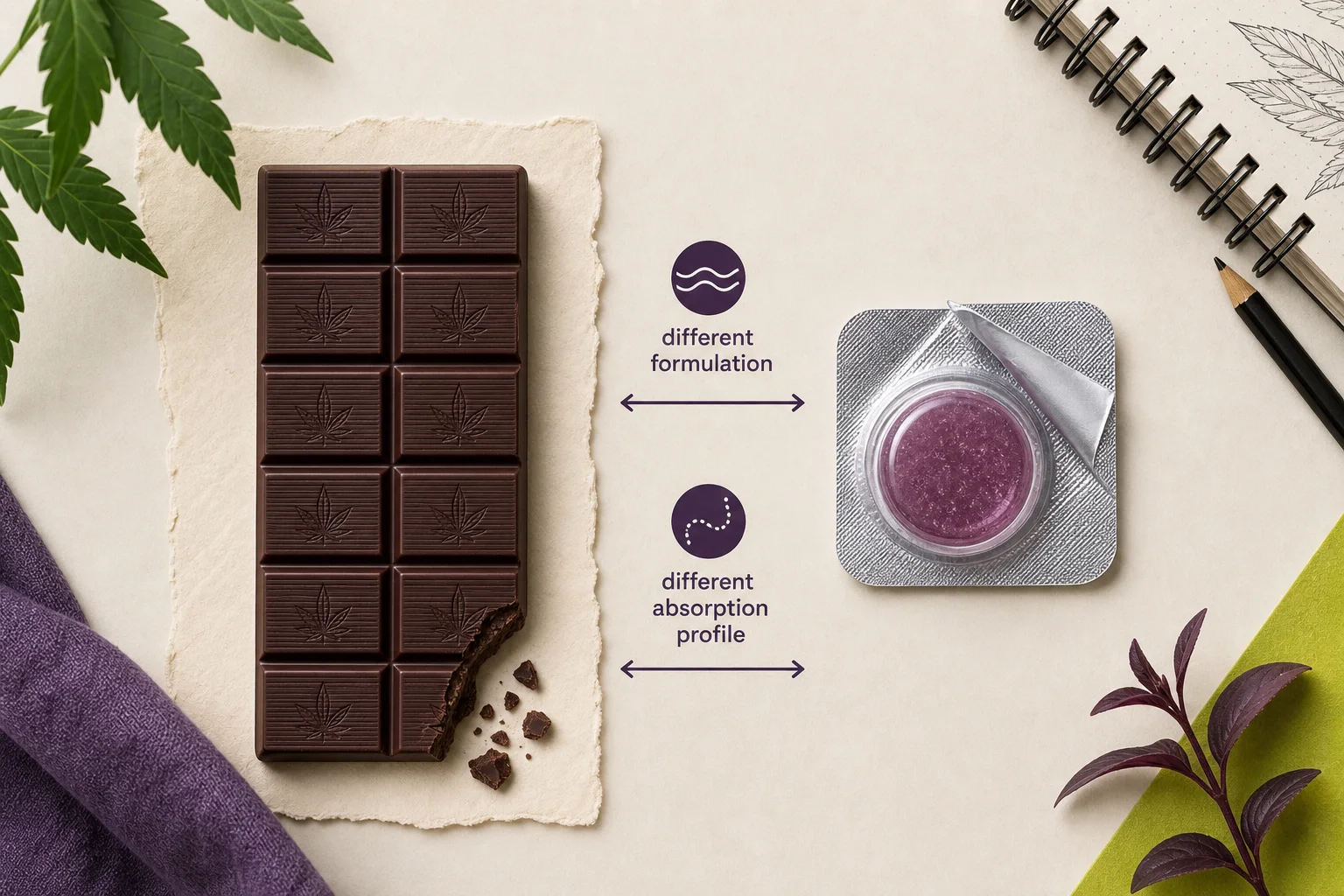
Illustrated comparative layout of a standard multi-serving edible versus a fast-acting lozenge to visually teach differences in expected onset profiles. The callouts emphasize format differences, not exact timings or safety claims. Source: recent controlled studies on fast-acting vs standard edibles and CDC guidance. ([pubmed.ncbi.nlm.nih.gov](https://pubmed.ncbi.nlm.nih.gov/41958200/))
Research context: Oral Administration of Cannabis and Δ-9-tetrahydrocannabinol (THC) Preparations: A Systematic Review ·Accidental exposure: children, pets, and how Maine tries to reduce these risks
Unintentional ingestion by children is a documented and serious hazard of edible cannabis. Poison-control centers and public-health reports show increases in pediatric exposures after legalization in some states; children are especially vulnerable to higher relative doses and to respiratory and neurological symptoms. Keeping cannabis products locked, out of sight, and in original child-resistant packaging is a common storage approach, and calling Poison Control is a typical emergency contact if ingestion is suspected. (poison.org)
Maine’s Office of Cannabis Policy requires adult‑use licensees to use a universal symbol and follow packaging standards designed to make products identifiable and less appealing to children. For edibles, Maine also requires standardized serving marking on each serving (for example, stamped or imprinted servings), which helps adults count and helps caregivers identify individual doses in multi-serving packages. These program rules are practical mitigations but do not remove the ongoing need for secure storage. (maine.gov)
Pets are also at risk. Dogs and cats can have pronounced adverse reactions after ingesting THC-containing products; veterinary guidance and poison-control resources can provide information to owners and clinicians. Because both children and pets are drawn to sweet and fatty foods, the packaging and storage strategies that protect children also protect pets. If exposure occurs, poison-control centers or veterinary clinics can provide guidance on next steps. (poison.org)
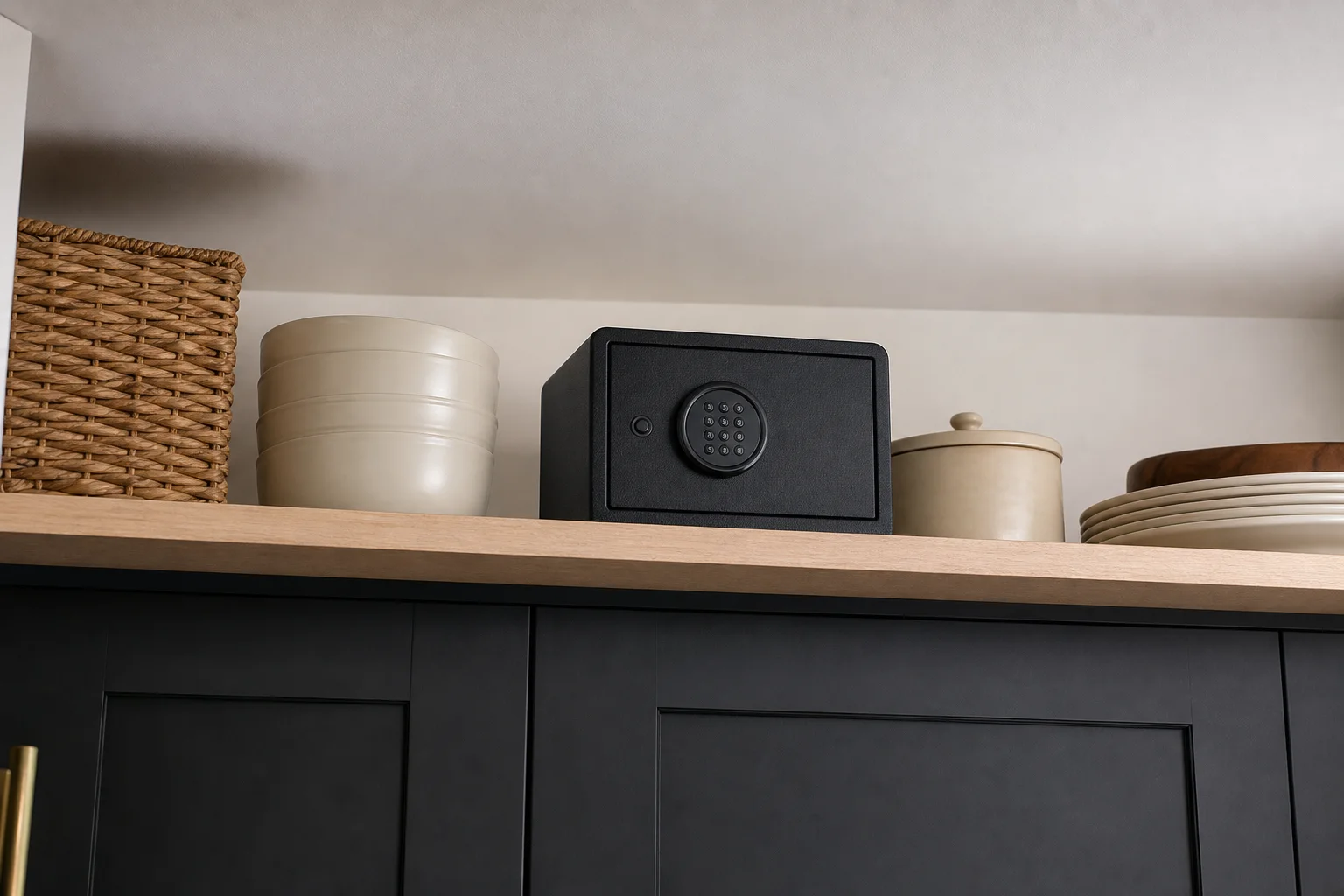
Documentary-style photo showing secure, out-of-sight storage for cannabis products. The image teaches practical risk reduction for accidental exposure; it is illustrative and not a legal endorsement. Source: Poison Control and CDC advice on childproof storage. ([poison.org](https://www.poison.org/articles/my-child-ate-a-cannabis-edible))
Research context: My child ate a cannabis edibleWhy this article cannot—and should not—prescribe a dose
You’ll find many sources that suggest general starting amounts, but a responsible educator must separate broad public-health guidance from individualized clinical decision-making. Dose response for oral THC is shaped by personal biology, concurrent medications, prior tolerance, formulation differences, and even meal timing, making an individualized “prescribed” dose inappropriate for an educational piece. Decisions about clinical dosing fall within the scope of licensed clinicians and often involve monitored titration in a clinical setting. (pubmed.ncbi.nlm.nih.gov)
Regulatory materials and scientific reviews provide population-level findings and safe-practice recommendations—like waiting between doses and keeping products away from children—but they intentionally stop short of suggesting a specific milligram dose for any particular person. That limitation is important: it’s both ethical and consistent with how dosing decisions are made in clinical contexts. We can therefore offer behavior-based, evidence-grounded advice (read labels, wait, store securely) without providing a specific dose target. (cdc.gov)
Individuals participating in Maine’s medical program who are seeking individualized dosing guidance typically consult their certifying clinician. Medical-program participants and adult-use consumers operate under different rules: Maine’s medical program allows clinical oversight while the regulated adult market centers on retail labeling and consumer harm reduction. Distinguish your pathway and rely on clinicians for individualized dose decisions when clinical oversight is part of the plan. (maine.gov)
Practical checklist: reading labels and reducing risk (a one‑page habit list)
- Confirm per-serving THC and package total. If not obvious, don’t assume the big number is per serving. Look for the words “per serving” or “per piece.” (maine.gov)
- One common harm-reduction approach is to consume a single standardized serving and monitor effects for at least 2 hours before deciding whether another serving is desired; longer intervals are commonly suggested for first-time product users or people taking other medications. Recording the time can help track onset and peak. (cdc.gov)
- Note the product form. Fast-acting formats may show a different onset profile—regard them as a new product and read the label carefully. (pubmed.ncbi.nlm.nih.gov)
- Keep all cannabis products in locked, child-resistant containers and in original packaging with warnings and the universal symbol visible. Poison Control (1-800-222-1222) is a central contact if a child or pet ingests an edible. (maine.gov)
- When buying in Maine, choose tested, labeled products from regulated licensees and retain batch numbers or receipts for reference in case of adverse events. Maine’s OCP guidance and labeling rules are designed to make this information available. (maine.gov)
Conclusion: patience is the skill you can practice today
Edible cannabis is a grown-up product that rewards the slow, careful consumer. Read the label twice, respect serving math, wait long enough to see what the first dose does, and store safely. Maine’s rules and public-health guidance aim to reduce risk through labeling, standardized serving markings, and the universal symbol—but regulation is not a substitute for cautious consumer behavior. In cases of uncertainty, Poison Control or a clinician in Maine’s medical program are appropriate contacts. (cdc.gov)
Resources and further reading
- Maine Office of Cannabis Policy — Cannabis 101 (state consumer guide). (maine.gov)
- Maine statute (Title 28‑B §701) — labeling and packaging requirements. (legislature.maine.gov)
- CDC — Cannabis and Poisoning (edibles risks and guidance). (cdc.gov)
- Poison Control (webPOISONCONTROL) — my child ate a cannabis edible (practical emergency steps). (poison.org)
- PubMed systematic review — oral THC pharmacokinetics and variability. (pubmed.ncbi.nlm.nih.gov)
Questions this guide answers
How long should I wait after taking an edible before trying more?
Wait at least two hours after a single standardized serving; because of individual and product variability, some people may need longer. Public-health guidance emphasizes waiting to avoid accidental overconsumption. ([cdc.gov](https://www.cdc.gov/cannabis/health-effects/poisoning.html))
What’s the difference between per-serving and package THC numbers?
Per-serving THC is the amount in one standardized portion; package THC is the total for all portions inside. Use the per-serving number to manage how much you eat. Maine labeling rules require clarity about both. ([legislature.maine.gov](https://legislature.maine.gov/legis/statutes/28-B/title28-Bsec701.html))
Are fast-acting edibles safer because they act sooner?
Faster onset may reduce the long wait-and-guess interval, but fast-acting products have different pharmacology and should be treated as new products—read labels and start cautiously. Evidence on long-term safety differences is still emerging. ([pubmed.ncbi.nlm.nih.gov](https://pubmed.ncbi.nlm.nih.gov/41958200/))
What should I do if a child or pet eats an edible?
Call your regional poison-control center (1-800-222-1222 in the U.S.) or seek veterinary or emergency care immediately. Keep the product packaging for information on potency and ingredients. ([poison.org](https://www.poison.org/articles/my-child-ate-a-cannabis-edible))
Can this article tell me an exact dose to take?
No. Population-level studies inform safe practices but cannot prescribe individualized milligram doses. Discuss individualized dosing with a licensed clinician, especially in Maine’s medical program. ([pubmed.ncbi.nlm.nih.gov](https://pubmed.ncbi.nlm.nih.gov/32585912/))
Educational information only. Cannabis affects people differently and this is not medical advice.