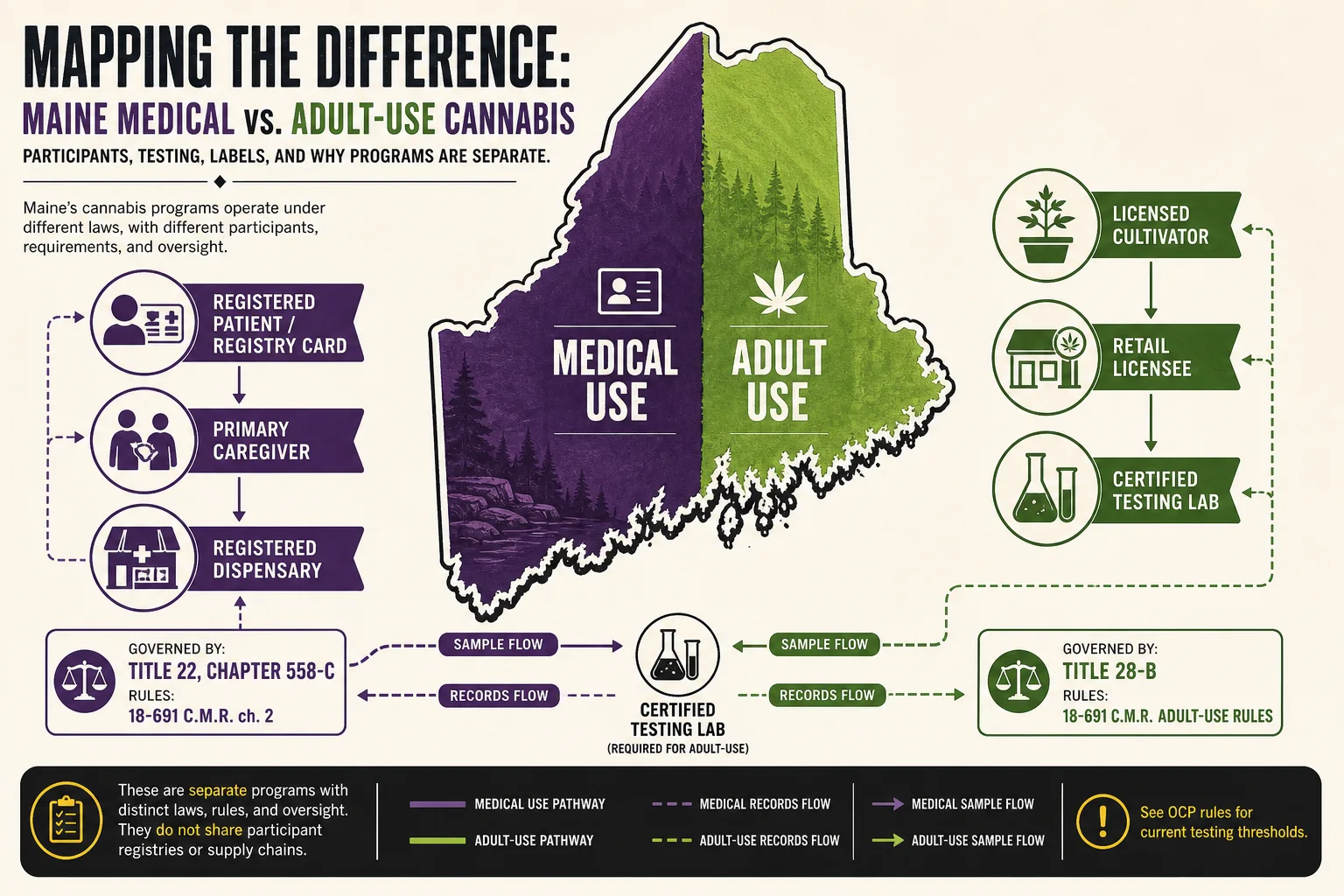
A documentary‑style infographic mapping Maine's two programs: who participates in each, what statutory anchors apply, and where testing and labeling diverge. The map visually summarizes the legal split described in Maine OCP rule pages. Limit: schematic only—does not display up‑to‑date numeric thresholds or municipal variations. Source: Maine OCP rules pages.
Intro
Maine runs two distinct, state‑regulated cannabis systems: a Medical Use program and an Adult Use (often called “adult‑use” or recreational) program. Both sit under the Office of Cannabis Policy (OCP) but are governed by different statutes, rules, and operational practices. That split matters for patients, caregivers, testing, labeling, cultivation, and the protections (and limits) people rely on when they grow, buy, or use cannabis in Maine. This article draws from Maine statutes and rule pages, national measurement standards, and public health guidance to make a dated, practical map you can use at a glance. (maine.gov)
Why a map? Because “medical” and “adult‑use” can mean different things depending on who you’re talking to—the grower, the lab technician, the OCP regulator, or the patient with a registry card. We’ll sketch the players, testing rules and analytes, label expectations and COAs, and the real consequences of program identity. I also flag where evidence is still thin and where Maine’s rules say to look for the final word.
1) Who the participants are (a plain‑English roster)
Medical program: qualifying patients, registered primary caregivers, and registered dispensaries. The Medical Use of Cannabis Act (Title 22, Chapter 558‑C) and the OCP medical rules lay out who can register, how caregivers function, and which facilities may operate to serve registered patients. Patients hold registry identification and — in many cases — have different possession and cultivation allowances than the general public. (maine.gov)
Adult‑use program: licensed cultivators, adult retail licensees, testing labs certified under adult‑use rules, and adult consumers (21+). Adult‑use licensing follows Title 28‑B and the OCP adult‑use rulebooks; licensees must operate within tracking, packaging, labeling, and mandatory testing rules that govern commerce to the public. The adult program is structured around licensure and marketplace controls rather than patient registration. (maine.gov)
Overlap and friction points: a single physical grower can serve both programs but must segregate plants, records, and product as required by rules. Registered medical caregivers and dispensaries sometimes keep separate inventories for medical clients; adult‑use licensees must meet mandatory testing before sale. OCP guidance documents and rule text spell out these separation and recordkeeping expectations. (maine.gov)
Questions this guide answers
Do medical products in Maine have to pass the same mandatory tests as adult‑use products?
No. Adult‑use products are subject to statutory mandatory pre‑sale testing in Title 28‑B and OCP adult‑use rules; medical program products are regulated under the medical rules and may be inspected or sampled under that program’s authority. Check the applicable OCP rule chapter for current requirements. ([legislature.maine.gov](https://legislature.maine.gov/statutes/28-b/title28-Bsec602.html))
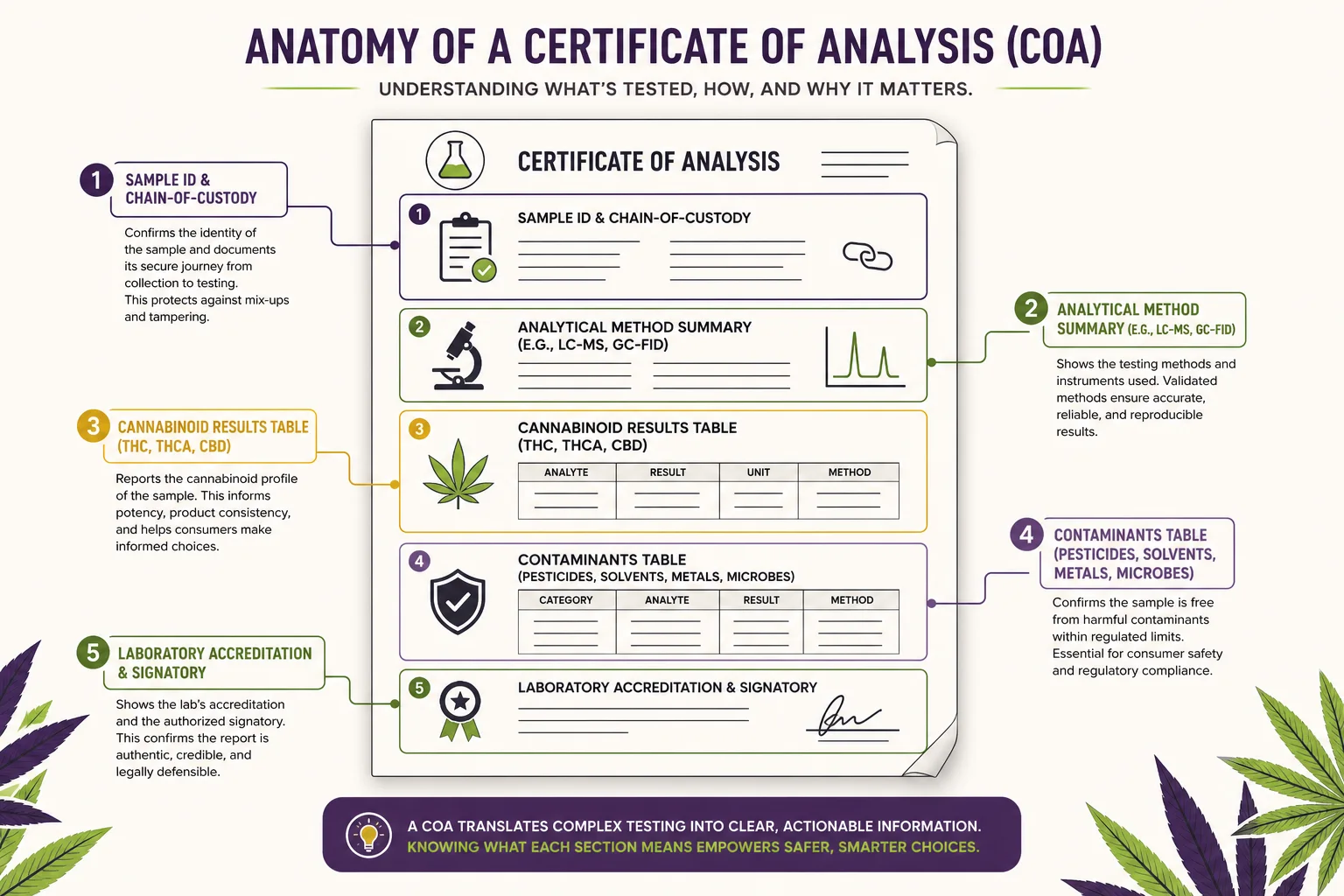
What should I look for on a Certificate of Analysis (COA)?
Look for the laboratory’s accreditation or certification, a clear methods description (sample prep and instrument), the analyte list (potency, solvents, pesticides, metals, microbes), and the date and batch/lot identifier. If those are missing, ask the seller or lab for more detail. ([nvlpubs.nist.gov](https://nvlpubs.nist.gov/nistpubs/ir/2024/NIST.IR.8519.pdf))
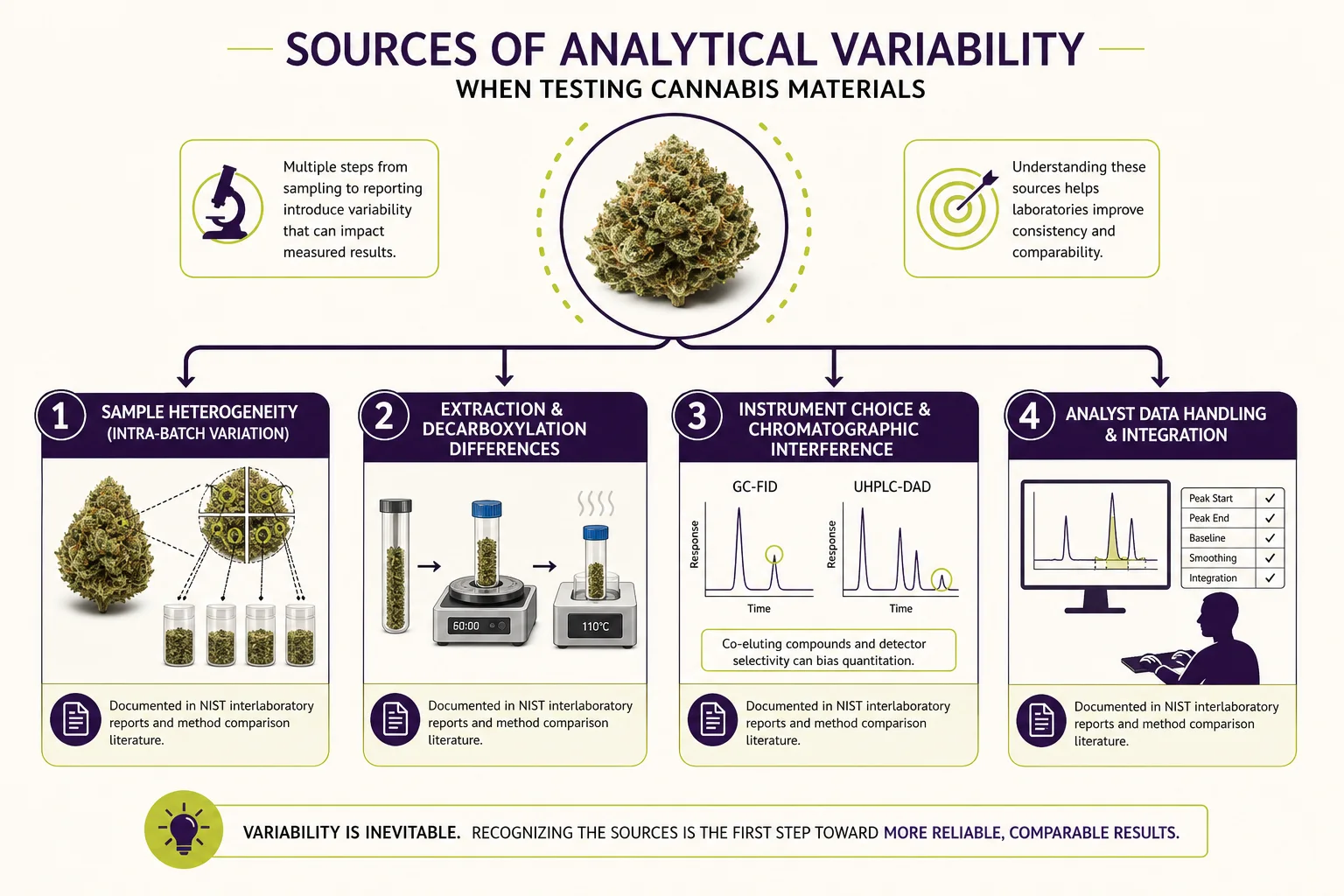
Are COAs perfectly reliable?
No. Interlaboratory variability and method differences can produce divergent COAs for the same material. NIST’s reference materials and quality‑assurance work aim to reduce that variability over time. Use method transparency and accredited labs to judge reliability. ([nist.gov](https://www.nist.gov/programs-projects/nist-tools-cannabis-laboratory-quality-assurance))
If a product fails a test, who enforces disposal or remediation?
For adult‑use, Title 28‑B and OCP rules require quarantine and, unless remediated and retested, destruction of failed product, with notification to OCP. Medical program sample collection and follow‑up actions are governed under the medical‑program rules and inspection authorities. ([legislature.maine.gov](https://legislature.maine.gov/statutes/28-b/title28-Bsec603.html))
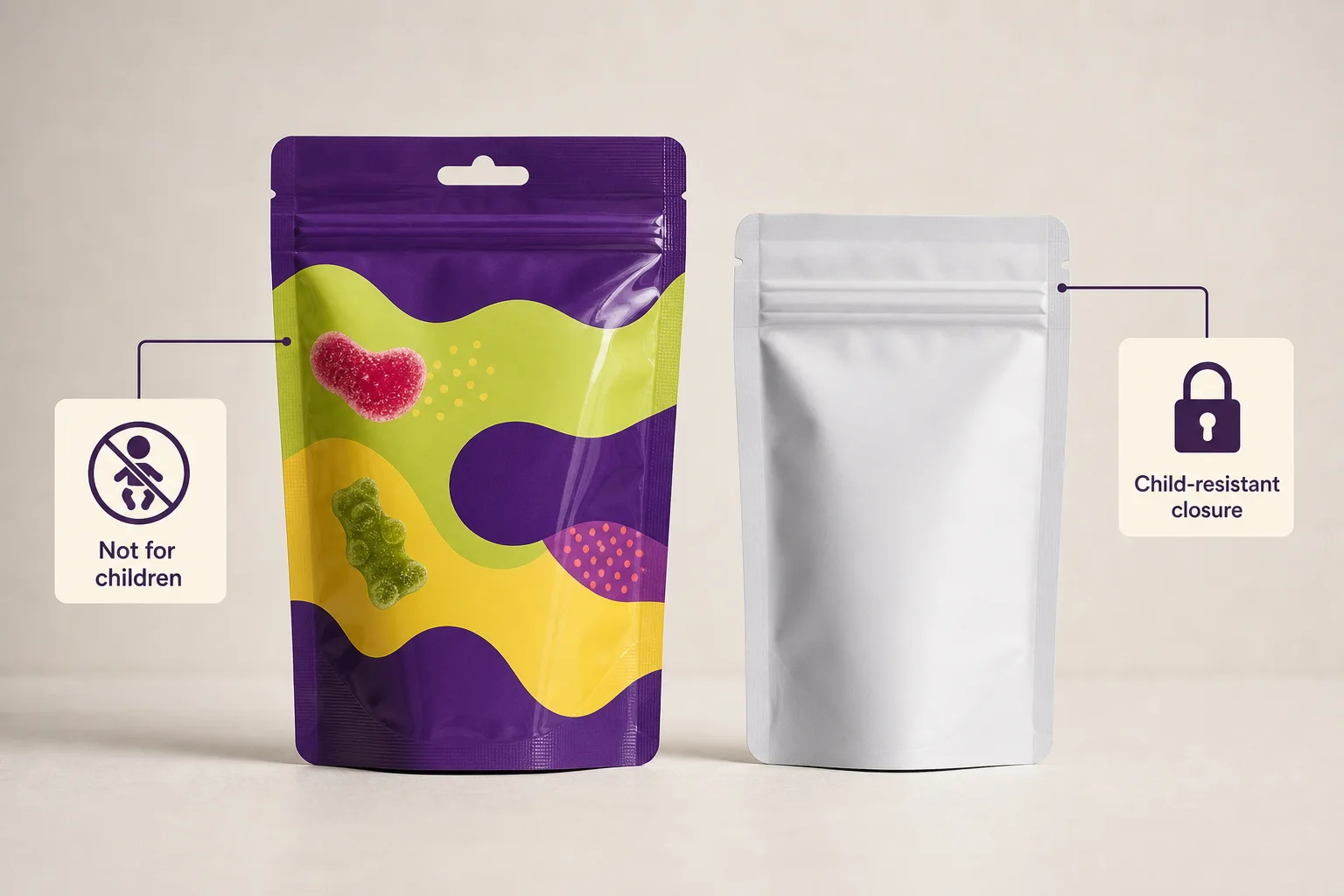
How can I reduce the chance of accidental child exposures at home?
Keep all cannabis products, especially edibles, locked and out of sight, never leave products on counters, and keep original packaging. If exposure is suspected call Poison Control at 1‑800‑222‑1222 or use webPOISONCONTROL. ([poison.org](https://www.poison.org/articles/my-child-ate-a-cannabis-edible))
Where can I verify the current testing thresholds and rules?
Check the OCP adult‑use testing pages and Title 28‑B statute for current mandatory analyte lists and thresholds, and consult OCP medical‑program rules for medical sampling and inspection practices. Links are in the sources list. ([maine.gov](https://www.maine.gov/dafs/ocp/open-data/adult-use/testing-data))
Educational information only. Cannabis affects people differently and this is not medical advice.