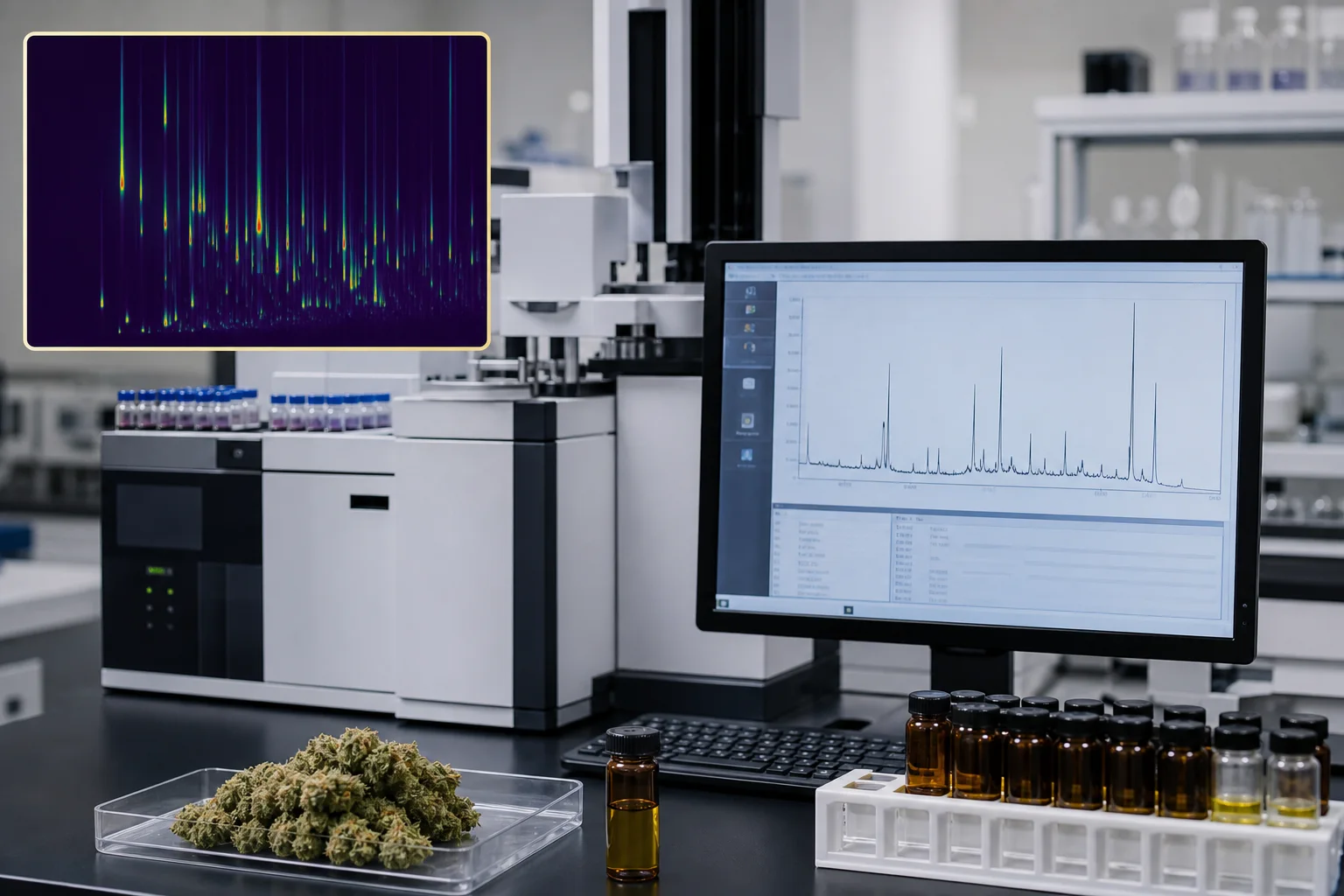
Laboratory evidence shows drying and storage change both the volatilome (terpenes) and cannabinoid profiles; use this hero image to ground the article’s central lab-based claims. Study conditions are controlled and illustrate mechanisms, not every farm outcome. Source: peer-reviewed analytical study of drying and storage effects. (See PubMed source.)
Introduction
Harvest day feels like the end of a long story. In reality it's the opening chapter of a new chemistry and microbiology story that keeps unfolding for weeks or months. Moisture moves, volatile oils evaporate or transform, acidic cannabinoids decarboxylate, microbes can grow or be controlled, and the packaging you choose changes the product's trajectory. This article lays out the evidence—what we know from recent lab work and Maine’s regulatory framework—so growers and small-batch post‑harvest processors can make informed post‑harvest choices without mistaking appearance for safety. (pubmed.ncbi.nlm.nih.gov)
How moisture moves after harvest
Freshly harvested cannabis flowers are living plant tissue with high water content. Once cut, water leaves in two main ways: surface evaporation from leaves and buds, and internal redistribution from wetter tissues (stems, fan leaves) toward drier tissues until a new internal equilibrium is reached. The rate of moisture loss depends on temperature, relative humidity (RH) and air movement; faster drying lowers water content quickly but can trap internal moisture pockets in dense buds, which raise local microbial risk.
Moisture content is not the same as water activity (aw). Two samples with similar percent moisture can have different aw depending on sugars, salts and matrix—aw predicts whether microbes can grow. That's why lab measurements for usable cannabis increasingly emphasize water activity for microbial-risk assessment rather than only percent moisture. Practical drying targets differ by cultivar and final form, and many growers monitor both RH in the drying space and the product's internal indicators (mass loss over time, or water-activity measurements) to avoid overdrying or leaving pockets that support mold. (pubmed.ncbi.nlm.nih.gov)
From a process standpoint, moisture movement continues during conditioning and early storage. A bud that feels dry on the outside can still be physiologically active for days; slow, controlled drying and conditioning let internal moisture equilibrate slowly and reduce the chance of hotspots where yeast and mold establish. Many curers target stable RH in the 58–65% range for jar conditioning (coupled with periodic jar burping) to strike that balance, but the optimal envelope depends on your drying method and the strain's bud density. (pubmed.ncbi.nlm.nih.gov)
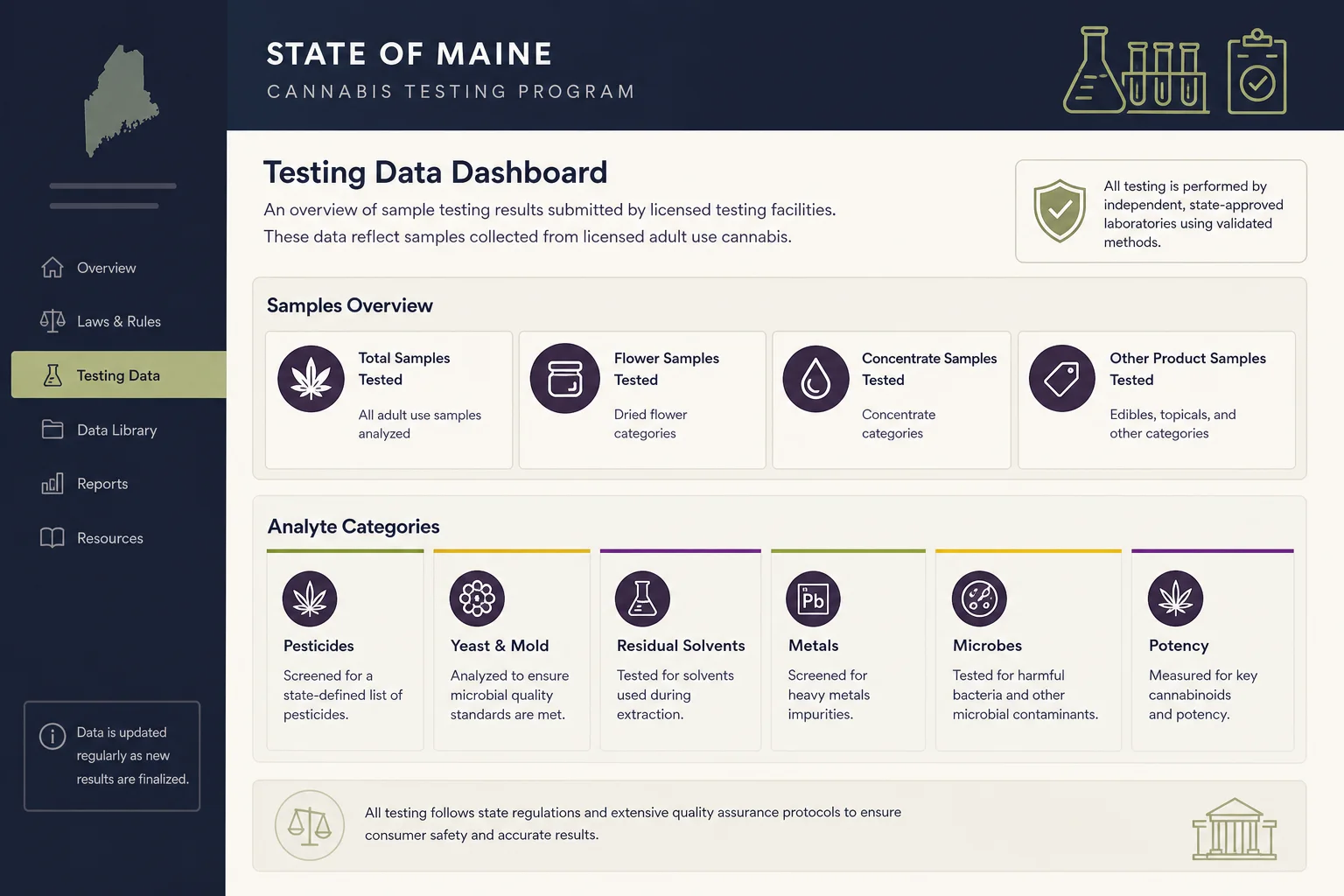
Maine OCP publishes adult-use testing data that define mandatory analyte categories and show aggregate fail rates; this visual helps explain regulatory checkpoints and data reporting limits. The dashboard represents submitted testing results and does not substitute for a COA of an individual sample. Source: Maine OCP testing data.
Research context: Adult Use Testing DataDrying methods and their chemical consequences
How you remove water matters chemically. Recent analytical work comparing freeze-drying, tray (forced-air) drying, and other approaches shows clear differences in both the volatilome (the terpene and volatile profile) and cannabinoids. Faster or hotter drying tends to drive off light, volatile terpenes first and can accelerate decarboxylation of acidic cannabinoids; cooler, slower methods better preserve fragile volatiles but can leave higher microbial risk if not controlled. (pubmed.ncbi.nlm.nih.gov)
That same 2024 study used multi-dimensional gas chromatography and HPLC to show that drying and subsequent storage conditions rewrite the aromatic fingerprint of an inflorescence and shift the measured cannabinoid ratios. For example, storage conditions that allow oxygen and light can promote the conversion of cannabinoid acids into their neutral counterparts—what some call “aging” of the cannabinoid profile—and may reduce the abundance of certain terpenes that define aroma and perceived effect. These are measurable, not just sensory, changes. (pubmed.ncbi.nlm.nih.gov)
In practice, that means your drying choice is a trade-off. If the goal is to retain the freshest terpene bouquet, aim for cooler, gentler drying and rapid transfer to low-oxygen, dark packaging. If the priority is speed and avoiding prolonged handling, faster drying in a controlled, filtered environment can be acceptable, but expect different terpene and cannabinoid outcomes. Document the method and conditions for each batch so you can interpret lab results and repeat processes that give desired outcomes.
Conditioning, moisture equilibration, and microbial risk
Conditioning is the period when moisture redistributes and some volatile compounds continue to evolve. Proper conditioning reduces chlorophyll-like “green” flavors, can mellow harshness, and allows delicate terpene balance to settle. But that slow timeframe is also when yeast and mold can establish if any section of the flower stays above safe aw thresholds. Because microbes reproduce locally, a single contaminated pocket can cause a product to fail mandatory yeast-and-mold testing even if most of the jar looks fine. (maine.gov)
Maine’s testing program explicitly categorizes yeast and mold with pass/fail thresholds and requires mandatory reporting of results and COAs for adult‑use sales. That regulatory structure matters for cultivators: a failed yeast & mold test removes the item from sale until remediation or retest procedures are completed under OCP rules. The Office of Cannabis Policy’s public data show that yeast & mold failures are a material category for usable cannabis and that test outcomes should feed back into drying and conditioning SOPs. (maine.gov)
From a hygienic perspective, control starts with the harvest window: trim in clean spaces, control dryer room RH and temperature, avoid over-handling, and monitor water activity. Use validated microbial-control strategies when a sample fails (remediation and retest rules are in OCP guidance) rather than relying on visual trimming to remove invisible spores or mycotoxins. The presence of spores or their toxic byproducts is not reliably gauged by sight or smell alone. (maine.gov)
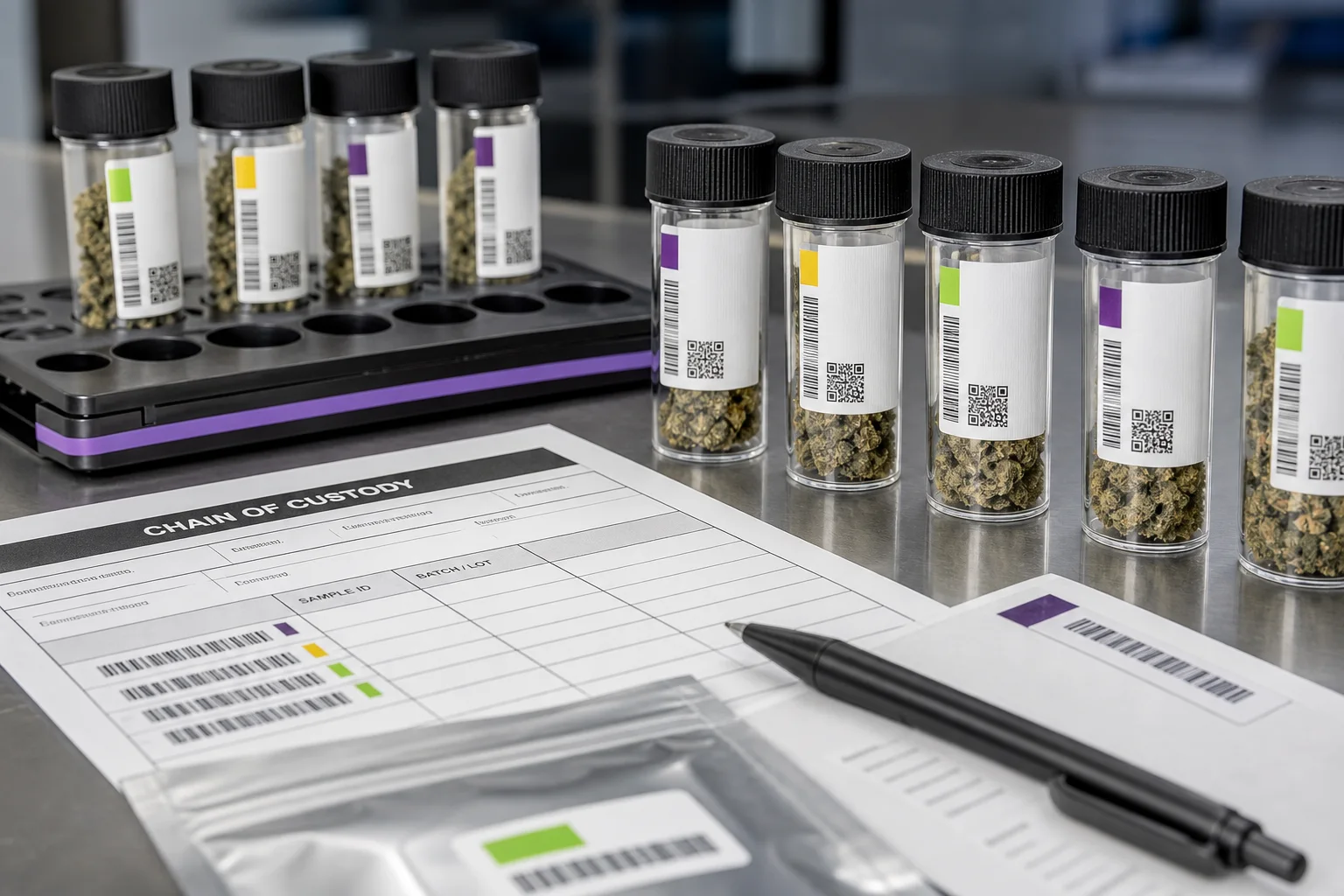
OCP’s medical testing report highlights onsite sample collection, testing, and the importance of traceability. This image teaches chain-of-custody practice and the distinction between a tested sample and the larger harvest. It does not show real sample identities or COAs. Source: OCP medical testing report.
Research context: OCP Fall 2023 Medical Testing ReportPackaging and storage: oxygen, light, and time
Once a product is dry and conditioned, packaging defines its trajectory. Oxygen, light, and temperature are the three environmental drivers of continued chemical change. Oxygen and light accelerate oxidation and decarboxylation reactions; temperature increases the vapor pressures of volatiles and raises reaction rates. Choosing an opaque, low‑oxygen barrier with appropriate headspace control helps keep acidic cannabinoids and terpenes closer to their conditioned profile for longer. The 2024 lab work even observed that storage container choice can promote conversion of acid cannabinoids into neutral forms. (pubmed.ncbi.nlm.nih.gov)
But packaging is not just chemistry; regulatory documentation matters. In Maine, every retail-ready adult‑use item is required to have a COA and the lab data (EDDs) are submitted to OCP within two business days. That means packaging and labeling must be tied to the batch testing protocol and traceability records that connect the jar on a shelf back to the tested sample and the cultivation/conditioning lot. Keep lot numbers, harvest dates, drying method notes, and package fill dates together so a COA can be matched to the product the consumer receives. (maine.gov)
Storage practices after packaging also matter: long shelf times at elevated temperature or with headspace oxygen will make older products chemically different from freshly packaged ones. For small-batch producers, consider shelf‑life testing on representative samples across intended storage times so your labels and consumer expectations align with measurable changes. Document those stability checks alongside your routine mandatory test COAs.
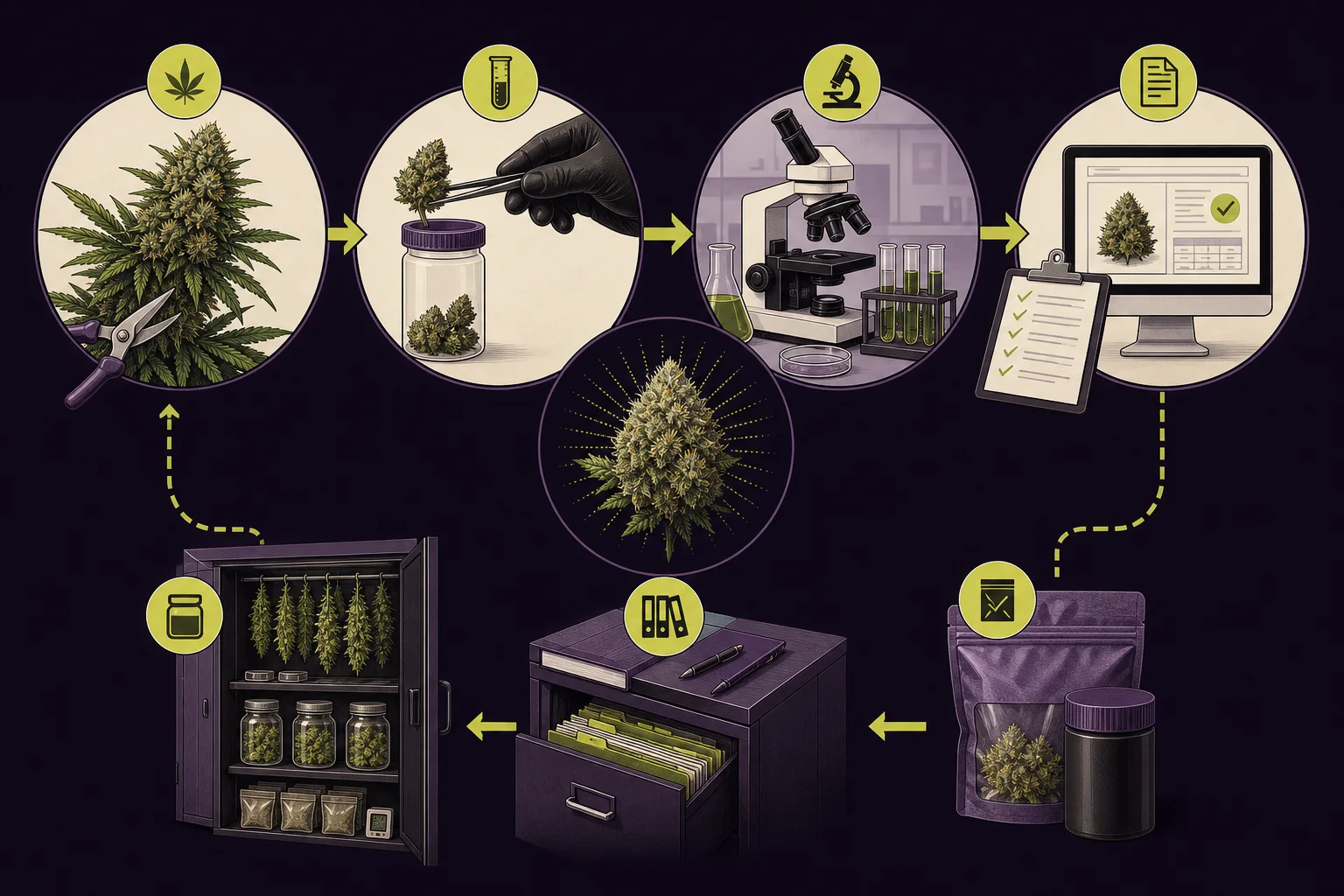
This explanatory diagram clarifies Maine’s rule-driven relationship between mandatory analytes, COAs, electronic data deliverables, and producer process records. It’s a schematic for education, not a legal instrument. Source: Maine OCP rules and guidance.
Research context: Adult Use Cannabis Program RulesBatch records, Certificates of Analysis, and Maine rules
In Maine the legal side of post‑harvest care is not optional. The Cannabis Legalization Act and OCP rules define required analyte categories—residual solvents, metals, yeast/mold and mycotoxins, harmful microbes, pesticides, and potency/homogeneity—and mandate lab reporting practices including COAs and EDDs. These are the hard checkpoints that separate an attractive product from a legally marketable one. For growers serving medical-program or adult‑use channels, integrating testing into post‑harvest record systems is a regulatory requirement and part of demonstrating chain of custody. (maine.gov)
A COA reflects the specific sample submitted for testing, not every jar from a harvest. Because sampling is a statistical act, strong recordkeeping is essential—note sample location within the population (which tent, which tray, which dry-batch); record the day/time and conditions of sampling; keep drying and conditioning logs tied to the batch number. Those records matter if you need to retest, remediate, or support a recall. Maine’s public testing data show overall fail rates and analyte breakdowns; use that public data to prioritize internal QA points—for many producers yeast & mold is a larger failure category in usable flower than pesticides or metals. (maine.gov)
Finally, familiarize yourself with retest and remediation rules before you start; OCP guidance documents outline when retesting is permitted and what remediation steps are allowed. Those limits influence decisions about investing in in‑house drying-room upgrades or working with a contract lab for rapid turnaround. (maine.gov)
Why appearance cannot certify safety
Looking at a bud is comforting—we read trichome density, color, and absence of visible mold as proxies for quality. But laboratories and regulators classify safety by analyte measures, not by how glossy a bud looks. Microscopic spores, small localized mold colonies, mycotoxins, residual pesticides, or heavy metals can all be present without obvious visual cues. That’s why a COA matters, and why a COA for one sample does not guarantee all jars from a harvest are free of the same risk. (maine.gov)
Maine’s dataset shows that fail rates do occur—yeast & mold and microbial failures are observed in usable cannabis submissions—and those results come despite visual inspection at multiple points. Additionally, regulatory labs test for mycotoxins and harmful microbes that are invisible to the naked eye; the FDA has also highlighted the reality of contaminants (pesticides, heavy metals, microbes) in commercial cannabis/CBD products and the need for robust testing and consumer awareness. Visual checks are necessary but insufficient. (maine.gov)
Because of sampling limitations and the possibility of localized contamination, the practical corollary is this: maintain conservative handling practices, establish batch-level QA checks, and be honest in records. If a lab flags a fail, OCP's approved remediation pathways outline permitted actions; trimming or relying on smell alone are not reliable remediation strategies. (maine.gov)
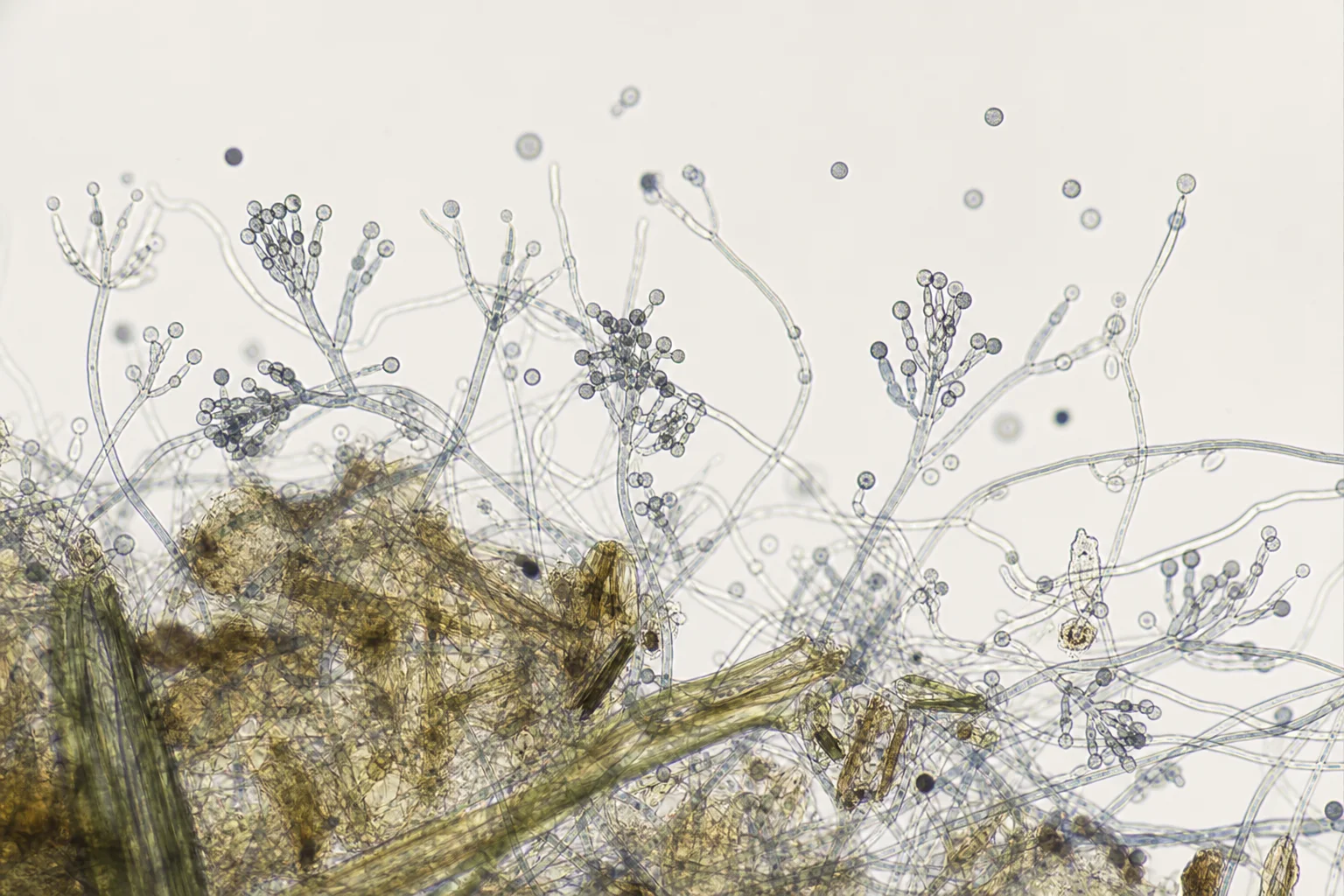
Microscopic views demonstrate that spores and small colonies can be invisible at the bud scale; CDC guidance on mold health underscores why lab tests are needed to detect microbiological hazards. This visual is educational and not diagnostic of any sample. Source: CDC mold information.
Research context: CDC: Mold — Health InformationPractical steps for small-batch growers in Maine
-
Log everything. Harvest date, room RH & temperature, drying method, mass at set intervals, jar fill date, and COA links. Keep sample IDs and lot numbers tight so a failed result can be traced. Maine’s testing rules expect that traceability. (maine.gov)
-
Target controlled drying, then measure water activity rather than just percent moisture where possible. If in-house aw measurement isn't available, establish repeatable mass-loss curves for each strain/density so you can reproduce outcomes. Cooler, slower drying tends to preserve volatile terpenes but this approach needs to be balanced with microbial safety through monitoring and hygienic practice. (pubmed.ncbi.nlm.nih.gov)
-
Use packaging that minimizes oxygen and blocks light for long storage, and manage headspace. If you intend multi‑month shelf life, validate that profile with periodic potency and terpene checks tied to storage conditions. Record those stability checks. (pubmed.ncbi.nlm.nih.gov)
-
Address any visual or laboratory‑detected issue with appropriate compliance-minded steps. Follow OCP remediation and retesting guidance and document corrective actions. Public test data show yeast & mold are an observed failure category—design drying and conditioning SOPs with that risk in mind. (maine.gov)
-
Communicate transparently. For medical-program participants and adult consumers, making COAs available and noting a product’s packaging date, batch, and storage instructions can help set expectations and build trust. Small-batch producers can use traceability and testing transparency as a quality hallmark while staying within Maine’s regulatory rules. (maine.gov)
Evidence limits and what remains uncertain
Lab studies often compare a handful of cultivars under controlled conditions; real-world drying rooms and strain variability add complexity. The 2024 volatilome work demonstrates mechanisms but under laboratory-controlled storage variables; your local microclimate and cultivar density will modulate outcomes. Maine’s public testing data report initial mandatory test results but exclude retests and R&D submissions, so aggregate fail rates are a conservative snapshot of regulated sales, not a comprehensive view of every crop. Interpret both lab studies and OCP data as tools to guide process improvements, not absolute predictions. (pubmed.ncbi.nlm.nih.gov)
Key takeaways
Questions this guide answers
Can a COA for one jar mean every jar in that harvest is safe?
No. A COA documents results for the specific submitted sample. Sampling is statistical and localized contamination can exist; good traceability and consistent processing reduce but do not remove that uncertainty.
Is smell a reliable indicator of terpene retention?
Smell gives sensory clues but cannot reveal pesticides, metals, microbes, or mycotoxins. Laboratory analysis provides the reliable record for those hazards.
Are visual signs of mold the same as failing yeast & mold tests?
Visible mold is a strong warning, but many microbial hazards are microscopic. Labs measure yeast & mold counts and mycotoxins that are not visible to the naked eye.
How long should I cure before packaging?
There’s no universal cure time. Optimal cure depends on strain density and drying method. Use repeatable SOPs, measure weight or water activity, and validate with lab checks to find the ideal window.
If a sample fails testing, what should I do?
Follow OCP’s remediation and retesting guidance, document the failure and corrective actions, and retest according to rules. Records are essential for compliance and traceability.
Educational information only. Cannabis affects people differently and this is not medical advice.