
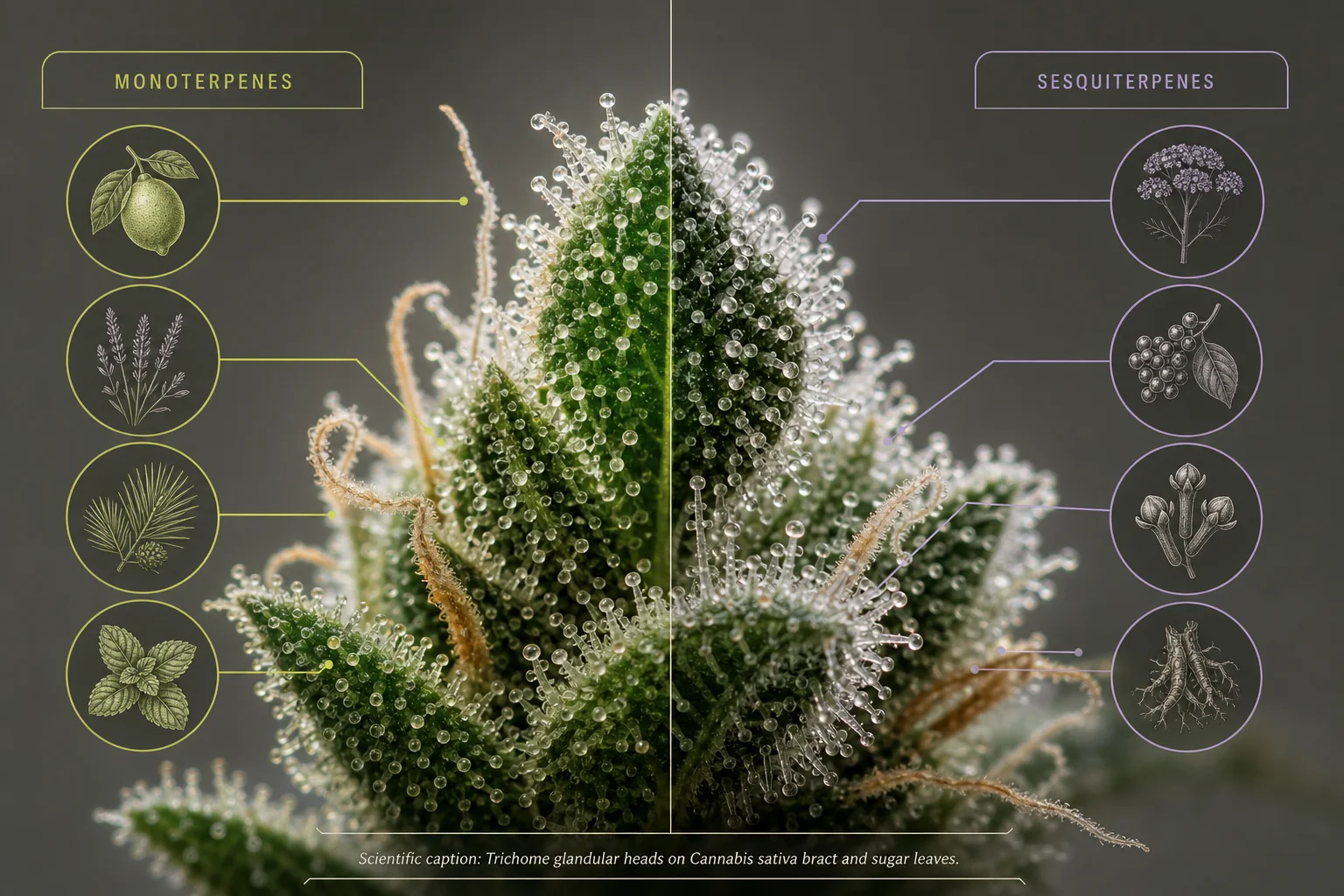
Hero image: botanical macro showing glandular trichomes (the plant structures that produce many terpenes) with an explanatory overlay that distinguishes major terpene classes. This documents the plant source of the volatile compounds measured in terpene panels, but does not connect any visual to subjective effects or claims. Source: gene networks and terpene biosynthesis literature.
Quick note before we begin
This guide keeps one clear promise: the lab measured numbers on a Certificate of Analysis (COA) are facts about chemistry; any claim that those numbers alone predict how a person will feel is speculation. The plant makes dozens to hundreds of volatile compounds; labs report a subset, with uncertainty. Use panels as data, not fate. (pmc.ncbi.nlm.nih.gov)
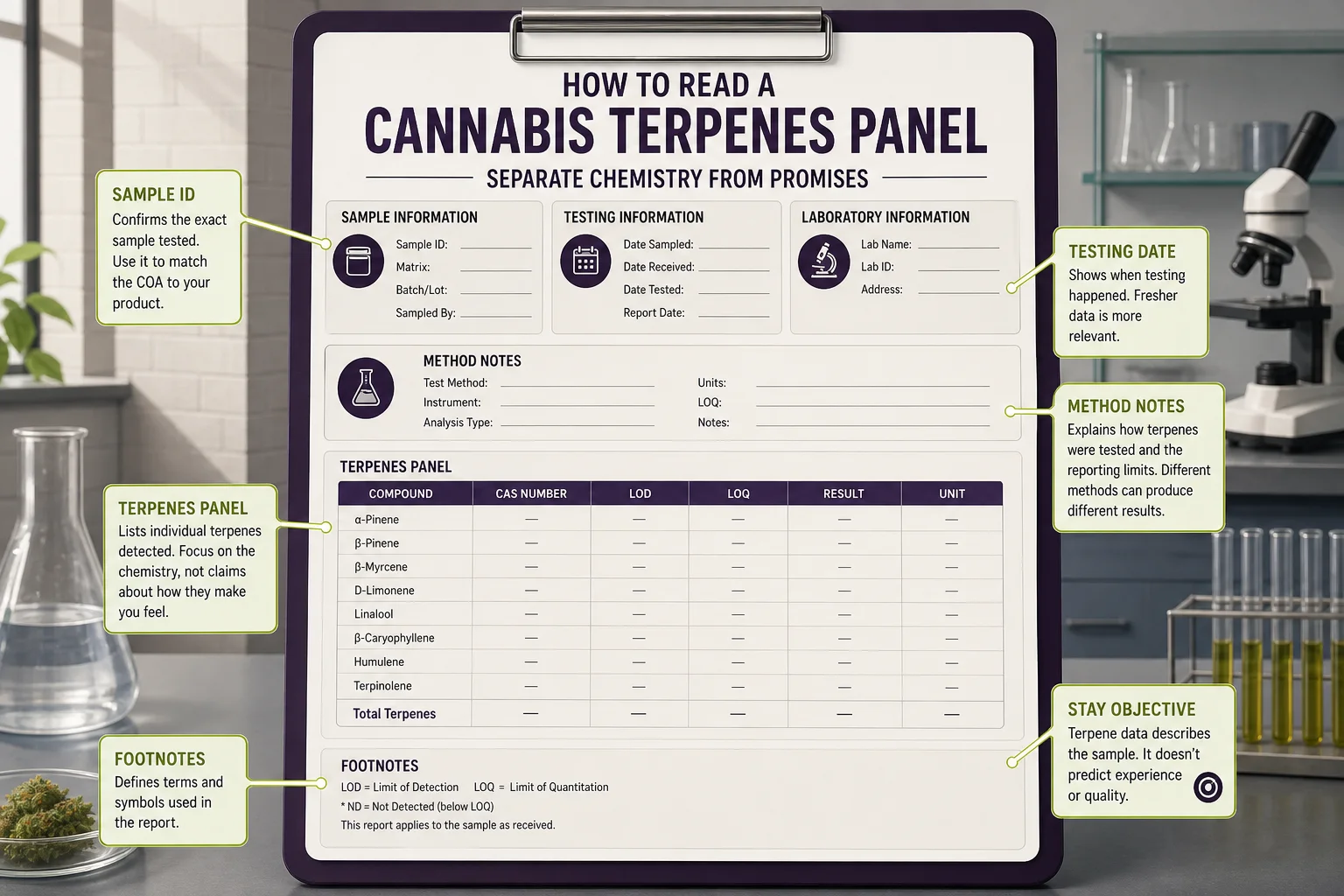
An annotated COA excerpt showing where terpene results, testing date, method notes, and batch identifiers appear. This brief teaches which COA elements matter for interpreting representativeness. It does not show real lab values or brand names.
Research context: Understanding Cannabis Testing Requirements & Results in Maine (OCP)What a terpene panel actually measures
Laboratories typically report concentrations (often in micrograms or milligrams per gram) of volatile terpenes and sometimes other volatiles found in cannabis flower or extracts. These are chemical identifications and quantitative estimates produced by chromatography and mass spectrometry workflows; they are not sensory scores or clinical outcomes. The measurable list is limited by the lab’s target analyte list, the extraction and analysis method, and the instrument calibration materials used. (pubmed.ncbi.nlm.nih.gov)
Terpenes themselves are a chemically diverse family produced by plant metabolic pathways (monoterpenes, sesquiterpenes, etc.). Cannabis also contains non-terpenoid volatiles — sulfur compounds, esters, aldehydes and others — that contribute a lot to the final aroma but are sometimes omitted or grouped under “other volatiles” in reports. Recent chemistry work shows terpenes are only part of the aroma puzzle. (pubmed.ncbi.nlm.nih.gov)
The numbers you see on a COA are subject to measurement uncertainty. Reference materials and laboratory quality programs (including NIST tools and inter-lab exercises) are improving consistency, but variation between labs and methods remains a real thing. Think of the panel like a weather station reading: useful, but with confidence intervals. (nist.gov)
Why sensory descriptions ("citrus", "diesel", "earthy") are helpful — and also misleading
Sensory descriptors are human shorthand. They’re helpful for cataloging and communicating what a sample smelled like during a tasting session or when the analyst opened the jar. But the mapping from a chemical number to a sensory word is not one-to-one. Multiple compounds can produce similar notes, and a single compound’s perceptual impact depends on concentration, odor threshold, and mixture effects. In short: the same terpene percentage can smell different in two batches. (pubmed.ncbi.nlm.nih.gov)
Marketing or menu labels that equate a phrase like “pinene-forward” with a predictable subjective experience cross the line from description into unsupported promise. The chemistry tells you what is present and roughly how much; it does not reliably predict personal response, timing, or functional effects. Consider aroma language an invitation to explore, not a guarantee. (pubmed.ncbi.nlm.nih.gov)
Good sensory work couples blind panels, trained assessors, and replicated chemical measurement. When a COA or producer report integrates both chemical and controlled sensory data, it’s more informative — but still constrained by sampling and by how representative the tested sample is of the whole batch. (pubmed.ncbi.nlm.nih.gov)
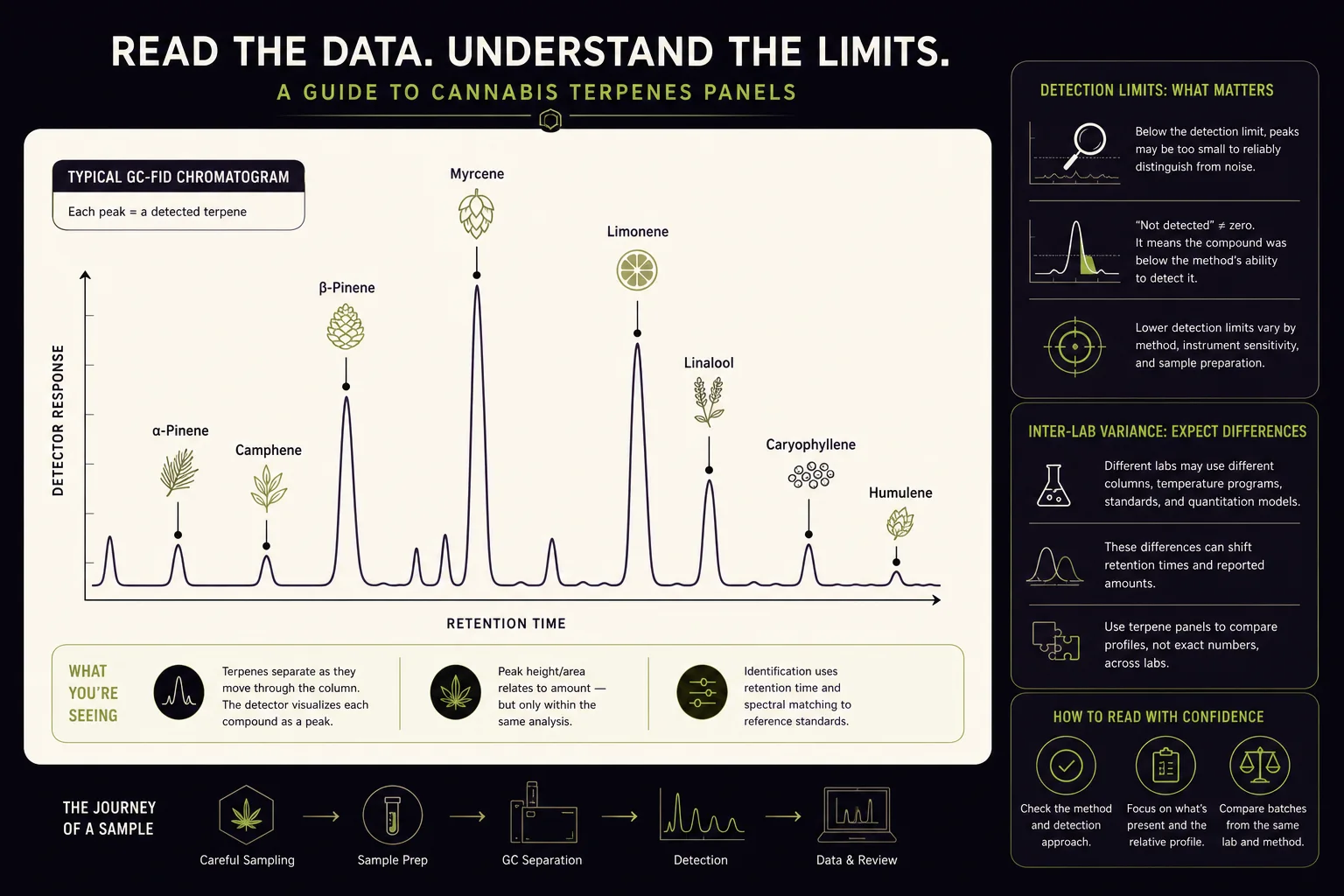
Explanatory GC chromatogram that teaches how chromatographic peaks are identified and why method choices affect reported terpene concentrations. It is illustrative, not a real lab printout, and does not include readable numeric values.
Research context: Fit-for-purpose analytics for cannabis: identification, quantification, and standardization of cannabinoids, flavonoids and terpenesLab methods, standards, and why numbers vary
A terpene panel’s result depends on several method choices: the extraction solvent and temperature, whether analyses are run by gas or liquid chromatography, the column and detector used, and the lab’s calibration standards. These choices change recovery rates and detection limits and therefore the reported concentrations. Two labs testing the same jar can return different-but-overlapping numbers. (pubmed.ncbi.nlm.nih.gov)
Standards and reference materials are the industry’s corrective: they give labs something consistent to compare to. NIST’s hemp reference material (RM 8210) and inter-lab programs help labs validate methods and quantify uncertainty so results become more comparable over time. That doesn’t eliminate variance, but it narrows it and makes COAs more trustworthy as part of a decision-making toolkit. (nist.gov)
Sampling is another large source of error. A single plant, a single room, or one jar can contain pockets of differently developed trichomes; terpene concentration can vary within a single plant and between buds. A lab result is only as representative as the sample collected and prepared for testing. Maine’s OCP guidance explains how COAs are created and stresses the importance of matching the tested item type to what a consumer is considering. (maine.gov)
Batch context: harvest timing, drying, curing, and storage change the panel
Terpenes are volatile — they evaporate or chemically transform with heat, oxygen, and over time. Drying, curing, trimming method, and storage conditions (temperature, humidity, light, container) change both the measured amounts and the sensory experience. A freshly cured jar may smell bright and citrusy; the same batch months later can be flat or darker in tone. That means a COA for a freshly tested sample is most useful when paired with a clear testing date and batch ID. (pubmed.ncbi.nlm.nih.gov)
Post-harvest chemistry also includes chemical rearrangements: some terpenes oxidize, others evaporate, and trace sulfur compounds can form which punch above their weight in aroma. Because labs measure the chemical reality at a moment in time, keep a mental timestamp: when was the sample taken relative to harvest and retail date? Maine OCP materials encourage licensees to include testing and report dates on COAs for this reason. (maine.gov)
For growers and small-batch producers, the practical takeaway is simple: maintaining consistent post-harvest protocols, logging them, and testing iteratively makes it easier to observe how drying and storage choices move the numbers — and the smells — so desired sensory profiles can be approached more reliably. (pubmed.ncbi.nlm.nih.gov)
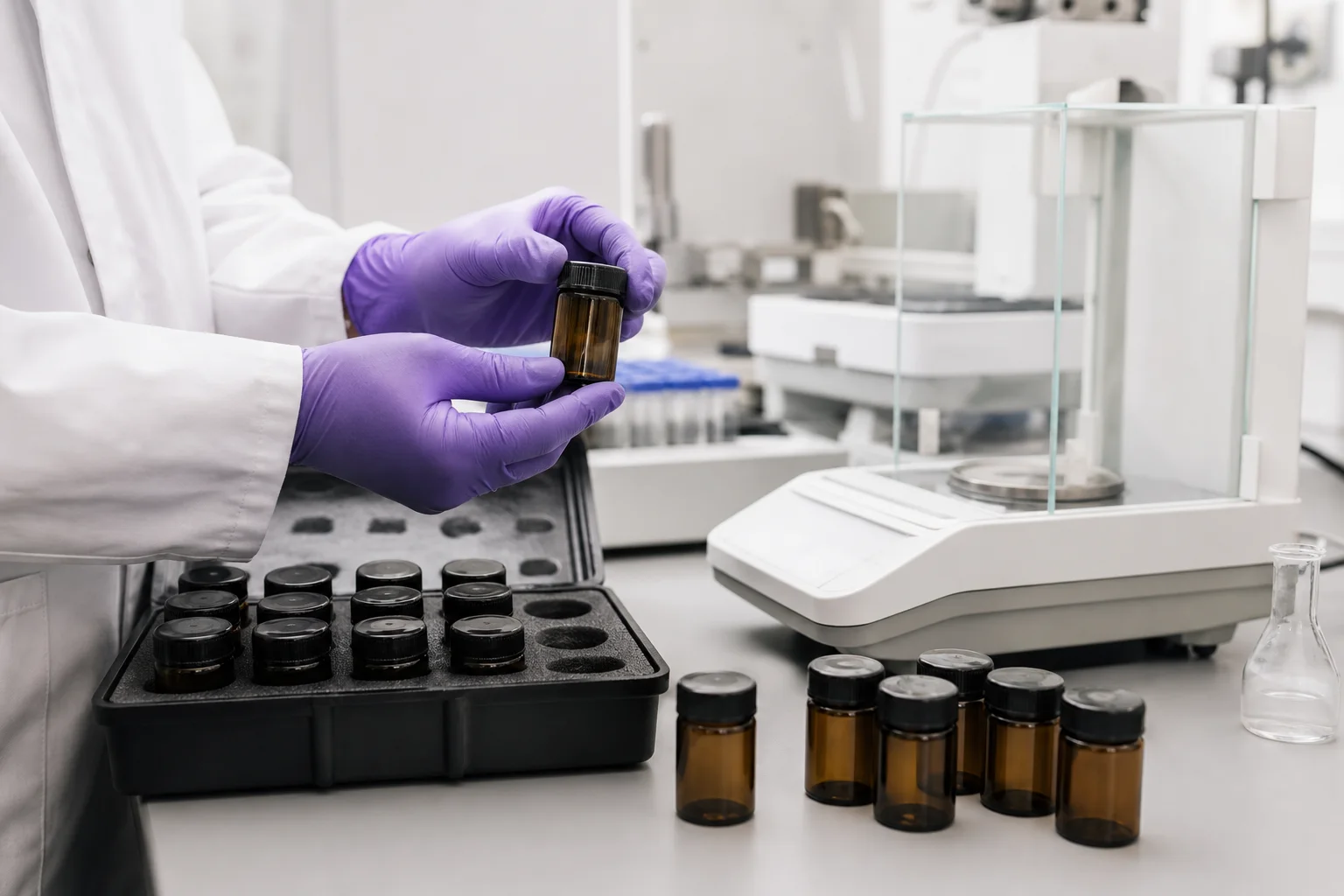
Documentary photo-style image of a technician handling NIST hemp reference material (or similar reference material) in a quality assurance workflow. This connects the reader to the role of reference materials in making terpene panels more comparable across labs. It does not show any actionable or proprietary details.
Research context: NIST’s New Hemp Reference Material Will Help Ensure Accurate Cannabis MeasurementsHow Maine rules make COAs useful — and where the medical program differs
Maine’s adult-use program requires mandatory testing (potency, contaminants, homogeneity, etc.) and the reporting of results to licensees and OCP. That framework makes COAs a standard transparency tool for adult-use products in Maine. The OCP guidance explains what to look for on a COA and notes that medical cannabis in Maine is not mandatorily tested; some medical providers and caregivers voluntarily test and provide COAs on request. That regulatory difference matters when you’re comparing a labeled adult-use product to a medical product in Maine: one is held to mandatory, public reporting; the other may not be. (maine.gov)
Regulatory testing focuses primarily on safety analytes and potency; listing every possible volatile is rare. If terpene specifics matter to a purchaser, requesting voluntary terpene reports or the lab’s EDD (electronic data deliverable) is an option. OCP guidance and certification rules also clarify acceptable analyte lists and lab certification expectations — useful context for assessing a COA’s scope. (maine.gov)
Regulatory COAs increase baseline safety and comparability, but they don’t change the underlying chemistry challenges. A mandated potency or pesticides test does not, by itself, create a sensory or subjective-effect guarantee. COAs are most useful when combined with provenance, lab certification, and on-farm records. (maine.gov)
Interpreting a COA responsibly — a practical reading order
-
Verify sample identity and date. Confirm the COA’s tested item matches the product you hold (batch number, harvest date, product type) and note the testing date. A mismatch or old date reduces representativeness. (maine.gov)
-
Look at method notes and analyte lists. If the COA provides method (GC-MS, GC-FID, LC-MS) and calibration materials, that’s a sign of transparent reporting. Understand which terpenes were targeted — absence of a terpene can mean it wasn’t in the target list, not that it was definitively zero. (pubmed.ncbi.nlm.nih.gov)
-
Consider uncertainty and lab credentials. If a COA shows limits of detection, quantitation, or method uncertainty, use that to judge how definitive small numbers are. If the lab participates in inter-lab proficiency programs or uses NIST reference materials, that increases confidence. (nist.gov)
-
Match chemistry to sensory context — cautiously. If a terpene is present at or above its known odor threshold, it may contribute noticeably to aroma; if it’s orders of magnitude below threshold, it likely won’t. But remember synergy: low-concentration molecules such as certain sulfur compounds can exert strong sensory effects. The chemistry provides clues — not certainties. (pubmed.ncbi.nlm.nih.gov)
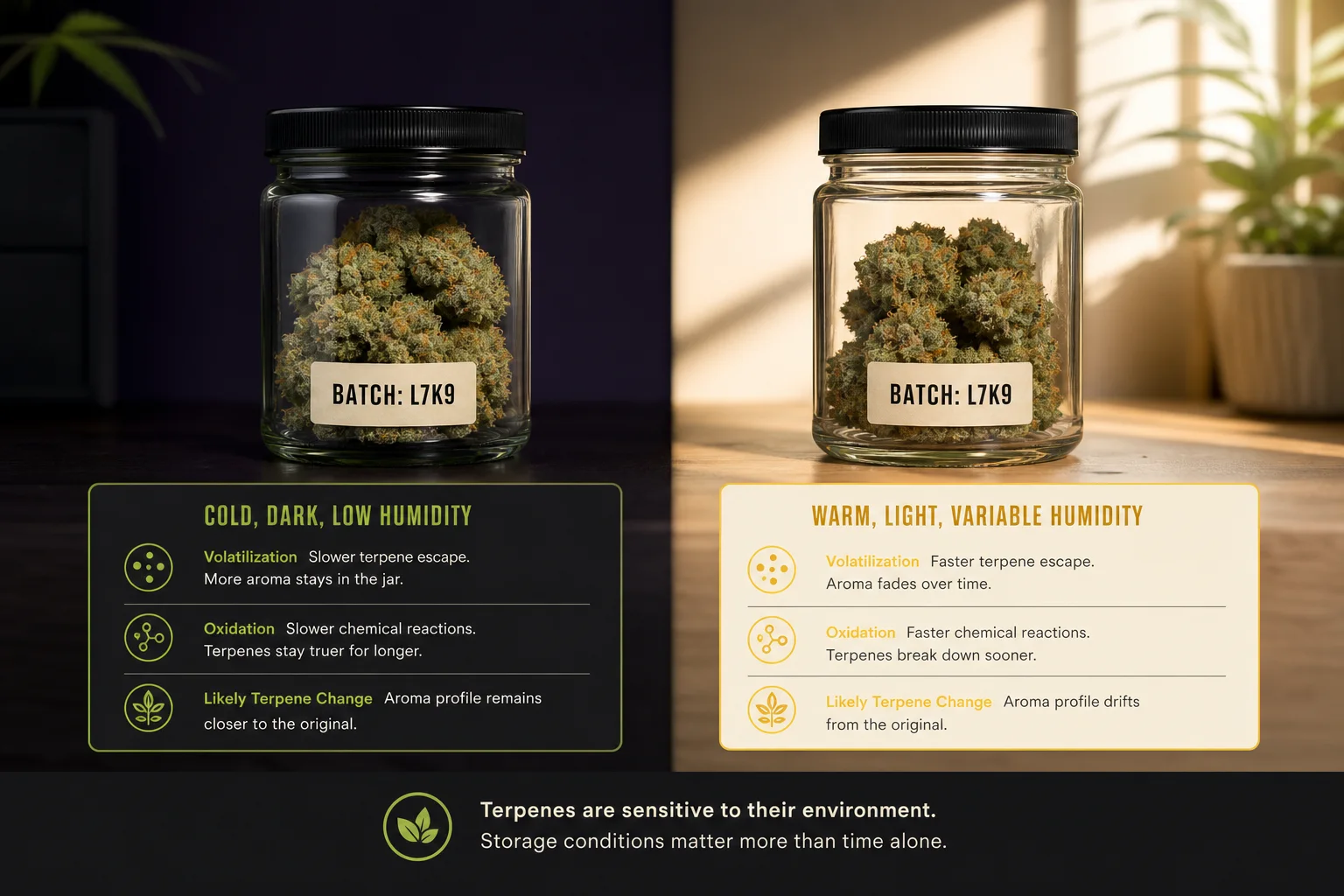
A controlled comparative illustration showing two identical harvest lots stored under different conditions and the likely directional changes in volatile profiles (e.g., loss of light, increased oxidation). This visual links post-harvest practices to panel changes without implying user outcomes.
Research context: Minor, Nonterpenoid Volatile Compounds Drive the Aroma Differences of Exotic CannabisPractical steps for growers, caregivers, and informed consumers
Growers: building repeatable post-harvest processes and keeping clear records is a common approach. Many growers invest in trusted lab partners and inquire about method details, calibration standards, and participation in quality assurance exercises. Small-batch producers often keep a chain-of-custody file that links the harvested lot to the COA to increase traceability. (pubmed.ncbi.nlm.nih.gov)
Caregivers and consumers: consider reviewing the COA before relying on a label’s sensory or effect language. If a medical caregiver voluntarily arranges testing, request the COA and check whether the tested sample matches what would be provided. For adult-use purchases in Maine, COAs are part of the licensing and reporting regime and are generally accessible. (maine.gov)
Everyone: regard terpene panels as informative chemistry snapshots. Use them to learn — about varietal tendencies, about how drying changes aroma, and about lab-to-lab comparability — but avoid interpreting a terpene percentage or a marketing phrase as an assured outcome. That mindset helps keep decisions evidence-informed rather than expectation-driven. (pubmed.ncbi.nlm.nih.gov)
Evidence limits and a brief research look-forward
Analytical methods and reference materials are improving, and inter-lab programs are expanding. Still, several research gaps matter: standardized sensory wheels for cannabis are nascent; minor volatiles are underreported; and method harmonization across labs is incomplete. Ongoing work from analytical researchers and standards bodies aims to close these gaps, but for now, responsible interpretation requires combining COA chemistry with sensory checks, batch context, and good record-keeping. (pubmed.ncbi.nlm.nih.gov)
Key takeaways
- COAs are measurements, not guarantees: they report measured compounds with method-based uncertainty. (pubmed.ncbi.nlm.nih.gov)
- Terpenes are important aroma contributors but are not the whole story; minor volatiles matter. (pubmed.ncbi.nlm.nih.gov)
- Maine adult-use products must be tested and reported; medical products may not be — ask for COAs. (maine.gov)
- Lab method, sampling, and post-harvest handling change the panel; date and batch context matter. (nist.gov)
- Combine COAs with provenance and sensory checks; avoid turning chemistry into effect promises. (pubmed.ncbi.nlm.nih.gov)
Questions this guide answers
What exactly is listed on a terpene panel?
A terpene panel lists identified volatile compounds (often terpenes) and their measured concentrations using chromatographic methods. It’s a chemical inventory, not a sensory score. ([pubmed.ncbi.nlm.nih.gov](https://pubmed.ncbi.nlm.nih.gov/42565826/))
Can a terpene panel predict how I will feel?
No. Panels describe chemistry; they don’t reliably predict subjective effects. Individual response, dose, and context matter. Use the panel as data, not a promise. ([pubmed.ncbi.nlm.nih.gov](https://pubmed.ncbi.nlm.nih.gov/37901519/))
Should medical cannabis in Maine have a COA?
Medical cannabis in Maine is not subject to mandatory testing. Some caregivers and dispensaries voluntarily test; ask for a COA to verify testing and analytes. ([maine.gov](https://www.maine.gov/dafs/ocp/sites/maine.gov.dafs.ocp/files/2023-10/Understanding%20Maine%20Cannabis%20Testing%20Requirements%20%26%20Results.pdf))
Why do two labs report different terpene numbers for the same sample?
Differences arise from sampling, extraction and instrument methods, calibration standards, and lab-specific recovery rates. Reference materials and proficiency programs help narrow these differences. ([nist.gov](https://www.nist.gov/news-events/news/2024/07/nists-new-hemp-reference-material-will-help-ensure-accurate-cannabis))
If I’m a grower, what’s the single most useful step to make COAs more meaningful?
Keep repeatable post-harvest protocols (drying, curing, storage) and link tested samples to clear batch IDs and dates. That makes results actionable across batches. ([pubmed.ncbi.nlm.nih.gov](https://pubmed.ncbi.nlm.nih.gov/42565826/))
Educational information only. Cannabis affects people differently and this is not medical advice.