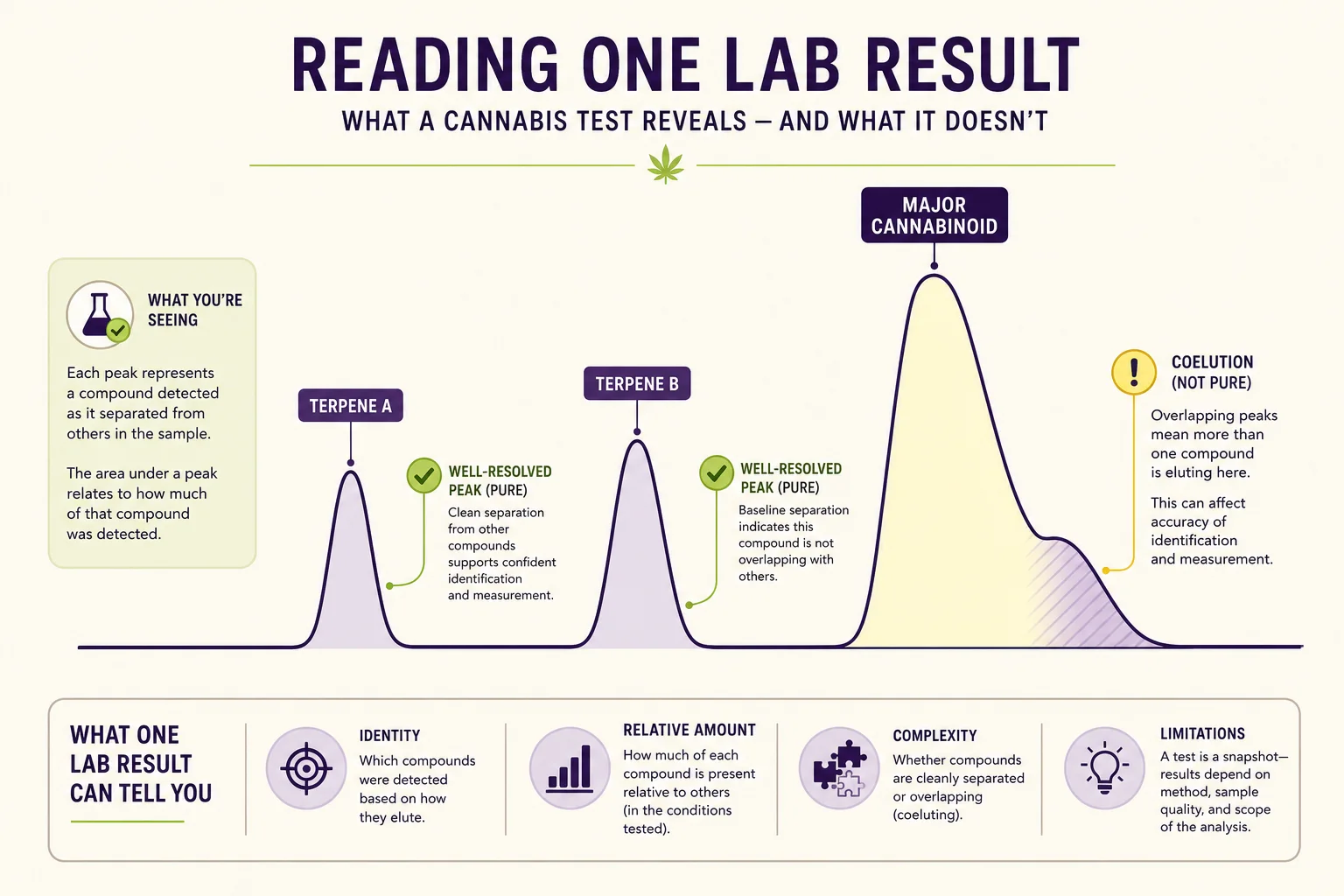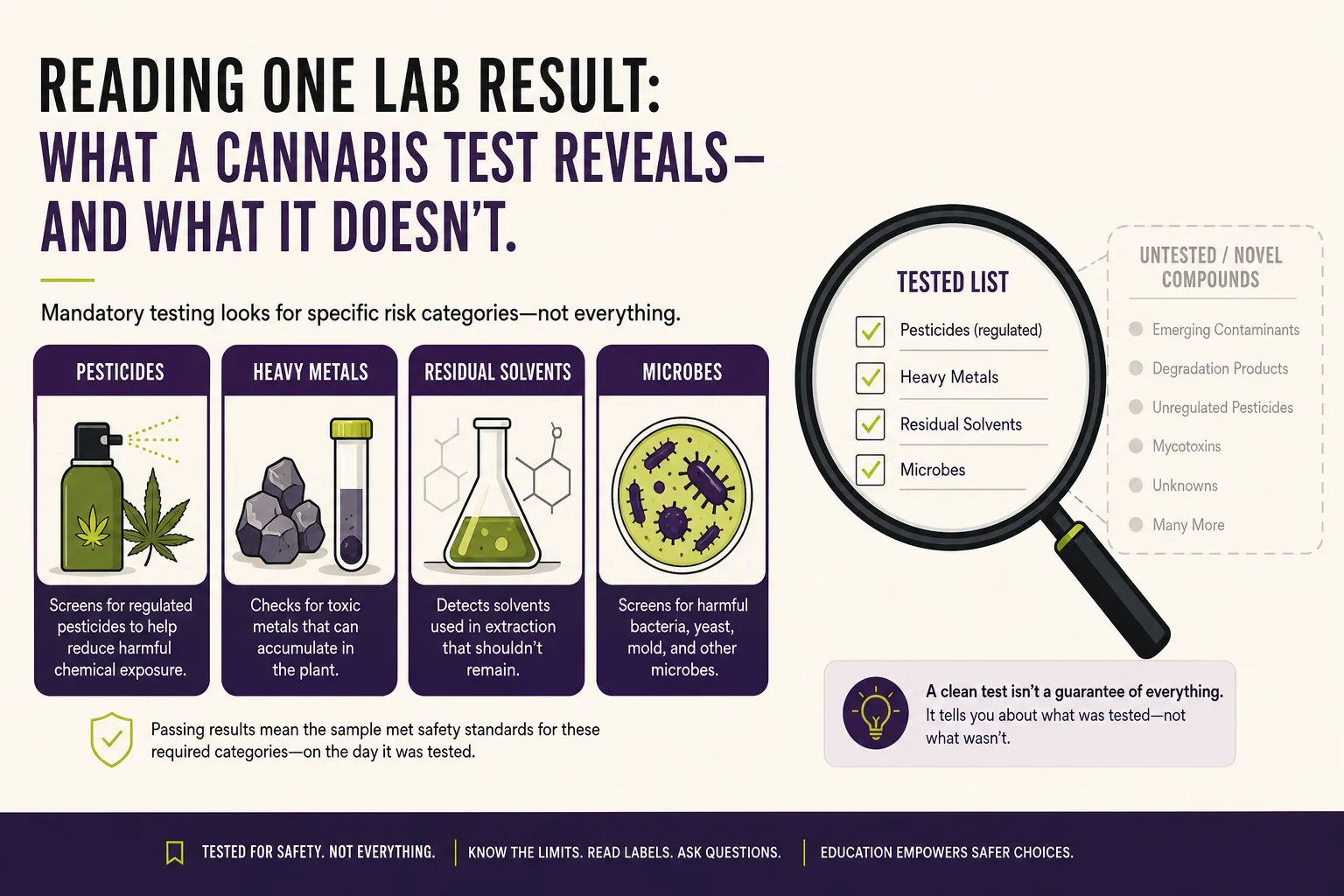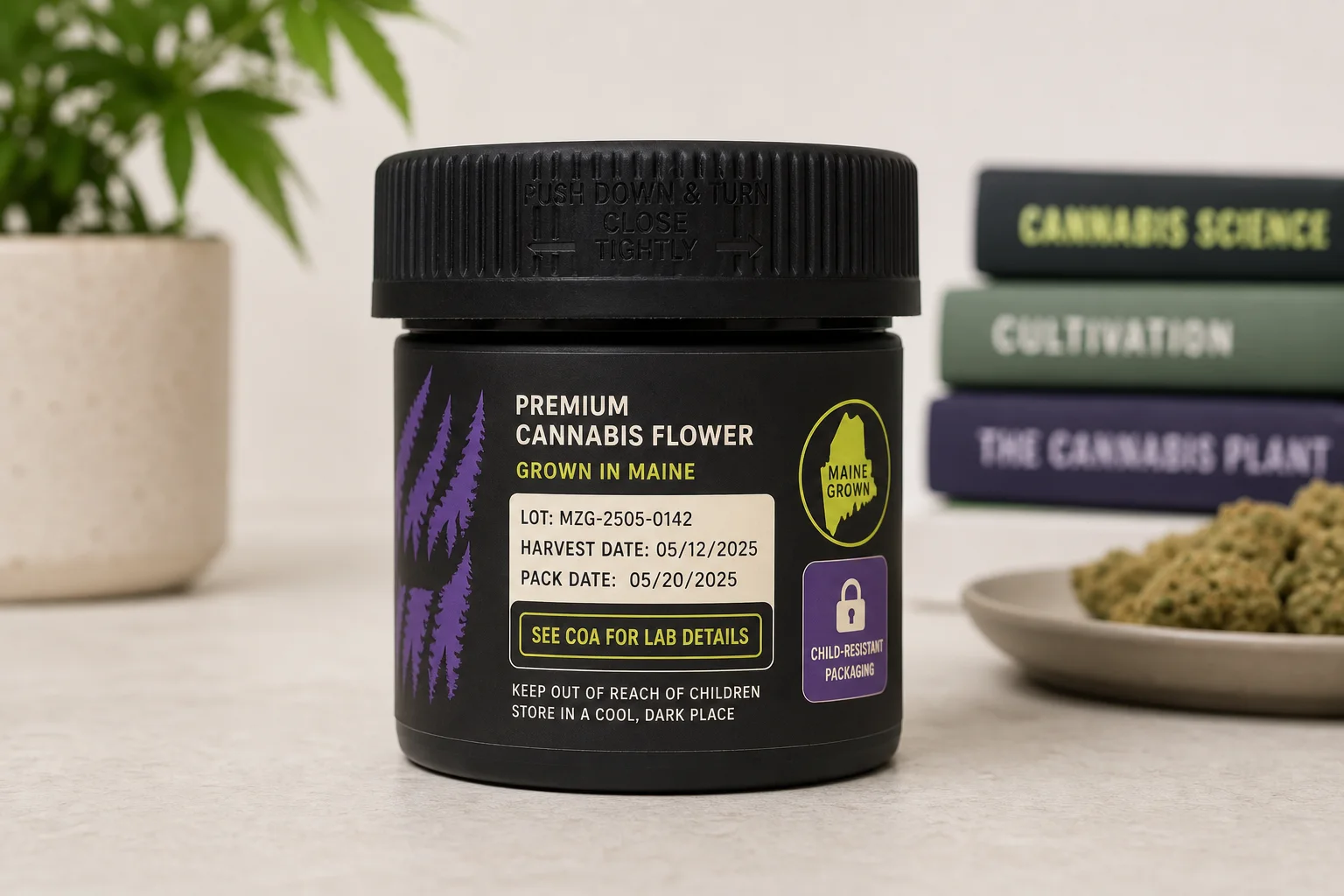
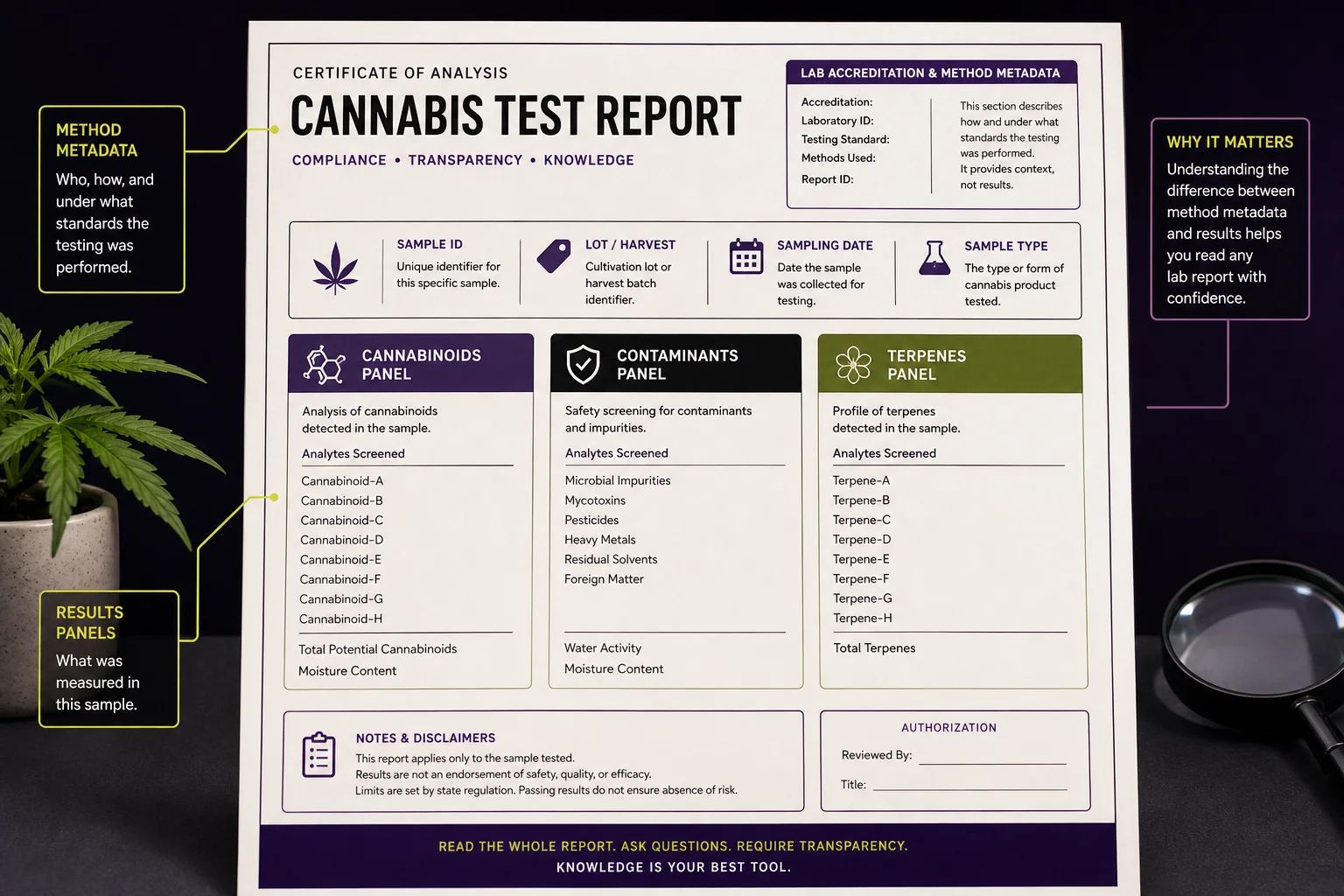
A clear COA layout teaches consumers which parts of a lab report to read first: identification, sampling notes, methods, and the separate panels for cannabinoids vs contaminants. This is a conceptual diagram (no real numbers) and cannot substitute for checking the live COA and method details. Source: Maine OCP testing rules and mandatory analyte guidance.
A quick primer: what's in a Certificate of Analysis (COA)
When a licensed grower or processor delivers a batch for mandatory testing in Maine, the laboratory returns a Certificate of Analysis (COA): a document that lists the sample identity, when and how the sample was tested, and measured values for cannabinoids, contaminants, solvents, microbial impurities, and sometimes terpenes and moisture. The Office of Cannabis Policy (OCP) in Maine requires testing and sets the framework for which analytes must be measured and reported, and which products must be tested before sale. (www11.maine.gov)
A COA is not one single number but a bundle of method metadata plus results: sample ID, collection date, lab name and certification, the analytical method used, and measurement units. That method metadata is crucial: two laboratories may both report “THC” yet have used different extraction methods, instruments, or reference standards. High-quality COAs make these differences visible; poor COAs bury them. For Maine consumers, a clear lab identification and references to the testing rules that apply to adult-use and medical products help interpret a report. (www11.maine.gov)
A practical way to think about a COA is as a signed snapshot of a single sample analyzed by a single laboratory at a single point in time. It tells you a lot about that sampled portion — and nothing definitive about every other ounce from the same harvest unless sampling was designed to be representative.
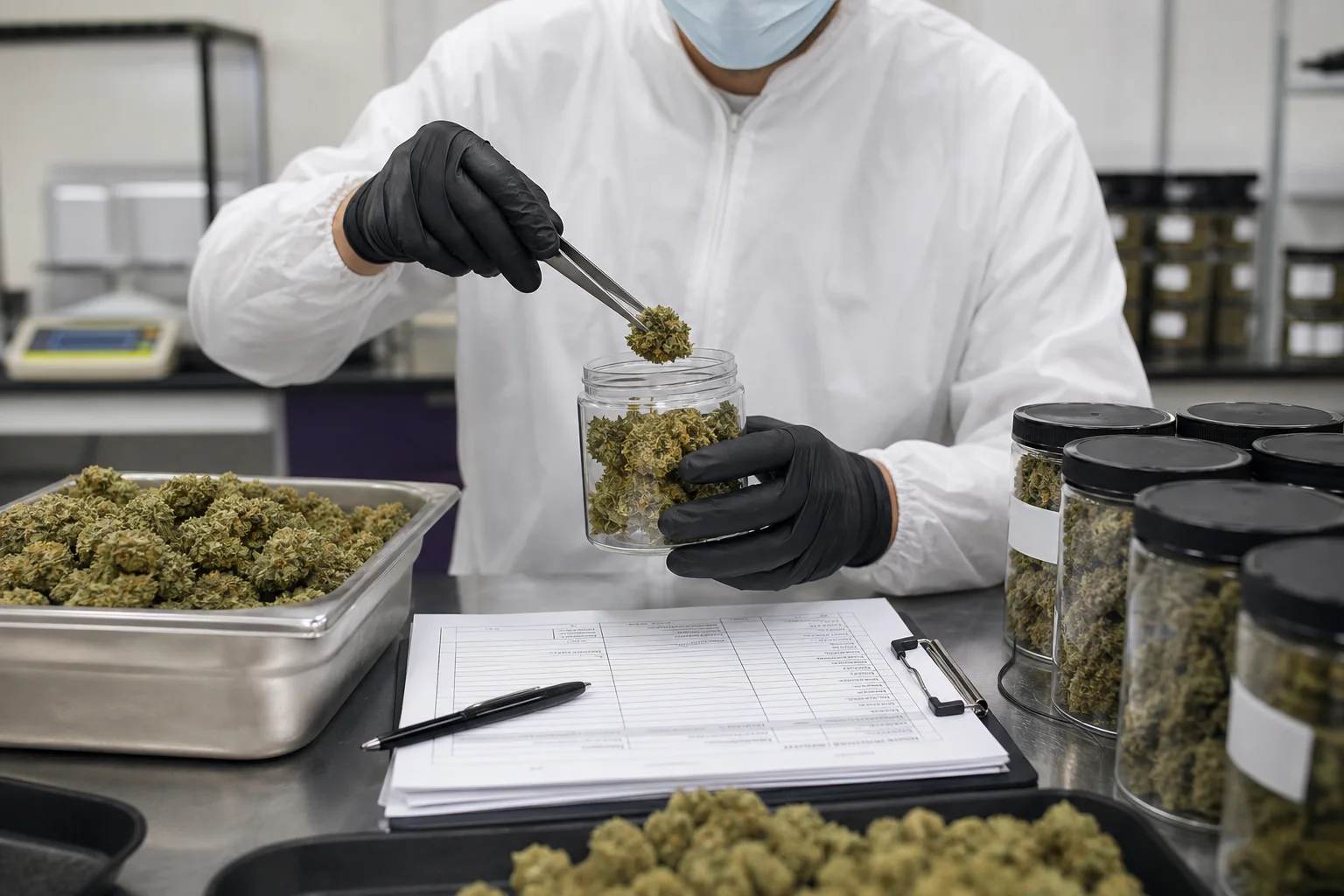
Sampling practice matters: this image documents a composite sampling workflow and the paperwork that links a sample to a lot. It illustrates why one nugget is not the same as a batch. Photo-style documentary image; does not show analytic results. Source: Maine OCP guidance on testing and sampling.
Research context: Adult Use Cannabis Program Rules | Office of Cannabis PolicyWhat cannabinoid percentages mean — and why they wobble
Most consumers first look to the cannabinoid panel (Δ9‑THC, THCa, CBD, CBDa, and other cannabinoids). Laboratories commonly measure cannabinoids by chromatography (HPLC, UHPLC, or GC with derivatization), and results are reported as mass fractions (percent or mg/g). Those numbers are real measurements, but they come with uncertainty: sample preparation, instrument calibration, analyst technique, and even the plant matrix (oils, sugars, resins) influence results. NIST’s interlaboratory programs and reference materials demonstrate that between-lab variability exists even for major cannabinoids, and that measurement uncertainty grows for minor cannabinoids near the limits of detection. ()
Questions this guide answers
Does a COA mean a product is 'safe'?
No. A COA reports what was measured in a tested sample. It helps identify some hazards but only for the analytes tested and the sampled portion. Packaging, storage, access control, and untested compounds are outside its scope. ([maine.gov](https://www.maine.gov/dafs/ocp/resources/guidance-documents/mandatory-testing))
Why do THC numbers differ between labs?
Differences can stem from sampling, extraction, instrument calibration, and reported uncertainty. NIST interlaboratory exercises show measurable variability across methods and labs. Compare method notes and LOQs to interpret differences. ([nvlpubs.nist.gov](https://nvlpubs.nist.gov/nistpubs/ir/2024/NIST.IR.8519.pdf))
Can terpene results predict aroma or effects?
No. Terpenes describe volatile chemistry present when the sample was tested. Drying, curing and storage alter terpene profiles; personal sensory response varies widely. Use terpene data as descriptive metadata. ([nist.gov](https://www.nist.gov/programs-projects/nist-tools-cannabis-laboratory-quality-assurance))
What if I have an acute reaction after use?
For urgent concerns call your poison center at 1-800-222-1222 or use webPOISONCONTROL. Poison Control resources show edible and inhalation exposures are common reasons for calls. ([poison.org](https://www.poison.org/webpoisoncontrol-data-analysis-dashboard))
Educational information only. Cannabis affects people differently and this is not medical advice.