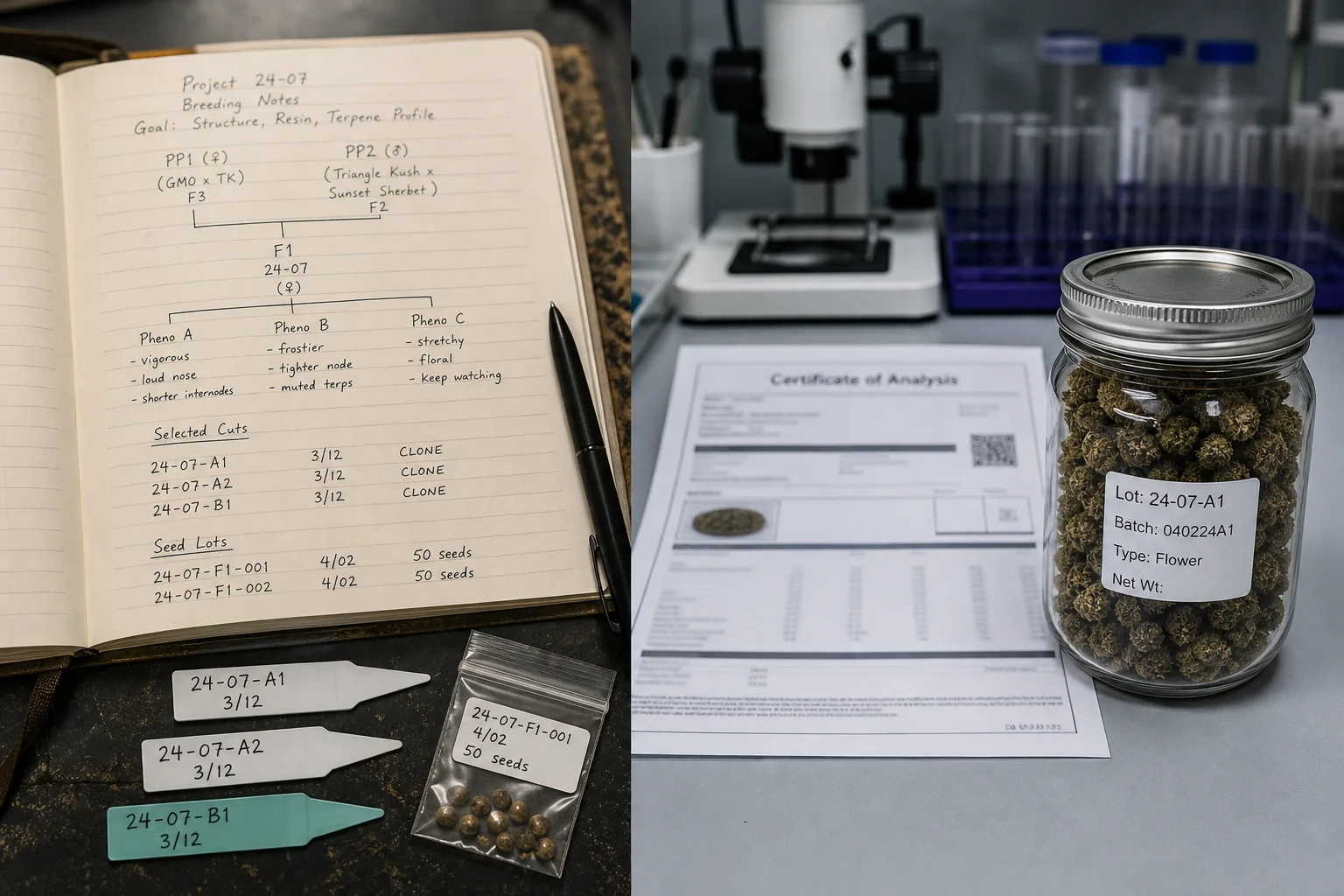
This composite documentary-style image shows the three kinds of evidence discussed in the article — breeder lineage records, batch-level lab data (COA), and tagged harvested flower. It teaches readers to compare these evidence types; it does not imply uniform chemistry across batches. Limit: readable numeric values on the COA should be blurred to avoid displaying specific test results. Source: Maine OCP guidance on testing and rules.
Why do two bags labeled with the same strain name sometimes feel different, smell different, or show different test results? The short answer: a name points at history, not a definitive predictor. This article unpacks what a strain name actually represents, how genetics, cultivation and testing contribute different kinds of evidence, and how adults in Maine’s medical and adult-use systems can read those signals more clearly.
1) What a "strain name" actually is — label, not destiny
A strain name (sometimes called a cultivar or trade name) is primarily an identifier created by a breeder, seed company, or marketplace. It can signal a lineage or a set of breeding choices — which parents were used, which traits were selected — but it does not legally or biologically freeze a plant’s chemistry across time and place. Two plants carrying the same name can carry different chemotypes (ratios of cannabinoids and terpenes) if their genetics, growing conditions, or post-harvest handling differ. Evidence from genetic and chemical studies shows that names are an imperfect proxy for a plant’s molecular profile. (pubmed.ncbi.nlm.nih.gov)
Because names travel through nurseries, cuttings, and informal exchanges, they can be reassigned, misspelled, or applied inconsistently. What matters for a particular consumer or patient is the combination of name plus current, batch-level information — not the name alone.
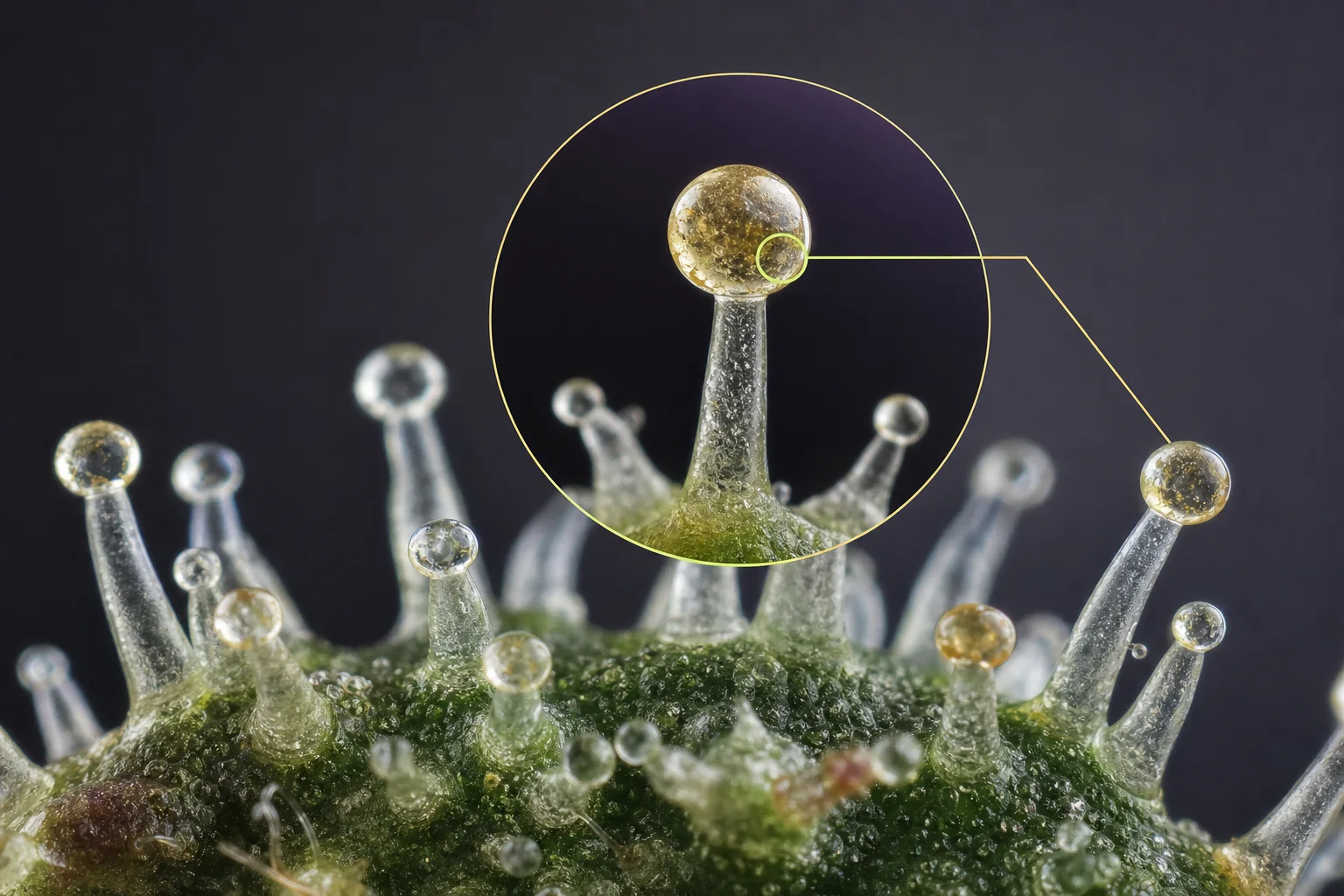
Macro botanical image emphasizing trichome density and gland heads, which produce terpenes and cannabinoids. Useful to show why garden conditions influence chemical expression; limits: cannot identify precise terpene composition from the photograph alone. Source: PubMed review on terpenes and terpene synthases.
Research context: The Cannabis Terpenes - review2) Breeder lineage and genetics — the historical backbone
Breeders create names to record deliberate crosses and selections. A pedigree gives useful clues: parentage can indicate likely chemotype ranges and growth traits. Modern genetic research shows cultivar groups share gene variants that influence cannabinoid and terpene pathways, but those genes express differently depending on environment and management. In other words, genotype sets potential; environment and care shape outcome. (pubmed.ncbi.nlm.nih.gov)
High-quality breeders document crossing history, stability of selected traits, and whether a line has been stabilized (i.e., made consistent through many generations). For adults seeking predictability, a documented lineage plus clonal propagation (cuttings from a mother plant) typically offers more repeatability than seed-grown populations, which can segregate traits across offspring.
Genetic testing can validate whether two plants labeled the same are closely related, but genetic identity does not translate automatically to identical chemistry or effects. That’s why lineage is an important starting point but not the final word.
3) Batch data and laboratory testing — what science can and can’t tell you
Laboratory test results (COAs — Certificates of Analysis) provide the most concrete, immediate evidence about a specific lot: cannabinoid percentages, terpene profiles, and contaminant screens. In Maine, adult-use testing data and reporting rules require certified labs to submit results to OCP and to the licensee, helping buyers and clinicians check what’s actually in a product lot. Those public reporting systems increase transparency but still describe a single batch at a single point in time. (maine.gov)
Laboratory methods are powerful but have limits. Labs measure concentrations under particular extraction and instrument conditions and may report limits of detection. Terpene profiles can shift with drying, curing, and storage; cannabinoids change when heated (decarboxylation) or over long storage times. Also, labs typically report values as percentages or milligrams per gram — useful for comparing batches — but they do not, and cannot, predict how an individual will subjectively respond. (pubmed.ncbi.nlm.nih.gov)
Read COAs closely: look for batch identifiers that match the product you have, the date tested, and whether the lab is certified under Maine’s rules. OCP guidance documents describe required testing categories and what results to expect; understanding that regime gives context to any COA you see. (maine.gov)
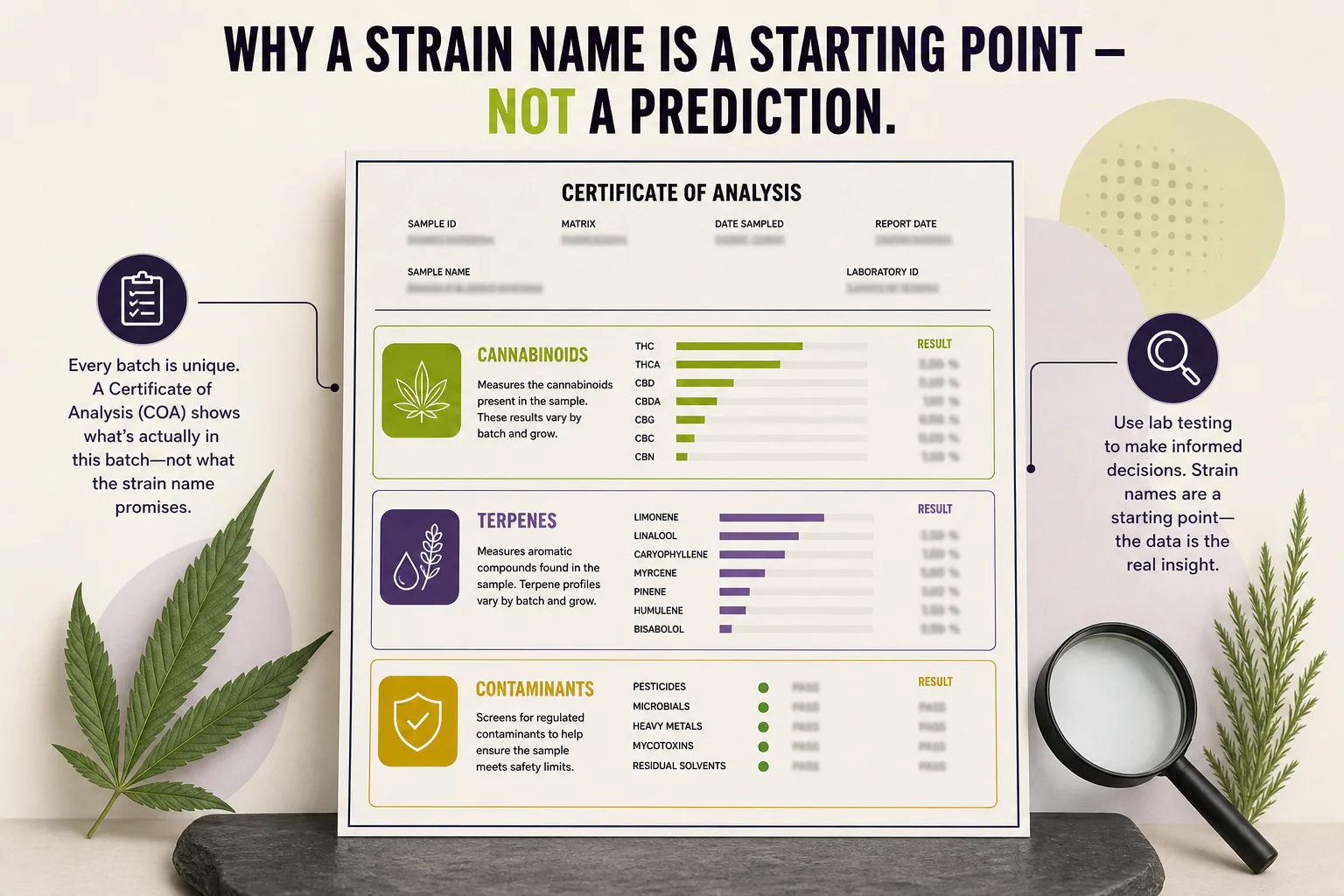
A visual guide to the sections you’ll find on a COA: cannabinoids, terpenes, and contaminant screens. This teaches readers the structure and what to match to a lot ID; limit: values are blurred to avoid implying specific test results. Source: Maine OCP testing guidance and adult-use testing data policy.
Research context: Adult Use Testing Data | Office of Cannabis Policy4) Garden observation and cultivation context — the local modifier
Where and how a plant is grown — light, temperature swings, nutrient programs, pest pressure, trimming choices and drying/curing schedules — has major effects on the flower you buy. Growers call this the "garden context" or terroir. Terpenes, the aromatic molecules people often use to categorize strain experiences, are especially sensitive to environmental factors and trichome development. Recent metabolomic and terpene-synthase research shows that different selections express different terpene synthase genes and that expression varies with microclimate and plant stressors. That makes on-farm records valuable evidence when you want to know why a batch smells or behaves differently than expected. (pubmed.ncbi.nlm.nih.gov)
For small-batch producers and medical caregivers, keeping clear garden notes tied to batch IDs — mother plant, clone/seed origin, grow-room conditions, harvest dates, drying and curing steps — creates evidence consumers can use to judge repeatability. Those observational records are not laboratory chemistry, but they bridge the gap between a breeder’s name and a lot’s COA.
5) Individual experience — human variability matters
Two people can use the same lab-tested batch and report different subjective effects. Why? Biological variables (age, body composition, prior exposure, tolerance), concurrent medications, mood, and context of use all influence subjective outcomes. The Centers for Disease Control emphasizes that cannabis affects the brain and body in multiple ways and that individual risks and responses vary. That’s why it’s important not to equate a chemical profile with a single, definitive subjective response. (cdc.gov)
Because effects are personal, the most reliable approach combines objective information (lineage, batch COA, garden notes) with cautious, self-aware experimentation and documentation of one’s own responses. For medical program participants this generally also means coordinating with a clinician or program guidance as appropriate; for adult-use customers, it means using label and COA data to make more informed choices.
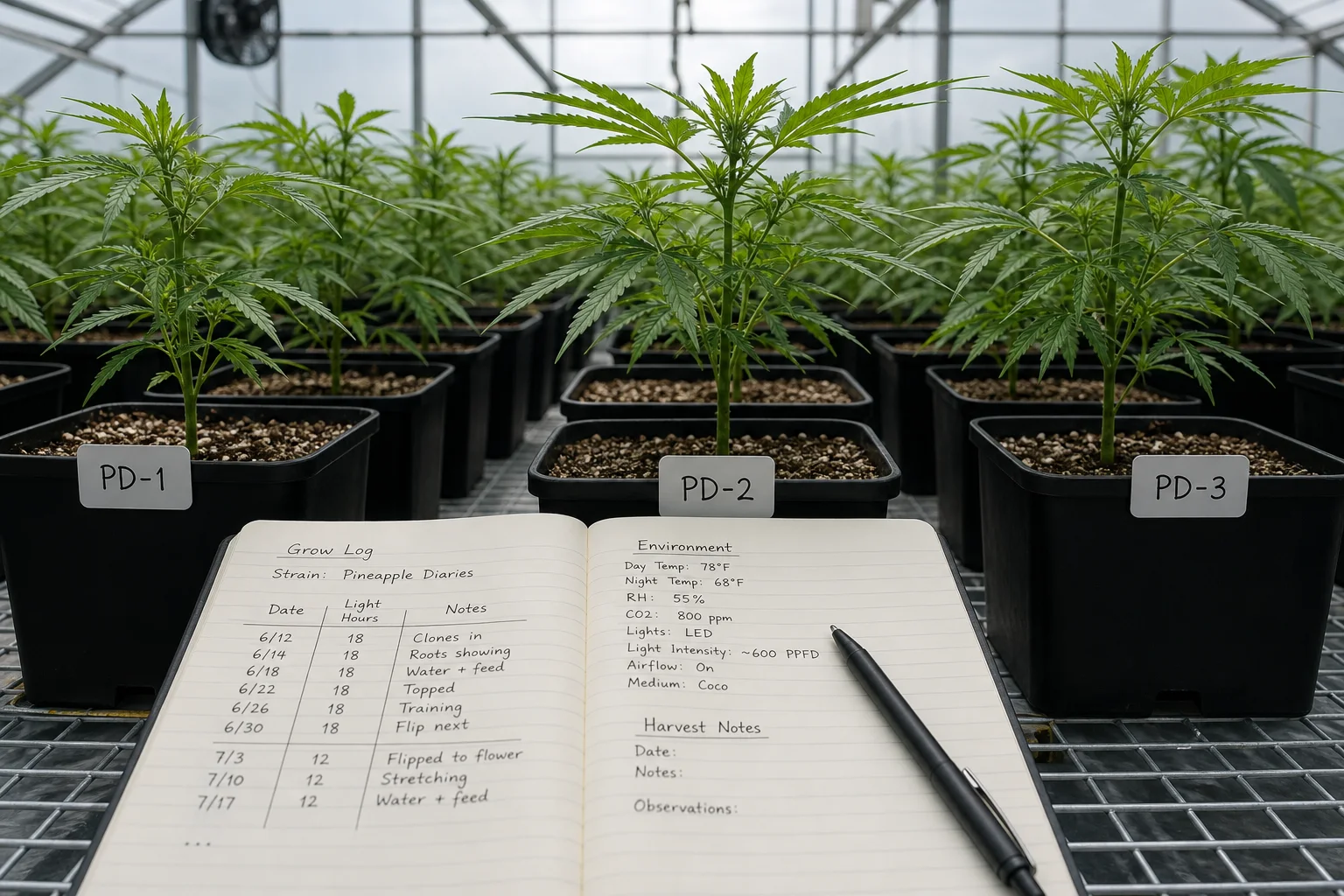
Illustrates 'garden notes' — mother/clone labels and a grow-room log tied to a batch ID. Shows how cultivation records connect breeder lineage to a specific COA. Limit: does not show a specific Mainezilla garden record. Source: PubMed terpene variability and Maine OCP guidance on testing.
Research context: Terpene Synthases and Terpene Variation in Cannabis sativa6) Reading labels in Maine — what the law and OCP require
Maine’s medical program is governed by statute and rule, and adult-use labeling and testing have their own requirements. The Office of Cannabis Policy publishes rules, guidance and an open-data feed of adult-use testing results so that adults and clinicians can verify lot-level information. For adult-use products Maine also mandates a visible universal symbol to identify THC-containing products; while that symbol communicates nothing about chemistry, it’s an important safety and regulatory marker on packaging. (www1.maine.gov)
Practical label-reading steps: confirm the product’s batch or lot number matches the COA; check the date tested; scan cannabinoid and terpene listings (and pay attention to detection limits); and review contaminant screens. If a label lists only a strain name but no batch-identifying test, consider the name a historical clue rather than current proof of chemistry. OCP’s consumer materials explain how to interpret testing reports and which laboratories are certified in Maine. (maine.gov)
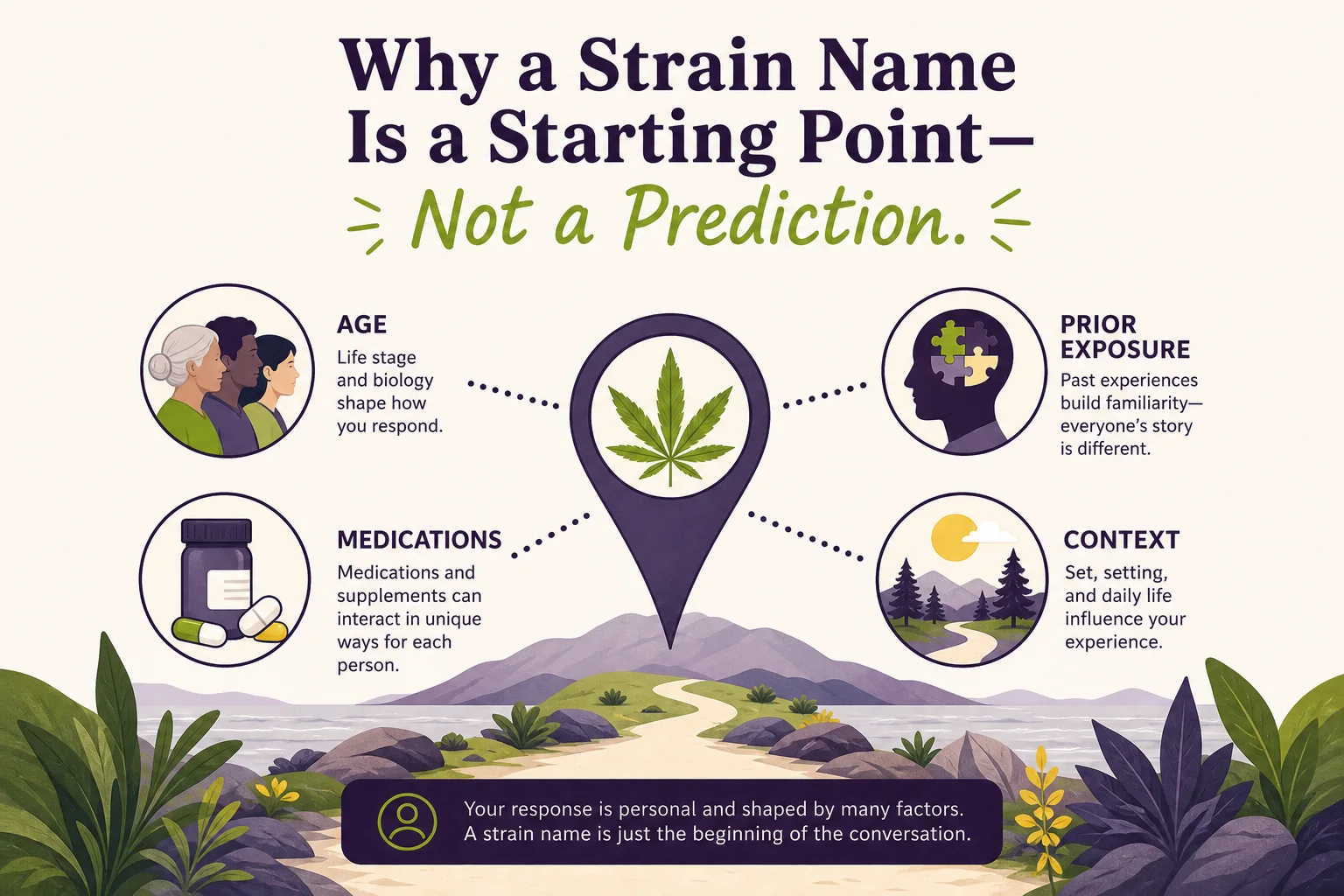
A clear, non-prescriptive reminder that chemistry isn’t the only factor: personal biology and context shape outcomes. This visual connects label/COA literacy to safer, cautious use. Limit: does not give dosing or medical advice. Source: CDC public health guidance on cannabis effects.
Research context: Cannabis Health Effects | Cannabis and Public Health | CDC7) Putting it all together — a practical checklist
When a name matters to you (clinical considerations, repeated preference, or curiosity), use this checklist:
- Verify: Confirm the lot/batch ID on the product and find the matching COA from a Maine-certified lab. (maine.gov)
- Compare lineage: Ask the supplier or dispensary for breeder/seed company information and whether the lot is clonal or seed-grown. Genetic lineage gives historical context but does not ensure identical chemistry. (pubmed.ncbi.nlm.nih.gov)
- Read the COA: Look at cannabinoids, terpenes, and contaminant screens. Note the test date. Remember that COAs describe the tested batch at the time of testing. (maine.gov)
- Check garden notes: For small-batch producers or caregivers, see if harvest, drying, and storage records are available. These records often explain why terpene profiles look the way they do. (pubmed.ncbi.nlm.nih.gov)
- Log your response: Keep a short personal log (dose, time, context, subjective effects) linked to the batch ID. This creates personal evidence about your responses and patterns over time. Refer to CDC guidance when weighing potential risks. (cdc.gov)
These steps help you move beyond a name and toward a repeatable, evidence-based understanding of a specific product or batch.
Evidence limits and where uncertainty remains
Research into cannabis genetics, terpene biosynthesis and how environment shapes chemistry is active and growing. While genetic markers and terpene synthase gene families are increasingly well described, translating that knowledge into deterministic predictions about an individual batch’s subjective effects remains out of reach. Laboratory testing gives robust lot-specific data but is a snapshot; post-test storage and consumer handling change chemistry over time. Consumer safety information from public health agencies (CDC, poison control) helps identify risk factors and patterns but cannot predict individual outcomes. (pubmed.ncbi.nlm.nih.gov)
Finally, Maine’s medical and adult-use systems overlap in some tools (lab COAs, OCP guidance), but program rules and labeling requirements differ—most notably around the universal symbol and some packaging rules—so always check whether a product is sold through the medical program or adult-use channels and which rules apply. (www1.maine.gov)
Key takeaways and next steps appear below, followed by a short FAQ and the sources used for this article.
Questions this guide answers
If two products have the same strain name, are they the same?
Not necessarily. The same name can be applied to plants with different genetics, grown in different places or handled differently after harvest. Compare the batch or lot-level COA and, if available, garden or breeder notes to see what’s really similar.
What is a COA and how does it help?
A Certificate of Analysis (COA) is a lab report that lists cannabinoids, terpenes and contaminant screens for a specific batch. In Maine, certified labs report COAs to licensees and to OCP; a COA tied to the product’s lot number is the best objective evidence of that batch’s chemistry.
Can lab tests predict my personal experience?
No. Lab values describe chemistry, not subjective response. Personal factors — tolerance, body chemistry, mood, and concurrent medications — change how someone experiences a product.
Do Maine medical and adult-use labels follow the same rules?
They overlap but are not identical. Maine’s OCP sets testing and reporting standards; adult-use packages must display Maine’s universal symbol for THC-containing products. Medical program materials and statute are available from OCP for program-specific rules.
How can I get more consistent results from cannabis?
Seek products with clonal lineage, consistent garden records, and matching batch COAs. Keep a personal log tied to batch IDs to track what reliably aligns with your goals and tolerances.
Educational information only. Cannabis affects people differently and this is not medical advice.