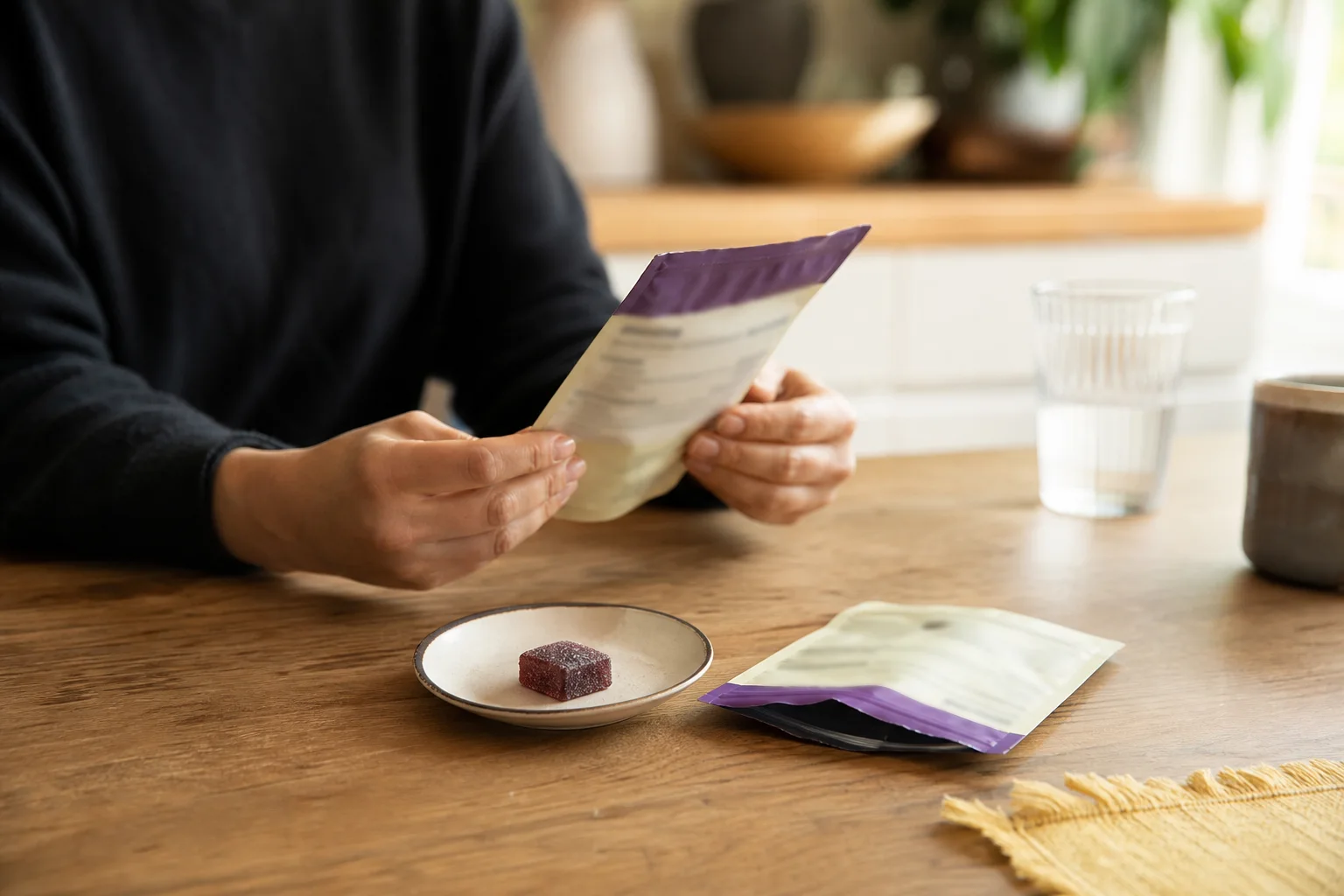
Hero image showing a consumer-facing edible package while keeping serving numerals unreadable. This visual supports the article’s point that per-serving and per-package information must be read and mentally converted. Does not show legible potency numbers or brand logos; illustrates the consumer task. Source: Maine OCP consumer materials. Limits: a photograph cannot show biochemical processes or guarantee label accuracy.
An honest opener from people who grow cannabis
Edible cannabis is seductive: discrete, shelf-stable, and familiar (a gummy, a brownie, a chocolate square). But as growers and small-batch producers we watch customers misread a package or rush a second bite and then surf a surprising — sometimes frightening — experience. Edibles act differently in the body than inhaled cannabis, with delayed, sometimes much longer, effects, and real variability from product to product. Public-health agencies and clinical pharmacology reviews converge on a simple message: patience, careful label reading, and safe storage are emphasized as important. (cdc.gov)
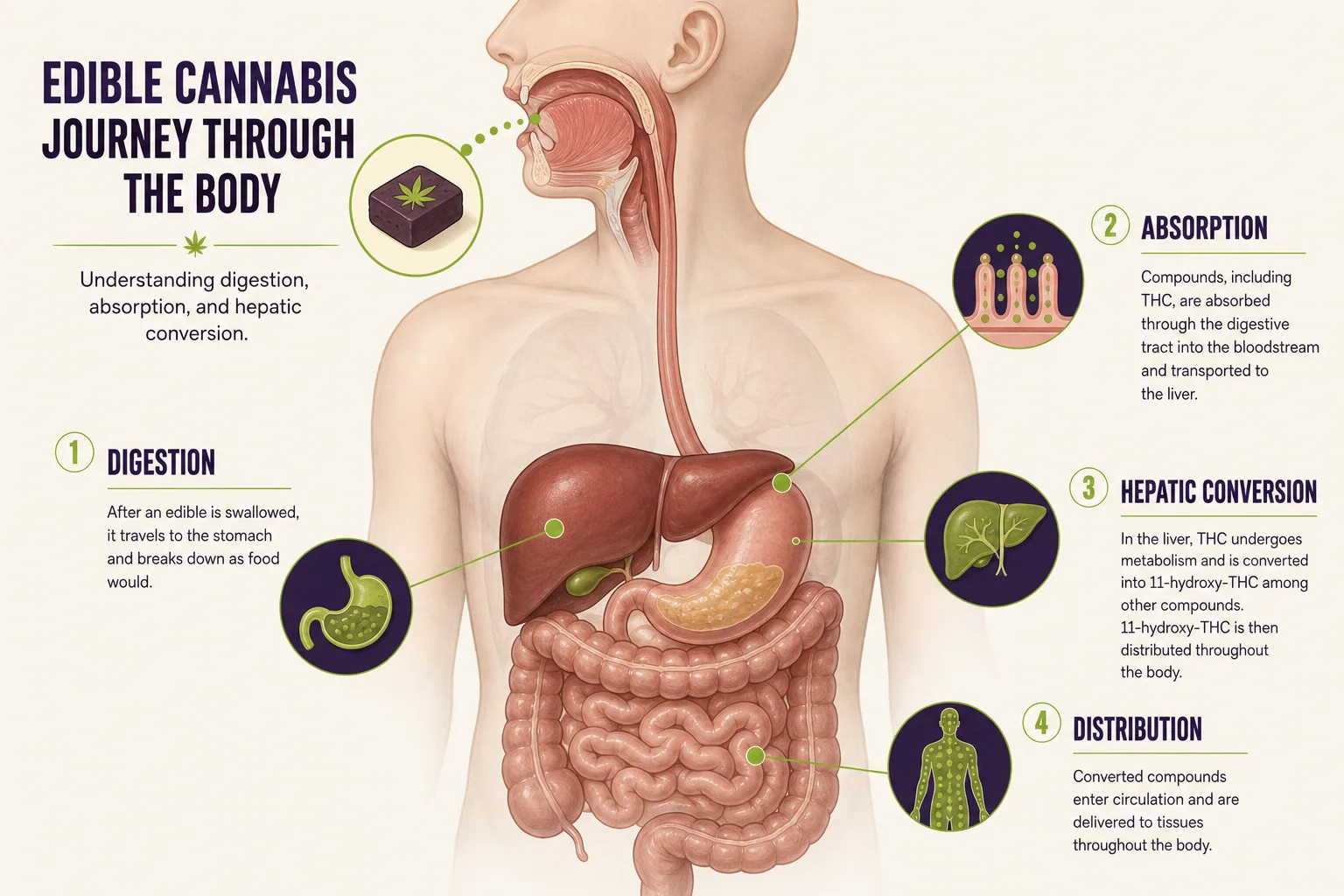
Explanatory illustration of the digestive path and liver conversion to 11-hydroxy-THC that helps explain why edibles have delayed and sometimes intensified effects. This diagram is pedagogical and avoids specific numeric claims. Source: pharmacokinetics literature. Limits: schematic only; individual responses vary widely.
Research context: Oral Administration of Cannabis and Δ-9-THC Preparations: A Systematic ReviewWhy 'when' matters: delayed onset and long tails
When you smoke flower the effects usually arrive in minutes; with edibles, your body has to digest and metabolize the active molecules first. That delay can be 30 minutes to two hours (and sometimes longer for peak effects), and the psychoactive period can last many hours. This timing difference is central to why people sometimes take "too much" — they expect the same quick feedback loop as inhalation and dose again before the first portion has fully expressed. (cdc.gov)
The underlying pharmacology explains that the liver converts delta-9-THC to an active metabolite, 11-hydroxy-THC, during first-pass metabolism. This metabolite is more potent at crossing into the brain in some people and contributes to a stronger or different subjective effect compared with inhaled THC. The degree of 11-hydroxy-THC formation varies between individuals and between product types, so the same edible can feel different day-to-day or person-to-person. Systematic reviews and pharmacokinetic studies show high variability in oral THC absorption and peak concentration across formulation types — capsules, oils, baked goods, and infused confections are not interchangeable in how quickly and strongly they act. (pubmed.ncbi.nlm.nih.gov)
How digestion, formulation, and context create variability
Edible pharmacokinetics are a moving target because multiple factors change how much THC reaches the bloodstream and how fast. Fat content in the food matrix, whether you ate the edible on an empty stomach, concurrent medications, individual metabolic differences, and even gut motility all matter. Baked goods and oil-based formulations tend to show higher variability in absorption compared with pills or tightly dosed oils. That means two identical-looking brownies — or two people eating the same gummy — can have very different experiences. (pubmed.ncbi.nlm.nih.gov)
Beyond biology, manufacturing and labeling variability affect the consumer experience. Errors in dosing during production, uneven distribution of cannabinoids within a batch (especially in home or illicit products), and intentional or accidental mislabeling can produce a product whose package label does not match the experience. Regulatory guidance and testing rules aim to reduce that risk in licensed markets, but variability still exists and warrants a cautious consumer approach. (maine.gov)
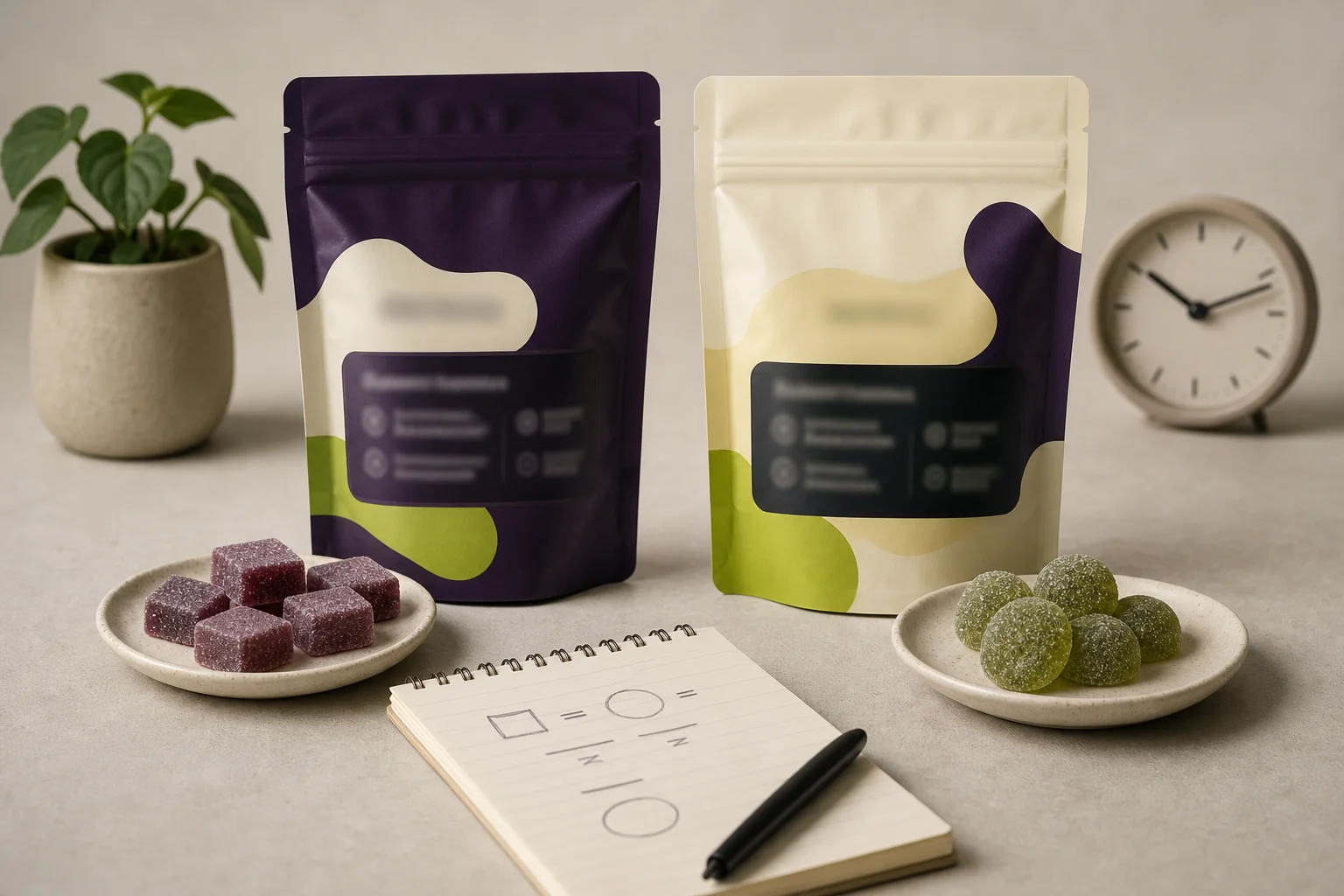
A focused photo comparing per-serving and per-package information visually. This supports the article’s guidance to check both labels and do the math. Limits: image intentionally obscures numeric values and batch IDs; it demonstrates a reading task rather than verifying label accuracy. Source: Maine Cannabis 101 and OCP resources on labeling.
Research context: Maine Cannabis 101 (OCP)Serving size vs. package label: what the print is telling you — and what it's not
Reading an edible package involves two distinct acts: reading the per-serving label, and reading the total-package label. Some packages show a small per-serving THC amount and list the number of servings per package. Others show only a total THC per package and tuck serving math into the fine print. It can be useful to convert mentally (or with a pen): how many servings are there, and how many servings would actually be consumed at once? Maine’s consumer materials and program rules explicitly highlight the importance of serving-size labeling and the public safety goal of accurate potency-per-serving statements. (maine.gov)
A cautionary pattern we see: people assume a chocolate square is "one serving" because it looks small, then eat the whole bar only to discover the package lists four servings. Conversely, some people see a low-per-serving number and ignore that the package contains multiple servings and that some product types deliver delayed, compounding effects. Labels are information to be interpreted in context — with attention and patience. (maine.gov)
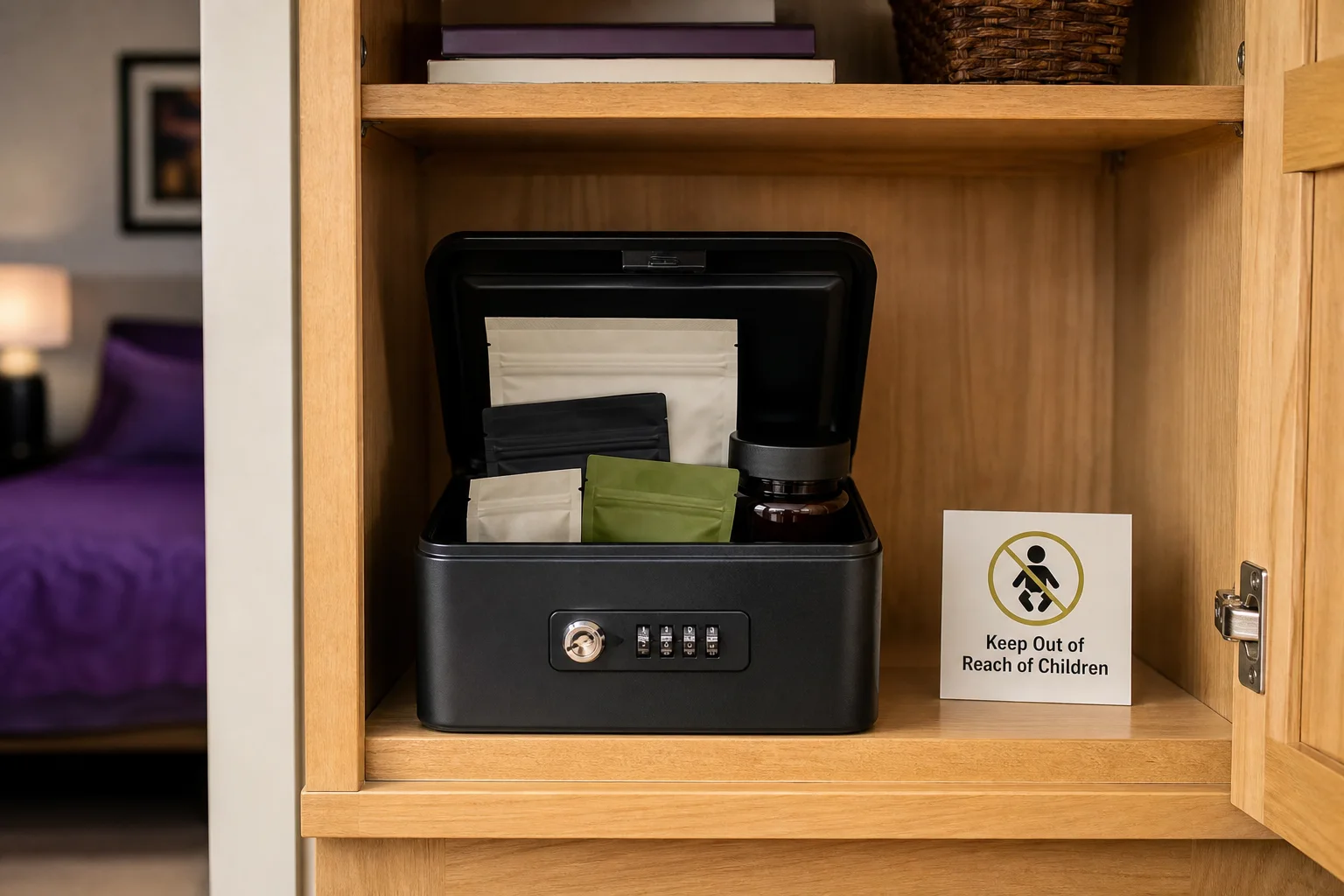
Storage and safe-keeping demonstration aligned with Maine OCP and poison-control recommendations. Image shows an adult home safety practice and is not intended to imply a product is childproof by design. Limits: does not substitute for legal storage requirements; shows a recommended habit. Source: Maine OCP and Poison Control guidance.
Research context: My child ate a cannabis edibleAccidental exposure: unintentional ingestion, pets, and copycat packaging
Edible products are disproportionately represented in accidental ingestion reports — both for young children and for adults who misidentify a product. Smaller-bodied individuals, such as young children, are overrepresented in accidental ingestion reports; because of smaller body size and different physiology, outcomes can be more serious. Poison control centers document that caregivers are commonly advised to call immediately if someone unintentionally ingests an edible; reported signs include vomiting, confusion, difficulty walking, and breathing problems. Packaging that resembles common snacks or novelty confections increases this risk, and federal agencies have issued warnings about lookalike products. Secure, locked storage is consistently described in official guidance as an important risk-reduction measure. (poison.org)
Maine’s Office of Cannabis Policy provides consumer education materials (for example, the "Know Your Edibles: Start Low & Go Slow" rack card) and safe-storage guidance for licensees and users, and the state tracks labeling, testing, and universal symbol initiatives designed to reduce accidental exposures. Even with these programs, consumers and caregivers cannot assume a package is secure against unintended access. (maine.gov)
Why we cannot — and will not — prescribe a dose
You will see guidance such as "start low and go slow" in many official materials, and it’s intentionally agnostic because individual dose response varies so widely. Physiological differences, prior cannabis exposure, co-use of alcohol or medications, and the product’s formulation mean a single numeric dose recommendation that fits everyone is scientifically untenable. Clinical and PK reviews emphasize interindividual variability and recommend careful titration rather than one-size-fits-all prescriptions. As educators and growers we can describe safe practices and what the evidence shows about variability, but not write an individualized dosing script. (pubmed.ncbi.nlm.nih.gov)
This is also a legal and ethical boundary: prescribing doses or suggesting a fixed milligram for a person would edge this article into individualized medical advice. Our job here is evidence-based education: explain what is known, what is uncertain, and what cautious approaches people can take to reduce risk.
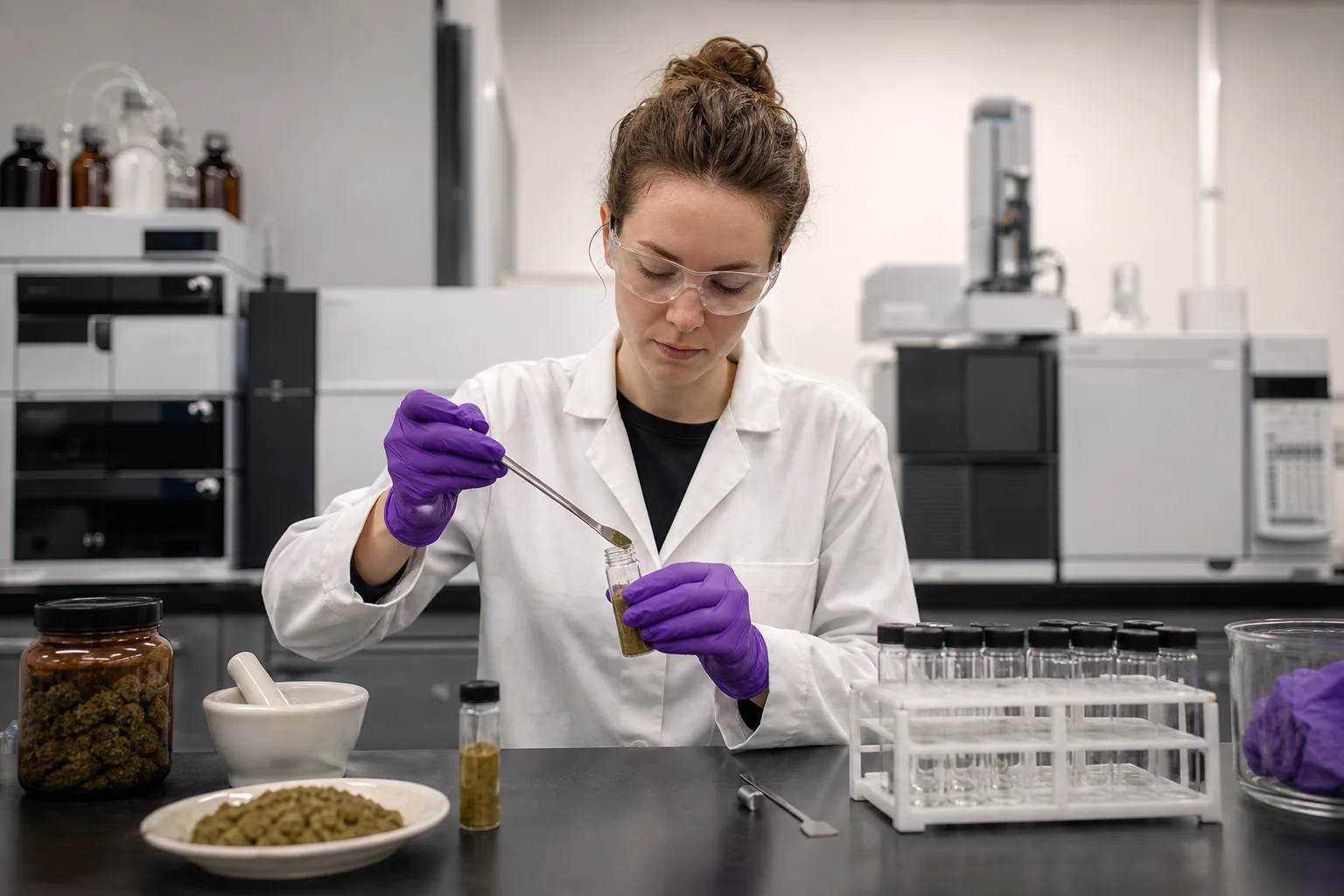
A laboratory context image to illustrate testing and batch verification practices discussed in pharmacology and regulation literature. The photo should make clear that lab work is part of the quality-control chain but not imply perfect consistency across all products. Limits: does not display test data or specific lab results. Source: pharmacokinetic and testing guidance literature.
Research context: Oral Administration of Cannabis and Δ-9-THC Preparations: A Systematic ReviewPractical considerations: label reading, timing, storage, and documentation
-
Active label reading helps. Label information can be used to confirm per-serving THC, number of servings, and any lab-test or batch identifiers. If a package lists only total THC for the whole product, doing the math before opening reduces surprises. Maine OCP materials encourage consumers to check both package and per-serving information. (maine.gov)
-
Timing matters. Official guidance and toxicology reviews typically advise waiting at least one to two hours between doses because of delayed peaks; many documents also note that effects can last several hours. Guidance commonly recommends avoiding driving or tasks requiring full attention until an individual's response is known. (cdc.gov)
-
Secure storage reduces access. Program materials and poison-control resources highlight keeping edibles secured and out of reach of unintended users and animals. Using original packaging and, where appropriate, secondary locked containers are options mentioned in consumer guidance for reducing access to unintended users. (maine.gov)
-
Documentation helps build a personal record. Treating a first experience with a new product like a small experiment — recording time of ingestion, whether the edible was eaten with food, the formulation type (gummy, chocolate, baked), and subjective effects at intervals — can reveal consistent patterns over time and reduce reliance on a single event for decision-making.
Limits of the evidence and why questions remain
The scientific literature shows consistent themes — delayed onset, first-pass metabolism to active metabolites, and high variability — but it also documents gaps. Many studies use small sample sizes or pharmaceutical formulations rather than commercial edibles, and illicit-market products are seldom studied in a standardized way. Reviews call for better controlled studies that compare real-world edible formulations, larger population pharmacokinetic modeling, and standardized reporting from manufacturers. For consumers, that means a measure of humility: the best available science supports cautious behavior and awareness of uncertainty rather than confident predictability. (pubmed.ncbi.nlm.nih.gov)
Distinguishing Maine’s medical and adult-use systems (briefly)
Maine’s Medical Use of Cannabis Program and Adult Use Cannabis Program share oversight by the Office of Cannabis Policy but have different participant rules and program goals. Medical participants may have different access pathways and caregiver relationships; adult-use consumers are regulated under the adult-use rules that emphasize labeling, testing, and packaging standards for retail sale. Both programs offer consumer education resources, and Maine’s OCP publishes guidance documents and resource cards specifically aimed at reducing edible-related harm. Product-specific questions for medical participants often involve conversations with a certifying clinician or with licensed dispensary staff, who are common points of contact for program participants. (maine.gov)
Bottom line for adults who choose to use edibles
Edibles are culturally and culinarily appealing, but they are pharmacologically different from inhaled cannabis. Read labels carefully (serving vs. package totals), respect delayed onset, secure products from unintended access and pets, and document reactions. There is no universally correct single dose — variability in product, biology, and context makes that impossible — so caution and attention to official guidance are the most rational approaches. In cases of unexpected reactions, Poison Control is a commonly recommended contact and urgent medical services may be appropriate. (poison.org)
Questions this guide answers
How long should I wait before taking more of an edible?
Because edibles have delayed onset, official guidance and pharmacology reviews recommend waiting at least one to two hours before considering an additional dose, and planning for effects that can last several hours.
Why might the same edible feel different on another day?
Differences in stomach contents, formulation fat content, individual metabolism, and even batch variability in products can make the same edible feel different from day to day.
Are packaged edibles childproof?
Not necessarily. Even products sold in compliant packaging can be mistaken for regular snacks; secure, locked storage away from children is essential and recommended by Maine OCP and poison-control guidance.
Do Maine medical and adult-use products have the same labeling?
Both systems fall under Maine OCP oversight, but access rules differ. Adult-use labeling rules emphasize testing, potency-per-serving, and packaging standards; medical dispensaries may follow specific program guidance — check OCP materials for details.
What should I do in an emergency after someone ate an edible accidentally?
Call your local poison-control center right away for expert, free guidance; if the person has severe difficulty breathing, loss of consciousness, or other life‑threatening signs, seek emergency medical care.
Educational information only. Cannabis affects people differently and this is not medical advice.