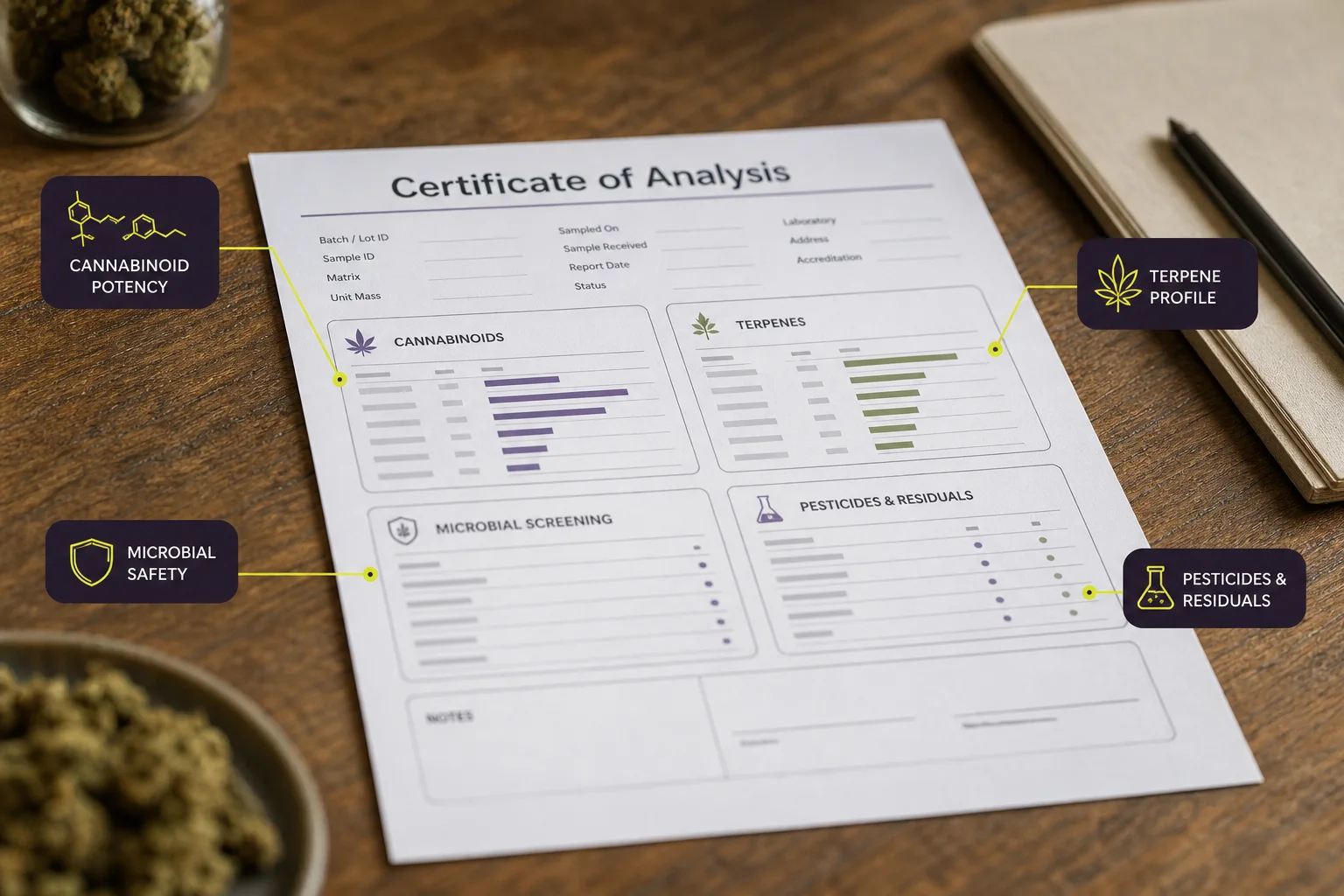
A COA visual helps readers learn to find sample dates, batch IDs, method names, and safety panels. It is a teaching image — it does not display real lab values or endorsements. Use to show where key provenance details live on a lab report. (Limit: does not prove the representativeness of any single COA.)
Why people look at lab results — and what they hope for
Adults who buy licensed cannabis often open the Certificate of Analysis (COA) expecting a short answer: “How strong is this?” or “Is it safe?” Lab reports are meant to provide measured data about a particular sample — cannabinoid content, some terpene measurements, and whether the sample passed mandatory safety screens. But a COA is a snapshot of one tested sample taken from one batch at one moment in time; it is not a product guarantee or a full portrait of every bud in the jar. (maine.gov)
A COA also answers regulatory needs: testing facilities must report mandatory results to the licensee and to Maine’s Office of Cannabis Policy, and labeling rules require certain facts appear on the package. These steps are intended to protect consumers by supplying consistent information at point of sale, but they do not eliminate natural variation or every possible source of harm. (maine.gov)
Understanding the limits of that snapshot is practical humility: it helps adults interpret numbers without turning them into promises. The rest of this article walks through what typical COAs include, the laboratory and botanical reasons that produce variation, how Maine regulates testing, and how to read a single batch result responsibly.
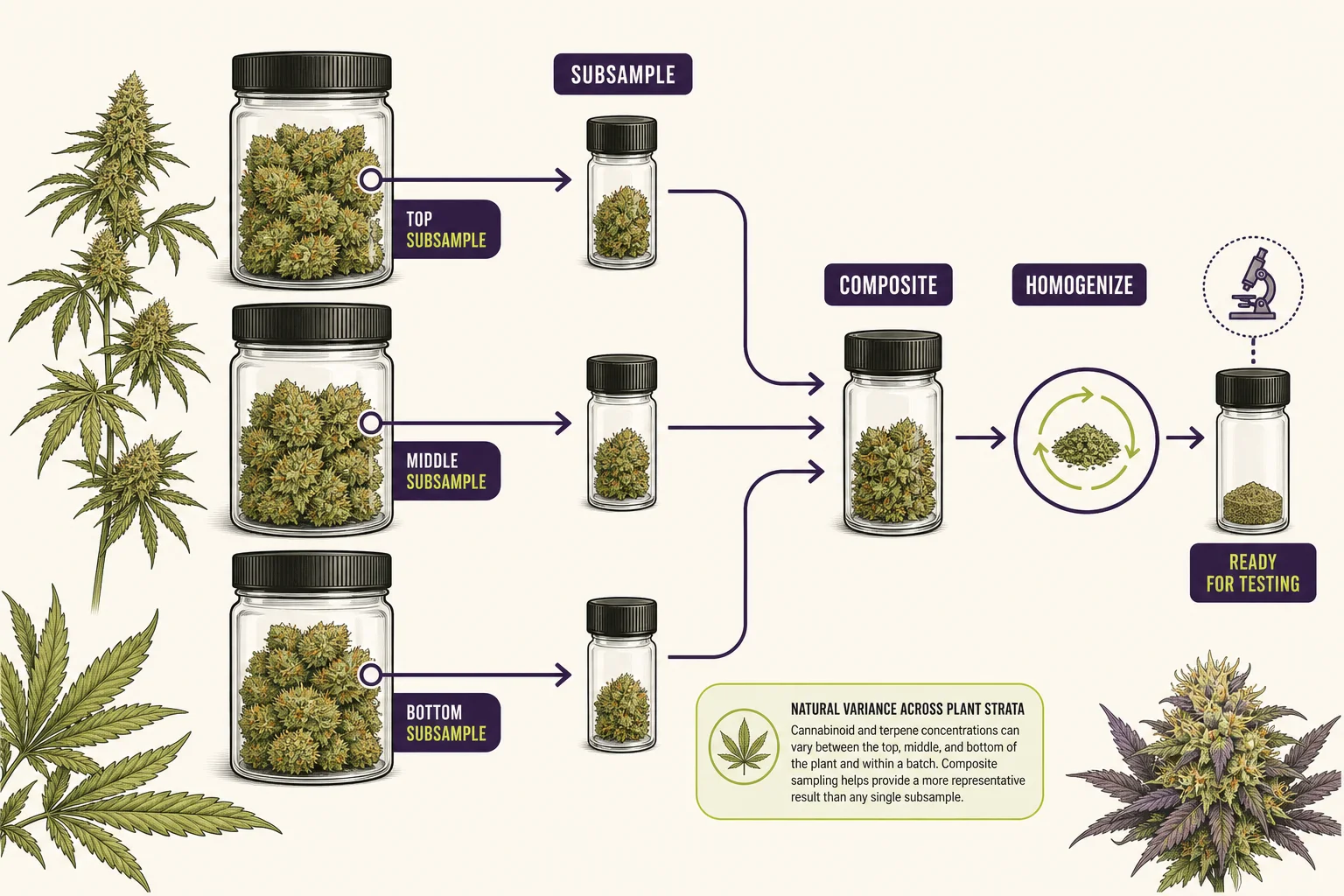
An evidence diagram of sampling emphasizes why a single bud does not equal the whole lot. The graphic teaches sampling concepts used in lab methods; it does not show laboratory results or endorsement of any product.
Research context: Adult Use Testing Data | Office of Cannabis PolicyWhat a Certificate of Analysis (COA) usually shows
Most COAs for tested cannabis include: measured cannabinoids (for example, delta‑9‑THC and CBD), sometimes an array of terpenes, and the results of safety testing (microbial screens, pesticide residues, solvent residues for extracts, and heavy metal analysis where required). If the sample fails a mandatory test, testing facilities follow protocols for notification, remediation options, and retesting under state rules. (maine.gov)
A COA will normally list the testing methods used, the date the sample was received and tested, and the lot or batch identifier. Method details help a reader know whether results were produced by chromatography (e.g., HPLC or GC) or another validated method; those technical notes matter because different methods and sample preparations can shift measured numbers. Transparent COAs that include method names, limits of detection, and analyst notes are more useful to an adult consumer than minimalist reports that only display a single percent number. (maine.gov)
Remember that what the COA reports depends on the testing scope required by law and by the laboratory's menu. Some analytes — like lesser cannabinoids, specific terpenes, or novel synthetic cannabinoids — may not be tested unless required or requested. A report that lists “ND” (not detected) for a pesticide only means the compound was below that lab’s reporting limit, not that the pesticide is impossible to find under any conditions.
Potency numbers: what they mean and what they don’t
When a COA lists THC or total-THC percentage, that value is the concentration measured in the tested sample. But potency varies within a grow, even within a single plant. Researchers who sampled dried flower from different heights and locations on the same plant found statistically significant variation in total THC across top, middle, and bottom strata of plants — which means a single sampled bud can differ from another in the same batch. Sampling approach therefore matters. (pubmed.ncbi.nlm.nih.gov)
Laboratory-to-laboratory variability is another real factor. Multiple studies have documented unexplained interlaboratory differences in reported THC levels across legal markets, and investigators have described phenomena such as “lab shopping” where producers choose laboratories that historically report higher values. Those systemic issues don’t necessarily apply to every lab or every state, but they do underline why one number should be read with context. (pubmed.ncbi.nlm.nih.gov)
Finally, potency on a COA does not directly predict subjective effects for any given adult. Individual response is shaped by many variables (body size, prior exposure, use method, concurrent substances, tolerance). Potency is one helpful piece of the puzzle, but it’s not a complete map of how someone will experience a dose.
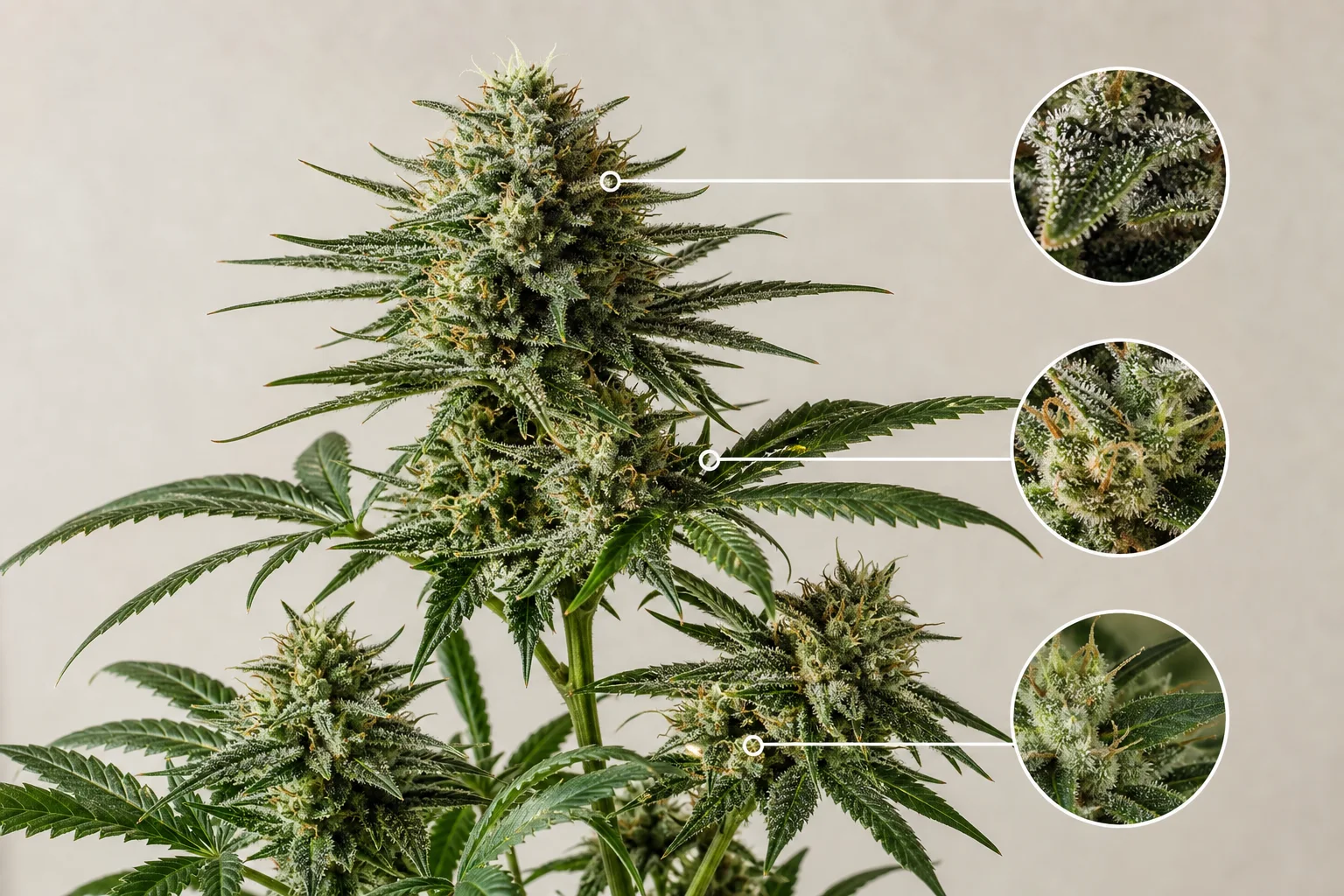
Macro botanical imagery demonstrates how cannabinoid concentration can vary by plant position — a botanical explanation behind potency differences cited in peer-reviewed work. The photo shows plant anatomy for educational context, not product forecasting.
Research context: Variability of total THC in greenhouse cultivated dried Cannabis - PubMedContaminants: what tests can detect — and what they can miss
Licensed labs run screens aimed at categories of contaminants that pose public-health concerns: microbiological growth (e.g., total yeast and mold, pathogenic bacteria as required), pesticide residues, solvent residues for extracts, and heavy metals. Regulatory lists and method requirements vary by state and product type; Maine’s rules set mandatory testing frameworks and the Maine CDC’s certification touches on method validation and lab capability. These systems reduce the chance that a regulated product contains common, known hazards. (maine.gov)
But testing cannot find every compound at every concentration. Limits of detection, the specific pesticides or solvents included on the lab’s panel, and whether a laboratory has validated methods for novel contaminants all shape what a COA will flag. Emerging or unusual adulterants, new synthetic cannabinoids, and certain process-related contaminants may not be detected if they’re not on the testing menu or if validated methods do not yet exist. The CDC and FDA have both warned consumers that unregulated or novel products can carry contaminants and that testing coverage is uneven outside regulated markets. (cdc.gov)
Another point: a “pass” for microbial screening applies to the tested portion. Microbial growth can be patchy, and improper handling after testing — during packaging, transport, or retail display — can introduce contamination later. A COA documents the sample’s condition when tested, not every subsequent handling step.
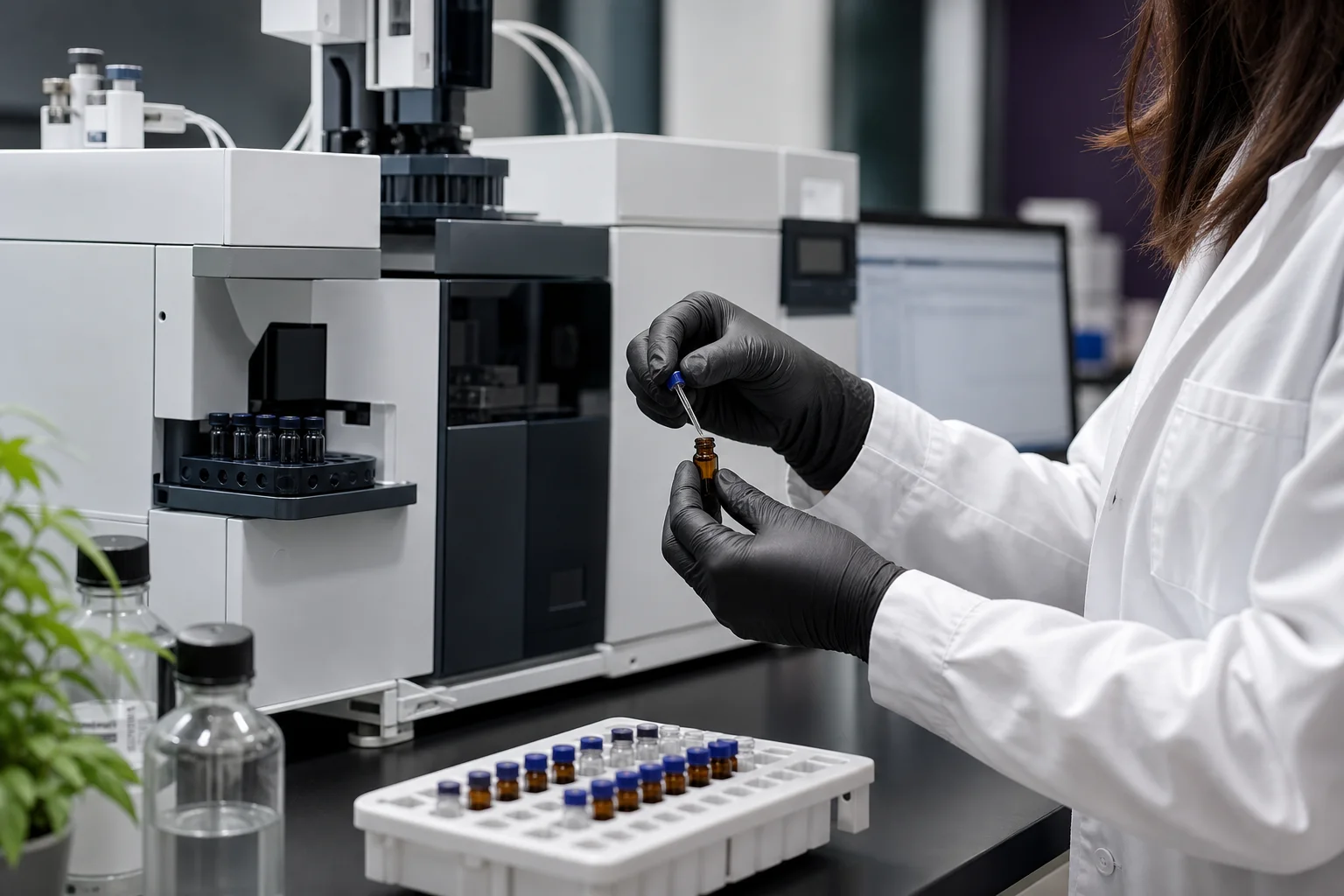
A lab context image helps explain instrument-dependent variability and why method notes matter on a COA. The picture teaches about testing workflow — it does not display any specific lab results, certificates, or brand names.
Research context: What You Need to Know About Products Containing Cannabis (Consumer Update)The limitations of one batch: sampling, lab variability, and “lab shopping”
Sampling is the technical Achilles’ heel of one-batch COAs. If a sample is not collected using a statistically valid plan, the tested portion may not represent the broader lot. For dried flower, effective sampling plans call for multiple subsamples from different containers and within plants, combined and homogenized before analysis. When that doesn’t happen, the COA reflects the tested handful — not the whole harvest. Maine’s testing rules include homogenization and sample handling requirements to reduce this risk, but natural heterogeneity can remain. (maine.gov)
Interlaboratory differences — due to instruments, calibration, reference standards, and analyst technique — can make the same homogenized sample yield slightly different numbers in different labs. Academic and regulatory audits have highlighted discontinuities and occasional upward clustering of reported THC values near marketing thresholds in other states’ markets; such findings argue for strong proficiency testing, transparency, and quality systems in labs. (pubmed.ncbi.nlm.nih.gov)
Finally, recall the incentive structure: producers and brands are motivated to show favorable numbers, while labs are motivated to keep clients. That dynamic has produced documented cases where market actors sought labs likely to return higher potency results. That is why regulatory oversight, interlab comparisons, and open data reporting — as Maine’s OCP collects testing data — are important for public confidence. (maine.gov)
How Maine’s rules shape what a COA includes (adult-use vs. medical notes)
Maine’s Office of Cannabis Policy maintains rules for testing and for the certification of cannabis testing facilities; testing facilities must report mandatory results to licensees and to OCP, and the state applies standards for method validation, equipment downtime reporting, and sample handling. These layers aim to make COAs consistently informative for consumers and regulators alike. (maine.gov)
Title 28‑B of Maine law requires truthful, non-misleading labeling and packaging and delegates many technical requirements to OCP rulemaking. That affects what information must appear on consumer-facing labels and what test results are relied upon for those claims. There are program differences in how adult‑use and medical programs operate in some states elsewhere; in Maine, testing rules and certification emphasize public health and accurate reporting across the regulated adult‑use program. (legislature.maine.gov)
Regulation reduces risk but does not create perfection. OCP’s public reporting of testing data and the laws on labeling give adults legally required information, but learning to read a COA and understanding its provenance — sample dates, lab name, methods — remains a crucial skill for adults who want to place that snapshot in context.
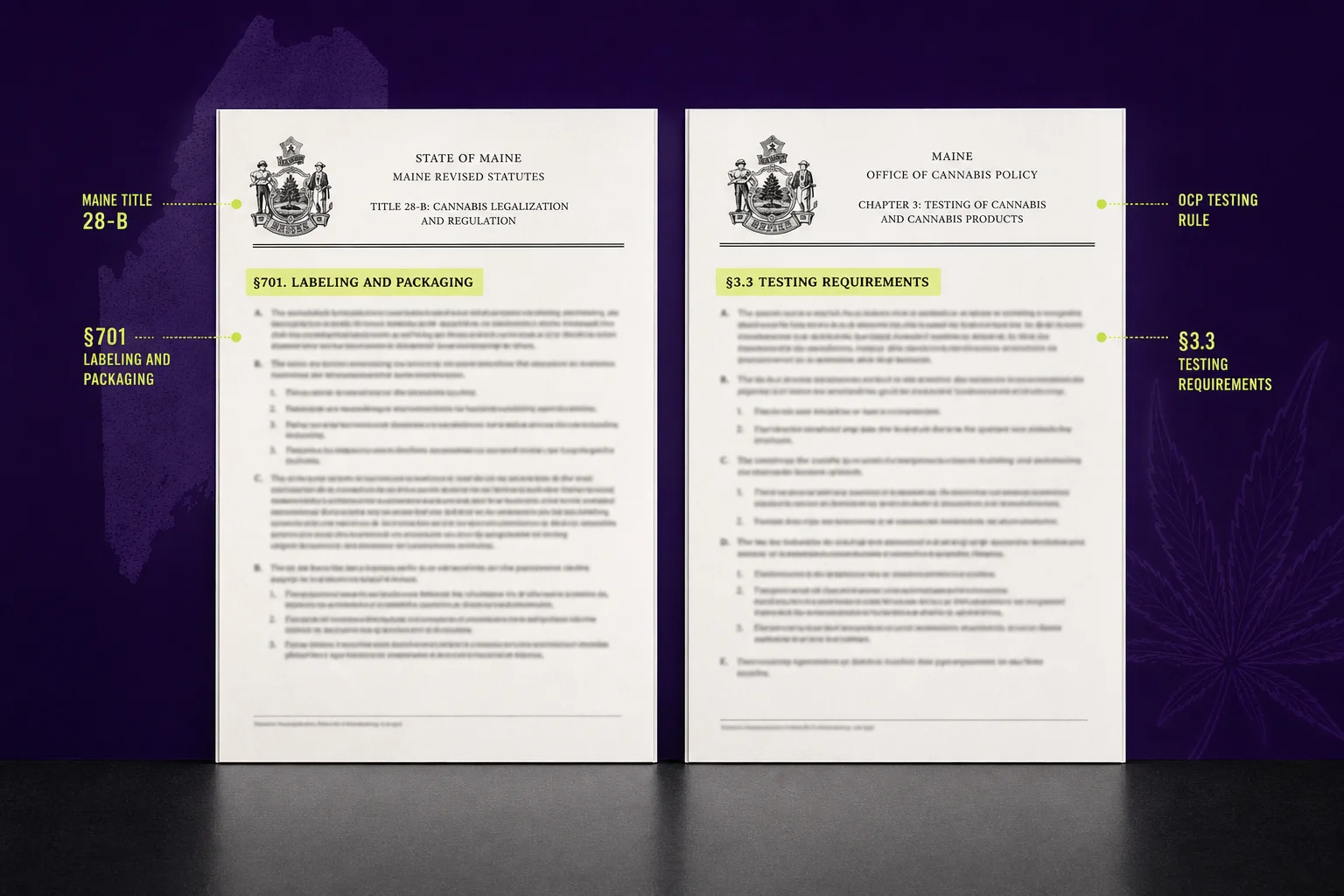
Side-by-side archival documents let readers see the legal and regulatory backbone for testing and labeling in Maine. This visual points to where consumers can verify requirements; it does not interpret or provide legal advice.
Research context: Title 28-B, §701: Labeling and packagingPractical steps for adults interpreting a single COA
Check the basics first: batch/lot ID, sample collection date, and the lab name and certification. A COA that lacks method names, detection limits, or a clear chain of custody offers less information about confidence and representativeness. When possible, compare results across multiple batches or look for consistent patterns in the same brand or grower over time rather than treating a single report as decisive. (maine.gov)
Look at how broad the safety screening was. Which pesticides were on the panel? Were solvents and heavy metals measured? If an analyte is listed as “not detected,” check the reporting limit to understand what “not detected” means in practice. For potency, consider the reported uncertainty or measurement variance if the COA provides it. That information helps you judge whether a small difference in numbers is meaningful. (fda.gov)
Finally, use COAs as informative data, not as product endorsements. If you have health concerns, are pregnant or breastfeeding, taking other medicines, or have a medical condition, federal and public-health authorities recommend avoiding cannabis altogether or discussing use with a clinician; the FDA and CDC provide consumer guidance and safety advisories about cannabis products, contaminants, and specific high-risk contexts. COAs are a tool for informed adult choice, not a substitute for professional care. (fda.gov)
Key takeaways
- A COA is a tested snapshot of a single sample from a single batch; it’s informative but not definitive.
- Potency varies within plants and across labs; one number is not a personal prediction of effect. (pubmed.ncbi.nlm.nih.gov)
- Safety screens reduce risk, but “not detected” is limited by the lab’s detection thresholds. (fda.gov)
- Maine’s rules require reporting and lab certification to improve consistency; check the COA’s methods and dates. (maine.gov)
- Compare multiple batches and prioritize reports with transparent methods rather than single percent numbers.
Questions this guide answers
If a COA shows high THC, does that mean it will affect me more?
No. High THC on a COA means the tested sample contained more THC. Individual response varies with tolerance, route of use, body chemistry, and context; potency is one factor, not a guaranteed predictor of effect.
Can a COA guarantee a product is contaminant-free?
No. A COA shows contaminants that were tested for and above the lab’s detection limits in the sample provided. It cannot prove the entire lot, future handling, or untested compounds are absent.
Why do labs sometimes report different potency numbers for the same product?
Differences come from sampling, lab methods, instrument calibration, and validated reference standards. Interlaboratory variability is documented in scientific studies and is why method transparency matters.
Does Maine require testing for everything I should worry about?
Maine’s OCP sets mandatory testing requirements and lab certification standards to reduce risks. However, some analytes may not be covered unless specifically required, and novel contaminants may be outside routine panels.
Where can I verify a lab or COA reported to OCP?
Maine’s Office of Cannabis Policy publishes testing data and rules; COAs reported to OCP and facility certification details are public records for regulated products.
Educational information only. Cannabis affects people differently and this is not medical advice.