 Growing the next page…Growing the next page…Growing the next page…
Agent Orange is a citrus-forward original with a real story behind its unforgettable name. MzJill Genetics created it from Orange Velvet and Jack the Ripper, pairing bright orange-and-lemon character with an experience adults often describe as upbeat, creative, and eventually relaxing.
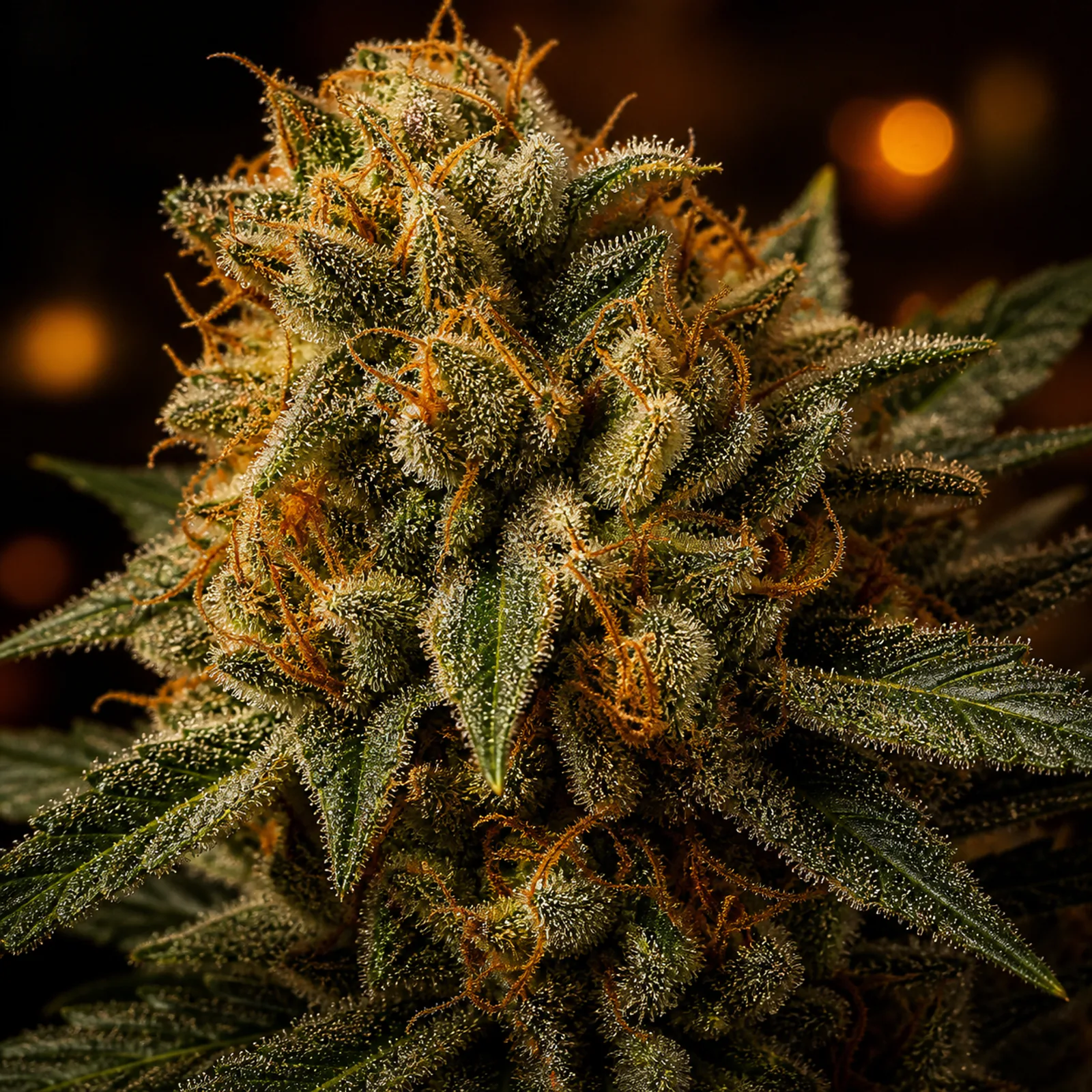
Meet the cultivar
Agent Orange is commonly placed in the hybrid category. That label is only a starting point: breeder selection, phenotype, growing conditions, harvest timing, and cure can matter more than a broad commercial category.
Across the archived adult reports used for this profile, happy, uplifted, relaxed, euphoric, and energetic appear repeatedly. Repetition makes the vocabulary worth documenting, but it does not turn subjective reports into a prediction for a different person or batch.
1,213 public ratings and reviews sit behind the recurring vocabulary used on this page. That volume shows where the language came from; it does not make the crowd infallible or establish a clinical effect.
The origin story
MzJill Genetics identifies Agent Orange as Orange Velvet × Jack the Ripper. The name honors MzJill’s father, a Green Beret exposed to Agent Orange during the Vietnam War, and was chosen to keep attention on the people affected by that chemical.
Agent Orange came out of the TGA/MzJill breeding world, where memorable flavor and strong personality were part of the point. Orange Velvet supplied the soft citrus side of the family; Jack the Ripper brought sharper lemon, resin, and vigor. The result became known for orange-rind aroma, colorful foliage in some expressions, and a name nobody forgets.
This is one of those cultivars whose name carries more weight once you know the reason for it. MzJill has written that it was created in honor of her father and other service members affected by wartime chemical exposure. That history belongs in the profile because it is part of the plant’s identity, not a marketing footnote.
Editorial take
Agent Orange earns its place in a serious strain library because it has more than a catchy label. The breeder, the cross, and the reason for the name are all part of the record. Mainezilla would approach a specific batch by looking for that tart orange personality, then letting the flower—not the reputation—tell us how closely it resembles the original story.
The experience
The five words that surface most often around Agent Orange are happy, uplifted, relaxed, euphoric, and energetic. Together they sketch a general arc, but they are better read as conversation starters than instructions for how anyone should feel.
Amount, tolerance, setting, product format, and the chemistry of the actual batch can all change that arc. A dated note tied to the correct product and batch is more informative than relying on the name alone.
A strain name is a starting point. The product, amount, setting, tolerance, and person finish the story.
Who may be drawn to it
This is not a prescription or a promise. It is a practical way to decide whether the cultivar belongs on your research list.
Adults who love unmistakable citrus—orange rind, sour lemon, and a creamy finish—and want aroma to be part of the experience.
People exploring cultivars commonly described as social, creative, or mood-brightening before a heavier body feel settles in.
Collectors interested in breeder-led genetics with a documented family tree and a meaningful name story.
Aroma & flavor
Agent Orange is most often described with citrus, orange, sweet, earthy, and pungent. Think of those words as a map for the nose, not a recipe: one batch may lean hard into a single note while another reveals the quieter parts after the flower is broken open.
Freshness and cure can completely change the conversation. A well-kept flower may open in layers; an old or poorly stored one can flatten an interesting genetic profile into hay, dust, or generic sweetness.
In the garden
A grower meeting Agent Orange for the first time will learn more from the plant in the room than from a generic difficulty score. Structure, stretch, feeding rhythm, finishing time, and aroma can all shift between selections carrying the same name.
Mainezilla has not run this cultivar in its own rooms, so there is no house grow diary to share yet. When there is one, it should read like a season with the plant—what surprised the grower, where it needed attention, and what changed after cure.
When Mainezilla grows this cultivar, this is where the team will record its structure, rhythm, surprises, harvest, and cure in plain language.
Evidence ledger
Used for identity, catalog context, or the uncertainty boundary shown in this profile.
MzJill Genetics · Reviewed Aug 9, 2026Used for identity, catalog context, or the uncertainty boundary shown in this profile.
PLOS ONE / PubMed Central · Reviewed Aug 9, 2026Used for identity, catalog context, or the uncertainty boundary shown in this profile.
Journal of Cannabis Research / PubMed · Reviewed Aug 9, 2026This encyclopedia is educational, not medical advice. Reported experiences are subjective and do not establish safety, efficacy, dosage, or treatment suitability.
Explore next
Frequently asked questions
Agent Orange is listed as a hybrid in historical strain directories. That category is descriptive, and a current batch may not express every trait associated with the label.
Historical adult self-reports commonly use happy, uplifted, relaxed, euphoric, and energetic. Those reports are subjective and do not predict an individual response or establish medical benefit.
Public adult reports include dry mouth, dry eyes, and paranoid. These are not incidence rates or a complete safety profile. Cannabis can impair judgment and coordination, and individual reactions vary.
Historical sensory descriptions include citrus, orange, sweet, earthy, and pungent. Aroma and flavor vary by phenotype, harvest, cure, storage, and observer.
Mainezilla has not published a first-party garden evaluation of Agent Orange.