 Growing the next page…Growing the next page…Growing the next page…
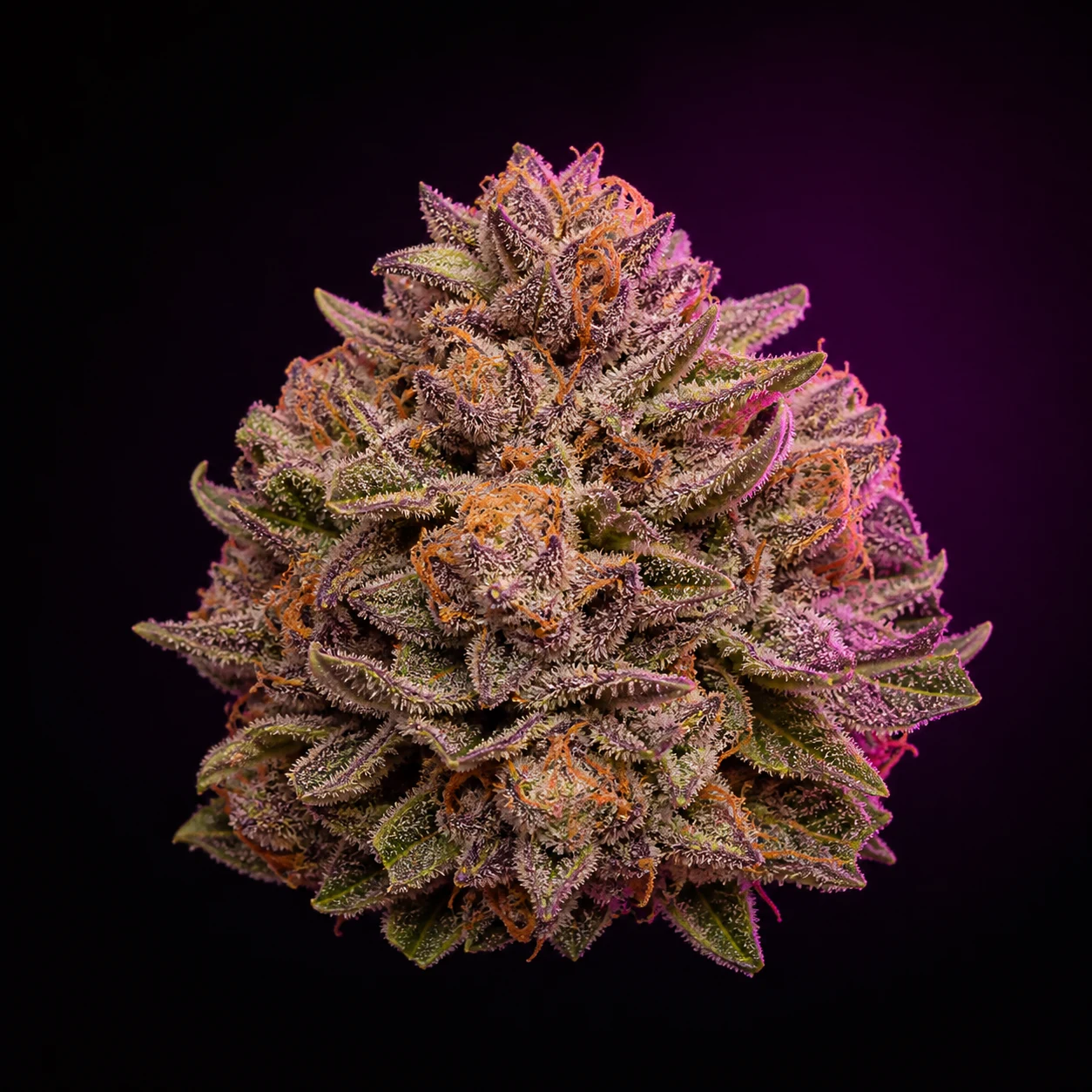
Blue Dream is California cannabis history in plant form: a blueberry-scented, Haze-leaning hybrid that escaped the Santa Cruz medical scene in the early 2000s and became one of the most recognizable strain names in America.
Meet the cultivar
Blue Dream is commonly placed in the hybrid category. That label is only a starting point: breeder selection, phenotype, growing conditions, harvest timing, and cure can matter more than a broad commercial category.
Across the archived adult reports used for this profile, happy, euphoric, relaxed, uplifted, and creative appear repeatedly. Repetition makes the vocabulary worth documenting, but it does not turn subjective reports into a prediction for a different person or batch.
14,916 public ratings and reviews sit behind the recurring vocabulary used on this page. That volume shows where the language came from; it does not make the crowd infallible or establish a clinical effect.
The origin story
Blue Dream is widely described as a Blueberry and Haze cross associated with California, but the original breeder attribution is less settled than the parent story. Producer and batch still matter because many selections circulate under the name.
The best-known Blue Dream story begins around Santa Cruz, California, in the early 2000s. A clone-only plant—generally understood as DJ Short’s Blueberry crossed with a Haze—moved through the medical-cannabis community without a brand, seed pack, or breeder stepping forward to claim it.
That anonymity helped turn Blue Dream into shared culture. Growers liked its vigor and yield; consumers remembered the berry aroma and easygoing reputation. By the 2010s it was everywhere, and the name began covering more than one interpretation. The original Santa Cruz cut is therefore both famous and strangely difficult to pin down.
Editorial take
Blue Dream has enough of a public record to investigate, but the name is not the verdict. Mainezilla would compare the actual flower, producer, batch details, aroma, and any available laboratory record with the inherited story, then document what is genuinely present.
The experience
The five words that surface most often around Blue Dream are happy, euphoric, relaxed, uplifted, and creative. Together they sketch a general arc, but they are better read as conversation starters than instructions for how anyone should feel.
Amount, tolerance, setting, product format, and the chemistry of the actual batch can all change that arc. A dated note tied to the correct product and batch is more informative than relying on the name alone.
A strain name is a starting point. The product, amount, setting, tolerance, and person finish the story.
Who may be drawn to it
This is not a prescription or a promise. It is a practical way to decide whether the cultivar belongs on your research list.
Adults curious about classic California genetics and the strains that defined the early medical-cannabis era.
People who enjoy berry-and-earth aroma and commonly seek a clear, upbeat experience that still has a relaxed edge.
Newer strain students who want a useful lesson in why a famous name can describe several cuts and seed versions.
Aroma & flavor
Blue Dream is most often described with blueberry, sweet, berry, earthy, and flowery. Think of those words as a map for the nose, not a recipe: one batch may lean hard into a single note while another reveals the quieter parts after the flower is broken open.
Freshness and cure can completely change the conversation. A well-kept flower may open in layers; an old or poorly stored one can flatten an interesting genetic profile into hay, dust, or generic sweetness.
In the garden
A grower meeting Blue Dream for the first time will learn more from the plant in the room than from a generic difficulty score. Structure, stretch, feeding rhythm, finishing time, and aroma can all shift between selections carrying the same name.
Mainezilla has not run this cultivar in its own rooms, so there is no house grow diary to share yet. When there is one, it should read like a season with the plant—what surprised the grower, where it needed attention, and what changed after cure.
When Mainezilla grows this cultivar, this is where the team will record its structure, rhythm, surprises, harvest, and cure in plain language.
Evidence ledger
Used for identity, catalog context, or the uncertainty boundary shown in this profile.
Leafly · Reviewed Aug 9, 2026Used for identity, catalog context, or the uncertainty boundary shown in this profile.
Leafly · Reviewed Aug 9, 2026Used for identity, catalog context, or the uncertainty boundary shown in this profile.
PLOS ONE / PubMed Central · Reviewed Aug 9, 2026Used for identity, catalog context, or the uncertainty boundary shown in this profile.
Journal of Cannabis Research / PubMed · Reviewed Aug 9, 2026This encyclopedia is educational, not medical advice. Reported experiences are subjective and do not establish safety, efficacy, dosage, or treatment suitability.
Explore next
Frequently asked questions
Blue Dream is listed as a hybrid in historical strain directories. That category is descriptive, and a current batch may not express every trait associated with the label.
Historical adult self-reports commonly use happy, euphoric, relaxed, uplifted, and creative. Those reports are subjective and do not predict an individual response or establish medical benefit.
Public adult reports include dry mouth, dry eyes, and paranoid. These are not incidence rates or a complete safety profile. Cannabis can impair judgment and coordination, and individual reactions vary.
Historical sensory descriptions include blueberry, sweet, berry, earthy, and flowery. Aroma and flavor vary by phenotype, harvest, cure, storage, and observer.
Mainezilla has not published a first-party garden evaluation of Blue Dream.